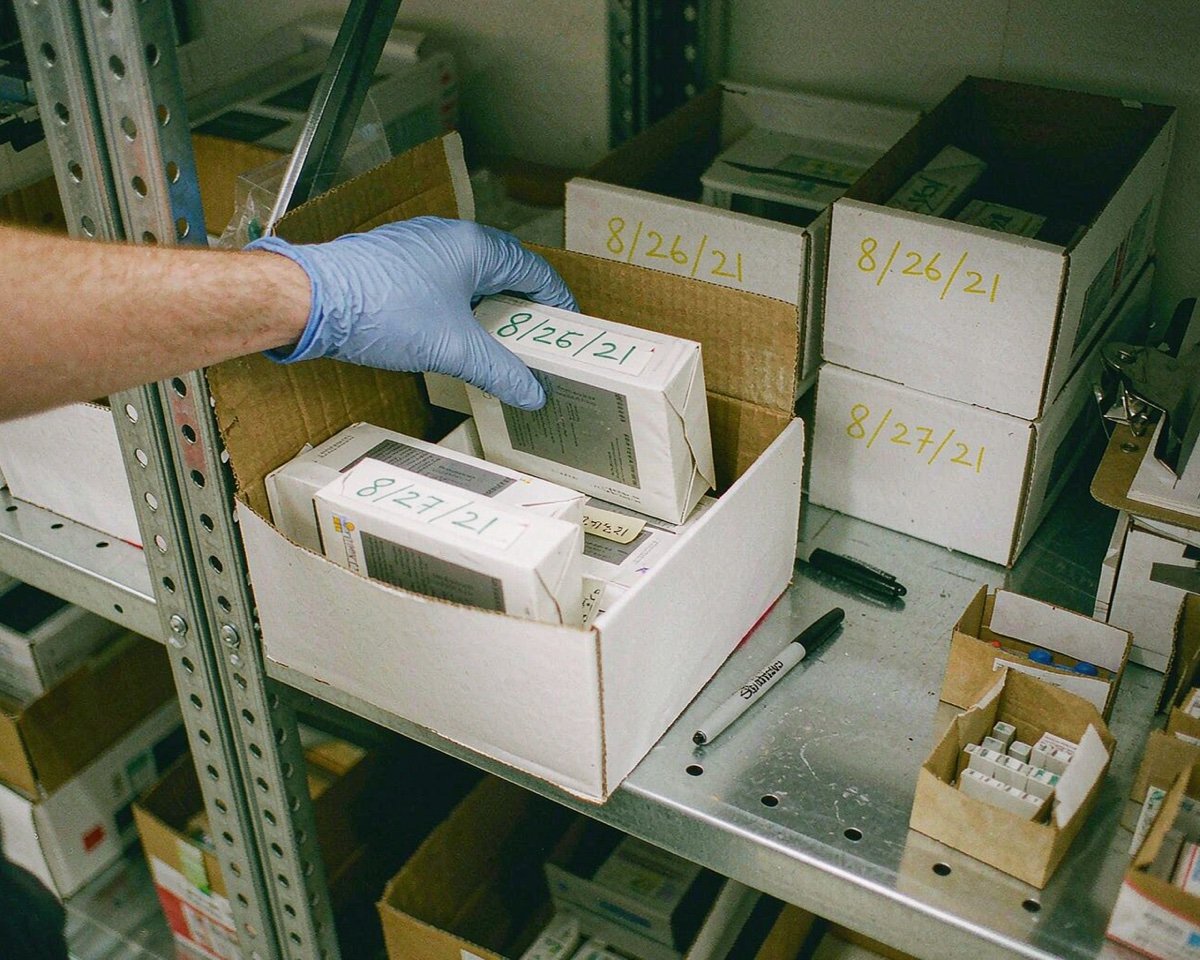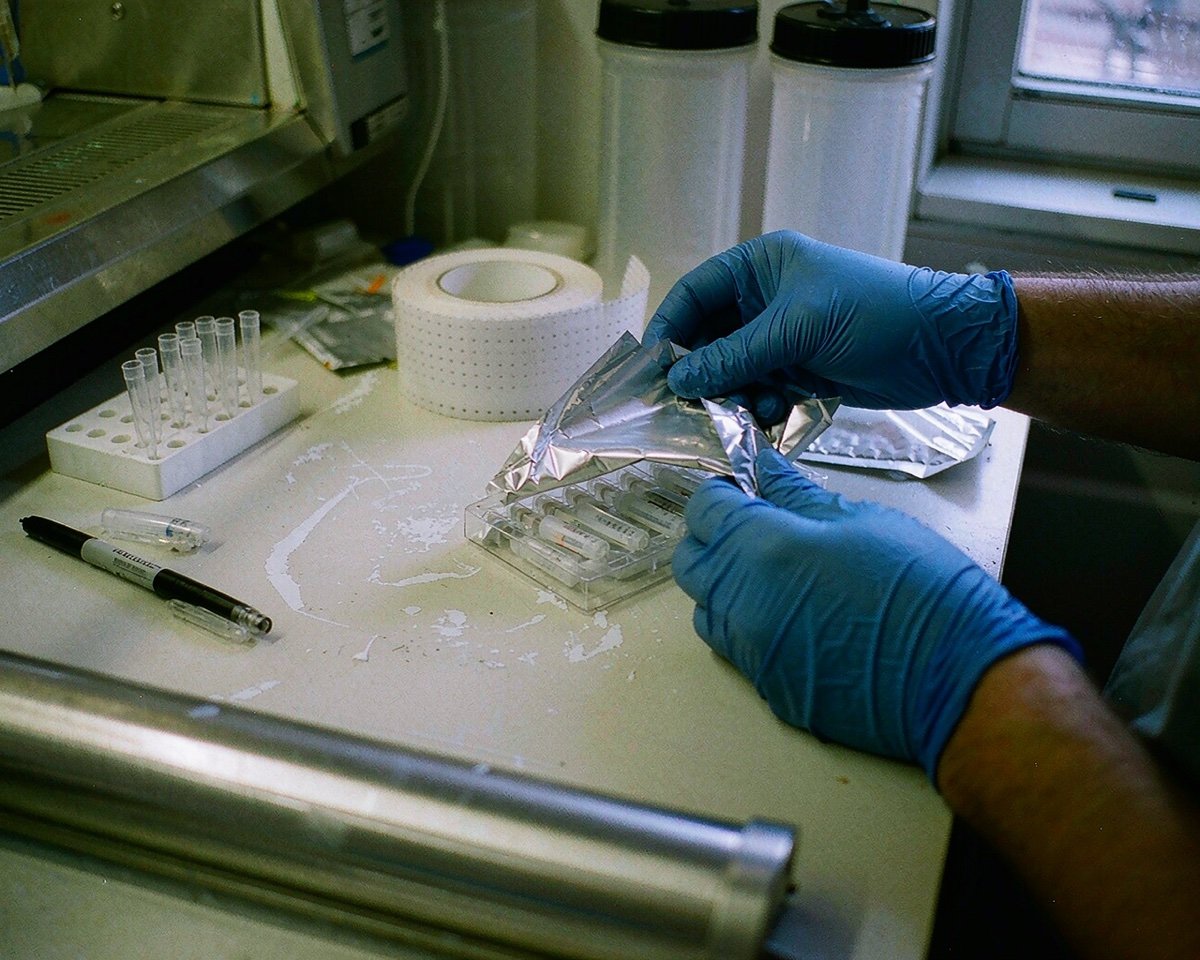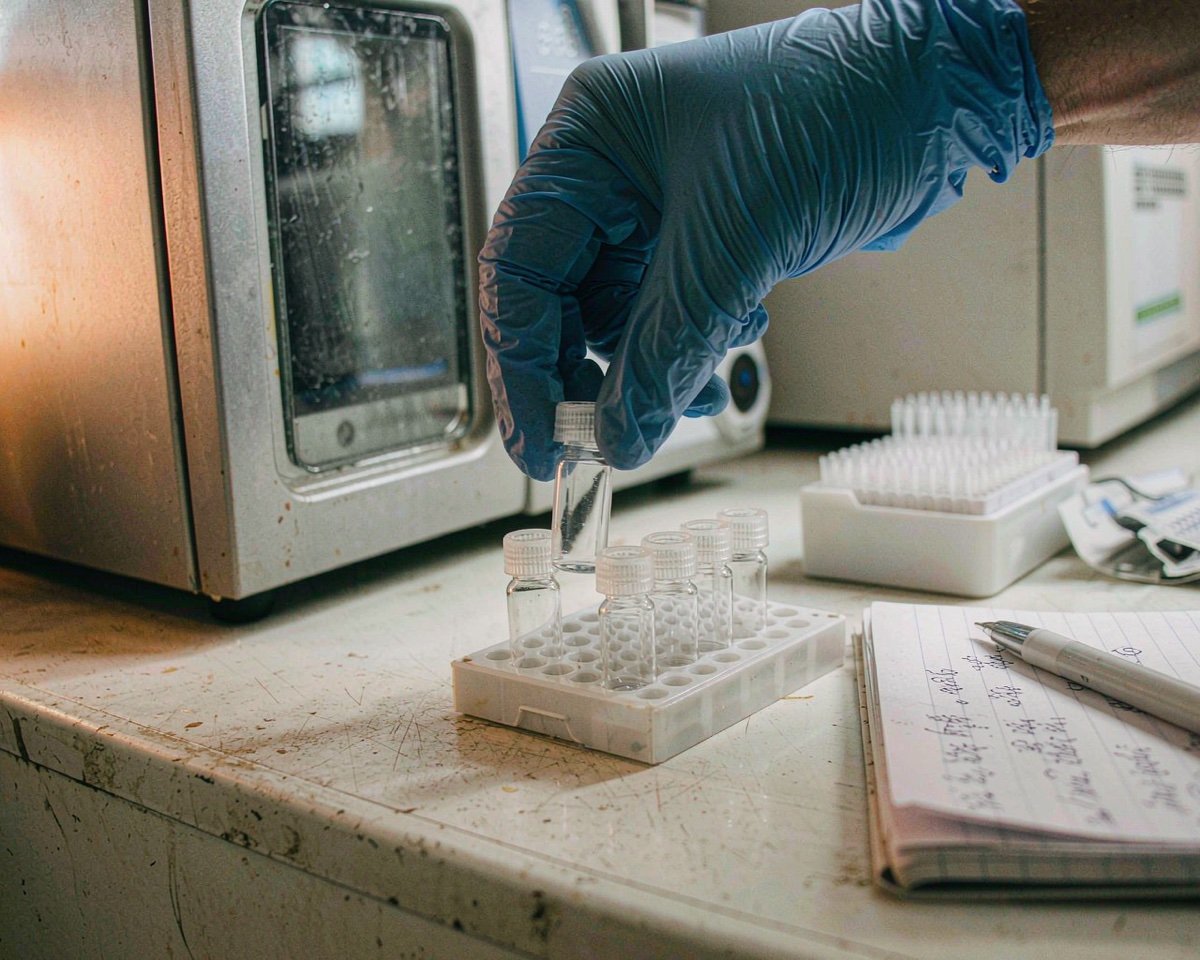

Every lab has a shelf of vials doing double duty: samples injected on Monday and stored for stability on Friday, in the same containers. It usually works. Then one day a stored sample comes back with a surprise, and the question lands on my desk: was it the vial?
The honest answer is that storage vials and analysis vials overlap heavily but are optimized differently. Analysis vials prioritize a clean, inert, dimensionally perfect presentation to an autosampler. Storage vials prioritize sealing integrity, chemical resistance, and survival across freeze-thaw and months of shelf time. One vial can often do both, but only if you pick the right one and know where the compromises are.
What Analysis Vials Are Optimized For
An autosampler vial’s job is mechanical and chemical precision:
- Exact outer dimensions so grippers, sensors, and trays engage correctly. A vial that’s 0.2 mm too tall causes pickup errors, and vendors like Agilent publish detailed vial selection guidance around those tolerances.
- Low background. Clean glass with low extractables, so the vial contributes nothing to your chromatogram. For trace LC-MS, that’s why labs pay more for certified lines with documented extractables profiles.
- Septa built for piercing. Autosampler septa are chosen for resealing over dozens of punctures and clean needle passage, which is a different priority set than storage closures face.
Analysis vials assume short dwell times: fill, inject, done within days.
What Storage Vials Are Optimized For
Storage changes the physics. A stored sample sits against glass and closure for months, sees temperature swings, and often freezes.
- Sealing integrity over time. Storage closures (liner systems, crimp seals, PTFE-faced caps) prioritize long-term hermetic sealing over puncture resealing. Evaporation is the enemy, and studies of autosampler storage stability show measurable evaporative changes within days for some matrices.
- Chemical inertness over long contact. USP’s glass quality framework for containers, USP 〈660〉, grades glass by its surface and hydrolytic resistance, because containers can change what they hold. Long contact times amplify any surface reactivity.
- Freeze-thaw survival. Freezing expands liquid, and headspace in the vial matters; frozen samples need fill volume headroom and glass or PP that handles the stress. My freezing samples guide covers the practice.
So, Can One Vial Do Both?
Often, yes, with conditions:
- Standard 2 mL threaded vials with PTFE/silicone caps handle short-term storage (days to a few weeks, refrigerated) of most routine samples before reanalysis. This is everyday practice and it’s fine.
- For months-long stability work, upgrade deliberately. Choose quality glass, match the cap liner to the sample chemistry, fill to minimize headspace for volatile analytes, and verify with a stored control.
- For freezing, pick format consciously. Standard vials freeze adequately with headroom; dedicated cryogenic vials with rated closures are the safer call for long frozen storage, which my cryogenic vials guide details.
Where the single-vial approach genuinely struggles: volatiles (long storage bleeds analytes through any septa not designed for it), high-organic solvents (some plastics and adhesives creep over months), and trace-level MS (storage leachables accumulate beyond what an injection-day vial would contribute).
The Closure Is Where Most of the Decision Lives
Glass gets the attention, but the cap decides whether a dual-role vial works. Two closure properties matter for storage duty: liner chemistry (the sample touches the liner for months, so PTFE-faced liners are the default and adhesive-backed constructions deserve scrutiny) and seal retention under thermal cycling (a cap that backs off slightly with every fridge-to-bench round trip pumps air in and out like a tiny bellows). If your samples move in and out of cold storage weekly, screw caps with good liner compression usually outlast crimp setups for convenience, and that tradeoff favors whichever closure your team actually reseats correctly every time.
One more closure note for LC-MS labs: cap and liner extractables accumulate during storage in a way injection-day use never reveals. If your method sits at the edge of acceptable background, run a stored blank through the hold-time validation and compare against a fresh blank. The difference is your container’s contribution, and it’s better measured than assumed.
A Practical Compromise That Works
Labs that store and analyze in one container usually run a simple validity check once per matrix: prepare triplicate samples, inject one immediately, store the other two for the method’s maximum hold time, and re-inject. If responses hold within method limits, the vial is validated for the combined role. This costs one afternoon and settles the question with data instead of anxiety. My sample hold-time guide covers what typically limits those windows.
A middle path that works in busy labs: keep a small rack of dedicated storage vials per study for the hold between collection and analysis, then transfer into the method-specified vials for the run itself. It costs one labeled rack and a five-minute transfer habit, and it buys clean audit trails on both ends of the sample’s life. I picked the habit up from a forensic lab running roughly four hundred samples a week on two instruments. Their transfer step caught a mislabeled collection tube twice in one year, which alone paid for the extra vials several times over.
Stocking a Dual-Role Default
If you’d rather not run two vial inventories, stock one spec that covers both roles: a good Type 1 borosilicate 2 mL screw-thread vial, a PTFE/silicone (or sandwich, for trace work) cap, and amber variants for anything light-sensitive. That single spec handles everyday injection, refrigerated holds of a few weeks, and most freezer work with headroom.
The procurement advantage is real. One vial line means one incoming-inspection routine, one certified document format, and fewer chances that someone grabs a storage-only vial for a dimensional-critical autosampler run. The cost difference between a basic storage vial and a decent analysis vial is pennies at case quantities, which is a cheap insurance premium against grip failures and pickup errors. I standardize most labs I advise this way unless their methods genuinely demand specialized containers.
Conclusion
Storage and analysis vials differ in emphasis: analysis vials optimize dimensions, cleanliness, and septa for the autosampler, while storage vials optimize long-term sealing, inertness, and freeze-thaw survival. One vial can do both jobs for routine samples held days to weeks, provided the closure matches the sample chemistry and the glass is clean. For long stability holds, volatiles, or trace MS work, the compromises stop being free, so either upgrade the container or validate the combined role with a simple hold-time study. The one-afternoon triplicate test converts the question from folklore into method-specific fact, and it is the single best thing a lab can do before trusting any vial across both jobs. If you’re standardizing your vial inventory anyway, pick the analysis-vial requirements first, then add storage capability where the hold-time data says you need it.
Frequently Asked Questions
How long can a sample stay in an autosampler vial?
It depends on the analyte and the seal, but routine aqueous samples hold days to a week refrigerated, while volatiles degrade within hours. My evaporation guide covers how to extend those windows.
Are amber vials better for storage?
For light-sensitive analytes, yes, amber glass slows photodegradation during storage and on the bench. For everything else, clear glass has the advantage of visible contents, and you give that up the moment amber becomes the default order.
Can I store samples in the same vial I inject from?
Usually yes for short holds. Validate once per matrix with a triplicate hold-time check, and watch for volatiles, solvent incompatibility, and any sign of evaporation between injections. Samples that freeze also deserve a fill-volume check, which my freezing samples guide covers.