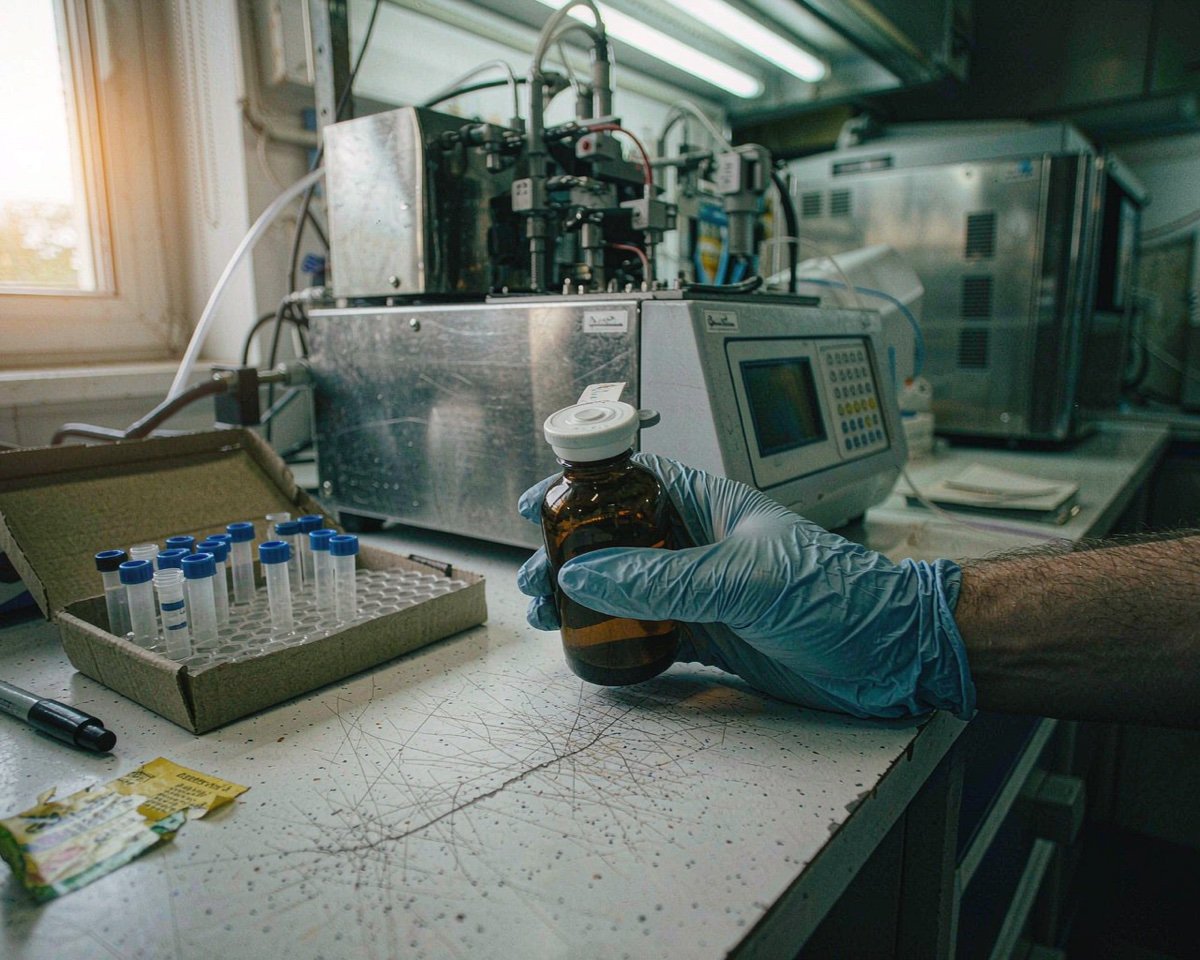

Last spring I watched a junior analyst chase a disappearing basic drug standard for three days. Fresh standard, fresh mobile phase, new column: the peak still came back 35% short every run. The answer was sitting in the tray the whole time. The compound was sticking to the inside of a plain glass vial.
That story repeats in labs everywhere, and the vial is blamed more often than it deserves, but also less often than you’d expect. Here’s the short version, then the details.
Quick Answer
Yes, the vial can absolutely cause low recovery. The four container-side suspects are glass surface adsorption, cap liner chemistry, evaporation through the closure, and extractables from the vial or filter. For polar and basic analytes, untreated borosilicate glass is the most frequent offender.
The Glass Wall Takes a Cut
Standard borosilicate glass looks inert and behaves mostly inert, right up until your analyte is polar, basic, or present at trace level. The surface carries silanol groups (Si-OH). Above roughly pH 3, those groups deprotonate and turn negatively charged, which is exactly the wrong surface for a positively charged drug molecule.
The numbers are uncomfortable. A 2024 study on thiamine, a small polar vitamin, stored 100 nM solutions for just 3 hours and recovered as little as 19.3 nM from non-silanized borosilicate autosampler vials. That is an 80% loss in an afternoon, from a container nobody would suspect. Polypropylene vials recovered 88.1 nM from the same solution.
Silanization helps but isn’t magic. The silanized glass vials in that study still recovered only 25.3 nM, because silanization blocks some interaction sites while leaving others active. For genuinely sticky analytes, reduced-surface-activity glass that removes silanols and trace metals during manufacture goes further than a coating applied afterward.
One more glass factor: USP 〈660〉 grades container glass by hydrolytic resistance precisely because containers can change what they hold. Leached alkali from the glass drifts your pH, and a drifting pH degrades esters and catecholamines while you wait in the queue.
Your Closure Has a Chemistry Too
The sample doesn’t only touch glass. It touches the liner, and for stored samples it touches that liner for days.
PTFE-faced liners are the safe default for organic solvents. But bare silicone or rubber liners can leach siloxanes and plasticizers into the solution, and adhesive-backed liner constructions add glue extractables on top. In LC-MS work those show up as rising background, and in trace UV methods they can swallow a small peak’s baseline entirely.
There’s a subtlety worth knowing: the compatibility of a PTFE-faced liner holds only while the PTFE face is intact. Once the autosampler needle punches through, solvent wicks into the silicone underneath. What was fine on injection one can extract differently on injection six. If you store punctured vials and re-inject later, the closure chemistry has changed under you.
Evaporation Masquerades as Recovery Loss
Before you indict the glass, check the seal. A loose cap or a fat needle hole bleeds solvent vapor for hours, and the analyte concentrates (or precipitates) along with it. Small fill volumes make this worse: 100 µL in a 2 mL vial has a huge headspace to equilibrate against.
Quick test: weigh a filled, capped vial before the sequence and after. A loss of more than a milligram or two over a day means the closure is leaking, and no vial glass was ever the problem. My evaporation prevention guide lists the seal and fill-volume fixes in detail.
Fill volume deserves a second look while you’re at it. A vial filled to 1.8 mL evaporates far slower than one filled to 150 µL, because the headspace acts as a vapor reservoir that keeps pulling solvent out of the liquid. If your workflow forces small volumes, either use an insert to raise the liquid level or accept that recovery checks need to happen closer to injection time. Labs that top off vials mid-sequence create a second problem: each opening adds oxygen and each re-seal multiplies leak paths.
Extractables Ride Along From Upstream
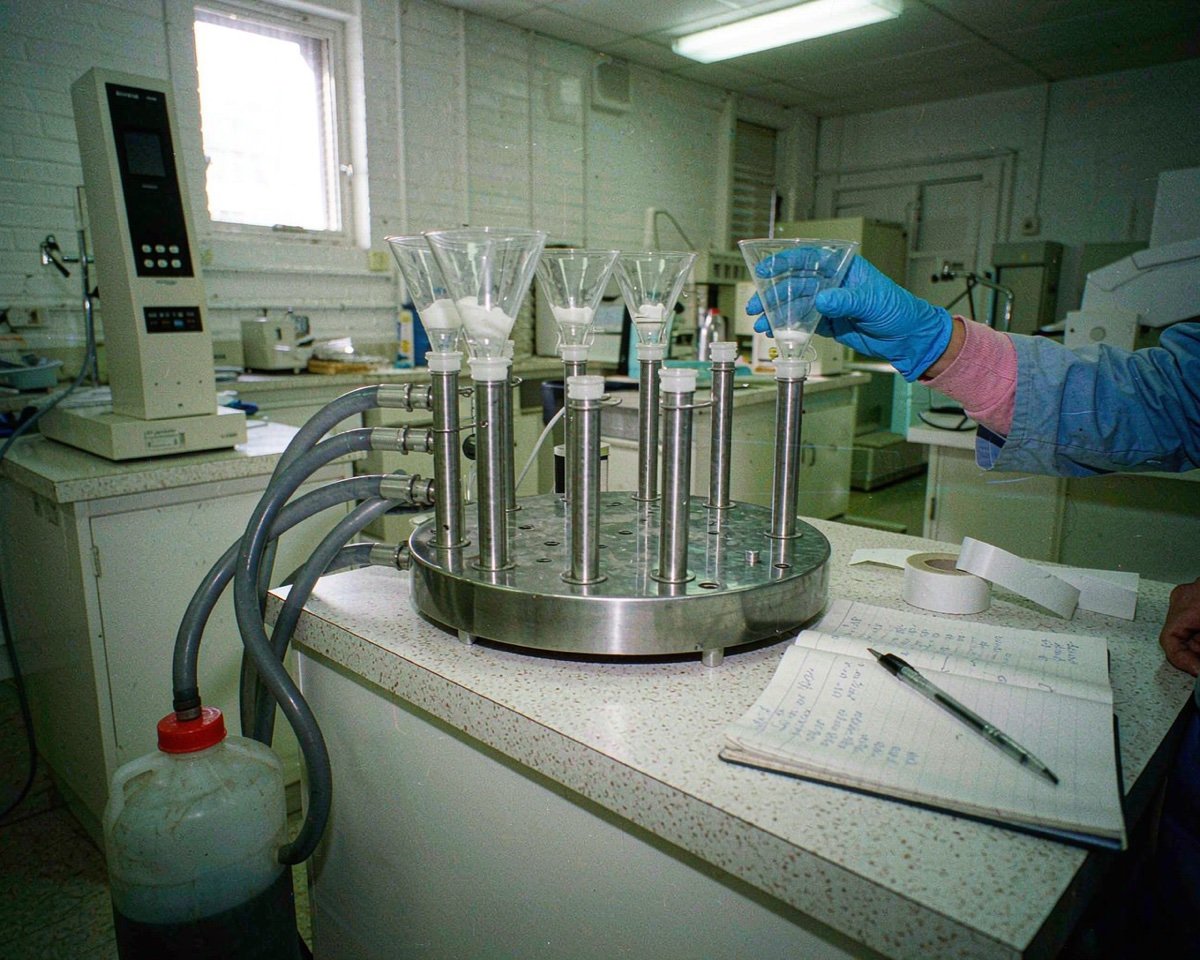
Sometimes the vial is innocent and the filter is the source. Filters shed extractables into the first milliliters of filtrate, and those land in your vial. Prewetting and discarding the first portion of filtrate is the standard defense, and I cover the mechanics in the syringe filter extractables guide. Filter binding is the mirror-image problem: the membrane eats your analyte before the vial ever sees it. If recovery is low and the filtrate ran cloudy, work through the cloudy filtrate troubleshooting checklist first.
Check the Standard Before You Check the Vial
One source of “recovery loss” never involves the samples at all: the standards. A working standard stored in glass for a week adsorbs just like a sample does, so your calibrator quietly loses response and every sample looks like it recovered poorly against it.
The thiamine study saw this clearly: the stock solution kept in a polypropylene tube held its concentration, while the same solution transferred into glass dropped within the hour. If your samples and standards live in different container types, the mismatch itself manufactures low recovery. When recovery looks uniformly low across a batch, run a fresh standard prepared that morning from the primary stock before touching anything else.
The 30-Minute Experiment That Settles It
You don’t need a forensic investigation. You need six vials and one afternoon.
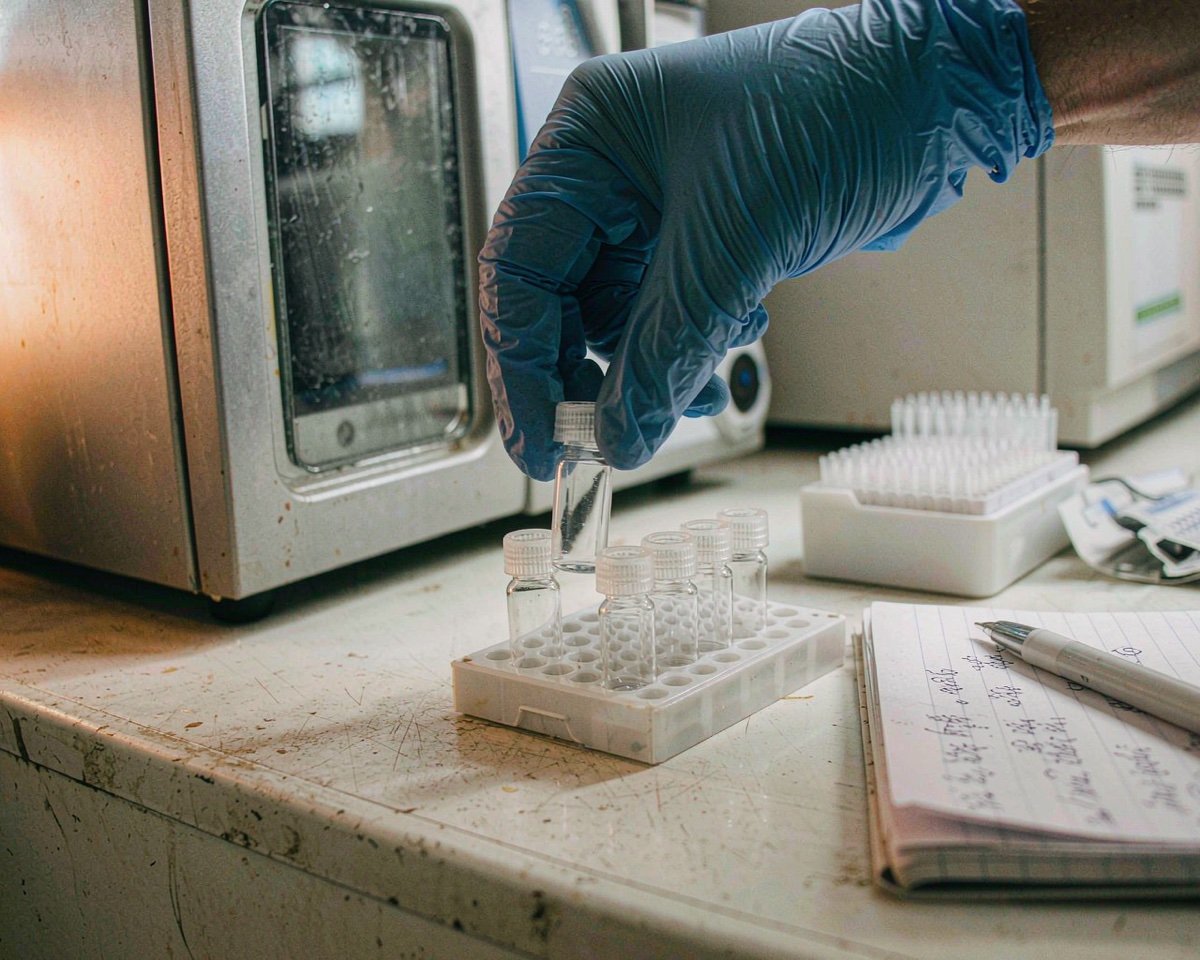
Prepare your sample at the concentration where you lose recovery. Fill three plain glass vials and three polypropylene vials. Inject everything immediately, then again at 1, 2, and 4 hours (longer if your workflow demands it). Compare peak areas over time.
The outcomes are clean:
- Glass vials lose area while polypropylene holds: adsorption. Switch to recovery-oriented vials, silanized or low-adsorption glass, or PP where the method allows.
- Both vial types lose area in step: the problem is upstream (filter binding) or downstream (injector adsorption, carryover).
- Glass holds but area drifts with time in the queue: look at pH drift or evaporation, not adsorption.
Run it once per matrix and you own the answer permanently. It also gives you a defensible number for method validation, which a vendor’s marketing sheet never will.
One honest caveat: if you recently switched vial brands within the same method, re-verify before blaming either container, since dimension and surface differences can both play in. Mix in a known-good lot from the original supplier and let the data sort out who is lying.
Conclusion
Low recovery has many fathers, and the vial is one of them. Untreated borosilicate glass genuinely strips polar and basic analytes, sometimes by half or worse within hours, and the closure adds its own extractables once the seal is punctured. But evaporation through a bad seal and filter-side binding produce nearly identical symptoms, so test before you buy. The triplicate glass-versus-polypropylene experiment costs one afternoon and turns a recurring mystery into a settled fact. If adsorption is confirmed, the fix is cheap: silanized or low-adsorption vials, a PTFE-faced cap, and a validated hold time you can actually defend in an audit.
Frequently Asked Questions
Why does my recovery drop only in the autosampler overnight?
Long dwell times amplify both adsorption and evaporation. Run the weigh test on the capped vial first to rule out seal leakage, then compare immediate versus overnight injections in glass and polypropylene vials to separate adsorption from other causes.
Are plastic vials better than glass for recovery?
For polar and basic analytes, often yes, because polypropylene lacks the silanol sites that bind them. Glass remains the default for organic-solvent samples and for methods where plastic extractables would raise the background.
What are silanized vials?
Silanized vials are glass vials treated with an organosilane that caps reactive silanol groups on the surface. They recover much more of sticky polar analytes than untreated glass, though they cost more and can still lose some analyte.
Can the cap cause low recovery too?
Yes. Liner extractables can add background that masks a peak, and a punctured PTFE face lets solvent reach the silicone underneath. For stored or re-injected samples, choose a liner matched to the solvent and replace caps rather than reusing punctured ones.
How do I validate a vial for my method?
Spike your matrix at the method’s lower concentration, hold it in the intended vial and closure for the maximum allowed dwell time, and show recovery stays within your acceptance limits. Do it once per matrix and record it with the method.