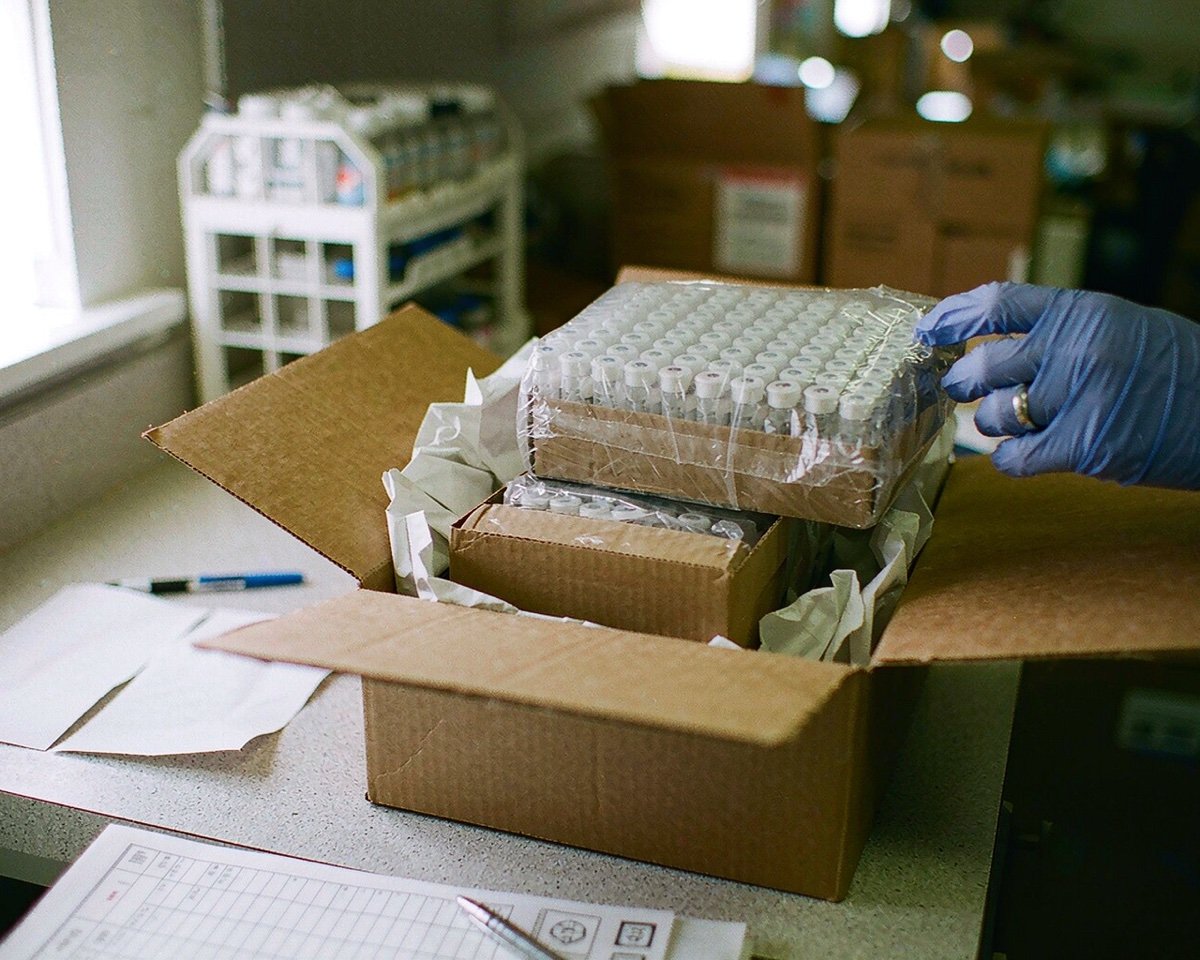

Every lab has a shelf, box, or cabinet where consumables go to age. One day someone checks the date on a box of filters and it says 2023. Now what? Throwing out hundreds of dollars of perfectly shiny plastic feels wasteful, but quietly using expired material in a regulated lab feels worse.
Short answer: for anything sterile, certified, or used in GMP-released testing, the expiration date governs and the item goes out. For ordinary non-sterile consumables with no performance claim, an old date is usually harmless, and the defensible middle path is a documented downgrade to non-critical use rather than a shrug.
Read on for how each category behaves, and how to write the policy down so an inspector never has to ask.
What Expiration Dates on Consumables Actually Mean
Start with what the date is, because it’s not one thing.
For sterile products, the date is the validated shelf life of the packaging barrier: the vendor has data showing the seal maintains sterility until then. For certified products (MS-certified vials, low-extractable lines, DNase-free plastics), the date bounds the vendor’s warranty on that specific tested claim. For plain non-sterile consumables, many vendors don’t even print a date, because glass and polypropylene don’t spoil.
The regulatory backdrop is clearer than most people expect. In an FDA Q&A on cGMP records and reports, the agency states that when a purchased reagent or consumable carries a manufacturer’s expiry date, that date should be followed. FDA’s own ORA lab manual goes further with two rules worth stealing: items dated only month and year expire on the last day of that month, and reference materials aren’t used past expiry without documented requalification. The underlying authority is 21 CFR 211.194 on laboratory records: if you use it in a released result, you need to know it was fit.
So “use anyway” is only ever acceptable as a documented decision, never as a default.
The Hard Stops: What Gets Thrown Out
Some categories have no downgrade path, and it’s cheaper to accept that now than during an investigation.
Sterile anything: filters, plates, loops, inoculation supplies. The claim is the packaging, and past the date nobody has data on the seal. Sterility-testing labs and cell culture labs should treat this as absolute; contamination costs more than the box.
Certified consumables used for the certified purpose: if a vial line is certified for low extractables and the date has passed, the certificate no longer speaks for the lot. In a validation or submission study, that’s a finding waiting to happen.
Septa and caps with silicone components: silicone relaxes and PTFE creeps over years on the shelf, and the failure shows up as leaks and evaporation rather than something visible. A 2019 cap sealing a 2026 stability sample is a slow-motion experiment you didn’t design.
The date rule from the ORA manual is worth restating, because it surprises people: a box marked “06/2025” expired on June 30, 2025, not June 1.
The Downgrade Path: What Can Move to Non-Critical Use
This is where a good policy saves real money without adding risk.
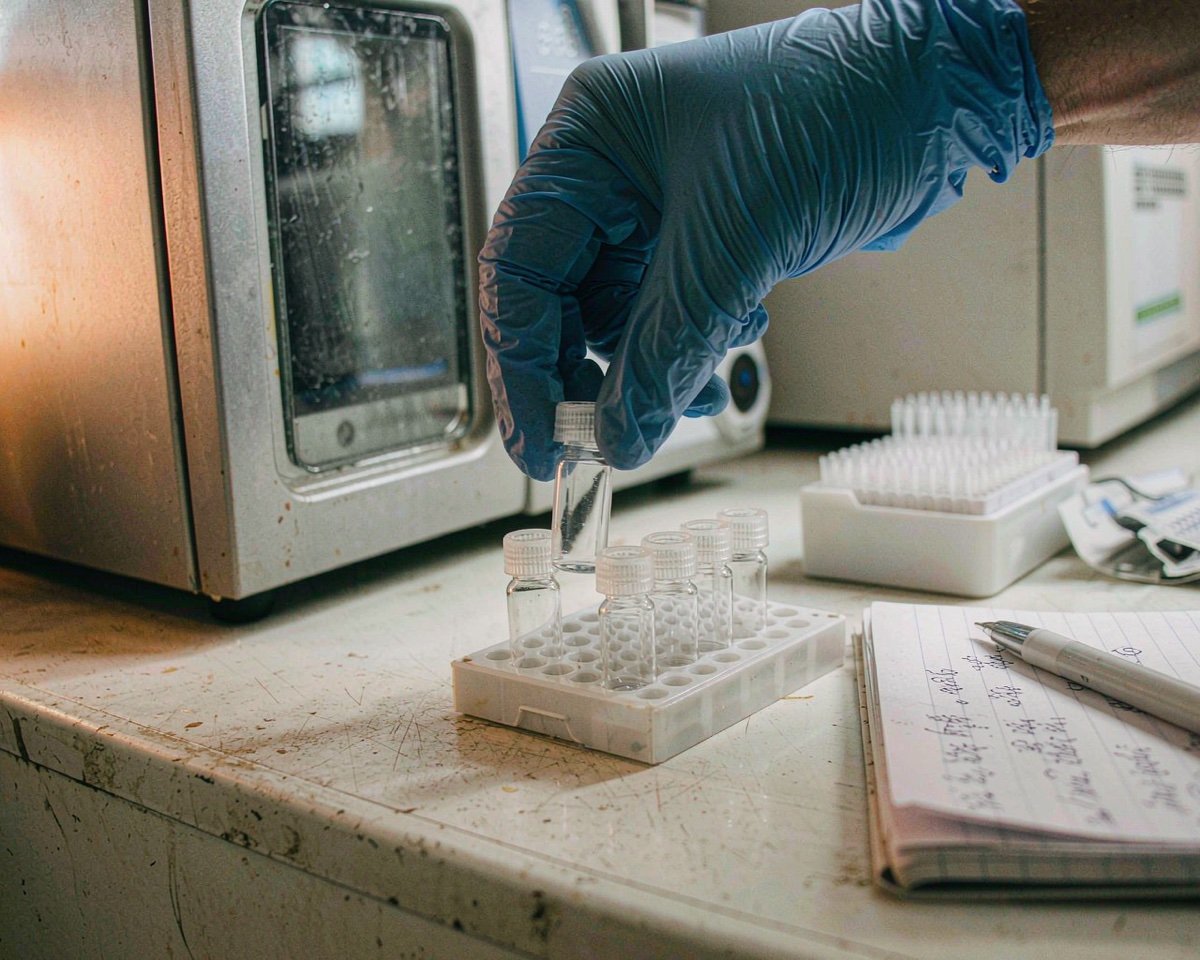
Plain glass vials (non-certified, non-sterile) barely age. If the box is clean and unopened, moving old stock to method development, teaching labs, or standard-prep work is reasonable, and a written rule makes it defensible. Polypropylene tubes and bottles similar: the polymer doesn’t expire in any meaningful way indoors, away from UV.
Filters are the interesting middle case. An unopened, non-sterile membrane filter stored dry has no microbial claim to lose, but hydrophilic membranes and their wetting agents do age, and flow and extractables can drift. If you downgrade old filters, bracket them: run a blank and a recovery check on one from the old box before you trust the rest. If the blank or a flow check looks off, the whole box goes.
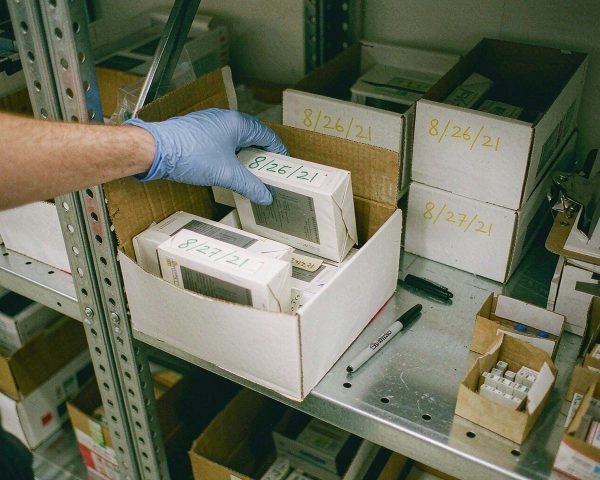
The discipline that makes downgrades work is labeling. When we cleared out a storage room during a lab move, we found a case of sterile 0.22 µm filters expired two years earlier. Everything questionable got a date-checked sticker: green for in-date, yellow “R&D ONLY” for downgraded, red for discard. It took an afternoon, and it prevented the classic failure, which is someone reaching into the yellow box for a GMP run six months later. (The red box went to disposal the same day, because “we’ll deal with it later” is how red boxes become green boxes.)
Use Anyway? Only With Requalification
There is a legitimate third option beyond toss or downgrade: requalify and extend. But note who does the work.
For critical materials, that means documented testing that the item still performs: recovery checks, extractables screens, or a bridging run against fresh material, with results filed. FDA’s expectation of an “assessment” before using materials past their date is exactly this. What requalification never does is rewrite the vendor’s date on the box; you’re creating a lab-specific extension with your name on it, which is fine if the data supports it.
For commodity items in a non-regulated lab, a quick functional check is often all that’s warranted. A teaching lab using five-year-old non-sterile vials for a separations course is not a compliance event.
The one thing I’d draw a hard line on, having seen the aftermath once: never let expired material drift back into released testing by accident. The lot fails, the investigation starts, and the first question (“which consumable lots touched these samples?”) has an embarrassing answer.
Writing the Policy (One Page Is Enough)
The fix for all of this is a single page that says:
- Expiration dates on consumables are followed as printed, including the last-day-of-month rule.
- Sterile and certified items past date are discarded, no exceptions for GMP-released work.
- Non-sterile commodity items may be downgraded to development or teaching use with a dated label and, where relevant, a functional check.
- Any use of expired material requires documented requalification before use.
- First-in, first-out stock rotation is checked at every receipt.
Pair it with the storage habits in our consumables shelf-life storage guide and a date-check whenever a lot fails incoming inspection, and most expiry findings disappear before they exist. If your question is really about vials specifically, our article on whether HPLC vials expire covers that category in depth, including which claims carry dates and which don’t.
Conclusion
Expired consumables are a policy problem disguised as a housekeeping problem. The vendor’s date is a claim about packaging and tested performance, and the correct response depends on which claim you’re actually relying on: sterile and certified items get discarded when the date passes, ordinary non-sterile plastics can move down the ladder to non-critical work with a dated label, and anything used past its date in released testing needs documented requalification first. Write the one-page rule, sticker the shelves, and check dates at receipt rather than at use. Do that once and the cabinet of aging consumables becomes a fifteen-minute sort instead of an audit finding. Next, read our guide to storing consumables for maximum shelf life to slow the whole problem down, and our CoA vs CoC explainer to make sure the documents in the box match the claims on it.
Frequently Asked Questions
Can I use expired syringe filters?
For non-critical, non-regulated work, an unopened non-sterile filter can often be downgraded to development use after a functional check on one unit. For sterile filters or anything feeding GMP-released results, no: discard them when the date passes.
Do HPLC vials really expire?
The glass doesn’t degrade, but certified claims (low extractables, MS certification, sterility) carry vendor-validated dates. Non-certified clean vials past date are reasonable candidates for downgraded, non-critical use.
What does an expiration date of 06/2025 mean?
Under FDA’s own laboratory manual, month-and-year dates expire on the last day of the month, so 06/2025 means June 30, 2025. The item is in date through that day.
Is it OK to use expired consumables for method development?
Generally yes for non-sterile commodity items, and this is exactly what a downgrade policy is for: label the box, restrict it to development or teaching use, and check function where aging could matter (membranes, septa).
How should we dispose of expired lab consumables?
Discard them as ordinary solid waste unless they contacted hazardous or biological material, in which case your lab’s waste SOPs apply. The important part is documentation: record what was discarded and when, so the inventory and the shelf agree.