
Every lab has a wish list of consumables they would love to try but not at full price: a new septa compound, a different filter membrane, that vial everyone on the forum swears by. Free samples solve this, and most established suppliers offer them. Yet plenty of buyers never ask, or ask in a way that gets a polite no. The difference is usually how the request is written.
The Short Answer
Most consumables suppliers will send free samples or low-cost evaluation packs if you ask with specifics: the exact product, thread size, material, quantity, and what method you plan to run them on. A professional request from a business email gets samples almost every time. A vague one-line message usually gets ignored.
Why Suppliers Say Yes
Sample economics favor the supplier, which is why the policy exists. A pack of 100 vials or 25 filters costs a vendor very little to produce and ship, while one converted lab account is worth thousands per year in repeat orders. Every sales director knows this math.
That means the supplier is not doing you a favor. They are making a small investment with a clear test attached: will this lab reorder? Requests that make the answer to that test look promising get approved fastest. Requests that look like a collector assembling free stuff get declined, and rightly so.
How to Write a Request That Gets Approved
The strongest sample request I ever sent was four sentences long. It named the exact product, our instrument, our method type, and the monthly volume we would order after a successful trial. It got a yes within a day, and the follow-up order became a standing account. Compare that with the requests that float around in vendor inboxes: “Please send samples of vials, thanks.” Those sit unread.
Include these details and your approval rate climbs:
1. The exact item. Not “vials” but “2 mL, 9-425 screw-thread, clear glass vials with PTFE/silicone septa, 100-pack.” 2. Your application. One sentence: reversed-phase method, water and acetonitrile, detecting at trace level, or whatever your reality is. This tells the supplier which product variant actually fits, which protects you too. 3. Your instruments. Agilent, Waters, Shimadzu, Thermo, whatever sits on your bench. Compatibility is the first rejection reason, and naming it lets the supplier confirm fit before shipping. 4. Volume potential. If you run 5,000 injections a month, say so. That is the number that turns a maybe into a yes. 5. A business context. A lab email domain and a job title do more for credibility than any fancy wording.
Before the request itself, it pays to know who you are writing to. Our 12-point supplier audit checklist covers the background check I run before contacting any new vendor, and the same research makes sample requests sharper.
What a Good Sample Package Looks Like
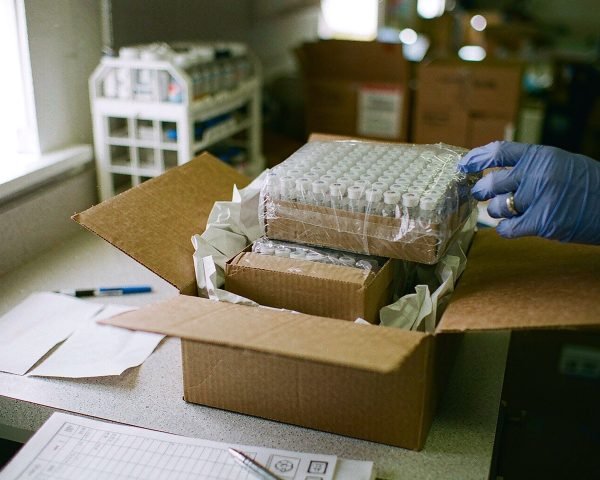
A serious supplier sends more than a bag of vials. Expect the product itself in standard packaging, a certificate of analysis for the actual lot, ideally a small catalog or price list, and a contact who answers questions during your evaluation. Suppliers operating under a documented quality system, such as the ISO 9001 quality management standard, are also more likely to keep that certificate traceable lot to lot. If the package arrives with no certificate and no way to trace the lot, treat the whole offer as marketing rather than a quality signal, and weigh it accordingly.
Free should also mean free. Some vendors ship samples “free” and then invoice freight at three times the market rate, or slide an MOQ commitment into the follow-up email. Neither is automatically disqualifying, but both belong on your radar, alongside the other red flags when buying consumables online.
After the Samples Arrive
A sample that sits unopened is wasted leverage on both sides. Run the qualification like a mini version of your method transfer:
Use the samples on a real method, not a made-up test. Compare results against your current consumable: retention time stability, peak shape, background, recovery, whatever your method actually cares about. Write down the lot numbers. Share results with the supplier either way, because a good supplier wants the failure data as much as the success, and the conversation itself tells you what their support will be like long term.
If the samples pass, ask for a formal quote against that specific lot. Our guide on comparing vial quotations walks through structuring that comparison so you are evaluating total delivered cost, not just the headline number.
One more practical point: expect minimums to appear after the sample stage. Many suppliers will not ship a paid order below a floor quantity, and that is normal economics rather than an insult. Our explainer on MOQs and lead times for lab consumables sets realistic expectations there.
It also helps to judge a sample program the way procurement professionals judge any vendor gesture: as one data point in a structured evaluation. Accreditation frameworks such as ISO/IEC 17025 for testing laboratories exist because documentation and consistent operation are testable claims, and the same instinct applies here. Weigh the sample pack on its paperwork and the supplier’s responsiveness, not on the gift itself.
One habit worth copying: keep a one-page scorecard per sample program, with lines for certificate quality, delivery speed, and how the supplier handled your one deliberately awkward question. After three or four suppliers cycle through, the scorecards make the eventual purchase decision almost boring, which is precisely what you want. A free box of vials should never be the reason you buy; it should just be the reason you learned what a supplier is like before money changed hands.
When a Supplier Refuses
Some suppliers do not do free samples at all, and a few of those are perfectly good vendors with thin margins and a no-exceptions policy. If a supplier you genuinely want to work with declines, ask for a paid evaluation pack at a reduced price, or the smallest sellable quantity. A vendor who has nothing to hide will usually meet you partway, and a vendor who refuses every evaluation path is telling you something useful before you have spent a cent.
Conclusion
Free samples are the cheapest risk reduction available in consumables procurement, and the whole process hinges on one well-written email. Name the exact product, your instruments, your method, and your volumes, then run the qualification on a real method and document the lots. Suppliers invest in labs that look like future accounts, so make the decision easy for them. If a sample program matters to your buying process, fold it into a bigger supplier-qualification habit rather than treating it as a one-off favor. Our guide to the red flags of buying consumables online makes a natural next read. Ask well, test honestly, and the samples will keep coming.
Frequently Asked Questions
Do consumables suppliers really send free samples?
Most established manufacturers and distributors do, either as free packs or low-cost evaluation kits. Policies vary, and some limit free samples to one per lab or require a small freight charge. Asking with specifics is what separates approvals from silence.
How many samples can I reasonably request?
One to three product lines per request is realistic, sized to a genuine evaluation, such as a 100-pack of vials or a box of filters. Requesting a shelf’s worth of unrelated products reads as hoarding and usually gets declined.
Should I pay shipping for samples?
Reasonable freight charges are normal for international shipments, especially for heavy items. Be cautious when shipping costs exceed the product’s market value, or when a “free” sample comes bundled with a minimum order commitment you did not agree to.
What should I do if the free samples fail?
Document the failure mode and lot numbers, then send the findings to the supplier. Good vendors use that feedback to suggest a better variant or acknowledge a mismatch. A supplier who argues instead of troubleshooting has told you what post-sale support will look like.