
# What Are Petri Dishes and How Should Labs Choose Them?
Every microbiology lab on earth still runs on a piece of labware designed in 1887. Petri dishes look like the simplest item in your storeroom, yet the version you pick changes condensation behavior, gas exchange, and how your counts hold up in an audit. Choosing well takes about ten minutes of attention. Choosing badly costs you a re-test.
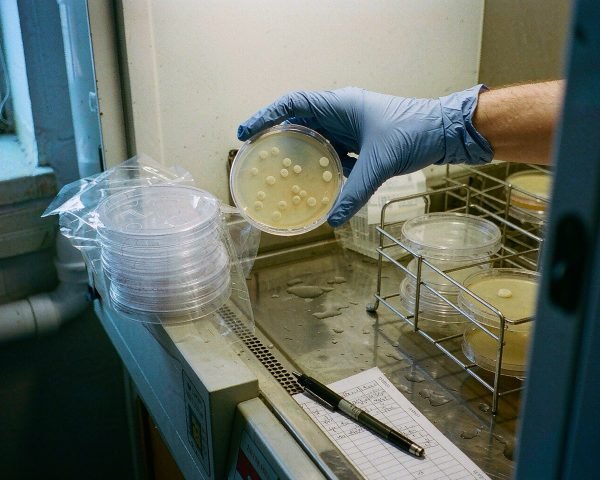
A petri dish is a shallow, lidded cylindrical container that holds agar or another culture medium for growing microorganisms and cells. Most modern dishes are disposable polystyrene; reusable ones are borosilicate glass. Labs choose them by material, size, sterility, and venting to match the test.
Below, I break down every option that matters, then map those options to real work: routine micro QC, environmental monitoring, pharma testing under USP <61>, and food plate counts.
What Are Petri Dishes, Exactly?
The dish is named after Julius Richard Petri, a German bacteriologist working under Robert Koch. In 1887 he published a small modification to Koch’s plating technique: a shallow covered glass dish that cut airborne contamination compared with the old bell-jar method. That basic shape has barely changed since, which tells you how well it works.
Modern dishes are still shallow cylinders with a loose-fitting lid. The lid does two jobs. It blocks dust and falling droplets, and, if it has vents, it lets gases move while the agar stays moist. You pour or buy medium into the bottom half, inoculate it, incubate it, then count the colonies that show up as visible dots.
Materials split into two camps. Borosilicate glass dishes are heavy, autoclavable at 121°C, and resistant to hot media and most solvents. They last for years if nobody drops them. Polystyrene dishes are the disposable standard: optically clear, cheap in volume, and supplied either gamma-irradiated or aseptically manufactured. Polycarbonate appears in a few specialty formats, but polystyrene dominates the market.
Sterility is a separate decision from material. Sterile dishes arrive terminally irradiated or made in a cleanroom, sealed in sleeves. Non-sterile dishes are simply clean, which suits labs that autoclave their own labware anyway and don’t want to pay for sterilization twice.
Vents are the detail most buyers get wrong. Small notches on the lid rim change how the plate breathes. A triple-vented lid (three notches) maximizes gas exchange for short aerobic incubations. A single vent limits evaporation, which matters for longer runs where you don’t want agar drying out. Non-vented lids seal best and suit anaerobic work; Thermo Fisher’s Sterilin 90 mm dish page lays out these formats in plain language if you want to compare them side by side.
Sizes run from 35 mm contact plates up to 150 mm giants. The 90 mm dish is the workhorse of microbiology. The 60 mm size suits pour plates and small volumes, while 100 and 150 mm plates handle surface testing, larger sample volumes, or plates you need to section afterward. Divided dishes with two or four compartments molded into one plate let you run several samples on a single incubator footprint.
One more fork in the road: filled or empty. Pre-poured plates (tryptic soy agar, Sabouraud dextrose agar, and blood agar are the usual suspects) arrive certified, dated, and ready to sample. Empty dishes give you control over the medium and the pour depth at a lower unit cost, at the price of prep labor and your own sterility checks. Browsing a supplier catalog like Sigma-Aldrich’s petri dish range shows how wide both categories have become.
Choosing Petri Dishes by Application
Routine microbiology and QC
For streaking isolates, colony counts, and general culture, a 90 mm triple-vented polystyrene dish is the safe default. Gas exchange keeps aerobic organisms happy and the optical clarity makes counting pleasant. If susceptibility testing is part of your routine, the dishes are only half the story; the discs, carriers, and plates behind that workflow deserve their own buying list.
Environmental monitoring
Settle plates and contact plates live rougher lives than bench cultures. They get wiped with disinfectant, sit in pass-through chambers, and incubate for days before anyone reads them. Many cleanroom teams order TSA settle plates double-wrapped so the outer sleeve can be removed outside the gowning line. For surface sampling, 55 to 65 mm RODAC-style contact plates with a raised agar dome are the norm. And since those plates are meant to prove your cleaning works, the disinfectants themselves need validation; our disinfectant efficacy testing guide walks through what that entails.
Pharmaceutical testing under USP <61>
USP <61>, the microbial enumeration chapter, expects pour-plate or surface-spread methods with at least two dishes per medium per dilution. Bacterial counts incubate at 30 to 35°C for three to five days; yeast and mold counts sit at 20 to 25°C for five to seven. The consumables around the plate matter as much as the plate itself, so our USP <61> consumables checklist pulls the full shopping list together, diluents and filters included.
Food and water testing
Food labs follow FDA methods, and BAM Chapter 3, the aerobic plate count, spells out the equipment plainly: glass or plastic dishes at least 15 × 90 mm, plate count agar tempered at about 45°C, and colony counts read within a defined range. If you plate dairy, watch the incubation temperature; some dairy methods call for 32°C rather than 35°C, so check your method sheet before you order crates of anything.
Glass or Plastic? The Honest Trade-Offs
Glass earns its keep where heat and chemistry are involved. You can autoclave it repeatedly, pour 45°C agar straight into it, and rinse it with solvents that would craze polystyrene. A 100 mm borosilicate dish can survive five years of weekly use, which is why teaching labs and media-heavy labs still buy them.
Plastic wins on everything that fills a working week. There’s no washing and no autoclave validation for dishes, and every plate opens sterile. Polystyrene’s limit is thermal: it softens far below autoclave temperatures, so it is single-use by design. Cost per plate looks higher until you price in the labor of washing and validating reusable glass.
My honest default: buy gamma-irradiated disposable dishes for anything routine, and keep a case of glass plates for pouring big batches of media or any assay involving solvents. The crossover point is volume. If your team pours several hundred plates a month, glass and a good autoclave routine start paying for themselves. If you go that route, remember the contaminated-plate side of the loop too; our autoclave bags and pouches guide covers the disposal half that most articles skip.
Buying Considerations Most Labs Overlook
Lot documentation comes first. Reputable manufacturers ship a certificate of conformity or sterility certificate with each lot, and auditors increasingly ask to see it. If a discount supplier can’t produce one, that saving starts to look expensive the moment an auditor finds the gap. I won’t name names, but I’ve watched a procurement team learn this twice in one year.
Packaging is the second thing to inspect on arrival. Good dishes arrive nested in sleeves inside a sealed irradiated pouch, with a stacking ring that keeps plates from fusing and a rim you can write on with permanent marker. Cracked sleeves or loose lids mean the sterility claim is now an opinion rather than a fact. Reject the lot and photograph the box before you do.
Sterilization method is the third check. Gamma irradiation is standard for packaged plastic dishes and leaves no residue. Ethylene oxide appears on gas-sensitive formats but requires degassing time. Aseptic manufacture, where dishes are molded and sleeved inside a cleanroom, is common on high-end microbiology lines. Whichever you buy, confirm the dishes were tested to a recognized standard such as EN ISO 24998, which covers plastic petri dishes for microbiology and includes dimensional control.
Storage and Handling Tips
Store sealed dishes upright in a cool, dark cabinet. Sunlight and UV age polystyrene and slowly cloud it. Pre-poured plates carry an expiry for a reason: agar loses water even through sealed packaging, and an over-dry plate quietly changes your counts.
Pouring your own? Work at about 45 to 50°C and aim for 15 to 20 mL per 90 mm dish, roughly a 3 to 4 mm layer. Let the agar set on a level bench. Uneven pours give lopsided colony distribution and counts nobody wants to defend.
Incubate plates inverted, agar on top and lid underneath. Condensation forms on the lid during incubation, and if the plate sits right-side up those droplets drip back onto the culture and smear colonies into uncountable streaks. It’s a two-second habit that saves entire runs.
I learned the storage lesson the hard way. A month of environmental monitoring settle plates came back suspiciously clean, and the investigation traced it to a shelf beside a south-facing window where the TSA had dried to a pale film. We re-sampled, wrote a CAPA, and my manager asked very pointed questions in the review. Storage is part of the test. Treat it that way.
Conclusion
Petri dishes haven’t changed much since 1887, but the buying decision around them has more layers than most people expect. Material, sterility, venting, and size all interact with your actual method, so start there: match the dish to the test, not to the lowest unit price. For routine micro work I’d stick with 90 mm triple-vented gamma-irradiated polystyrene and keep glass for heavy media pouring. Whatever you choose, insist on lot certificates, inspect the packaging on arrival, and store the boxes away from light and heat, because a good dish handled badly still produces bad data. If you want to go deeper on regulated workflows, the USP <61> consumables checklist and the disinfectant efficacy testing guide linked above are the two I’d read next.
Frequently Asked Questions
Can you reuse petri dishes?
Glass dishes can be reused indefinitely if they’re autoclaved properly and inspected for scratches and cloudiness each cycle. Polystyrene dishes are single-use; they can’t survive autoclave temperatures, and washing used agar plates off-protocol is a contamination risk no QC lab should take.
What is the difference between vented and non-vented petri dishes?
Vented lids have small notches that allow gas exchange while the lid stays on. Triple-vented dishes maximize aeration for short aerobic incubations, single vents reduce evaporation on longer runs, and non-vented lids seal tightly for anaerobic culture or work where drying out is the main risk.
How much agar goes into a 90 mm petri dish?
For a standard surface plate, 15 to 20 mL gives a solid layer about 3 to 4 mm deep. Pour plates use less per dish but distribute the sample through the medium, which changes how you read the counts, so follow whatever your method specifies.
Why are petri dishes incubated upside down?
Inverting the plate keeps condensation droplets on the lid instead of dripping onto the agar. That prevents colonies from smearing together into uncountable streaks and also slows evaporation from the medium during long incubations.
Do sterile petri dishes expire?
Yes. Gamma-irradiated dishes carry a printed expiry on the pouch, and pre-poured agar plates have explicit use-by dates because the medium dehydrates over time. Empty non-sterile dishes don’t really expire, but store them dry and dust-free anyway.