
# What Consumables Does Disinfectant Efficacy Testing Need?
Disinfectant efficacy testing looks like a standards game on paper, but anyone who has actually run EN 14476 or the AOAC use-dilution method knows the real bottleneck is the consumables bench. The strains, the media, the neutralizers, the carriers, the plates: every one of them can quietly decide whether your log reduction is real or an artifact.
The short answer: you need authenticated reference strains (usually ATCC), neutralizer broths such as Dey-Engley, TSA or Columbia agar plates, sterile carriers (penicylinders or glass/stainless steel coupons), bovine albumin as the interfering substance, hard water standards, and a steady supply of sterile tubes, pipettes, and dilution blanks. Which of those you actually consume depends on the standard you’re testing against.
Below I’ll walk through the two big method families, the neutralization step that sinks more tests than anything else, and a practical shopping list with the details procurement managers usually miss.
Suspension tests vs. carrier tests: the consumables differ
The European framework splits into two families. Suspension tests (Phase 2, Step 1), like EN 14476 for virucidal activity, challenge microorganisms in liquid. The organism suspension meets the diluted product, an interfering substance simulates organic load, and after the contact time you neutralize and plate out. Here your consumption is mostly biological: stock cultures, dilution tubes, agar plates for enumeration, and the interfering substance itself.
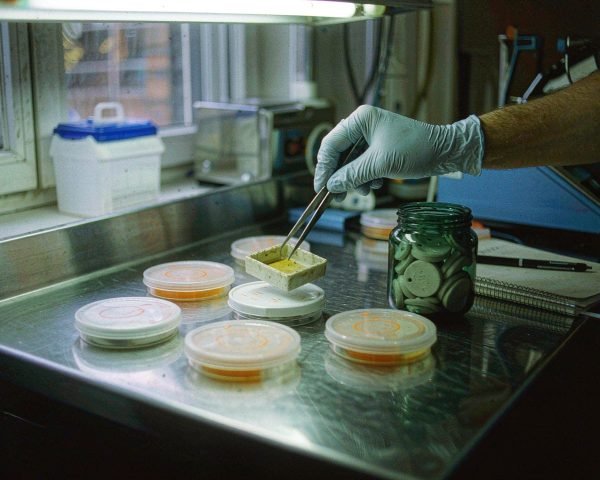
Carrier tests (Phase 2, Step 2), like EN 13697 for hard non-porous surfaces, dry the inoculum onto stainless steel or glass coupons first. That adds a physical consumable layer: carriers, forceps, sterile Petri dishes to dry them in, and enough carriers per condition to survive the inevitable dropped one.
The US side runs mostly carrier-based. ASTM E1153, the non-food-contact sanitizer method, dries S. aureus and K. pneumoniae onto glass carriers, treats them, neutralizes, and enumerates by pour plate. A GLP run typically uses 5 test carriers and 3 control carriers per condition, plus neutralization and viability controls on top.
And then there’s the AOAC use-dilution method, 955.15 for S. aureus and 964.02 for P. aeruginosa. Per the EPA’s performance standard document, registration testing means 60 stainless steel penicylinders per microorganism per batch, three batches at the lower certified limit, tested on different days. That’s 360 carriers per microorganism before you count the controls. I once watched a tech count out penicylinders for a full registration run and realize at carrier 58 that two were chipped. Small things, real stakes.
Neutralizers: the consumable that decides pass or fail
If I could only emphasize one line item, it would be the neutralizer. At the end of the contact time you must stop the chemistry exactly, and if your neutralizer is wrong for your actives, survivors look dead when they’re just still being poisoned. That reads as a great disinfectant until a lab with a proper neutralizer can’t reproduce your data.
Dey-Engley broth is the workhorse because it neutralizes a broad spectrum at once. The Sigma-Aldrich formulation sheet for D3435 lists the logic: lecithin captures quaternary ammonium compounds, polysorbate 80 handles phenolics, sodium thiosulfate chelates iodine and chlorine, sodium thioglycollate takes mercurials, and sodium bisulfite mops up aldehydes like formaldehyde and glutaraldehyde. The D/E broth IFU from Thermo Fisher adds a QC detail worth knowing: each lot is checked with E. coli ATCC 25922, P. aeruginosa ATCC 27853, and S. aureus ATCC 25923.
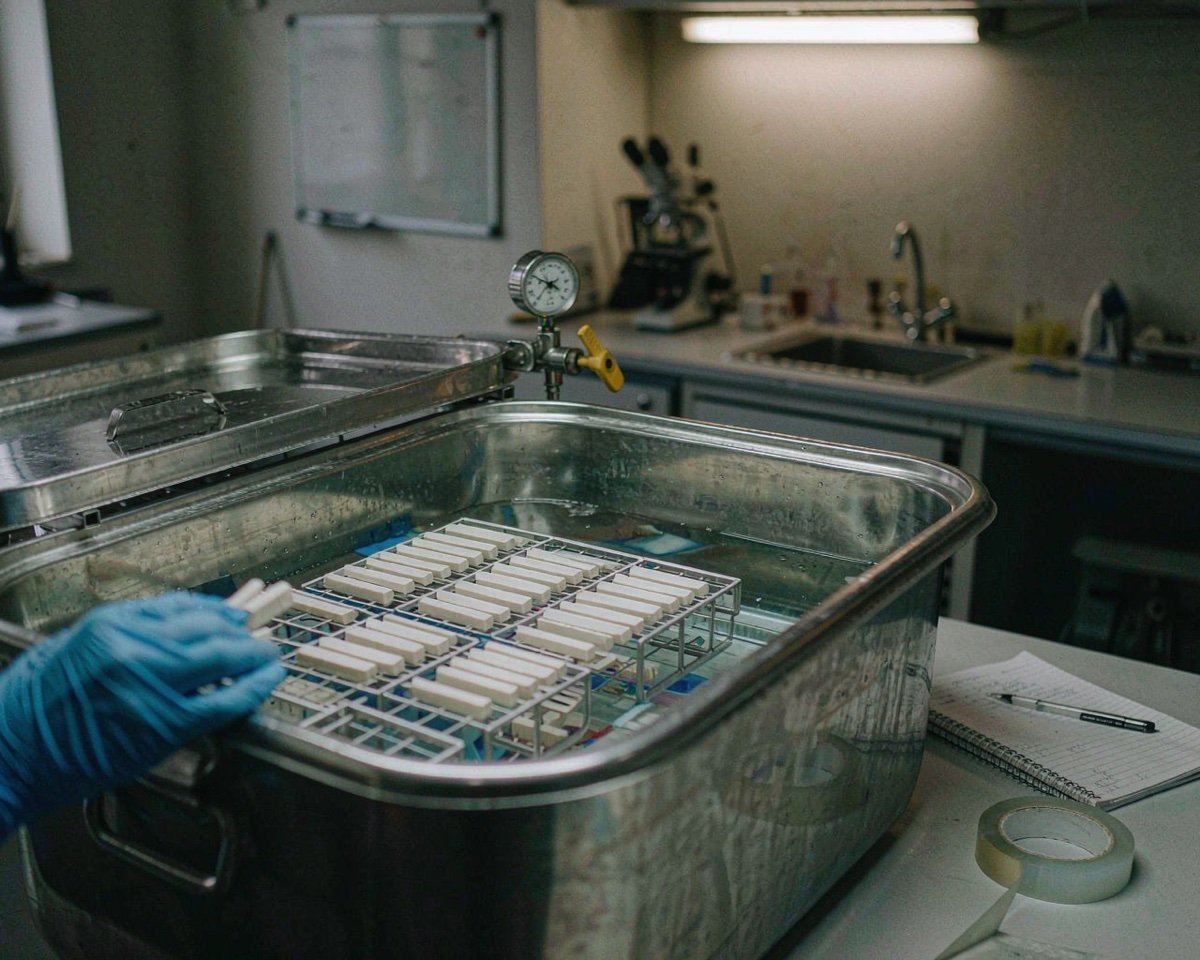
One practical note: D/E is prepared at 39 g per litre and autoclaved at 121 °C for 15 minutes, so if you prepare media in-house, your bottles and your sterilization workflow matter as much as the powder. My default is to order pre-poured neutralizer where I can and reserve in-house prep for methods that force it.
Media, plates, and the enumeration stack
After neutralization comes counting, and counting lives on agar. The common bench stack:
• Tryptic soy agar (TSA) for most bacterial enumeration and neutralizer validation controls
• Columbia agar with blood for fastidious strains and recovery checks
• Sabouraud or malt extract agar for Candida albicans and Aspergillus brasiliensis work
• Pour-plate consumables: sterile Petri dishes, 1 mL pipettes, dilution blanks with buffered saline or peptone water
Most labs get away with a single generic TSA for everything until they don’t. A strain that recovers poorly on the wrong medium shows you a fake log reduction, and in my experience that failure usually surfaces at the worst time, which is during a client audit or a regulatory submission rather than during method development.
If your lab also runs antimicrobial susceptibility testing alongside, there’s real overlap in plates and strains; the consumables behind antimicrobial susceptibility testing cover much of the same ground. And if you prepare your own media, keeping the supply chain for your bottles tight matters; we’ve written separately about how to sterilize reagent and media bottles without wrecking them.
Strains and the ATCC question
Every standard names its strains, and they’re not negotiable. EN 13697, for example, requires P. aeruginosa ATCC 15442, E. coli ATCC 8739, S. aureus ATCC 6538P, E. hirae ATCC 10541, plus C. albicans and A. brasiliensis for the fungal claims. ASTM E1153 and the AOAC methods name their own reference cultures. Buying authenticated ATCC-derived working stocks, and subculturing them under your lab’s documented passage limits, is a consumable line item because working cultures are consumables. They get used up, they drift, and they need replacing on schedule, not on convenience.
A word on the paperwork side: regulators reviewing disinfectant claims expect documented strain provenance, lot-level media QC, and validated neutralization controls. In my experience, auditors eventually ask for the evidence trail behind those details, so buying from suppliers who issue proper certificates is not a luxury.
A practical checklist before you quote a study
Before any lab commits to a timeline for disinfectant efficacy testing, I’d verify these in order:
• Enough authenticated working stocks for every required strain, with passage history
• The correct neutralizer for the formulation’s actives, validated per lot
• TSA and specialty agars within expiry, with QC growth checks on arrival
• Carriers: penicylinders or coupons, clean and undamaged, in sufficient quantity for the full replicate plan
• Bovine albumin at 0.3 g/L (clean) and 3.0 g/L (dirty) for EN-style clean/dirty conditions
• Hard water prep (per the standard’s mineral recipe) and dilution blanks
• Sterile forceps, tubes, pipettes, and dishes, more than the protocol says, because you will need them
One more thing worth checking: whether your plates and bottles arrive with the right sterility assurance for your claim. The distinction between sterile and low-bioburden consumables matters a lot here, since a control plate with background growth invalidates a whole day’s work.
Conclusion
Disinfectant efficacy testing is only as credible as the consumables behind it. The standard tells you what to prove, but the strains, neutralizer broths, agars, carriers, and clean glassware determine whether your log reductions hold up under review. The two failures I see most often are mismatched neutralizers and tired working cultures, and both are procurement problems before they’re laboratory problems. Map your chosen standard (EN 14476, EN 13697, ASTM E1153, or the AOAC methods) to a written consumables list, validate each lot as it arrives, and buy with certificates. If you want to go deeper on the media side, start with our USP 61 microbial limits testing guide and the antimicrobial susceptibility testing consumables overview; the overlap will save you a purchase order or two.
Frequently Asked Questions
How many carriers does the AOAC use-dilution test require?
For initial registration testing, 60 stainless steel penicylinders per microorganism per product batch, with three batches at the lower certified limit. Confirmatory and supplemental testing drops to 10 carriers per organism.
Can I substitute Dey-Engley broth with Letheen broth?
Sometimes, and many older methods accept Letheen, but coverage differs; D/E includes bisulfite for aldehydes while Letheen does not. Match the neutralizer to your formulation’s actives and validate neutralization per lot either way.
What agar is used to enumerate bacteria after disinfectant exposure?
Tryptic soy agar (TSA) is the default for most bacterial counts, with Columbia blood agar for fastidious strains and Sabouraud agar for yeasts and fungi. The standard you’re testing under specifies the acceptable options.
Why does bovine albumin appear in disinfectant tests?
It simulates organic soil so the product is tested under clean (0.3 g/L) and dirty (3.0 g/L) conditions. Disinfectants that pass clean but fail dirty need higher concentrations or longer contact times on the label.
Do I need certified reference strains, or can I use lab stock cultures?
Regulatory-grade studies require authenticated strains such as ATCC-derived lines with documented passage history. Lab stocks drift and lose plasmids, so unauthenticated cultures are fine for screens but not for submissions.