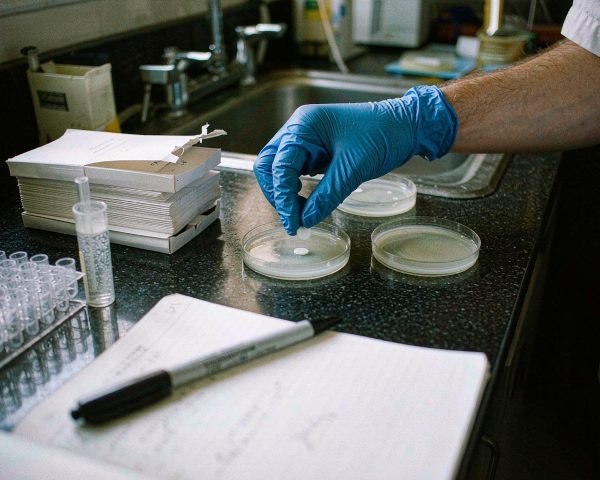

# Consumables for Antimicrobial Susceptibility Testing
Most labs budget carefully for the big-ticket items in antimicrobial susceptibility testing: the ID systems, the panels, the incubators. What gets underestimated is the bench-level consumable list. I’ve watched a full afternoon of disc diffusion plates get tossed because the saline came in tubes nobody could vouch for, and that loss stung more than any delayed delivery ever did.
The short answer: Mueller-Hinton agar plates, antibiotic discs, broth microdilution panels, sterile 0.85% saline, 0.5 McFarland turbidity standards, sterile loops and swabs, calibrated pipette tips, sterile dilution tubes and vials, plus blood culture bottles to isolate the organism first.
Below I break down what each method actually burns through, where consumables most often ruin a result, and what I check before signing off on the next purchase order.
What an AST Bench Actually Consumes
AST methods are standardized to an unusual degree. CLSI M02 defines the disk diffusion reference procedure and its QC, CLSI M07 covers broth and agar dilution, and ISO 20776-1 is the international reference method for broth microdilution. When the method is this tightly specified, every physical input is specified with it. Get one input wrong and the result is out of spec.
Mueller-Hinton agar plates are the workhorse. The EUCAST disk diffusion methodology requires a level agar depth of 4 mm ± 0.5 mm, which works out to roughly 25 mL poured into a 90 mm plate. Non-fastidious organisms grow on unsupplemented MH; fastidious ones need MH-F, which is MH plus 5% defibrinated horse blood and 20 mg/L β-NAD. The surface must be dry at inoculation, but over-drying hurts too, so how plates are stored before use matters as much as how they were poured.
Antibiotic discs come next. Each paper disc carries a defined drug load (the 10 µg ampicillin disc is the classic), and the reading rules assume that load is exact. EUCAST caps a 90 mm plate at six discs so zones don’t overlap, and discs must go on within 15 minutes of inoculating. They’re humidity-sensitive, they ship with desiccant, and an opened cartridge left on a warm bench degrades faster than most people expect.
Broth microdilution panels are the MIC side of the house: 96-well trays preloaded with serial drug dilutions in cation-adjusted Mueller-Hinton broth. Commercial panels cost real money per isolate, and each one demands the supporting cast: inoculum reservoirs, a multipoint inoculator or calibrated tips, tray sealers, and reading guides or a reader matched to the panel format. Labs that prepare trays in-house, which CLSI M07 also permits, swap the panel spend for sterile microdilution plates, broth, reservoirs, tips, and sealers, plus the freezer space to hold them.
The inoculum side of the list is short but critical: sterile 0.85% saline tubes, a 0.5 McFarland turbidity standard or a calibrated photometer, sterile loops, and sterile cotton swabs. Then the dilution plumbing: calibrated tips, sterile tubes and vials for serial dilutions, serological pipettes. None of it is glamorous. All of it is load-bearing.
Blood culture bottles belong on the same list, even though procurement often files them elsewhere. You can’t test an organism you haven’t isolated, and for bloodstream infections that means BC bottles first, then subculture to a pure plate. If the bottles are out of stock, AST waits, no matter how full your disc drawer is.
Agar vs Broth Microdilution: What Each Method Uses
Disc diffusion is the cheap, flexible option. Per test you consume one MH plate, a handful of discs, one swab, one saline tube, and a loop or two. The drug menu changes on the fly, which is why smaller labs stick with it. The tradeoff is reading: zones are measured by eye against a dark background, so results depend on human technique more than any tray-based method does. The paper behind the EUCAST method’s development explains how tightly zone sizes depend on sticking to the prescribed media, inoculum, and reading conditions.
Broth microdilution costs more per test and returns an actual MIC. A commercial panel, tips, a sealer, plus the same inoculum consumables. In-house trays add broth and sterile reservoirs to that tally. My honest take: labs under roughly 20 isolates a day usually get better economics from disc diffusion with selective reference testing for the hard cases. Higher volumes tip the math the other way.
The Inoculum: Where Most Consumable Mistakes Happen
The target is a 0.5 McFarland suspension (about 1-2 × 10⁸ CFU/mL for E. coli). You make it by picking several morphologically similar colonies from overnight growth, 16 to 24 hours, on a non-selective medium, suspending them in saline with a loop or swab, and adjusting the density. EUCAST is explicit that water or buffer won’t do; the method is built on 0.85% saline.
Timing is unforgiving. Use the suspension within 15 minutes of preparation, 60 at the absolute outside. Dip the swab, press the excess fluid against the inside of the tube, swab in three directions across the whole surface. A dripping swab over-inoculates the plate, especially with Gram-negatives, and your zones come out falsely small.
How you verify density matters too. A calibrated photometer is the preferred route, and it needs its own consumables: matched cuvettes or tubes, because a scratched or off-brand tube skews the optical reading. Visual comparison against a 0.5 McFarland reference tube is still permitted, but it only works if the standard itself is in date and has been mixed properly. A vortex-mixed standard compared against a settled one is a mismatch you’ll pay for in re-reads.
A failure I still think about: a bench lost an entire afternoon’s run because saline had been dispensed into re-used tubes “that looked clean.” Every plate carried background growth, every zone was unreadable, and the ward waiting on those results got nothing for another day. The tubes cost cents. The repeat cost a tech-day and a very uncomfortable conversation.
Loops and swabs earn a line each. Calibrated loops (1 µL routine, 10 µL where the method calls for it) must actually deliver their stated volume, and single-use sterile loops beat flame-heated glass for reproducibility. Whether loops and swabs are gamma-irradiated or autoclaved changes how you receive and store them; I’ve unpacked that difference in gamma-irradiated vs autoclaved consumables: what’s the difference?.
Quality Control Strains and the Consumables Behind Them
QC strains (E. coli ATCC 25922, S. aureus ATCC 25923, P. aeruginosa ATCC 27853, and the rest of the usual suspects) anchor the whole system. When zones drift out of range, the discs and the incubator get blamed first. In my experience the consumables are at least as likely: a tip box that’s been open on the bench for a week, a turbidity standard past expiry, a saline bottle that’s been living in the fridge door for months.
One QC investigation I sat near chased a drifting ceftriaxone zone for two weeks before anyone audited the tips used for panel inoculation. The tips looked fine. They weren’t fine by calibration: a subtle fit problem had shifted delivered volume enough to skew the inoculum. The fix cost nothing. The corrective-action paperwork most definitely did not.
Run QC on the schedule your standard and accreditation body require. Daily testing is the norm for disc diffusion, and every new lot of discs or media gets checked regardless of the calendar. I’d hedge here because intervals shift between CLSI editions and local inspectors, so read what your current M100 edition actually says before you write the SOP.
Keeping QC strains alive is its own consumable stream that buyers routinely forget. Working stocks live on agar slants or in cryovials with beads, stored at -80 °C for the long term, and each revival cycle burns a sterile loop, tubes of broth, and fresh plates. Subculturing too many generations from one stock is a classic source of drift, so labs that plan stock rotation properly buy fewer surprises along with their cryovials.
A Buying Checklist for a Busy Micro Lab
• Match the sterility claim to the use. AST consumables touch live cultures and plates you read by eye, so “sterile, single-use” is the floor, not a nice-to-have. If supplier claim language blurs together, my breakdown of sterile vs non-sterile vs low-bioburden claims clears it up.
• Ask for lot numbers on everything. QC records need traceability for saline, swabs, loops, and tips. A pack without a lot number is a finding waiting to happen.
• Trial before you pallet. “OEM-compatible” claims deserve a trial pack: tips on your actual pipettes, panels on your actual reader. Cheap insurance.
• Plan storage, not just delivery. Opened disc cartridges, opened tip boxes, and opened swab packs all degrade differently, and my notes on how to store opened packs of sterile consumables cover the habits that keep them in spec.
• Count honestly, then add margin. Plates per day, discs per plate, panels per week, plus the repeat rate you actually experience rather than the one you wish you had. Under-ordering is how re-used tubes happen, and I’ve already shown you where that ends.
Conclusion
AST presents itself as a media-and-discs problem, and procurement spreadsheets tend to reflect that view. The bench tells a different story. Tubes, tips, loops, swabs, and saline decide whether a standardized method produces defensible results, and they decide it quietly, one run at a time. Pull your last month of rejected or repeated tests and count how many trace back to a consumable rather than an instrument. If the number surprises you, refresh the supply line before the next budget cycle. The same consumable categories come up if your lab also runs microbial limits testing, and consolidating suppliers across both workflows is often the cheaper move: start with what USP <61> microbial limits testing needs. Small items, bought well, protect the expensive ones. That’s the whole trade.
Frequently Asked Questions
What agar is used for Kirby-Bauer testing?
Mueller-Hinton agar, unsupplemented, poured to a depth of 4 mm ± 0.5 mm. It’s the standard because its thymidine content is low and its composition is reproducible, so zone sizes stay comparable between labs. Fastidious organisms move to MH-F with horse blood and β-NAD.
How often should QC strains be run?
Most labs test QC strains every day the method is in use, plus every new lot of discs or media. Some accreditation schemes allow weekly testing once a lab demonstrates sustained control. Confirm the exact interval against your current CLSI M100 edition and your assessor’s expectations.
Can I use water instead of saline for the inoculum?
No. EUCAST specifies 0.85% saline for inoculum preparation, and water or buffered solutions aren’t acceptable substitutes. Osmotic differences can injure cells and shift the effective inoculum density, and that shows up in your zones.
How long can a 0.5 McFarland suspension sit before use?
Use it within 15 minutes for best results, and never beyond 60 minutes. After that, cell density and viability drift enough to change zone sizes and MICs. When in doubt, remake it; the saline costs pennies.
Do AST consumables need to be sterile?
Yes. Anything that touches the inoculum (loops, swabs, saline tubes, tips, vials) should be sterile and single-use. Non-sterile or re-used items introduce background growth that makes zones unreadable, and a full repeat is the cheapest part of that failure.