
# What Consumables Does Chlorophyll and Algae Analysis Need?
Algae work punishes sloppy prep faster than almost any other water test. Chlorophyll breaks down under light and heat, so the bottles, filters, and vials you pick directly shape your numbers. This list covers what a pigment run actually consumes, from the sampling bottle to the injection vial.
Short answer: Chlorophyll and algae analysis needs amber glass sample bottles, 0.7 µm glass fiber filters (Whatman GF/F, 47 mm), 90% acetone for extraction, glass centrifuge tubes, amber HPLC vials with PTFE/silicone septa, and a -20 °C freezer or colder. Everything on that list keeps pigments dark and cold.
Below I break down each category, why the standard methods specify it, and where labs tend to overspend or cut the wrong corner.
Why Pigment Work Has Its Own Rules
Most water tests tolerate a clear bottle on the bench. This one doesn’t. Chlorophyll degrades when it sits in light, and the standard methods say so explicitly: EPA Method 445.0, the fluorometric chlorophyll-a procedure, requires work in subdued light and storage at -20 to -70 °C in the dark, per the EPA method record. The spectrophotometric alternative, Method 446.0, carries the same warning, as its EPA record shows.
The workflow explains the shopping list. You filter a measured volume of water, extract the pigment from the filter in 90% acetone, let it steep for 2 to 24 hours, centrifuge the slurry, then read the fluorescence before and after acidification. Each step has a consumable attached, and each one has a reason behind it.
Who runs these tests? Environmental agencies tracking algal blooms, drinking water utilities watching for cyanobacteria and taste-and-odor events, aquaculture operations monitoring pond productivity, and researchers doing pigment HPLC. If you handle several water parameters at once, the water quality testing lab consumables guide gives the wider view; this article stays on pigments.
Sample Collection: Amber Glass, Not Plastic
Start with amber borosilicate bottles with PTFE-lined caps. Clear bottles work only if you wrap them in foil and get them into the dark fast, and plastic is worse on both counts: it transmits light and can adsorb or leach. Wide-mouth 1 L bottles handle lake and bay samples; ocean work needs more, since the same method notes that low-biomass seawater may require up to 4 L per filter set.
One habit worth copying from the volatile organics bench: fill the bottle completely, cap it with zero headspace, and treat light as contamination. For comparison, the EPA VOA vials used for volatile organics follow the same logic, just for a different analyte. Keep samples on ice and in a cooler from the moment the bottle is filled.
Filtration: The GF/F Filter Is the Standard
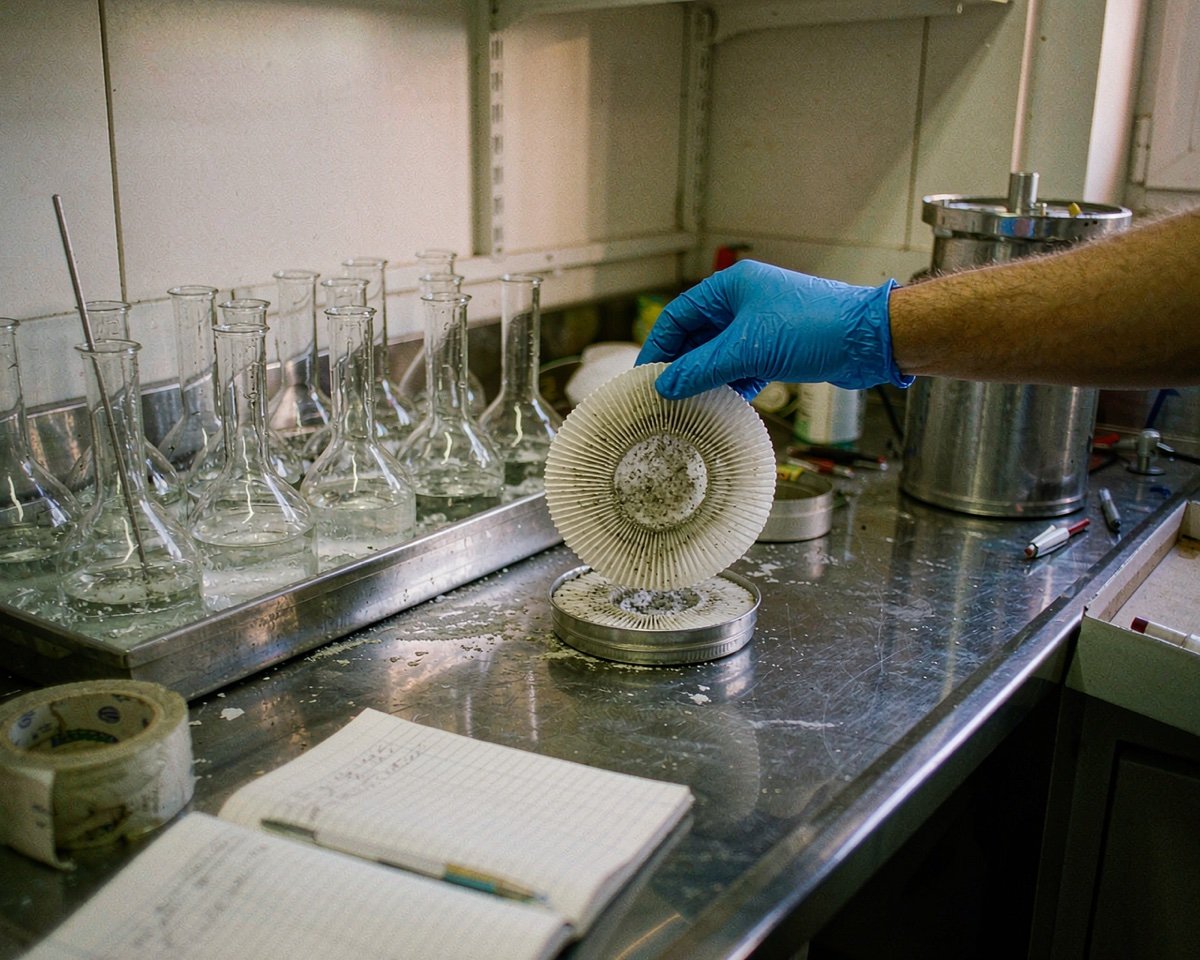
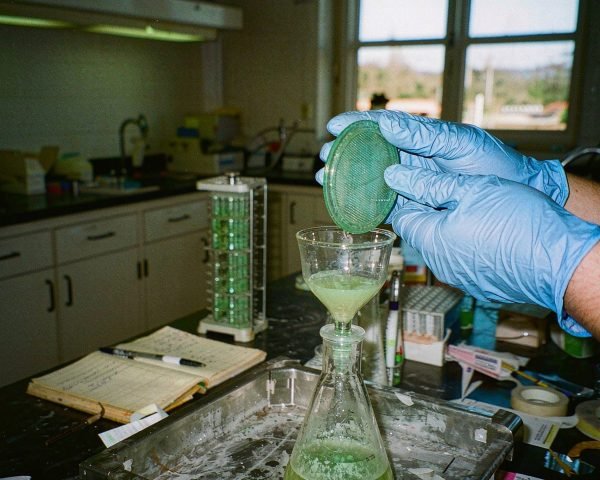
The filter matters more than any other single item. Glass fiber with a 0.7 µm nominal retention, specifically Whatman GF/F, is the accepted filter for chlorophyll-a per EPA Method 445.0 and Standard Methods 10200 H. The 47 mm circle is the default format for most filtration funnels, and binder-free borosilicate construction matters because binders can add background fluorescing material.
Why glass fiber and not a membrane? Three reasons: it catches phytoplankton across a wide size range, it loads heavily before clogging, and it grinds cleanly with the tissue mixer during extraction. Keep the vacuum low. Hard pulls can rupture fragile cells and push pigment through the filter.
You’ll also want blunt stainless forceps and a folded filter boat or aluminum square for handling. Wet GF/F filters tear if you grab them with fingertips, and folded filters go straight into cryovials for the freezer. I once watched a whole bloom-survey batch get tossed because a new tech used cellulose filters; the acetone dissolved the paper into the extract and the fluorometer read fiber mush, not chlorophyll. One box of the wrong filters cost them a week of sampling.
Extraction Consumables: Solvent, Tubes, Grinders
The classic solvent is 90% acetone, and the methods give you latitude on timing: steep 2 to 24 hours depending on your throughput. Ethanol is used in some labs and regions, but if your method citation says 90% acetone, match it, because the extinction coefficients assume that solvent.
Store the acetone in an amber glass reagent bottle, not the original shipping container on an open shelf. During extraction you’ll need glass centrifuge tubes with PTFE-lined caps; acetone attacks many plastics, and dissolved plastic adds a haze that shows up as baseline noise. The published protocols grind the filter, extract in the dark at around 4 °C, then centrifuge to clarify before reading, as described in a pigment extraction study on PMC.
Budget consumables here: a mechanical tissue grinder or mortar set, 15 mL glass centrifuge tubes, Pasteur pipettes, and cryovials or foil squares for frozen filters. Nothing is exotic, but the glass-vs-plastic distinction is where most improvisation fails.
Injection and Quantification: Amber Vials and Good Septa
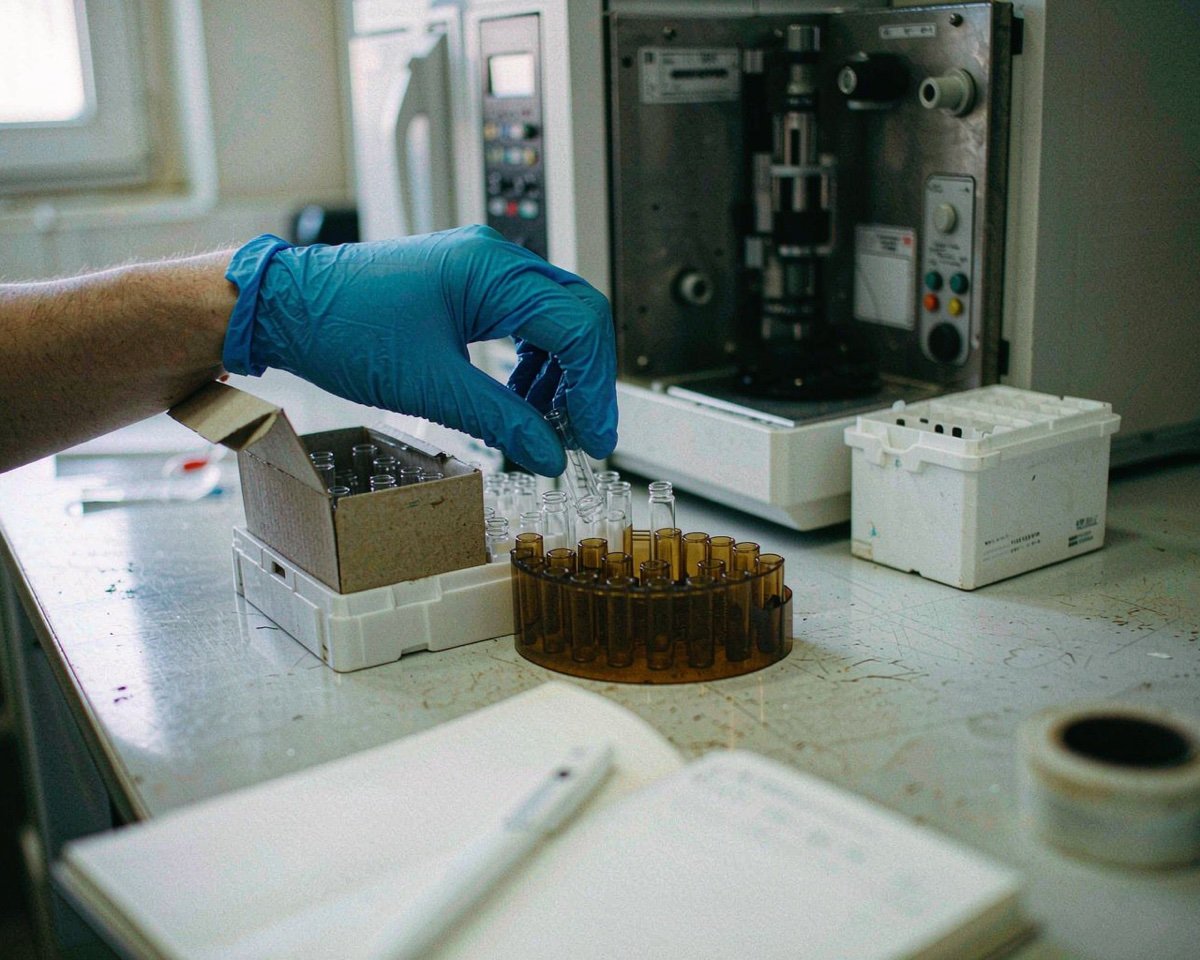
If your lab confirms pigments by HPLC, the extract ends up in amber 2 mL vials with low-volume inserts. Extract volumes run small, often under 300 µL after centrifugation, and a standard vial can leave the needle sipping air. Inserts pull the meniscus into the pickup range. Amber glass matters here for the same reason it matters everywhere else: pigment degradation is light-driven, and an extract can sit in an autosampler tray for hours. Thermo Fisher notes outright that amber vials protect light-sensitive samples.
Septa should be PTFE/silicone laminates. Pure silicone swells in acetone, and a swollen septum cores easily and leaks extract into the tray. For fluorometric and spectrophotometric reads, keep a set of matched glass cuvettes on hand; the methods reference a standard 1-cm glass cell.
Storage and Handling: Cold, Dark, Fast
Freezer storage buys time but isn’t free. EPA Method 445.0 allows filters to hold up to 3.5 weeks at -20 °C without significant chlorophyll loss. Colder is better: a comparison study found measurable chl-a loss during storage at -20 °C and recommends -80 °C or liquid nitrogen when freezing is unavoidable, as reported in Limnology and Oceanography Methods.
The same study makes a case worth hearing: extract immediately when you can. Filters submerged straight into sealed tubes of 90% acetone and extracted for 22 to 24 hours at -20 °C gave more accurate results than any frozen-storage approach. If your schedule allows same-day extraction, do that. Wrap filters in foil, label with date and volume, and keep the freezer door shut.
Selection Tips and Common Mistakes
A few shortcuts from experience. Buy filters by the case; they’re cheap and a bloom event can burn through 50 in a day. Match your vial septa to your solvent, always. And keep a dedicated dark box or amber tray for extracts waiting on the autosampler, so nobody parks them next to a window.
Mistakes I see most often:
• Filtering through cellulose or mixed-ester membranes because they were in stock.
• High vacuum to “speed things up”, which lysed cells and lost pigment.
• Plastic centrifuge tubes with acetone, then wondering about cloudy extracts.
• Clear vials on the bench while the sequence runs all afternoon.
• Skipping the record of filtered volume; concentration math needs it.
If you only change one thing this week, make it the freezer discipline. Samples that stay cold and dark forgive a lot of other small errors. For labs pairing pigment work with other field chemistry, the dissolved oxygen testing consumables list is a natural companion read.
Conclusion
Chlorophyll and algae analysis is unforgiving about light and heat, so its consumables list reads like a defense plan: amber glass bottles for collection, 0.7 µm Whatman GF/F filters in 47 mm format for concentration, 90% acetone in amber reagent bottles for extraction, glass centrifuge tubes and grinders for prep, and amber HPLC vials with PTFE/silicone septa and inserts for injection. None of it is expensive compared with the cost of rerunning a missed bloom event. Get the filter right, keep everything cold and dark, and extract promptly when your schedule allows. If you’re building out a broader water-testing bench, start with the water quality testing lab consumables guide, then check the dissolved oxygen testing consumables list to round out field parameters.
Frequently Asked Questions
Can I use ethanol instead of 90% acetone for chlorophyll extraction?
Some labs do, and ethanol is common in European protocols. If your cited method specifies 90% acetone, stick with it, since the calculation equations and detection limits assume that solvent. Switching solvents means revalidating your numbers.
What pore size filter should I use for chlorophyll-a?
Glass fiber with 0.7 µm nominal retention (Whatman GF/F) is the standard per EPA Method 445.0 and Standard Methods 10200 H. The 47 mm circle fits most glassware. Membrane filters can clog quickly on algae-rich samples.
How long can filters sit in the freezer before extraction?
EPA Method 445.0 allows up to 3.5 weeks at -20 °C without significant chlorophyll-a loss. Storage at -80 °C preserves pigment better, and immediate extraction beats both. Log the storage time either way.
Why do I need amber HPLC vials for pigment work?
Chlorophyll degrades under light, and extracts often wait hours in the autosampler. Amber glass blocks the wavelengths that drive that breakdown. Pair them with PTFE/silicone septa, because acetone swells plain silicone.
How much sample volume do I need to filter?
About 1 L is usually enough for lake, bay, and estuary water; ocean samples can require up to 4 L because phytoplankton density is lower. Filter enough volume to load three or more replicate filters, as the method recommends.