
# What Consumables Does Thin Layer Chromatography Need?
TLC is the quiet workhorse of the chromatography world. It asks for almost no money, almost no training, and in return it tells you in fifteen minutes whether your reaction worked. But the consumable list behind that fifteen minutes is not obvious to a new lab, and buying the wrong plate backing or skipping one sheet of filter paper can quietly wreck your Rf values.
Thin layer chromatography needs five things: TLC plates (silica gel 60 F254 on aluminum, glass, or plastic), a covered developing chamber with filter paper, glass spotting capillaries, mobile-phase solvents, and visualization tools: a UV lamp, iodine vapor, and class-specific spray reagents.
Below I go through each group, the buying decisions that actually matter, and the two habits that separate clean TLC data from sloppy TLC data.
The Working TLC Bench, Start to Finish
The consumables map directly onto the steps of a run. You spot your sample onto the plate with a capillary, stand the plate in a covered chamber with a shallow pool of mobile phase, let the solvent climb by capillary action, then dry the plate and make the spots visible. MilliporeSigma’s TLC overview walks through the same sequence and notes the supporting cast: glass, plastic, or aluminum as plate backings, silica or alumina as sorbents, and the retention factor (Rf) as the number you report at the end.
So the shopping list is really five small bins on a shelf. Plates, chamber, capillaries, solvents, visualization. Get the versions of those five that match your workload and TLC will cost you pennies per run.
TLC Plates: Backing, Sorbent, and the F254 Label
The plate is the only true “consumable” in the sense that it’s used once. Everything else on this list lasts years.
Most plates you’ll buy are silica gel 60 F254: standard 60 Å pore silica with a fluorescent indicator mixed into the layer. That indicator glows green under 254 nm UV light, and compounds that absorb UV quench the glow, so colorless samples show up as dark spots on a bright background. Chemguide explains the chemistry behind this nicely, along with why the layer itself matters: the polar silanol groups on the silica surface are what hold your compounds back and create the separation (Chemguide, thin layer chromatography).
The backing is the decision most buyers get wrong. Aluminum-backed plates are cheap, light, and you can cut them with scissors into whatever strip size the run needs. Glass-backed plates stay perfectly flat, which matters for HPTLC and any densitometry work, and they don’t curl when the mobile phase climbs. Plastic-backed plates are the budget option for teaching labs. Many aluminum and glass plates are also pre-scored, so you can snap a 20 x 10 cm sheet into uniform strips without a cutting board.
My default for a busy organic bench: aluminum-backed silica gel 60 F254 plates, 20 x 10 cm, cut into 5 cm strips for reaction monitoring. I only order glass-backed when someone on the team is scanning plates quantitatively. Layer thickness on standard analytical plates is around 250 µm; HPTLC plates use finer silica particles for sharper bands, and they cost more accordingly.
The Chamber and Its Filter Paper Liner
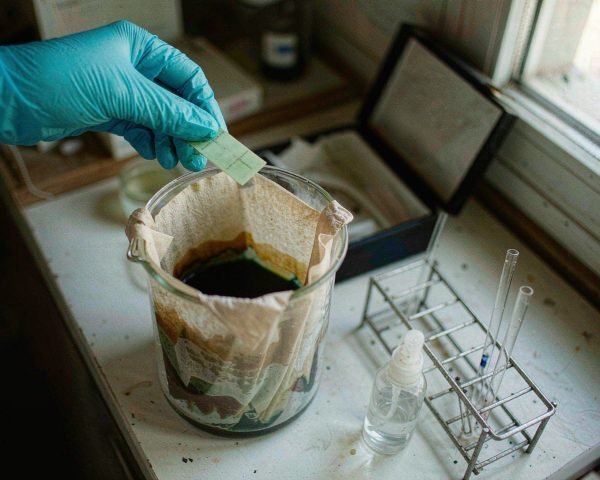
This is the cheapest consumable in TLC and the one labs most often skip. The developing chamber is just a covered glass jar or beaker with a shallow pool of mobile phase, roughly 0.5 to 1 cm deep, kept below the sample baseline so the spots never dissolve off the plate. A strip of filter paper is stood against the inside wall so it wicks solvent and saturates the chamber’s atmosphere with vapor. NPTEL’s chromatography course notes describe exactly this setup, including the warning that the plate must not touch the wet filter paper during development (NPTEL, TLC development).
Why bother with the paper? Because an unsaturated chamber lets solvent evaporate off the plate as it climbs, which distorts the front and makes your Rf values drift between runs. Give the closed chamber ten to fifteen minutes to equilibrate before you drop the plate in. One sheet of Whatman paper per day. That’s the entire cost of reproducible fronts.
Two small rules that live here: mark the baseline in pencil, never pen, because ink travels with the solvent; and lift plates in and out with tweezers, because fingerprint oils show up as phantom spots under UV.
Spotting Capillaries and Mobile Phase Prep
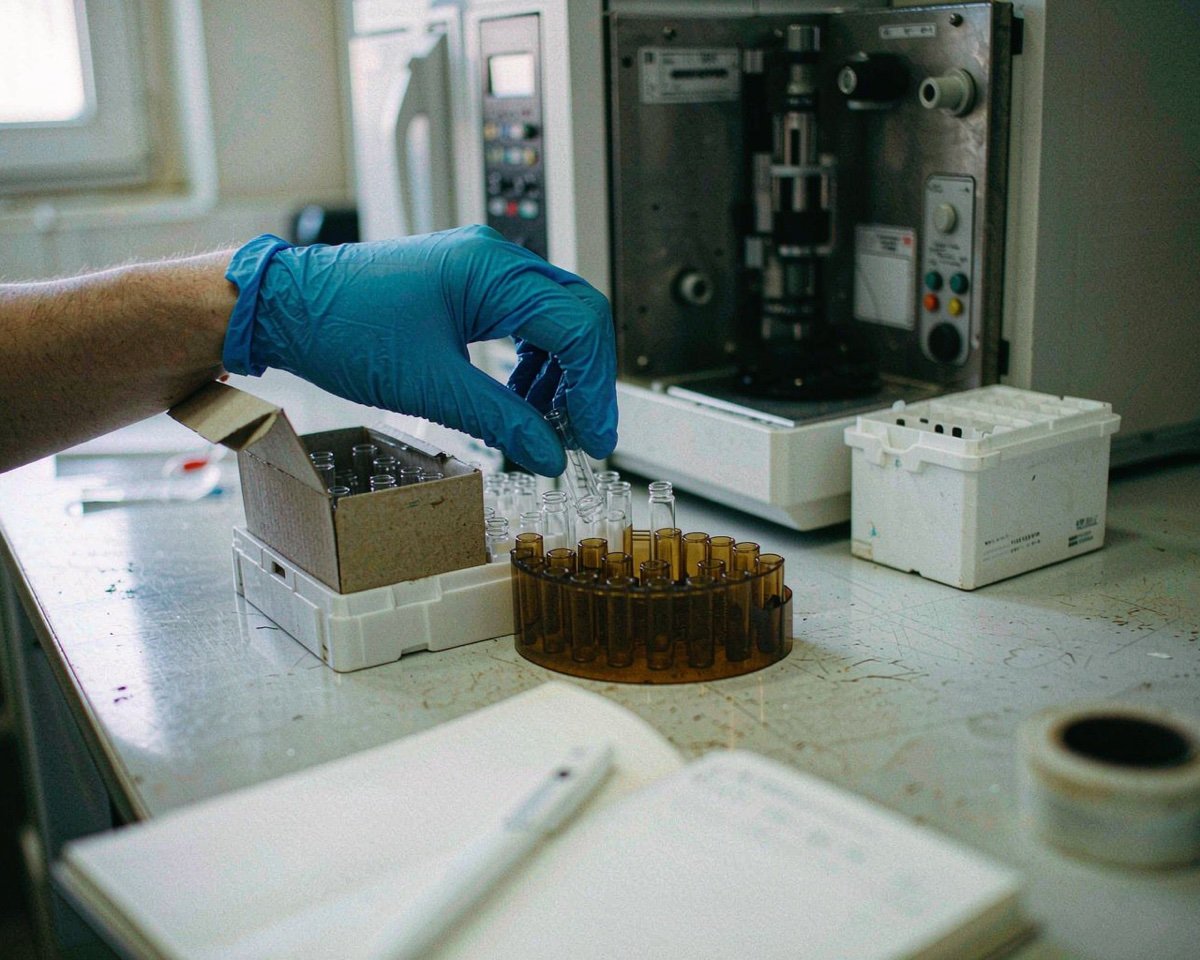
Sample application is where most bad TLC plates are born. The traditional tool is a box of glass spotting capillaries, which you dip into your sample solution and touch lightly to the baseline. The goal is a spot under about 2 mm across. Load too much and the spot streaks, which is the most common complaint I hear from teaching labs. For dilute samples you re-apply to the same spot after drying rather than touching once and hoping.
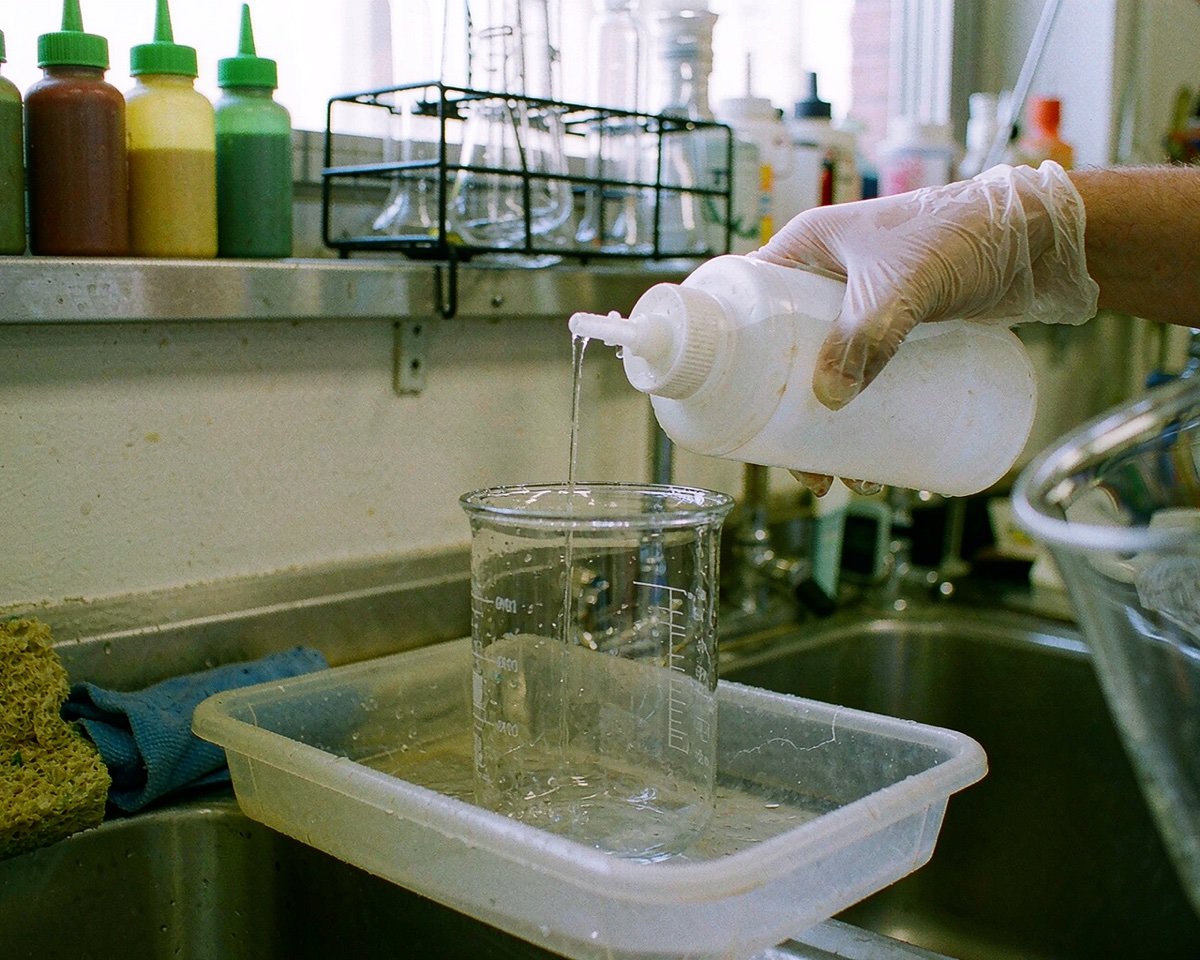
The mobile phase bin is simpler: a small stock of HPLC-grade or analytical-grade solvents, a few volumetric flasks for mixing, and a bottle of glacial acetic acid or formic acid for the additives. For silica plates, most chemists start with a hexane and ethyl acetate mix and adjust the ratio until the spots land where they want. SiliCycle’s TLC guide suggests aiming for Rf values between roughly 0.15 and 0.85, with 0.2 to 0.4 as the sweet spot, and notes that adding 0.1 to 2% acetic or formic acid tames tailing on acidic compounds (SiliCycle TLC brochure, PDF).
Visualization: UV Lamp, Iodine, and the Stain Shelf
Colorless spots are the norm, so visualization consumables are non-negotiable. A dual-wavelength UV lamp covering 254 and 366 nm covers most cases: at 254 nm the F254 indicator quenches wherever UV-absorbing compounds sit, and at 366 nm some compounds fluoresce natively and glow against the dark plate. Circle the spots in pencil while the lamp is still on, because they vanish the moment you switch it off.
Iodine vapor is the second tool every bench should have. A closed jar with a few iodine crystals stains most organic compounds brown-yellow within minutes, and it’s reversible, so you circle fast and measure before the color fades. Chemguide covers both the iodine chamber and ninhydrin spraying, the classic stain for amino acids and amines, which produces purple and brown products (Chemguide).
Beyond those two, the stain shelf is where specificity lives. Anisaldehyde stain is the general-purpose workhorse for terpenes, steroids, and natural products, and it needs gentle heating with a heat gun or hotplate to develop color. Potassium permanganate catches oxidizable compounds. Phosphomolybdic acid and vanillin-sulfuric round out a typical shelf. Add a glass sprayer or a dip tank, and run all of this in a fume hood. I once watched a master’s student lose a week of Rf data because she labeled her baseline with a gel pen; the ink ran right alongside her samples and every spot had a twin. A 30-cent pencil would have saved the afternoon.
Plate Selection and Storage Tips
Plates are hygroscopic, so storage matters more than people expect. Keep them flat in their original box, sealed, away from ammonia and solvent vapors; a desiccator is worth it in humid climates. An open pack of silica plates sitting on a damp bench for a month will pick up water, and an activated-versus-deactivated layer changes your Rf values without warning.
A few practical buying notes. Aluminum plates warp if stored vertically under weight, so keep them flat too. For a QC lab that photographs plates for records, stick with one backing and one lot range so your archived images stay comparable. And order the small boxes first: 25-plate boxes let you test a plate lot against your methods before you commit to a case.
Where TLC Still Fits Before HPLC
TLC hasn’t been replaced by instruments; it has been given a narrower, smarter job. Reaction monitoring is the big one, since a co-spot of starting material and reaction mixture on the same strip tells you the reaction is done in the time it takes HPLC to finish its equilibration. Herbal and food screening is the second: HPTLC fingerprints on silica gel 60 F254 plates are an accepted quality-control method for botanicals, and published work on turmeric curcuminoids shows the plate chemistry behind those methods in detail (NCBI/PMC review of TLC and HPTLC methods).
TLC also feeds the techniques downstream of it. The solvent system that gives you clean separation on a plate is the starting recipe for purification, whether that’s a gravity column or a pressurized one; our flash chromatography consumables guide picks up exactly where the plate leaves off. When a sample needs real quantification, sensitivity, or regulatory-grade documentation, you move it to liquid chromatography, and our HPLC method development guide is the natural next read. We’ve also argued the broader case for why TLC remains a go-to tool in modern labs, if you want the technique-level view rather than the consumable view.
Conclusion
A working TLC bench needs five consumable groups and almost nothing else: silica gel 60 F254 plates in the backing that fits your workload, a covered chamber with its humble filter paper liner, glass spotting capillaries, mobile-phase solvents with a small bottle of acid additive, and a visualization kit built around a dual-wavelength UV lamp, iodine, and a few spray reagents. The total investment is a fraction of one HPLC column, and the runs it supports, reaction monitoring, botanical fingerprinting, and solvent scouting, repay it within the first week. If your plate selection or storage habits drift, the failure mode is silent: drifting Rf values that nobody can trace. Stock the five bins deliberately, handle plates by the edges, keep them dry, and mark everything in pencil. When your TLC samples need cleanup before spotting, our SPE consumables guide covers the extraction step that keeps plant and food matrices from streaking your plates.
Frequently Asked Questions
What are F254 TLC plates used for?
F254 plates contain a fluorescent indicator that glows green under 254 nm UV light. Compounds that absorb UV quench that glow, so colorless samples appear as dark spots on a bright background. It’s the standard choice for most organic and pharmaceutical work.
Can I use a beaker instead of a proper TLC chamber?
Yes, a covered beaker works fine for occasional runs, as long as it’s sealed and lined with solvent-wetted filter paper. For daily work, a dedicated chamber with a ground lid holds saturation more reliably and gives more reproducible fronts.
Why did all my spots stay at the baseline?
Your mobile phase is not polar enough for silica, or your sample is overloaded. Increase the polar solvent fraction first, and if the spots still streak, dilute the sample or add a small percentage of acetic or formic acid.
Do TLC plates expire?
Not in the sense of a hard expiry date, but silica is hygroscopic and absorbs moisture from the air over time. Sealed in their original box in a dry place, plates perform well for years; an open pack on a humid bench will drift within weeks.