
# Stack Emissions Lab Consumables: The Complete Guide
Run one compliance stack test and you’ll burn through quartz filters, a full impinger setup, recovery vials and a stack of custody seals before the first run is even recovered. This guide maps every consumable a source-testing crew needs, organized by the EPA methods that demand them.
Stack emissions testing consumables are the single-use items an isokinetic train uses up per run: probe nozzles and liners, quartz or glass-fiber filters, impinger glassware and reagents, XAD-2 sorbent modules, Tenax and DNPH tubes, plus VOA vials, bottles and custody seals for sample recovery.
Below I break down who runs these tests, which methods drive the shopping list, how to choose between quartz, borosilicate and glass fiber media, and how a busy crew should buy all of it without wasting budget.
Who Actually Runs Stack Tests
Start with the people, because the buying habits follow from them.
The Testing Firms
Independent stack testing firms are the heaviest consumers. They run compliance tests at a different facility every week, sometimes three test programs in one week, and every single run consumes fresh media. A Method 5 train needs its own filter, liner rinse and impinger charge for each of three runs, minimum. Multiply by a dozen jobs a month and the consumable bill becomes a real line item.
These crews think in kits. A method kit for a particulate job includes filters, cassettes, impinger glassware, reagent salts, rinses, vials and seals, packed once and stocked against the next mobilization. Anything missing from the kit is a problem discovered on site, and on-site problems cost overtime.
In-House Facility Teams
Then you have the facilities that test in-house. Refineries run Method 325 passive tubes at their fenceline every 14 days, all year, without exception. Power plants cycle through particulate and mercury tests during tuning seasons. Cement kilns and hazardous waste incinerators face trial burns where a Method 0010 train runs for hours at a stretch. Environmental consultancies sit in the middle: they subcontract or self-perform, but either way they specify the media, so they care about what goes in the train.
The refinery fenceline case deserves a note on volume. Passive tubes are cheap individually, but a single plant can deploy dozens of sampling points, and the method requires duplicates and field blanks on top. The tube count per 14-day period climbs fast, and the reordering cycle never stops. Media for these programs is bought on a standing schedule, not case by case.
Why Stockouts Hit So Hard
In my experience, the in-house teams get caught out most often by stockouts. A testing firm knows it has a job in Tulsa on the 14th, so it checks the trailer on the 10th. A plant lab assumes the storeroom has impinger blanks “somewhere” and discovers otherwise the morning the rig is supposed to go up the stack. I watched exactly that happen at a power plant: the test got pushed a full week, the consultant rebooked travel, and the plant’s environmental manager spent a very uncomfortable afternoon explaining the delay. One missing box of filters cost more than the filters ever would have.
The Methods Behind the Shopping List
Every consumable on the truck exists because a method demands it. So the fastest way to build a buying list is to walk the methods.
Isokinetic Sampling in Plain Terms
Before the method list, one concept. Stack gases move; the sample has to keep up. Isokinetic sampling means the gas enters the nozzle at the same velocity as the gas passing around it, so particles of every size get captured in their true proportions. The velocity is set by nozzle diameter and pump flow, calculated from pitot tube readings, which is why nozzle sets come in many sizes and why every nozzle carries its own calibration record. Get the velocity wrong and you skew the particle collection, oversampling large particles at low rates and undersampling them at high ones. The regulator reading the report will check that ratio.
The Particulate and Metals Methods
EPA Method 5 is the backbone particulate test. Sample gas is pulled isokinetically through a heated probe and collected on a filter held at 120 ± 14 °C, and the method spells out the hardware in detail: stainless steel or glass nozzles sized from 0.32 to 1.27 cm inside diameter in 1/16-inch steps, and borosilicate or quartz probe liners rated for stack temperatures up to about 480 °C. Each nozzle has to carry its own calibration, which is why nozzle kits ship as matched, documented sets.
EPA Method 29 adds metals to the picture. The train keeps the heated probe and filter up front, then stacks impingers charged with acidified hydrogen peroxide (for most of the 17 target metals) and acidified potassium permanganate (for mercury). The permanganate solution is finicky. It degrades with time and light, and a stale charge can sink a mercury run before you collect a liter of gas.
Halogen work flips the chemistry. EPA Method 26 pulls stack gas through a heated probe and filter into dilute sulfuric acid, which captures hydrogen halides like HCl, then into dilute sodium hydroxide with a thiosulfate boost, which catches molecular halogens like Cl₂. Both solutions go to ion chromatography. The reagents are cheap; the discipline of preparing them at the right normality, fresh, is not optional.
The Organic Methods
Semivolatile organics are where trains get long. Method 0010, the modified Method 5 train, keeps the filter and then adds a condenser and a packed module of XAD-2 resin to catch compounds that boil above 100 °C. Dioxin and furan work (Method 23) uses a similar filter-plus-sorbent layout. The XAD modules must arrive pre-cleaned and certified, because background contamination in dirty resin shows up in your blank and nobody can remove it after the fact.
At the ambient end, TO-11A carbonyl work and Method 325 fenceline monitoring swap the whole train for small sorbent tubes, which I cover in their own section below. The practical takeaway is that one testing crew can carry four completely different chemistries on the same truck, and the consumables inventory has to match all of them.
Filters: Quartz, Borosilicate or Glass Fiber?
Filter choice trips up more new labs than anything else on the list, so let me give it proper space.
Method 5 calls for a glass fiber filter without organic binders, held at 120 ± 14 °C. For plain particulate mass in a moderately hot stack, that’s your default, and it’s the cheapest option per filter. The failure mode is heat. Push a glass fiber filter much past roughly 500 °C and the media starts to degrade, and in metal-rich streams the alkaline earth content of glass fiber can generate sulfate and nitrate artifacts that inflate your gravimetric result.
Quartz fiber filters solve both problems at once. They are binder-free, tolerate temperatures up to about 800 °C, and their low alkaline earth content nearly eliminates those SO₂/NO₂ artifacts. The Whatman QM-A quartz filters page lists the relevant specs plainly: 2.2 µm retention, binder-free construction, temperature resistance to 800 °C, and suitability for stack, flue and acidic gas sampling. Method 29 and dioxin work effectively require low-background quartz for exactly these reasons.
Borosilicate is the in-between material you meet mostly as a probe liner rather than a filter media. It handles most stack temperatures, costs less than quartz, and shatters more easily during the probe rinse. Crews that work hot, corrosive sources (incinerators, some kilns) tend to run quartz liners and accept the price; crews on cooler sources stay with borosilicate.
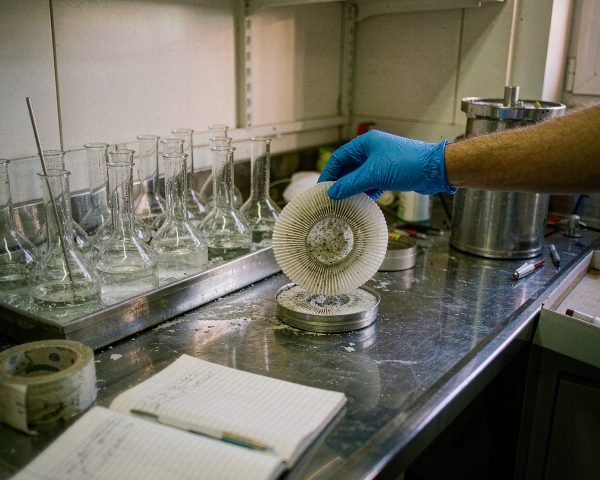
Whatever the media, the handling ritual matters as much as the material. Filters go into cassettes in a clean trailer, get desiccated and pre-weighed with the lot number logged, and travel to site sealed. Open the cassette in the field for even a few seconds on a dusty day and your blank correction conversation starts all over again. If you only tighten up one habit this month, make it filter handling.
Pre-Weighing, Cassettes and Temperature Ratings
The gravimetric side has its own consumables. Filters are conditioned in a desiccator for hours, then weighed on an analytical balance to a tenth of a milligram, twice, with the weights logged. Cassettes, the hinged holders that clamp the filter, need clean gaskets and retaining rings every run. A torn gasket leaks around the filter and quietly understates your result.
Temperature rating is the quiet killer of cheap choices. A filter specified for 120 °C in Method 5 will not survive the filter temperature some sources require, and stack temps above roughly 500 °C push every filter decision toward quartz. Match the media to the hottest condition the method allows for that source, not to the average day.
Probes, Heated Lines and the Hardware You Consume
Most of the sampling train is capital equipment, but the probe assembly eats consumables at a steady rate, and a procurement plan that ignores this gets surprised.
Nozzles are first. They dent, they corrode, and each one needs calibration documentation to stay compliant. A serious crew carries a full button-hook set from 0.32 to 1.27 cm so the isokinetic calculation can match whatever velocity the pitot reads that day. Missing the right diameter means either a second trip up the stack or running outside the acceptable nozzle range, and neither option ends well.
Probe liners are glass, and glass breaks. A borosilicate liner clacked against a flange during teardown is a consumable, not an asset, from that moment on. Heated probe lines and umbilicals wear at the connector ends, and the heating tape inside them eventually develops cold spots that let moisture condense where it shouldn’t. Keep spares on the trailer; a spare umbilical weighs less than the phone call you’d otherwise make.
Condensate management consumes smaller parts constantly. Peristaltic pump tubing, moisture traps and PTFE tubing runs all degrade with heat cycling. Glassware in the front half, the filter holder and its gaskets, O-rings and frits, takes a baking between jobs to shed organic background. And every recovery session uses up glass rinse bottles, acetone, and weighing dishes by design, because the method requires quantitative rinsing of every surface the sample touched.
What Actually Wears Out
A quick inventory of the failure points I see most. Heating elements in probe lines die at the plug end, where the cord flexes. Rubber O-rings harden after a few bake cycles and stop sealing. Pitot tube lines crack where they pass through the probe flange. Glass frits in impinger stems clog with particulate and change the bubble pattern, which changes collection efficiency in ways nobody notices until a recovery check fails. None of these parts costs much. All of them end test days when missing.
Calibration consumables round out the category: pitot tubes need annual recertification, nozzles carry their own numbers, thermocouples drift and get replaced or recalibrated on a schedule. Budget for the certification paperwork the same way you budget for the hardware.
Impingers, Sorbent Trains and Reagents
The back half of the train is where the reagent calendar lives.
A classic Method 5 train runs four or five Greenburg-Smith style impingers in an ice bath: condensate, H₂O₂ or other method-specific charges, then a silica gel impinger as the moisture indicator. Method 29 uses a similar rack with its peroxide and permanganate chemistry. Method 26 uses the acid/alkali pair I described earlier. The glassware itself lasts for years if you don’t drop it, but the stopcocks, U-tube connectors, silicone cords and ice bath hardware all turn over regularly.
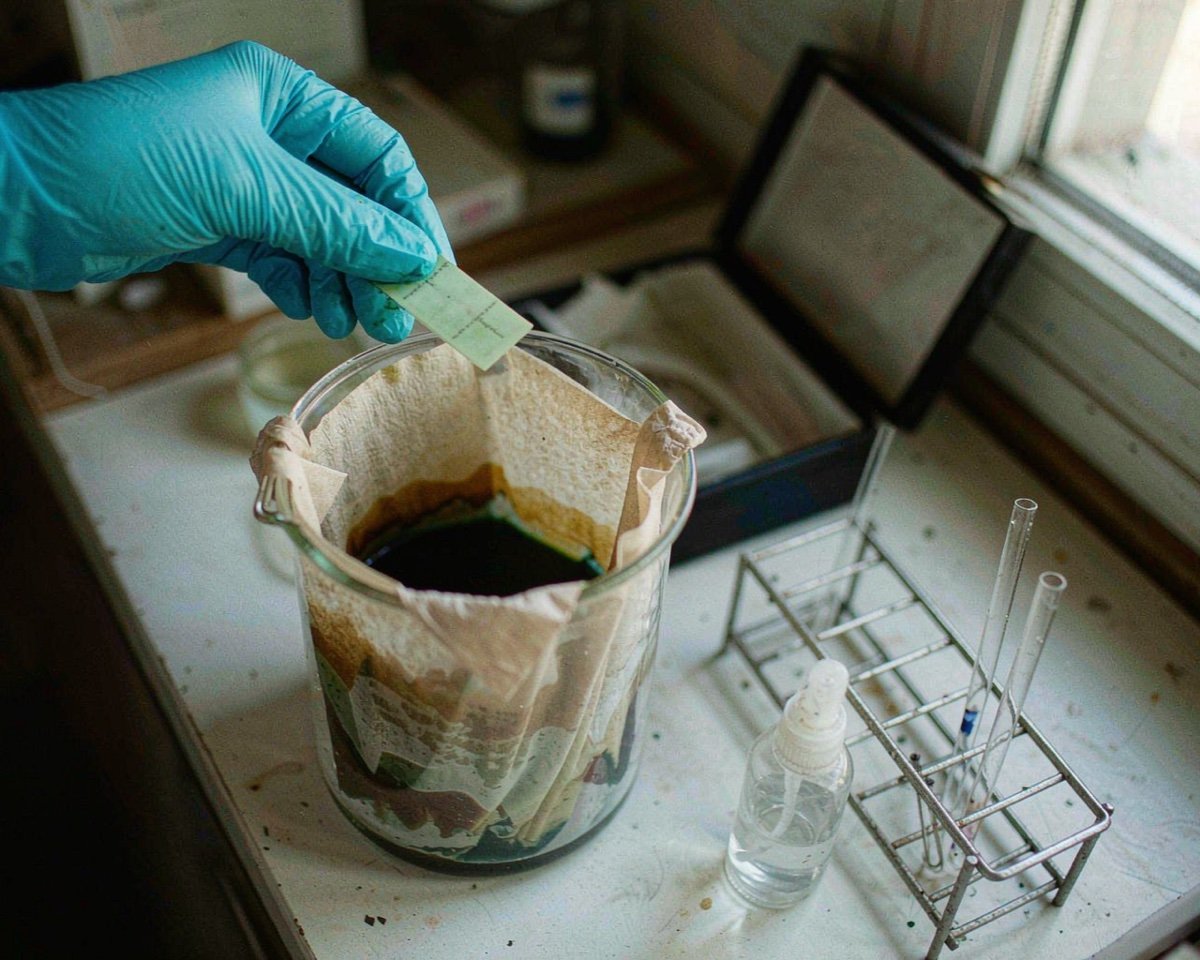
Reagents deserve a shelf-life conversation. Potassium permanganate for mercury work should be prepared fresh, within the window the method and your lab’s SOP allow, and stored dark. Hydrogen peroxide weakens in storage. Silica gel is indicator-grade and changes color when it’s done, which is conveniently self-documenting. I mark every reagent bottle with a mixing date and an expiry in marker, and I don’t apologize for the ugly handwriting; the ugly handwriting has kept expired permanganate off at least two test programs.
XAD-2 sorbent modules sit at the strict end of the scale. They ship pre-cleaned with batch documentation, they must stay sealed until use, and after sampling they’re capped and shipped for extraction within the holding time. If a module arrives without certification paperwork, send it back. The cost of the module is trivial next to the cost of re-running a trial burn because your resin blank carried background phenol.
Breakthrough is the other sorbent concept to watch. Method 0010 trains let you analyze front and back sorbent sections separately, and a back half holding more than a small fraction of the total flags a train that overloaded. A crew that reads its back halves is a crew that finds out about problems before the report goes out.
Cleaning and Turnaround Between Jobs
Impinger glassware comes back filthy, and the cleaning loop is a consumable pipeline of its own. Soak in the right detergent, rinse with tap then deionized water, then oven-dry and cap. Residual acid in a “clean” impinger will neutralize your next sodium hydroxide charge and shift the collection chemistry. Labs that batch-clean glassware with documented detergent lots have an easier time at audits than labs that wash in the field sink between runs, and the field sink habit is more common than anyone admits.
Sorbent Tubes and DNPH Cartridges
Small media, big convenience, and each format has its own rules.
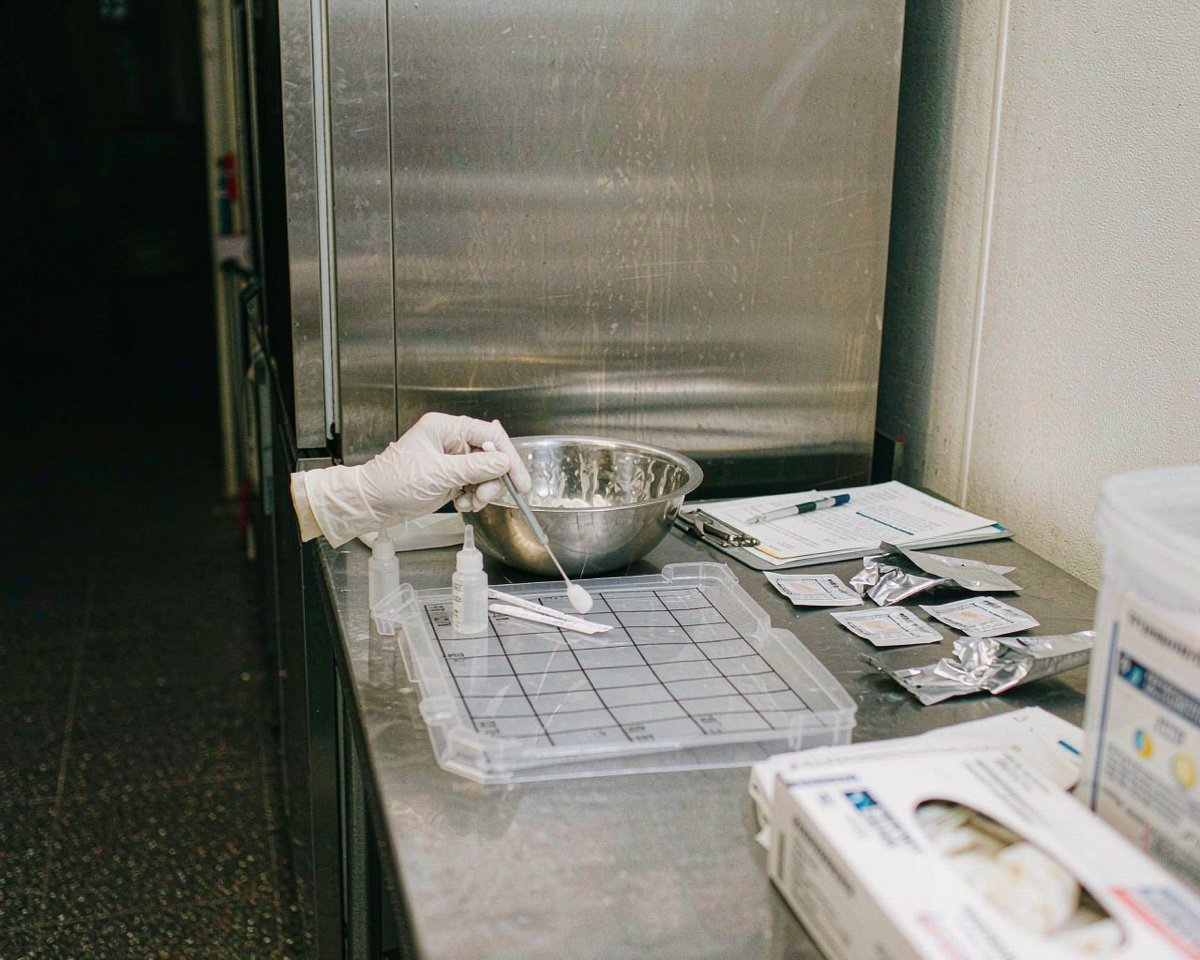
Thermal desorption tubes filled with Tenax TA or graphitized carbon sorbents (Carbopack, Carbograph) cover volatile organics in the C6 to C26 range, with multi-bed tubes reaching lighter compounds. Tubes are reusable after reconditioning, but they carry individual serial numbers, condition records and blank chromatograms, and they should be tracked like the precision items they are. For fenceline work, Method 325A/B passive tubes loaded with Carbopack X sit in weather shelters around a refinery for 14-day periods, no pump needed, then go to a lab for thermal desorption GC/MS analysis. One refinery can deploy well over a hundred tubes per period once you count duplicates and field blanks, so passive programs buy media on a subscription-like rhythm.
DNPH cartridges are strictly single-use. TO-11A draws air through a silica cartridge coated with acidified 2,4-dinitrophenylhydrazine, which reacts with formaldehyde and other carbonyls to form stable hydrazones for HPLC analysis, and the method explicitly recommends buying commercially pre-coated cartridges rather than coating your own. The EPA TO-11A method document notes that commercial low-pressure-drop cartridges run at flows up to 2 L/min and carry lower, more consistent carbonyl backgrounds than lab-coated versions. After sampling, the cartridge goes into a culture tube, into cold storage, and to the lab for elution and HPLC with UV detection around 360 nm. An ozone scrubber rides upstream, because ozone eats DNPH derivatives and will quietly bias your formaldehyde low.
The stock discipline for DNPH is refrigeration and expiry. A cartridge sitting in a warm mail room for three weeks accumulates background formaldehyde from the air it sees through the septum. Buy from a supplier that ships cold packs, store at 4 °C, and use within the printed window.
Choosing a Sorbent for the Compound
Matching sorbent to analyte is the selection skill here. Tenax TA holds C6 to C26 compounds well but lets the very light stuff slip past. Graphitized and carbonized sorbents catch lighter volatiles but can hold heavier ones too tightly to desorb cleanly, which is why multi-bed tubes stack two or three sorbents in layers, strongest last. The rule of thumb: strongest sorbent at the outlet end, so back-diffusion during storage works against a weaker bed first. If your program suddenly adds a lighter target compound, check the tube spec before you assume the existing stock covers it.
Recovery: Vials, Bottles and Chain of Custody
Nothing after the train matters if the recovered sample leaks, evaporates or loses its paperwork.
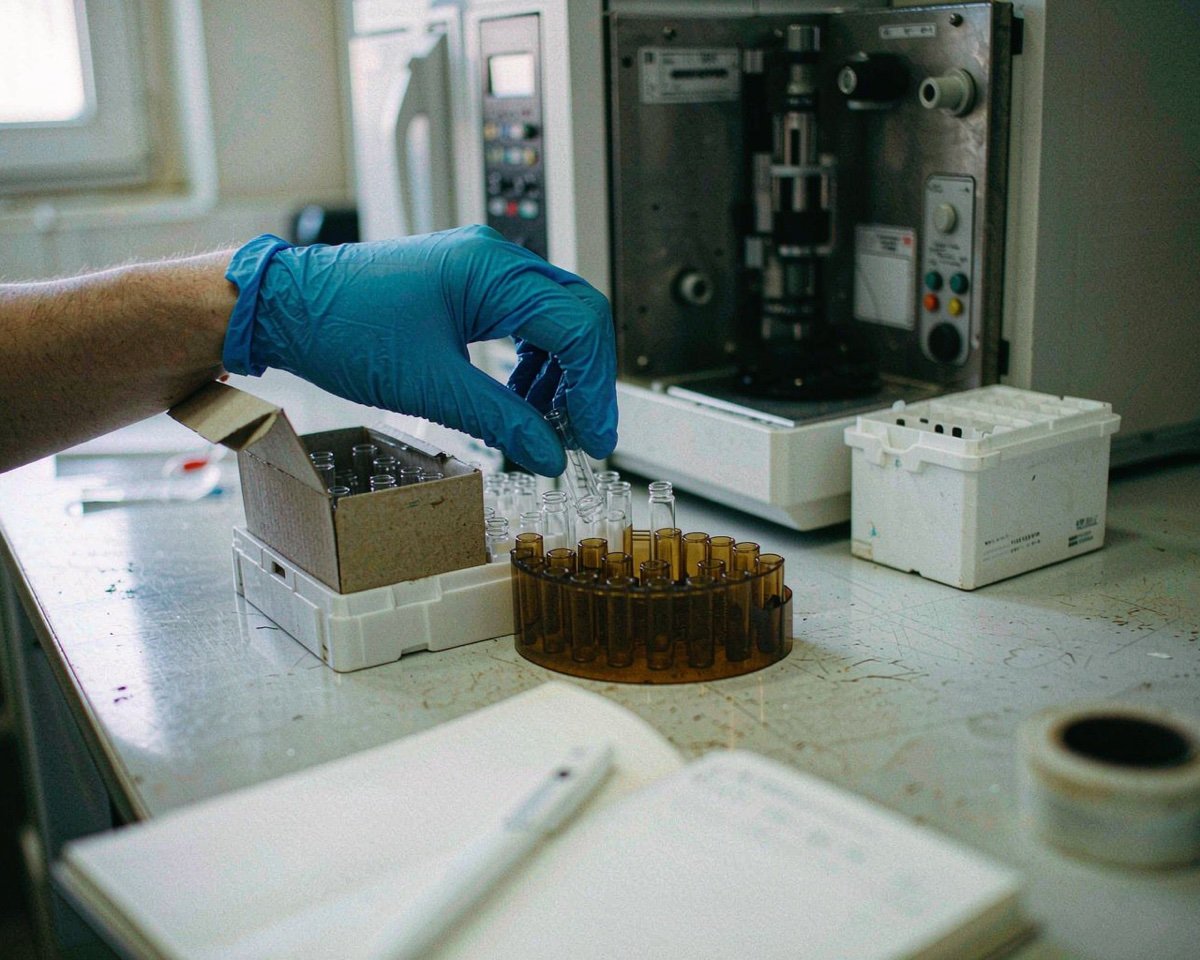
Impinger contents and rinses go into pre-cleaned amber glass bottles, usually 125 or 250 mL, with PTFE-lined caps matched to the chemistry. Acidic permanganate, basic hydroxide and solvent rinses each get their own bottle and their own label line on the field sheet. Condensate and any wastewater generated or sampled during the test go into 40 mL vials for volatile analysis, and those vials deserve their own attention: zero headspace, HCl preservative when the method calls for it, and a septum that reseals after the sampling needle. If you’re unsure what qualifies, our EPA VOA vials explainer covers the details.
Chain of custody supplies are consumables too. Tamper-evident seals, sample tags, gloves, absorbent padding and cooler ice packs all get used by the dozen per job. The seal and the form are what turn a bottle of liquid into evidence, and auditors read both. A wastewater and effluent testing lab consumables guide applies directly here, because condensate recovery shares its packaging and preservation logic with routine effluent work.
One packaging habit worth copying from the water labs: bottle orders should always include a few extra. A dropped recovery bottle on the trailer floor at 4 p.m. has no same-day replacement, and the whole run waits on a 125 mL bottle that cost a dollar or two. Crews that pack two spares of every container size stop having this story.
QC Practices: Blanks, Spikes and Defensible Data
The consumable list for quality control is short, cheap, and the most valuable part of the whole budget.
Field blanks ride along in the trailer, get opened at the site, and go home unexposed. Trip blanks travel sealed the entire way. Both exist to answer one question: was any contamination in my media before the stack ever contributed? Method 325, for instance, requires at least two field blanks per sampling period, deployed in the protective hoods with closures intact. That tells you the standard the industry holds itself to.
Tube and module blanks matter even more for sorbent work. A XAD module blank, a DNPH cartridge blank and a TD tube blank each establish the background the lab will subtract, and the lab can only subtract what it can document. Matrix spikes and audit samples, where permitted, check recovery through the whole digestion and analysis chain.
Here’s my one story about stakes. Years back, a crew I know ran a metals program where the permanganate was mixed from salts that had been in the trailer through two summers of heat. Every field blank came back with a mercury signal. The lab flagged it, the whole program was repeated with fresh reagent, and the firm ate the second mobilization, about as expensive as a month of consumables. The blank cost nothing. Skipping the blank cost a client relationship.
Documentation closes the loop. Every consumable that touches the sample should leave a paper trail: the filter lot number on the field sheet, the reagent mix date on the bottle, the sorbent certificate filed with the run record. When a data reviewer asks why the blank looks elevated, the answer should be a five-minute file pull, not a week of guessing. Most labs already do this for calibrations; extending it to media costs nothing extra because the information arrives with the box anyway.
Buying for a Testing Crew
Sourcing decisions matter more in this field than in a typical bench lab, because the media travels, sits in trailers, and waits for jobs.
Buy filters and glassware in lot-sized quantities. A case of sequentially numbered quartz filters used across many jobs gives you lot-to-lot uniformity in pre-weighing, and one documented lot is easier to defend than five mixed lots. Check manufacturing dates on DNPH and permanganate chemistry at purchase time, not when you open the box at the job site.
Consolidate where you can. Every additional supplier adds a lead time, a freight charge and one more COA format to chase. A single supplier who can fill filters, impinger glassware, reagent salts, vials and custody supplies on one purchase order saves your QA person hours per month. Watch minimum order quantities on small items like septa and O-rings; they outlast filters anyway, so a bulk box is rarely wasted money.
Lead time is the real constraint. XAD modules with certification paperwork and DNPH cartridges with cold-chain shipping both have calendars attached. Order against the test schedule, not the stockroom’s comfort level, and keep a two-job buffer for anything with an expiry date.
Price per Run, Not Price per Unit
The mental shift that saves money: cost the consumables per test run, not per box. A quartz filter at a higher unit price that arrives clean, pre-numbered and lot-documented is cheaper than a bargain filter that adds blank corrections or a repeat run. The same logic applies to impinger glassware, where a slightly better grade of stopcock pays for itself the first time a train holds vacuum through an hour-long leak check. Ask suppliers for lot certificates up front, and file them with the job record; the paperwork is part of what you’re buying.
The Pre-Job Checklist
Print this, tape it inside the trailer door.
• Nozzle set complete, with calibration sheets for each size
• Probe liners (borosilicate and quartz), plus one spare of the material you use most
• Filters: correct media, pre-weighed, lot logged, in sealed cassettes
• Filter holder gaskets, O-rings and frits
• Impinger glassware, connectors, stopcock grease, ice
• Reagents mixed fresh, dated, with expiry marked
• XAD/sorbent modules certified and sealed
• DNPH cartridges cold, in date, with ozone scrubbers
• TD tubes conditioned, with blank chromatograms
• Recovery bottles (amber glass), VOA vials, preservatives
• Custody seals, sample tags, field notebooks, gloves
• Field blank and trip blank items packed last, labeled first
A checklist sounds boring until the morning it saves you a mobilization.
Conclusion
Stack emissions testing is a consumable business hiding inside an instrument business. The train gets the glory, but quartz filters, impinger reagents, XAD modules, DNPH cartridges and recovery vials decide whether the data holds up. Pick media by the method first and the price second, treat blanks as part of every order rather than an afterthought, and buy against the job schedule with lead times and shelf lives in mind. Crews that do this spend less per test, not more, because they stop paying for repeat runs. If you want a wider view of how this connects to other lab work, our environmental testing lab consumables guide and the wastewater testing guide linked above are the natural next reads.
Frequently Asked Questions
What filter does EPA Method 5 require?
Method 5 collects particulate matter on a glass fiber filter held at 120 ± 14 °C, and the filter must be free of organic binders. Quartz fiber filters are used instead when the source runs hot or when the test targets metals or dioxins, since quartz tolerates higher temperatures and carries a lower background.
How many impingers does a Method 29 train use?
A Method 29 train typically runs four impingers after the heated filter: a condensate impinger, then impingers charged with acidified hydrogen peroxide for most target metals, followed by acidified potassium permanganate for mercury. The permanganate impingers often come in pairs to guard against breakthrough.
What is isokinetic sampling and why does it matter?
Isokinetic sampling means the gas enters the nozzle at the same velocity as the stack gas around it, so the collected sample represents the true particle mix. Sample too fast or too slow and you over- or under-collect larger particles, which skews the particulate result and can invalidate the run.
Do DNPH cartridges get reused?
No, DNPH cartridges are single-use items, used once and discarded. They must be stored cold, ideally around 4 °C, and used within their printed expiry because the coated sorbent slowly accumulates background carbonyls from ambient air.
What sorbent tube does EPA Method 325 use?
Method 325A/B fenceline monitoring uses passive sorbent tubes packed with Carbopack X or an equivalent validated sorbent. The tubes sit in protective shelters for 14-day periods and are analyzed by thermal desorption GC/MS, with duplicates and field blanks required each period.