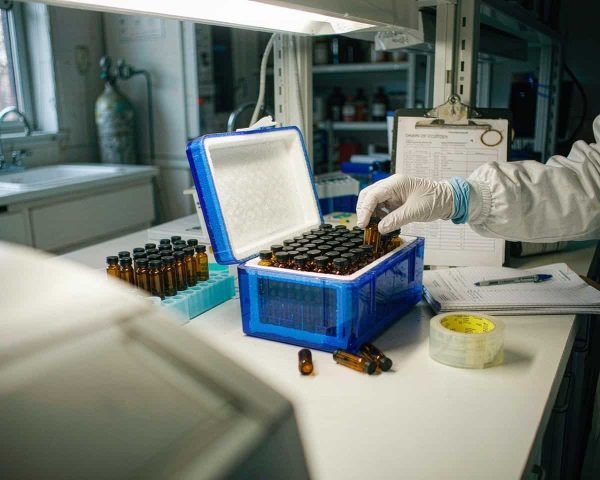

I spent three years supplying consumables to environmental labs across three continents, and I can tell you the fastest way to lose a contract with one is to ship a box of VOA vials missing its batch certification. Environmental work runs on paperwork as much as it runs on chemistry, and the paperwork starts with the container.
Environmental testing labs analyze water, soil, air, and waste samples to detect contaminants, and their consumable choices are dictated by the analytical methods they must follow. The right vial, bottle, or filter is not a preference in this sector. It is written into the method, referenced by number, and checked during audits.
This guide walks through the consumables that matter most in environmental work, stream by stream, so you can stock a lab (or a sampling van) without guessing. I’ll cover what each method family expects from its containers, where the hidden failure modes live, and what a sensible buying program looks like.
What Environmental Labs Actually Test
Before buying anything, you need to know what drives the workload. Environmental labs split into four broad streams, and each one pulls on a different shelf of the stockroom.
Water is the biggest. Drinking water, groundwater, wastewater effluent, stormwater. A mid-size municipal lab can process several hundred samples a week, and most of them arrive in bottles the lab itself supplied to the sampling crew. The methods governing this work sit in the EPA’s Clean Water Act methods collection, which spells out container types, preservation requirements, and holding times for permitted testing. If you’ve never read one of these method summaries, the level of container detail surprises people: approved plastic types, cap liner materials, even the order in which preservative and sample meet.
Soil and solid waste comes next. Contaminated site assessments, landfill monitoring, brownfield redevelopment. These samples feed volatile organic analysis, semi-volatile extractions, and metals digestion, and they arrive in everything from brass sleeves to methanol-filled jars. The consumables story here is mostly about vials and jars that survive field abuse and keep volatiles where they belong.
Air work is smaller in most commercial labs but real: sorbent tubes, filter cassettes, stack testing impingers. The consumables are specialized and the margins for error are unforgiving, because you cannot re-run an air sample collected last Tuesday.
Waste characterization rounds out the picture. Hazardous waste profiling feeds the SW-846 methods family, and the EPA maintains a validated test methods list that labs audit against when they qualify a new supplier or container.
The common thread through all four: in a regulated lab, the container is part of the measurement. Pick the wrong one and the data is invalid no matter how good your chromatography is.
The Core Consumables Every Environmental Lab Burns Through
Walk the bench of any environmental lab and you’ll see the same short list in high volume.
Forty milliliter VOA vials, usually amber, for volatile organics. One-liter amber glass bottles for semi-volatiles and pesticides. Acid-washed HDPE bottles for metals. Polypropylene bottles wherever PFAS is on the menu. Glass fiber and membrane filters for suspended solids and dissolved metals fractions. Syringe filters, mostly PTFE and PVDF membranes, for cleanup before extraction and concentration.
Consumption is the defining trait. A drinking water lab can empty a case of VOA vials in a week during a monitoring quarter, then order another. Procurement managers in this sector buy on standing orders and quarterly framework agreements, which is why lead time and lot-to-lot consistency matter as much as unit price. A cheaper vial that arrives three weeks late during a compliance quarter is not cheaper.
One habit worth copying from the well-run labs I’ve visited: they keep a shelf designated for method-specified containers, physically separate from general glassware. Nobody grabs a random bottle from that shelf to water the office plants. The discipline sounds trivial until an auditor asks where the bottles for a compliance batch came from, and the answer is a purchase order tied to a cleaning certificate.
Where does the market stand on all this? The big suppliers treat environmental as its own product universe; the environmental analysis section on Thermo Fisher’s site shows how sampling containers, preservation chemicals, and filtration products get organized by method rather than by material. That’s a useful mental model when you build your own stockroom taxonomy.
Decontamination consumables hide inside this list too, and they’re worth naming. Solvent rinses for soil sampling gear, nitric acid solutions for bottle washing, and the sleeves, gloves, and wipes that keep cross-contamination between stations honest. Labs that prep their own containers go through these at rates that surprise new buyers: a single bottle-washing day can consume a liter of acid solution and a full box of lint-free wipes, and running out mid-batch means either an unverified rinse or a delayed batch. Neither is a good answer to an auditor asking how the containers were cleaned.
VOC Work: Where the Vial Is the Method
Volatile organic analysis is the sharpest example of consumables determining data quality. The workhorse method, EPA SW-846 Method 5030B, describes purge-and-trap extraction of VOCs from aqueous samples, and it assumes the sample arrived in a vial that did not betray it en route. The method document itself is publicly available through the EPA’s SW-846 5030B page, and it’s worth reading for the sample handling assumptions alone.
What does method-compatible hardware look like in practice?
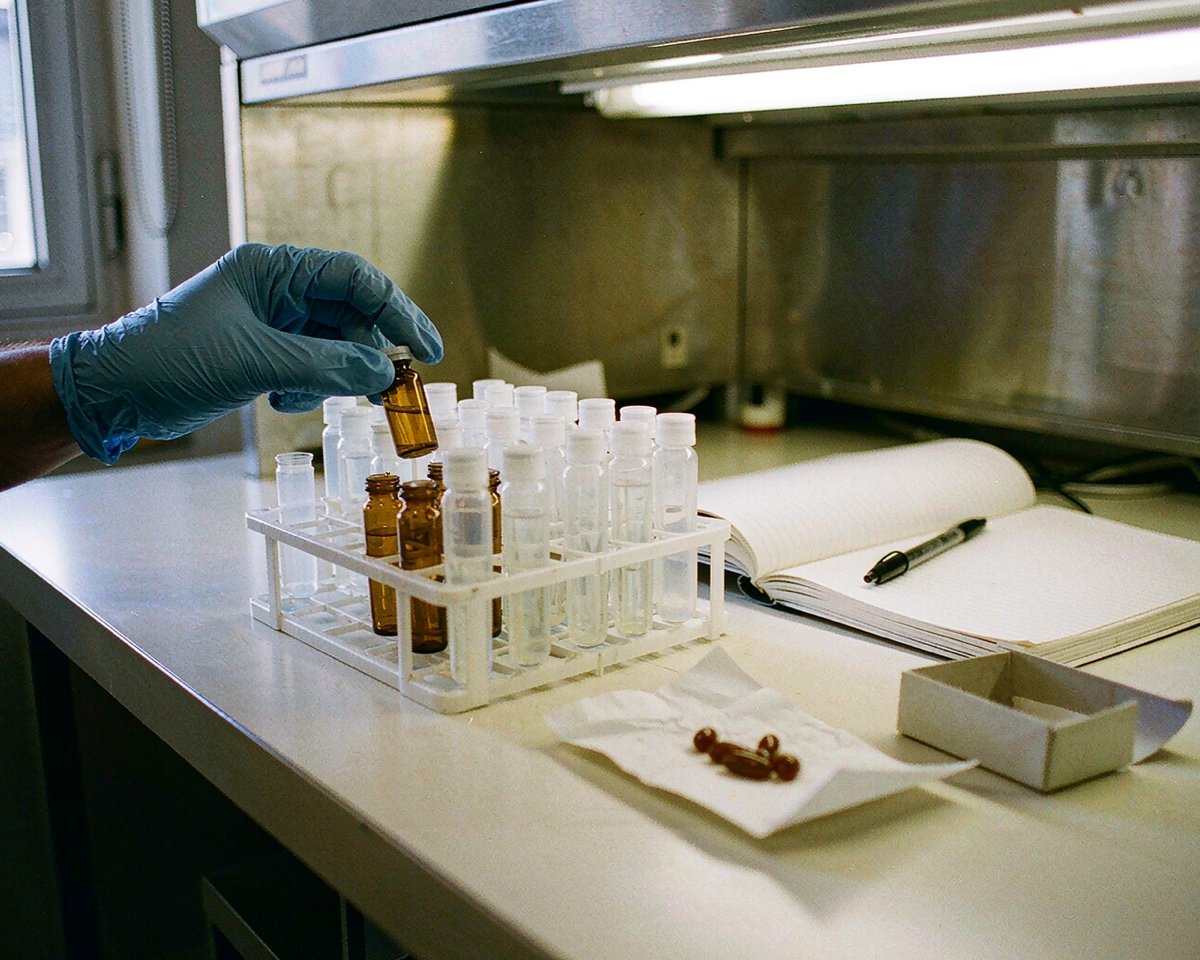
The vial is 40 mL, borosilicate glass, often amber for light-sensitive analytes. It closes with an open-top cap and a PTFE-faced silicone septum, because the purge-and-trap needle pierces the septum directly and nothing between the needle and the water column should be extractable. Reputable suppliers preclean these vials to EPA specifications and ship them lot-traceable and certified; you can see that spec structure on a commercial product like this precleaned 40 mL VOA vial listing from Restek, where the cleaning protocol, septa material, and traceability are stated on the product page rather than buried in a separate document.
Three physical details decide whether the sample survives the drive back to the lab.
Zero headspace is the goal. A bubble the size of a pencil eraser in the third vial of the cooler can strip out the lightest analytes before the vial is ever opened. I once watched a field crew fill VOA vials by pouring straight from a tap, laminar flow and all, and every vial in that batch carried a visible bubble. The lab flagged the set and resampled at their own cost. Fill with a funnel or a dedicated dispensing nozzle, cap slightly over-full, let the meniscus dome, then seat the septum.
The septum has to be PTFE-faced. A bare silicone liner absorbs halogenated solvents and bleeds plasticizers into a matrix you’re trying to measure at parts per billion.
And the vials should be certified clean per batch. Method blanks catch a dirty batch, but they catch it after you’ve collected, transported, and started preparing the sample. A certified container catches nothing because it rarely fails in the first place.
Metals: Acid-Washed Plastic and the 0.45 Micron Rule
Metals work looks simpler and isn’t. The container for a dissolved metals sample is usually HDPE, not glass, because trace metals adsorb to glass surfaces and glass can leach boron and sodium into a sample being measured for exactly those elements at trace levels.
The bottles need acid cleaning before use for trace work. A lab-grade soak in dilute nitric acid followed by thorough rinsing with Type I water is standard practice for labs that fill their own containers, and most commercial suppliers sell bottles that arrive pre-washed with the cleaning documented. The economics are worth thinking through: buying pre-washed bottles costs more per unit and saves a technician-day per batch, and in labs I’ve worked with, the math favors buying the moment anyone’s time is accounted for honestly.
Dissolved versus total recovery is where filters enter the picture. A dissolved metals fraction requires the sample to pass through a 0.45 micron membrane in the field, right after collection, before any acid goes into the bottle. Filter choice matters here more than buyers expect. A membrane that sheds particles or leaches cations shows up as false positives for iron or zinc, and those false positives land in your method blanks where an auditor will find them. Labs doing this work tend to standardize on one membrane chemistry and one supplier precisely because filter lot changes show up in the blank data.
For programs that need to identify which EPA-recognized procedures apply to a given matrix, the Clean Water Act methods index and the SW-846 validated methods list are the two references I keep bookmarked, and your consumables documentation should reference the same method numbers so the chain from method to container is traceable on paper.
PFAS Changes the Rules
If one topic has rewritten consumable SOPs in environmental labs over the past five years, it’s PFAS. Per- and polyfluoroalkyl substances are measured at low part-per-trillion levels, and the sampling materials themselves are common sources of interference.
The constraints are unusual enough that they break habits built around other analytes.
Glass is out. Long-chain PFAS compounds adsorb to glass surfaces, so drinking water PFAS methods specify polyethylene or polypropylene containers. A tech who reaches for an amber glass vial out of instinct can sink the result, and nothing about the failure will be visible until the data review.
PTFE is out, too, or heavily restricted depending on the program. Fluoropolymer components are everywhere in labware, and fluorinated polymers can carry PFAS residues that leach into the sample. That means no PTFE-lined caps, no PTFE syringe filters, no PTFE tape on sampling fittings. Nylon components bring their own adsorption problem with certain PFAS chain lengths. This is the one corner of the environmental lab where I tell buyers to read the method’s material exclusions literally, word by word, and to keep a physically separate set of consumables so a PFAS sample never touches shared labware.
The suppliers who moved first now market PFAS-compatible consumable lines explicitly, with material declarations that go beyond a standard certificate of cleanliness. When you qualify a supplier for PFAS containers, ask for extractables documentation specific to PFAS methods. A general “clean” certificate is not the same claim, and the difference will eventually end up in front of a data validator.
Cleanliness, Blank Control, and Batch Certification
Environmental data lives or dies on blanks. Method blanks, field blanks, trip blanks, equipment rinsates. Each blank is a question asked of a container: did you contribute anything to this measurement?
That question only gets a clean answer if the consumable was cleaned to a documented protocol and stayed that way. In practice this means a few things worth demanding from a supplier.
Batch-level certification for precleaned containers, with the cleaning protocol identified by name and revision. Lot numbers printed on boxes and ideally on individual vial labels, so a field crew’s custody records tie to a specific cleaning batch. Packaging that keeps vials segregated and capped, because a precleaned vial stored open in a dusty vehicle is no longer precleaned, whatever the box says.
I rate this the most transferable habit from pharma QC work. The pharmaceutical labs I supply maintain the same container cleanliness logic with different method references behind it, and the parallels between the two sectors run deeper than most buyers expect. Food testing labs sit on the same spectrum with pesticide residue and packaging migration work, and both of those sectors have written the buying playbook you can borrow from: the pharmaceutical lab consumables guide and the food testing equivalent on our site both treat documentation as a purchasing requirement rather than an afterthought.
Bottles for the Sampling Crew
Most of what an environmental lab buys never touches the bench. It goes into a sampling van, gets filled at a monitoring well or a manhole or a riverbank, and comes back in a cooler. That changes what “good” looks like.
Field bottles need to survive being handled by someone wearing cold gloves. Wide openings beat narrow ones for filling from a dip sampler. Graduations molded into the glass rather than printed on, because field bottles get scrubbed. Caps that seal wet, one-handed, in the rain; a pour ring on the bottle keeps the river in the bottle rather than the sampler’s sleeve.
Amber glass remains the default for semi-volatile organics and pesticides because UV degrades several target analytes in transit. HDPE wins for metals and general chemistry. The 500 mL and 1 L sizes dominate because they balance sample volume against cooler weight, and anyone who has hauled a full cooler up a levee at 2 PM in July understands why that balance matters more than the catalog suggests.
Preservation happens in the field too: acid dosing for metals, sodium thiosulfate for chlorinated water, sodium bisulfate for VOC preservation in some programs. Bottle materials need to be compatible with the preservative, and cap liners need to shrug off the acid you just dosed the bottle with. This is why experienced labs standardize their field kits and stop improvising bottle choices per project.
Air, Stack, and Sediment: The Smaller Streams
The three smaller matrices deserve their own consumable notes, because they break the water-and-soil assumptions in different directions.
Air and stack testing leans on sorbent tubes and impingers. Sorbent tubes (Tenax, Carboxen, and cousins) arrive pre-conditioned and sealed, and the consumable risk is thermal breakthrough: a tube stored in a hot vehicle loses its light-end analytes before sampling even starts. Impinger glassware for stack trains gets cleaned, assembled, and leak-checked by the crew, and a chipped impinger tip is the kind of defect you find with your fingertips, not your eyes. Labs that run stack work keep a dedicated glassware inspection step for exactly this reason, and the tubes themselves get logged with lot and condition dates like any other certified consumable.
Sediment samples are the soil program’s messy cousin. They need wide-mouth jars because a narrow neck plus wet clay is a losing combination, and the organic carbon measurements they feed are sensitive to container cleanliness in ways that make batch certification worthwhile. Freeze-core and grab sampling programs also burn through sterile and precleaned containers faster than anyone budgets for, in my experience.
Groundwater monitoring wells add bailer-specific consumables: disposable bailers, dedicated tubing per well, and the argument about whether disposable bailers or dedicated pumps produce cleaner data is a permanent fixture of the sector. Whichever side your program lands on, the consumable volume is steady and the inventory discipline pays off, because a well visit is the single most expensive trip in the sampling calendar.
None of these streams is large on its own, but together they’re why environmental distributors carry deeper catalogs than their water-testing cousins, and why a stockroom audit that only covers vials and bottles misses a third of the spend.
Common Pitfalls That Ruin Environmental Data
The failure modes repeat across labs, which is good news, because every one of them is preventable with consumable choices.
Headspace in a VOA vial is the classic. Volatiles partition into that bubble during transport and escape when the vial is opened. Fill full, cap clean, invert and tap the vial to check. Thirty seconds per vial that saves a resampling trip.
Wrong liner chemistry is the quiet one. A red rubber liner under an open-top cap looks equivalent on a shelf and behaves nothing like a PTFE-faced silicone septum in the chromatogram. Rubber bleed lands in the 80 to 150 degree GC oven range and mimics contamination with a persistence I find almost artistic.
Filtering when the method says settle, or settling when it says filter. Turbidity handling is method-specific, and swapping in a 0.45 micron PES membrane where the method expects glass fiber changes the dissolved organic carbon number you report. The filter is part of the method definition here, not an accessory.
And the most expensive one: holding time failures caused by consumable logistics. Samples collected in containers that arrive short in the field, or without the right preservative pre-dosed, wait in the cooler while someone drives to a depot. Holding clocks for VOCs and metals are measured in days, sometimes hours. A stockout at the wrong moment converts directly into invalid data and a return visit. If you want the deeper story on what happens between collection and analysis, how long a sample can legitimately sit in its container gets its own treatment in our sample stability guide, and the holding time rules in environmental methods are the strictest cousins of that discussion.
Qualifying a Supplier for Environmental Work
Because the consumable is part of the measurement, supplier qualification in this sector goes one step beyond price and lead time. Here’s the sequence I use.
Request the certificate package for the exact product, not the product family. For VOA vials that means the cleaning protocol name, the certification statement per batch, and a sample CoA. For filters, the membrane chemistry, extractables data, and lot traceability. If a supplier hesitates to send these for a sample order, that hesitation is data.
Check the packaging spec. Precleaned containers should arrive sealed, in compartments, with lot labeling on the box. A supplier whose precleaned vials ship loose in a poly bag has skipped a step that shows up later in your trip blanks.
Run a receiving verification on the first three lots. Wash a few vials down with your own method blank procedure, or run the filter’s extractables against your blank acceptance limits. This is cheap insurance, and it’s the step that catches the “same spec sheet, different factory” problem before it catches you.
Finally, ask about change control. Resin changes, mold transfers, and cleaning protocol revisions happen, and a supplier who notifies you proactively is worth a few cents per unit. The one who doesn’t will teach you why the notification exists, the hard way, in your blank data.
I consolidate suppliers where I can. Fewer suppliers means fewer documentation formats to audit, and volume in one place buys priority when a monitoring quarter goes sideways and you need an emergency shipment of amber vials on a Thursday.
Building the Buying Program
When I help a lab build or audit its environmental consumables program, I work through the same short list, in the same order.
Match every consumable to its governing method first, not to a catalog category. Write the method number on the internal item record so the connection survives staff turnover. Specify cleaning protocol and certification level on the purchase order, in writing, not in an email thread. Fix membrane and liner chemistries by method and buy the same lots where volume allows. Keep PFAS stock physically separate from everything else. Maintain a one-quarter buffer of VOA vials and field bottles, the two items where a stockout forces resampling.
Then read the supplier’s documentation the way an auditor would. Certificates should name the cleaning protocol, the lot, and the exact claim being made. If the abbreviations on a container spec are doing more obscuring than describing, our guide to reading a lab consumables spec sheet walks through the ten terms that show up most, and it applies to environmental containers as much as to autosampler vials.
Budget note from experience: consumables run about three to six percent of an environmental lab’s operating cost, and every point of that is cheaper than one resampling campaign. When procurement pressure lands on this line item, the right response is to trim duplicate stock and consolidate suppliers, not to chase the cheapest uncertified vial on the internet.
Storage and Shelf Life of Containers
Clean containers don’t stay clean by accident. Pre-washed bottles and precleaned vials have a practical shelf life, driven less by the container than by its environment: open shelving in a busy lab re-contaminates a cleaned surface faster than anyone wants to admit.
Store certified containers sealed in their original packaging until use, off the floor, away from solvent exhaust and the chunk of bench where someone strips old tape off glassware. Rotate stock so the oldest lots get used first, and mark the receipt date on the box in the same pen you use for everything else. If a box has been open for months, treat its contents as unverified and either re-clean or re-certify them before they touch a compliance sample.
None of this is chemistry. All of it protects the certification you paid for.
Conclusion
Environmental testing is the corner of the lab world where the consumable is written into the method you’re legally testing against. A 40 mL VOA vial with a PTFE-faced septum, an acid-washed HDPE bottle, a PFAS-safe polypropylene container: each exists because a method says so, and each fails the measurement silently when someone substitutes whatever was on the shelf. Build your stockroom around methods, demand batch certification in writing, keep PFAS stock physically separate, and treat the sampling crew’s van as an extension of the bench. Do those four things and your consumables stop generating blank hits and resampling trips, and start being the boring, reliable foundation that defensible environmental data sits on. When you’re ready to tighten the documentation side, start with the spec sheet guide linked above and audit one container line at a time.
Frequently Asked Questions
What is a VOA vial?
A VOA (volatile organic analysis) vial is a 40 mL borosilicate glass vial with an open-top cap and a PTFE-faced silicone septum, precleaned and certified for trace VOC work. The purge-and-trap instrument pierces the septum directly, so the vial is never opened between sampling and analysis.
Why can’t I use glass bottles for PFAS samples?
Long-chain PFAS compounds adsorb to glass surfaces, which biases low-level results. EPA drinking water PFAS methods specify polyethylene or polypropylene containers, and many also restrict PTFE components because fluoropolymers can carry PFAS residues.
What size filter is used for dissolved metals?
A 0.45 micron membrane, used in the field immediately after collection and before acid preservation. The membrane chemistry matters: it must not leach cations or shed particles into a sample being measured for trace metals.
Do VOA vials need to be certified?
For compliance work under methods like SW-846 5030B, yes in practice. Batch certification documents the cleaning protocol and gives your method blanks a documented reference. Without it, a contamination investigation has no trail to follow.
How should I stock consumables for field sampling?
Keep a one-quarter buffer of VOA vials and field bottles, pre-dose preservatives where your program requires them, and treat the van inventory with the same reorder discipline as the bench. Holding times start at collection, so a consumable stockout can force resampling.