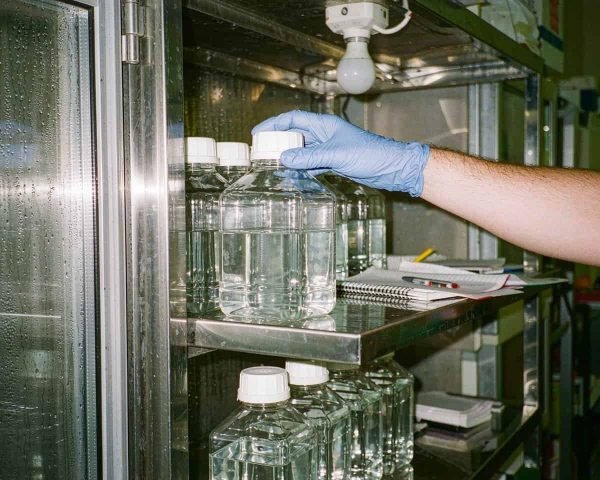

Cell culture punishes sloppy containers more than any other bench discipline I’ve worked with. A bottle that leaches a little plasticizer, or survives an autoclave cycle with a hairline crack, doesn’t fail loudly. It fails two passages later, in your viability data.
Media bottles for cell culture should be chosen on five criteria: material compatibility with your temperature range, sterility level, closure type, light protection, and the documentation behind the lot. Get those right and everything else is preference.
I learned the temperature one the expensive way, so let’s start there.
Material: Glass, PETG, or PET?
Three materials dominate cell culture media storage, and each has a specific job.
Borosilicate glass bottles (Type 1) are the reusable workhorse. They autoclave, they don’t leach, and they last for years. Standard lab-grade glass media bottles are manufactured to ISO 4796 specifications and accept GL45-style screw caps, which matters when your lab already runs one cap ecosystem. The trade-off is wash-rack labor, breakage, and the validation burden if you reuse them for GMP-adjacent work.
PETG square bottles are the sterile single-use default. Manufacturers certify them radiation-sterilized to a sterility assurance level of 10^-6, non-pyrogenic, non-cytotoxic, and compliant with USP Class VI plastics testing, and the resin tolerates freezer storage down to about -70 °C. That temperature window is why PETG owns the media prep shelf: you can freeze complete media in the same bottle you thaw and dispense from, with no transfer step. The product pages that document these claims are worth reading closely before you choose; the media bottles category at Fisher Scientific lays out material-by-material certifications (SAL, USP Class VI, temperature ranges) in one comparable view, which beats opening twelve PDFs.
PET bottles occupy a narrower niche: shipping and storage of liquid media, buffers, and sera, where the resin’s gas barrier properties protect contents in transit. Suppliers build their shipping bottle lines around this property, and the cell culture bottle category at VWR shows the range of sterile PETG and polycarbonate formats aimed at exactly this use.
Here’s the mistake I made as a new lab manager: I reused a sterile PETG bottle for an autoclave batch to “save a glass bottle from the wash queue.” The bottle came out warped and the media came out smelling faintly of burnt plastic. PETG is not autoclavable. Ever. The bottle says so, and now my SOP does too.
Sterility: What the Certificate Actually Promises
“Sterile” on a media bottle should mean something specific, and it’s worth demanding the specifics.
For gamma-irradiated single-use bottles, the number you want on the certificate is a sterility assurance level of 10^-6, meaning a one-in-a-million chance of a viable organism on a unit. That’s the standard for single-use labware, and any reputable manufacturer publishes it. Non-pyrogenic and non-cytotoxic claims sit alongside it, and they matter for primary cells and sensitive lines more than for robust immortalized ones.
For reusable glass, sterility is your job: autoclave with caps loosened or vented, and let media-grade water be the last thing to touch the interior. Our guide to sterilizing reagent and media bottles covers the cycle details, including why a fully tightened cap on a liquid-filled bottle becomes a small pressure vessel.
One nuance from the vendor side: sterile bottles arrive in shrink-wrapped trays or double-polybagged cartons. That packaging hierarchy isn’t marketing. It supports aseptic transfer into a biosafety cabinet, and if your team fills bottles inside a BSC, the tray-packed stock genuinely speeds the workflow while cutting the chance of a contaminated exterior.
Closure and Neck: The Underrated Decision
The cap decides daily usability more than the bottle does.
GL45 has become the de facto thread standard on glass media bottles, and it pays to stay within one thread family across your glassware: shared caps, shared pour rings, and no mismatch surprises mid-experiment. If your lab mixes glass brands, our GL25 vs GL32 vs GL45 thread guide keeps the confusion to a minimum.
On single-use PETG lines, look for closures with integrated features rather than accessories. A good example is the Nalgene PETG media bottle with septum closure, which uses an HDPE cap with a silicone/PTFE septum so you can add supplements or draw aliquots by syringe without ever opening the bottle. That keeps the headspace sterile and removes one whole category of contamination risk from supplement additions.
Pour rings on glass bottles deserve a mention too: they’re cheap, they’re replaceable, and they keep drips off the shoulder of the bottle, where dried media residue becomes a contamination harbor and a labeling nightmare.
Light Protection
Complete media contains components that degrade under light, and riboflavin is the notorious one; light exposure drives riboflavin-mediated photochemistry that can harm cell growth in ways that look like “bad lot” problems.
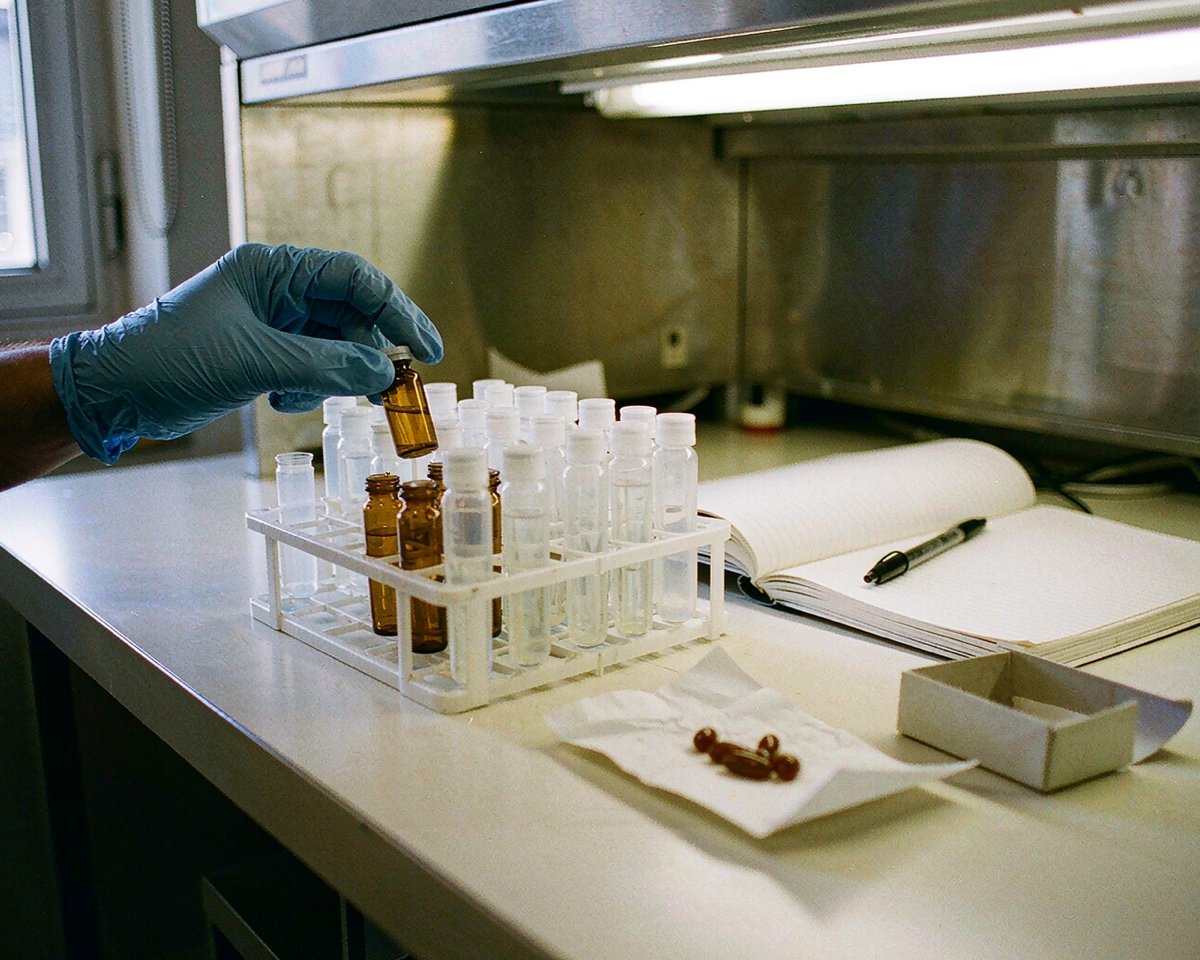
Two solutions exist and they’re not equal. Amber glass bottles protect the contents passively and are the right call for light-sensitive reagents that live on an open shelf; our amber vs clear reagent bottle comparison goes deeper on when the amber premium pays off. Low-actinic and amber-coated plastic lines exist too. For media stored in a dark cold room, clear bottles are fine and let you see the fill level and any precipitation.
My default: amber for anything with riboflavin or serum that sits out, clear for everything else, and no exceptions on where bottles are parked in the culture room.
Documentation and Lot Traceability
For cell culture work, and especially anything feeding a regulated workflow, the bottle’s paperwork matters as much as its plastic.
What to ask your supplier for: certificates confirming SAL, non-pyrogenic status, and USP Class VI compliance, tied to the lot number on your box. Change notification, so a resin or closure modification reaches you before it reaches your cells. And consistency between lots, because a bottle change can alter adsorption of serum proteins in ways that show up as drift.
The pharmaceutical consumables guide on our site walks through the documentation culture that regulated labs expect, and cell culture sits squarely in that world.
Conclusion
A media bottle looks like the least interesting purchase in a cell culture lab, and it quietly decides whether your media prep is boring and reproducible or a recurring source of weird data. Choose the material for its actual temperature and sterilization envelope (autoclave glass, never PETG), demand SAL 10^-6 and USP Class VI documentation on single-use stock, standardize your closures, and protect light-sensitive media with amber rather than hope. If you take one action from this guide, make it the documentation request: certificates tied to lot numbers, from every bottle supplier you use. And when you’re ready to build out the rest of the bottle shelf, the complete reagent and media bottle guide picks up where this one ends.
Frequently Asked Questions
Can PETG media bottles be autoclaved?
No. PETG softens well below autoclave temperatures and will warp or fail. If you need steam sterilization, use borosilicate glass bottles with vented or loosened caps, or buy single-use bottles that arrive gamma-irradiated.
What does USP Class VI mean for a media bottle?
It means the plastic passed the USP’s biological reactivity tests for plastics, covering systemic injection, intracutaneous, and implantation responses. It’s the baseline biocompatibility credential to expect on sterile single-use media bottles.
Why are cell culture media bottles often square?
Square PETG and PET bottles pack more efficiently into cold rooms and shipping cartons, and they resist rolling off benches. The material choice (PET/PETG) brings the sterilization and gas-barrier properties; the square shape is a storage and logistics win.
Do I need amber bottles for complete media?
If the media contains riboflavin or sits exposed to light for extended periods, yes. Light-mediated riboflavin chemistry can degrade growth performance in ways that are easy to misattribute to other causes. Media stored cold and dark can stay in clear bottles.
What sterility level should I require?
For gamma-irradiated single-use bottles, a sterility assurance level (SAL) of 10^-6, supported by a lot certificate. That’s the industry standard for single-use labware and the number to check on the certificate before a new supplier’s stock reaches your biosafety cabinet.