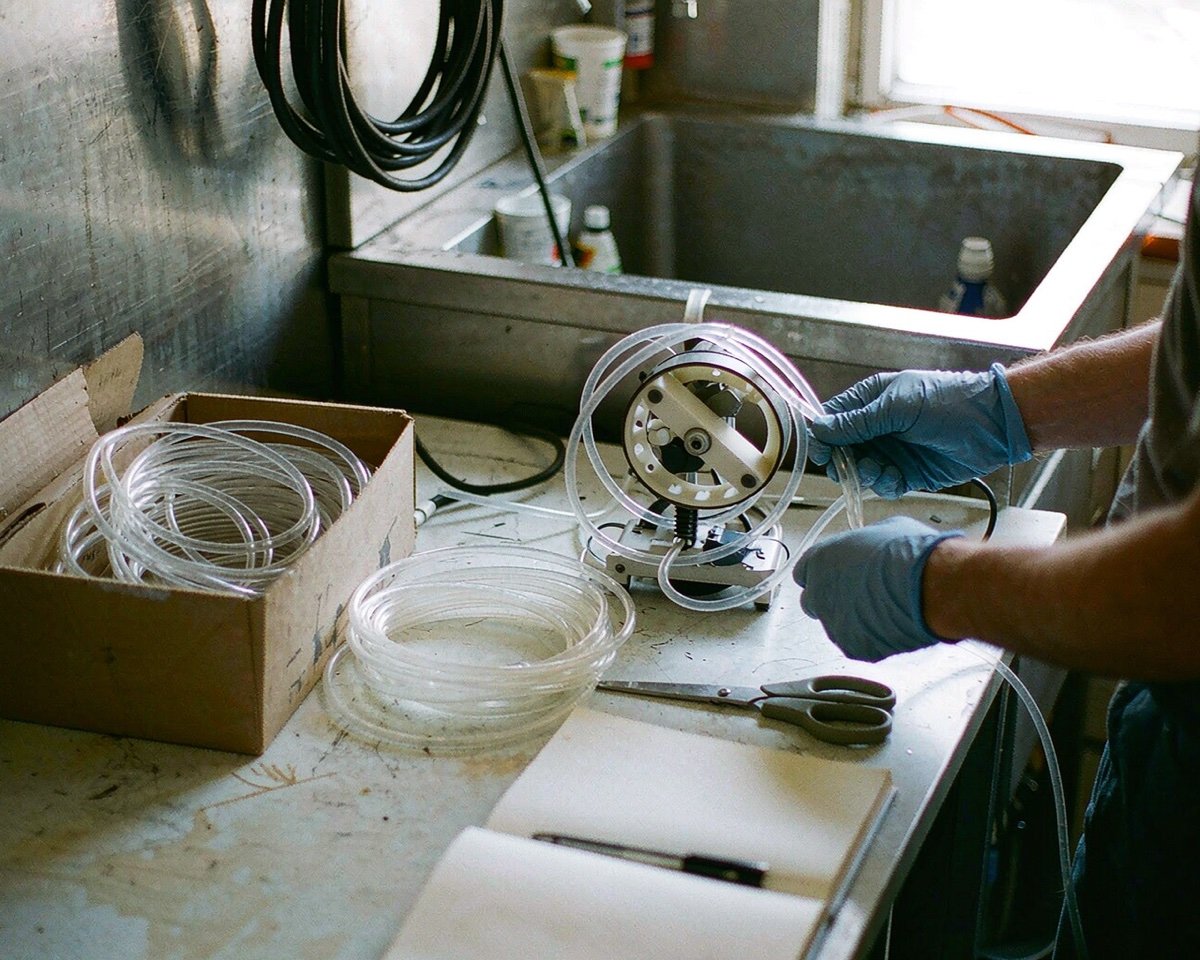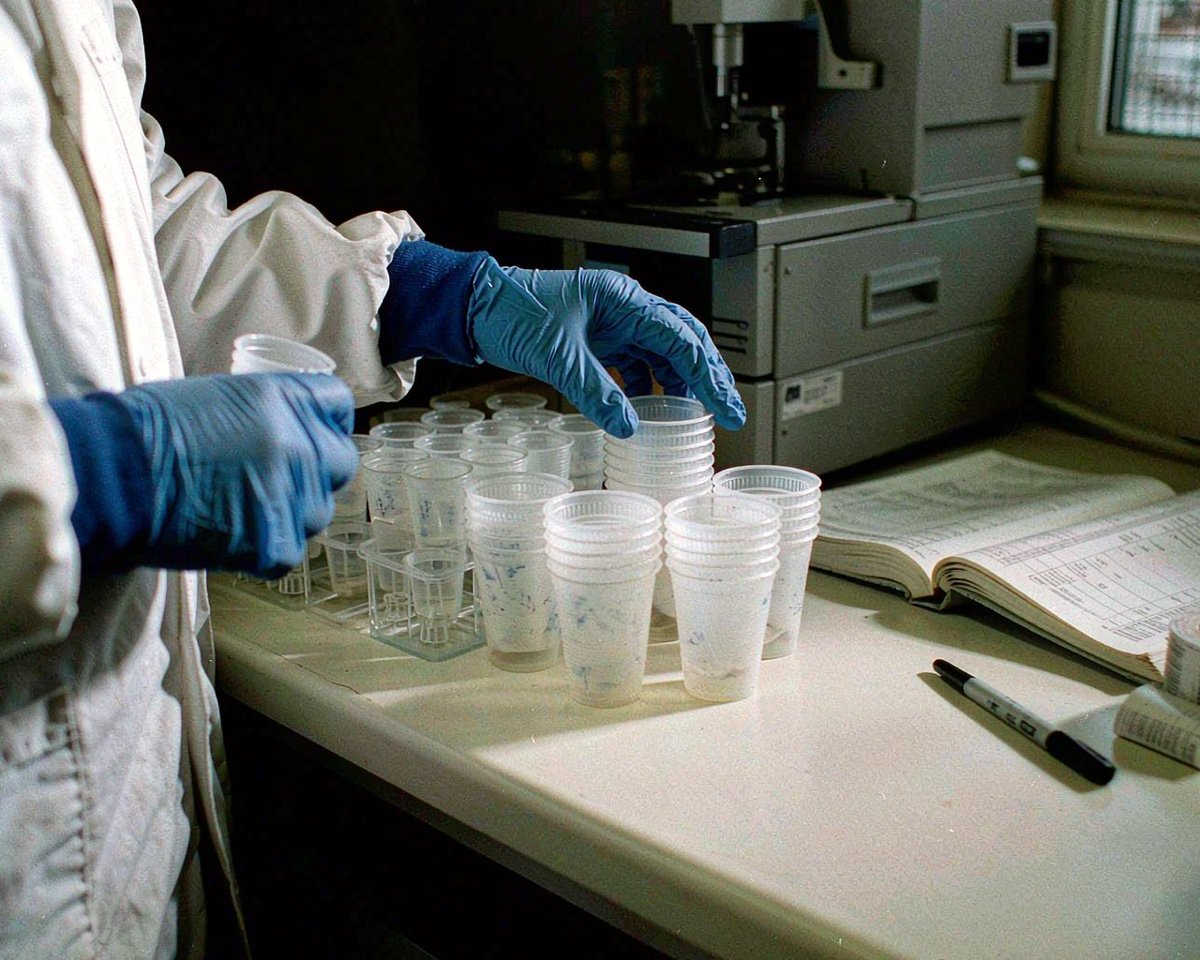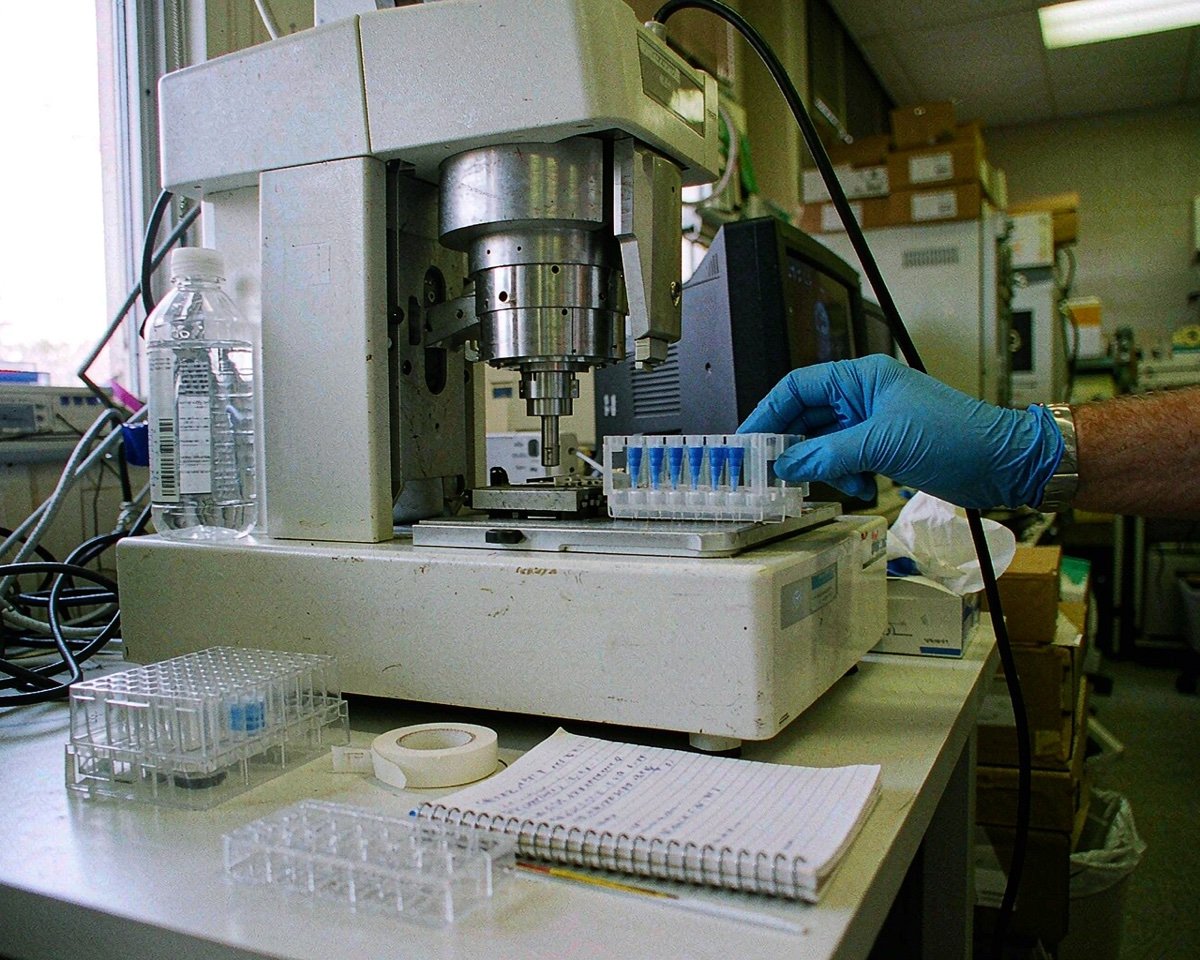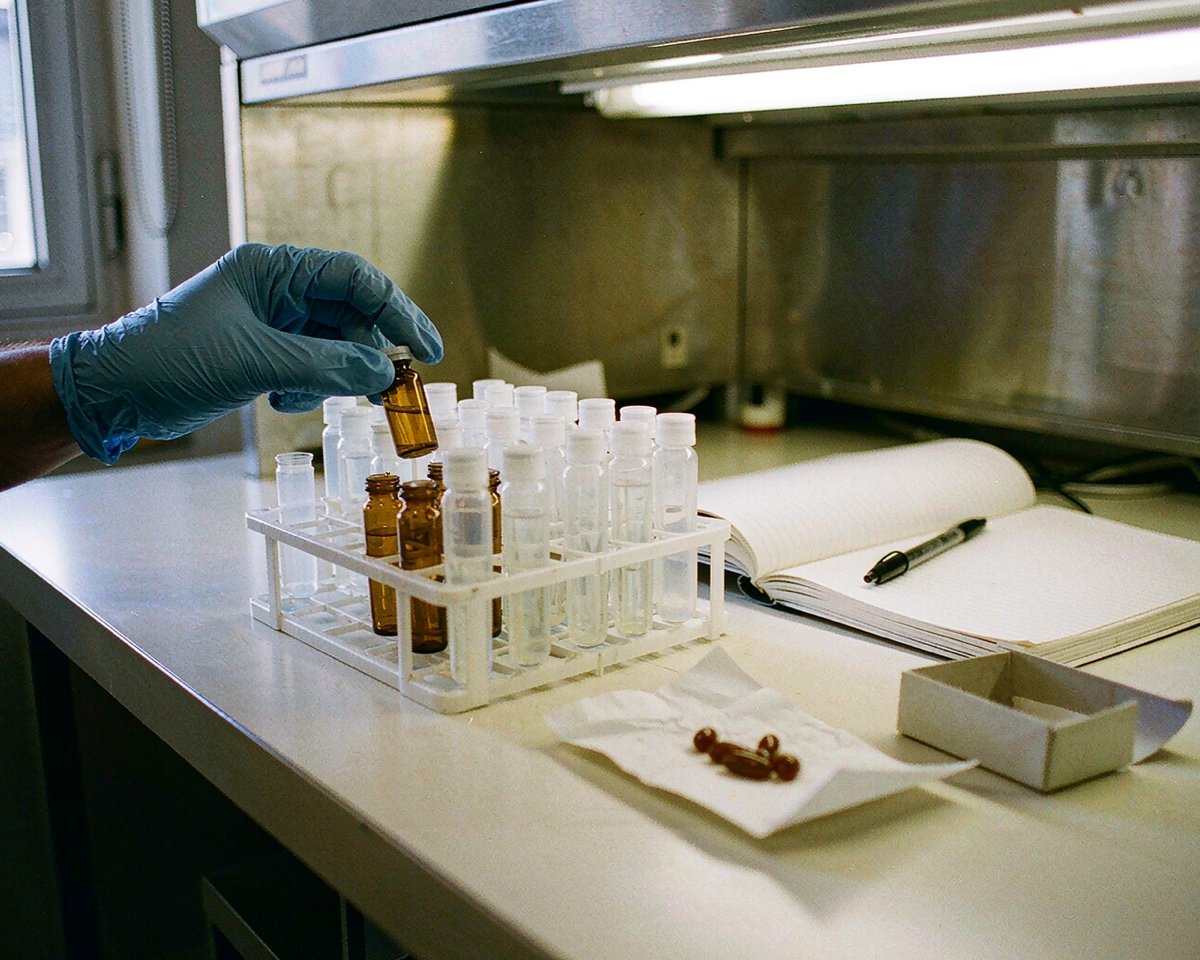
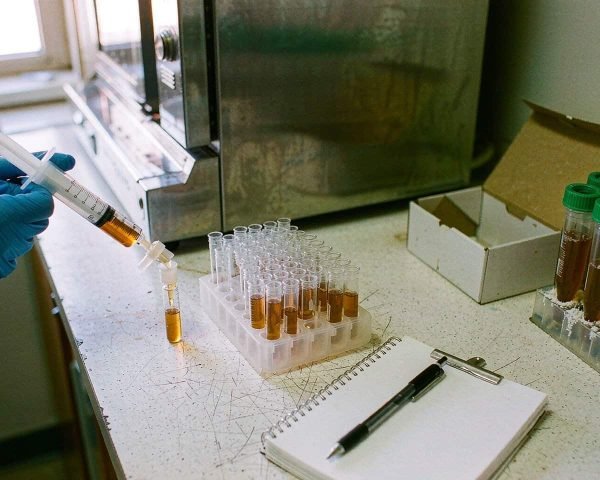

Food labs burn through consumables faster than almost any other analytical environment, and the products you pick show up directly in your data. This guide walks through every major category, what regulators expect from them, and how to buy well without overspending.
Food testing labs run on consumables. Vials, filters, caps, bottles, and swabs are small purchases individually, but together they decide whether a pesticide result holds up in an audit or collapses under questioning.
A food lab is a different animal from a pharma QC lab. You might run pesticides in spinach in the morning and allergens in cookies after lunch, and each matrix punishes sloppy sample handling in its own way. I learned this the hard way when a chlorpyrifos confirmation came back suspiciously low and the investigation ended at a reused syringe filter that had already seen twenty extracts. The instrument was fine. The method was fine. The consumable choice was the problem.
This guide covers the consumable categories food labs actually use, what the quality standards mean for each, and how to build a buying program that survives both budget reviews and auditor visits.
What Consumables a Food Testing Lab Actually Uses
The daily workload of a food lab falls into a few buckets, and each one has its own consumable stack.
Sample collection and homogenization
Before anything reaches an instrument, samples get collected, transported, and homogenized. Sterile sample bags, whirl-pack style bags, and pre-sterilized jars dominate this stage. For microbiological work, the collection container itself is part of the test. A bag that leaches plasticizer into a dairy sample can inflate a result, and nobody discovers this until the lab is defending an out-of-spec finding.
Homogenization consumables include blender bags with integrated filter layers, which separate the analytical portion from solids like bone or seed fragments. These seem trivial until a bag splits mid-blend and you spend the afternoon decontaminating the stomacher.
Extraction and cleanup consumables
This is where food labs differ most from clinical or pharma labs. Food matrices are dirty. QuEChERS (which stands for Quick, Easy, Cheap, Effective, Rugged, and Safe) extraction is the industry-standard workflow for pesticide residues, and it consumes pre-weighed salt packets, centrifuge tubes, and dispersive SPE cleanup tubes by the case. If your lab runs QuEChERS methods, these kits are probably your single largest recurring line item after solvents.
Syringe filters come next in the workflow. Nearly every extract passes through one before injection. The choice of membrane matters more in food work than most people expect, because extracts carry oils, pigments, and sugars that interact with filter media. I have seen carotenoid recoveries drop visibly when someone filtered a tomato extract through the wrong nylon membrane. The filter didn’t clog. It just quietly adsorbed the analytes.
Instrument-side consumables
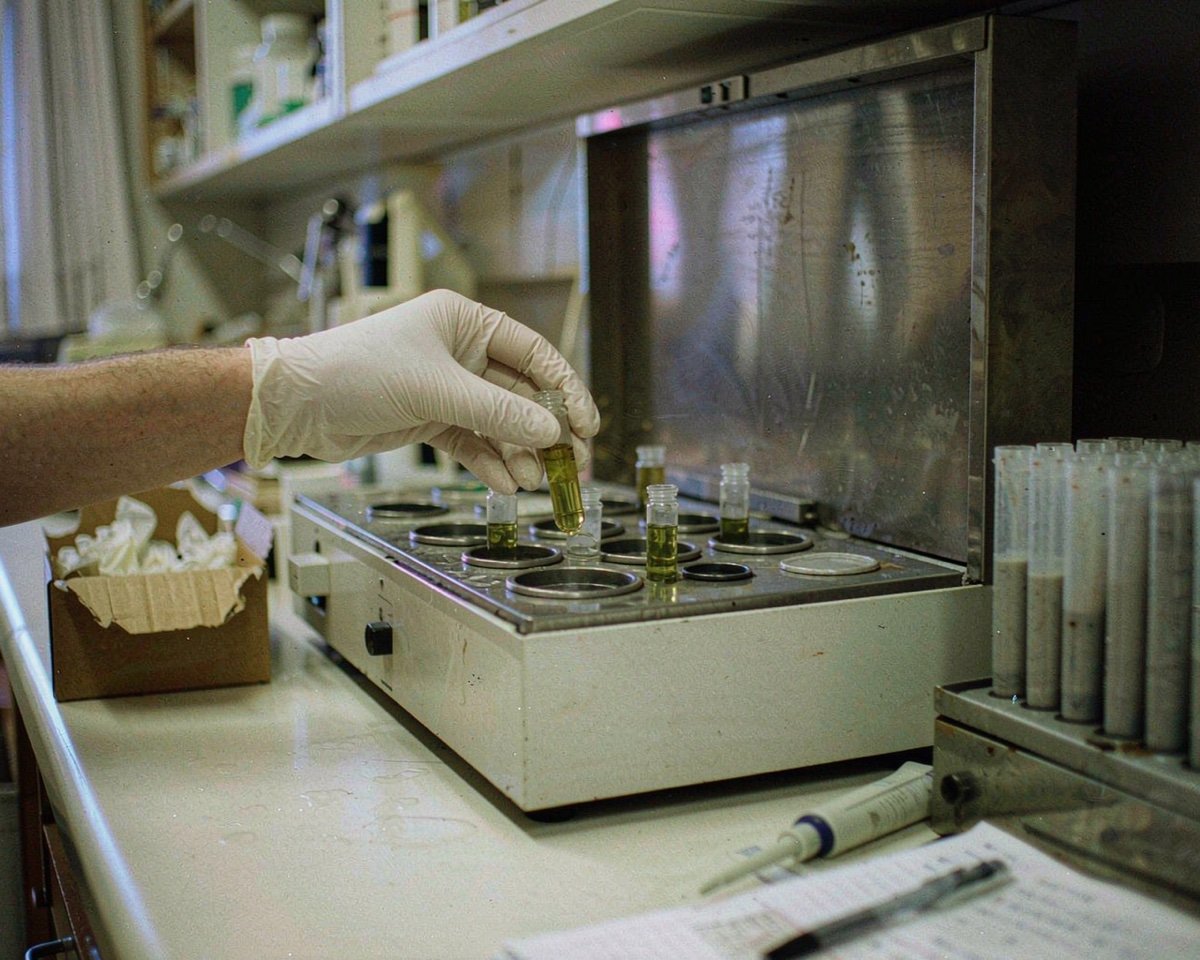
Autosampler vials, caps, and septa are the consumables that touch the instrument itself. Most food labs running LC-MS/MS or GC-MS/MS for contaminants use 2 mL screw-thread vials with PTFE/silicone septa. Low-adsorption and low-bleed versions exist for trace-level work, and they earn their premium when you are quantifying pesticides at parts-per-billion levels in a matrix that fights back.
Headspace vials deserve a separate mention. Flavor compounds, alcohol content, and packaging migrants are commonly measured by static headspace GC, which runs 20 mL crimp or screw vials in high volume. A flavor lab can burn through several thousand headspace vials a month without anyone noticing the spend.
Media and reagent storage
Media bottles, reagent bottles, and volumetric glassware round out the list. Buffer preparation for ELISA allergen kits, mobile phase storage, and microbial media all need borosilicate bottles with reliable closures. Food labs that run both chemistry and micro sections often standardize on GL45-thread bottles so one cap type covers everything from pH 4 acetate buffer to tryptic soy broth.
A Closer Look at the Four Consumables That Touch the Result
Some categories deserve more depth than a paragraph, because they sit closest to the data. These are the four I’d put on any food lab’s watch list.
Autosampler vials: the last container your sample ever sees
Every extract you prepared ends up in a vial, and whatever the vial contributes becomes part of the chromatogram. Three vial properties matter in food work. Glass type (Type I borosilicate) prevents alkali leaching into aqueous extracts. Septa quality (PTFE/silicone laminates with good resealability) prevents evaporation and coring across a long sequence. And cleanliness, the least visible property, determines your baseline: a poorly cleaned vial adds ghost peaks that look exactly like trace contaminants.
Volume is a quiet consideration too. A 2 mL vial with a conical insert lets you run a 200 µL extract without wasting the cleanup effort you invested in it. Food extracts are labor-intensive to produce, so losing half of one to hold-up volume hurts more than it would in a pharma lab with abundant sample.
Syringe filters: the gatekeeper before the column
Filtration looks like a trivial step, and that’s exactly why it causes problems. The filter membrane physically contacts your entire analytical portion. Match the membrane to the matrix: PTFE for oily or high-organic extracts, PVDF or PES for aqueous and protein-containing samples, regenerated cellulose where protein binding is the enemy. Use 0.45 µm for routine HPLC and 0.22 µm for UHPLC and LC-MS work.
The one habit worth institutionalizing: discard the first portion of filtrate. Extractables from the membrane concentrate in the first milliliter, and at trace levels that milliliter is the difference between a clean baseline and a day of investigation.
QuEChERS kits: method-critical by design
The salt blend in a QuEChERS kit is a method parameter, not a commodity. Unbuffered, acetate-buffered, and citrate-buffered blends exist because pesticide recovery changes with extraction pH. Sorbent loading in the dSPE tube (MgSO4, PSA, C18, GCB in various combinations) is matched to matrix types: the cleanup that works for apple doesn’t work for avocado. Buying kits that match the published method, with documented sorbent masses, is the cheapest form of proficiency-test insurance a food lab can buy.
Media and reagent bottles: boring, in the good way
Bottles rarely cause dramatic failures. They cause slow ones. A bottle that retains detergent residues shifts microbial counts. A clear bottle stored on an open shelf photodegrades the riboflavin in your vitamin premix standard. Amber borosilicate with PTFE-lined GL45 caps solves both quietly, and standardizing on one thread system means one cap inventory covers the whole lab.
How Food Testing Methods Shape Consumable Requirements
The method you run decides the consumable spec, and the regulator decides the method.
Regulated food testing leans on a small number of method frameworks. In the United States, the FDA publishes the validated methods its own labs use in the FDA Laboratory Methods database for food, covering chemical, microbiological, and macroanalytical procedures. Many of those chemical methods, especially multi-residue pesticide methods, are QuEChERS-based, which is why the salt packet and dSPE tube business is so large.
Method credibility comes from validation. The FDA’s Foods Program requires its chemical methods to pass internal validation guidelines before they enter routine use, and labs in other countries follow similar logic through national programs. AOAC INTERNATIONAL maintains the Official Methods of Analysis and SMPR performance standards that many food labs treat as the benchmark for method acceptability. When a customer asks whether your pesticide method is “AOAC-style,” these are the documents behind the phrase.
What does this mean for consumables? Three practical consequences:
- Trace-level work demands cleaner materials. Pesticide MRLs are set at low parts-per-million and sometimes parts-per-billion levels. At those concentrations, a few micrograms of plasticizer leached from a low-grade tube is a phantom peak, not a rounding error.
- Matrix dirt demands robust cleanup products. QuEChERS kits with the right salt blends exist because different pesticide classes behave differently at different pH. Buying a generic “extraction kit” instead of the blend your method specifies is a quiet way to fail a proficiency test.
- Documentation follows everything. If a result is challenged, the lab must show which lot of consumables touched that sample. This single fact drives most of the buying advice below.
What a Typical Method Consumes
Budget conversations get easier when you can see the consumption pattern of each method type. The table below reflects what a mid-size food lab typically burns through per batch, drawn from what I’ve watched labs order over the years. Your volumes will differ, but the ratios hold surprisingly well across labs.
| Method | Key consumables per batch | Typical batch size | The item that runs out first |
|---|---|---|---|
| Pesticide multi-residue (LC-MS/MS) | QuEChERS extraction + dSPE kits, 2 mL vials, PTFE or PVDF filters | 20 to 40 samples | dSPE tubes |
| Mycotoxin screening | Immunoaffinity columns, 2 mL amber vials, filters | 15 to 30 samples | Immunoaffinity columns |
| Allergen ELISA | Extraction bags, buffer bottles, coated wells | 20 to 40 samples | Extraction bags |
| Residual solvents (headspace GC) | 20 mL headspace vials, crimp caps, PTFE/silicone septa | 20 to 50 samples | Headspace vials |
| Microbiology (plate/count) | Sterile bags, diluent bottles, petri dishes, media | 30 to 100 samples | Sterile sample bags |
Two observations from that table matter for planning. First, the item that runs out first is almost never the expensive one; it’s the highest-count commodity item, which is why reorder points on cheap products save more downtime than negotiating their price. Second, amber vials appear in the mycotoxin row for a reason: aflatoxins and related compounds are photolabile, and labs that switched to amber vials mid-year sometimes see the change in their QC trend before they see it in the literature.
If your lab runs several of these methods, the shared consumables (filters, 2 mL vials, GL45 bottles) are where standardization and volume pricing concentrate. The method-specific items (QuEChERS blends, immunoaffinity columns) are where supplier reliability matters most, because there are fewer alternate sources for a validated kit and lead times run longer.
The Consumable Categories That Deserve Extra Scrutiny
Not every consumable carries the same risk. After enough audits and enough investigations, I sort food lab consumables into two groups: the ones where cheap is fine, and the ones where cheap is a bet you will lose.
Where budget products are fine
General-purpose items that never touch the analytical portion directly can usually be sourced on price. Nitrile gloves, wipe rolls, blender bags for clearly non-critical prep steps, and laboratory film fall into this bucket. So do storage boxes and racks.
One caution applies. Never let a supplier substitute an equivalent-looking product for a specified one without telling you. The substitution itself isn’t the problem. Not knowing is.
Where quality pays for itself
Autosampler vials sit at the top of this list. A bad vial produces surface variability, septa coring, and ghost peaks that cost hours of investigation. The economics are blunt: a premium vial might cost a few cents more per unit, while one re-run of a 60-sample batch of LC-MS/MS pesticide work costs more than a case of vials. This is why my article on HPLC in food analysis treats vial quality as a method parameter, not a supply item.
Syringe filters for trace analysis are the same story. Extractables and leachables from an unsuitable membrane show up exactly where your target analytes live. Food extracts, being oily or sugary, are harder on membranes than clean aqueous standards, so the filter needs to be matched to the matrix. Labs running high-throughput contaminant screening should read the filter chemistry trade-offs in detail before standardizing.
QuEChERS components deserve sourcing attention because the salt blends are method-critical. Reversed-phase dSPE tubes with MgSO4, PSA, and C18 are standard for most fruit and vegetable work, but fatty matrices need C18 plus PSA, and polyphenol-rich samples often call for GCB (graphitized carbon black), which also strips planar pesticides if you overdo it. The kit composition is a method decision. Treat a supplier who can’t document sorbent loading as a risk.
Media and diluent bottles look low-risk but sit close to microbiological results. A bottle that sheds particles or retains residues from previous batches can shift microbial counts, and micro results are the ones that trigger product holds. Borosilicate bottles with PTFE-lined GL45 caps are the boring, correct answer here.
The packaging migrants problem
Food labs sometimes measure what packaging leaches into food, which creates an odd loop: the lab needs consumables that are cleaner than the products being tested. Headspace GC work on packaging migrants is a good example. If your 20 mL headspace vials bleed siloxanes, the migrant profile you report includes your vial. Labs doing this work should review headspace analysis applications to see where volatile background comes from and how vial and septa quality control it.
Quality Standards and Documentation: What to Demand from Suppliers
Food labs don’t face the same regulatory structure as pharma, but good labs borrow pharma habits because audits reward them. The core habit is lot-level documentation.
Certificates of analysis and conformance
For consumables that touch the analytical portion, ask for a Certificate of Analysis or Certificate of Conformance per lot. A CoA should state what was tested, the acceptance criteria, and the actual results for the lot you received. A one-page “quality assurance” statement without lot numbers is decoration.
Vial certificates commonly cover dimensions, glass hydrolytic resistance, and cleanliness testing. Filter certificates cover extractables, pore size, and flow characteristics. QuEChERS certificates should confirm sorbent identity and mass. When a supplier sends these without being asked, that is usually a good sign about everything else they do.
Glass quality standards
Vial and bottle glass follows compendial classifications. USP Type I borosilicate is the default for food lab containers because its hydrolytic resistance keeps it from adding alkali to aqueous samples. The classification system and its tests are defined in USP General Chapter 660, Containers—Glass, and the same logic appears in the European and Japanese pharmacopoeias. You don’t need to be a pharma lab to benefit from a Type I classification. You just need to know that “glass” on a quote can mean several different things.
Amber glass matters more in food labs than most buyers realize. Vitamins, flavor compounds, and some pesticides are photolabile. An amber vial or amber reagent bottle is a cheap insurance policy against a slow degradation that quietly flattens your calibration curve over a sequence.
Supplier quality systems
A supplier running an ISO 9001 quality management system has documented processes for handling complaints, changes, and traceability. That matters most when something goes wrong, because the investigation will ask how the supplier controls its own process. Food labs in export chains also get asked about supplier qualification during customer audits, and a supplier’s ISO certificate answers that question in seconds.
Incoming verification, in five minutes
Documentation only helps if someone checks the delivery against it. A short receipt routine catches most problems while they are still free to fix: count the cases against the packing list, confirm the lot number on the box matches the certificate, glance for broken glass or punctured packaging, and file the certificate by delivery date. Five minutes, once per delivery, and the lab’s documentation chain is intact from factory to bench.
Building a Buying Program That Survives Audits
The labs that handle consumables well share a few habits. None of them require new software or a consultant.
Standardize deliberately
Pick one vial format, one filter chemistry per matrix type, and one bottle thread standard, then buy them in volume. Standardization does two things at once: it cuts unit price, and it removes a whole class of method variability, because the same consumable touches every sample. The exception is specialty work (low-adsorption vials for trace analysis, for example), where the specialty item is written into the method.
Keep the paperwork with the physical inventory
File lot certificates in the same location discipline as the products themselves. When an auditor asks for the certificate of the lot that touched sample X from March, the labs that pass are the ones where the answer takes two minutes. I keep a folder per consumable type with lot certificates filed by delivery date. It is a low-tech system and it has never failed an audit.
The bench team is part of this system whether or not it’s written anywhere. Analysts are the first people to notice that a new lot filters slower or that the caps feel different, and they’ll mention it at the bench long before it appears in a QC chart. Make it easy for that observation to reach whoever owns the supplier relationship, because those informal signals are your earliest warning that a lot changed.
Set reorder points based on method, not habit
Consumption is predictable once you count it. A lab running five QuEChERS batches a day knows it consumes 250 dSPE tubes per week plus breakage. Reorder points belong on the shelf, not in someone’s memory. Labs that wait until the box is empty before ordering always end up borrowing from a neighboring lab and quietly introducing a different lot mid-method.
Qualify second sources for critical items
Single-sourcing critical consumables is efficient until it isn’t. A missed shipment or a quality event at one factory can stop a food lab that has regulatory deadlines. Keep a qualified alternate for the items that would stop the lab if they vanished: vials, filters, QuEChERS kits, and media bottles. Qualify the alternate by running your method’s QC samples with their product once or twice a year, so the switch is a formality instead of a project.
Common Buying Mistakes in Food Lab Consumables
The same mistakes recur across labs of every size. Here are the four I see most.
The first is buying on unit price alone. The cheapest vial is rarely the cheapest purchase once re-runs and investigations are priced in, so compute cost per valid result rather than cost per unit. The quote comparison takes twenty minutes longer and pays for itself the first time the lab avoids a re-run.
The second mistake is ignoring lot-to-lot change. Suppliers change production sites, molds, and membranes. Without change notification commitments in the supply agreement, your first hint of a change is a shift in your QC chart. Ask suppliers in writing whether they notify customers on changes that could affect performance.
Mixing consumable lots mid-method comes third. For a validated or regulated method, changing a critical consumable lot mid-study invites questions you don’t want. Plan lot usage so a study finishes on one lot where practical.
And fourth: no incoming verification. A quick receipt check (count, condition, lot match against certificate) catches most supply problems at the moment they are cheapest to fix. It takes five minutes per delivery.
Cost Management Without Cutting Corners
Food labs usually operate on tighter budgets than pharma QC, so cost control matters. The effective levers are structural rather than cheap.
Volume contracting on standardized items typically saves 15 to 30 percent compared to ad-hoc purchasing, and it stabilizes delivery. Direct sourcing from manufacturers (rather than through multiple middlemen) removes margin layers, which is a large part of why OEM-compatible suppliers can price 20 to 40 percent under the big brands for equivalent products. Reviews of consumable spend once or twice a year catch the slow creep of small one-off orders, which is where most money quietly leaks.
There is a seasonal dimension worth planning for, too. Audit season and proficiency-test rounds both spike consumable demand, and both tend to arrive before anyone has updated the standing order. If your lab knows a surveillance audit lands in October, the September order is the one to double.
The one place not to economize is the consumable your method depends on for data integrity. That is usually the vial and the filter. Everything else can be shopped.
Conclusion
Food testing consumables are ordinary products bought to unusually high standards, and the gap between good and careless buying shows up in your data. The through-line of this guide is that consumable choices are method choices. The vial holds the extract, the filter defines what reaches the column, and the certificate is what defends the result later. Standardize where you can, document what you buy, qualify a second source for the items that can stop the lab, and spend your scrutiny on the few products that touch the analytical result directly. Labs that do this convert consumables from a source of surprises into a solved problem. If you want to go deeper on the instrument side, the guide to why chromatography is key in food and beverage testing is a natural next read, and the walkthrough of the role of HPLC in food production shows how these lab practices scale into factory quality control.
Frequently Asked Questions
What consumables does a food testing lab use most?
QuEChERS extraction kits, syringe filters, and 2 mL autosampler vials top the list for chemistry sections, while sterile sample bags and media bottles dominate microbiology work. Headspace vials are high-volume in flavor and packaging labs. Most labs find that three or four product lines account for the bulk of their spend.
Do food labs need certified HPLC vials?
Lot-level certification is valuable for trace-level contaminant work because it provides documentation and lot consistency, but many routine food applications run well on quality standard vials with a CoA on request. The deciding factor is your detection level and how often your results face external scrutiny.
What is a QuEChERS kit and why does the salt blend matter?
A QuEChERS kit contains pre-weighed extraction salts and dispersive SPE sorbents used to extract pesticide residues from food matrices. Different salt blends (unbuffered, acetate-buffered, citrate-buffered) shift the pH of the extraction, which changes how pH-sensitive pesticides and matrix components behave. Using a blend your method doesn’t specify can change recoveries enough to fail validation.
Which syringe filter should I use for food extracts?
Match the membrane to the matrix: PTFE handles oily and strong-organic extracts, PVDF or PES suit aqueous and biological samples, and regenerated cellulose works for protein-containing extracts. Use 0.45 µm for routine HPLC and 0.22 µm for UHPLC or LC-MS. Discard the first portion of filtrate at trace levels to avoid membrane extractables.
How should a food lab store consumables?
Keep vials, filters, and media bottles sealed in their original packaging in a cool, dry area away from direct sunlight, and rotate stock first-in-first-out. Septa and filters age with time and temperature, so don’t warehouse years of stock to chase a volume discount. Amber glass products protect light-sensitive reagents in storage as well as in use.