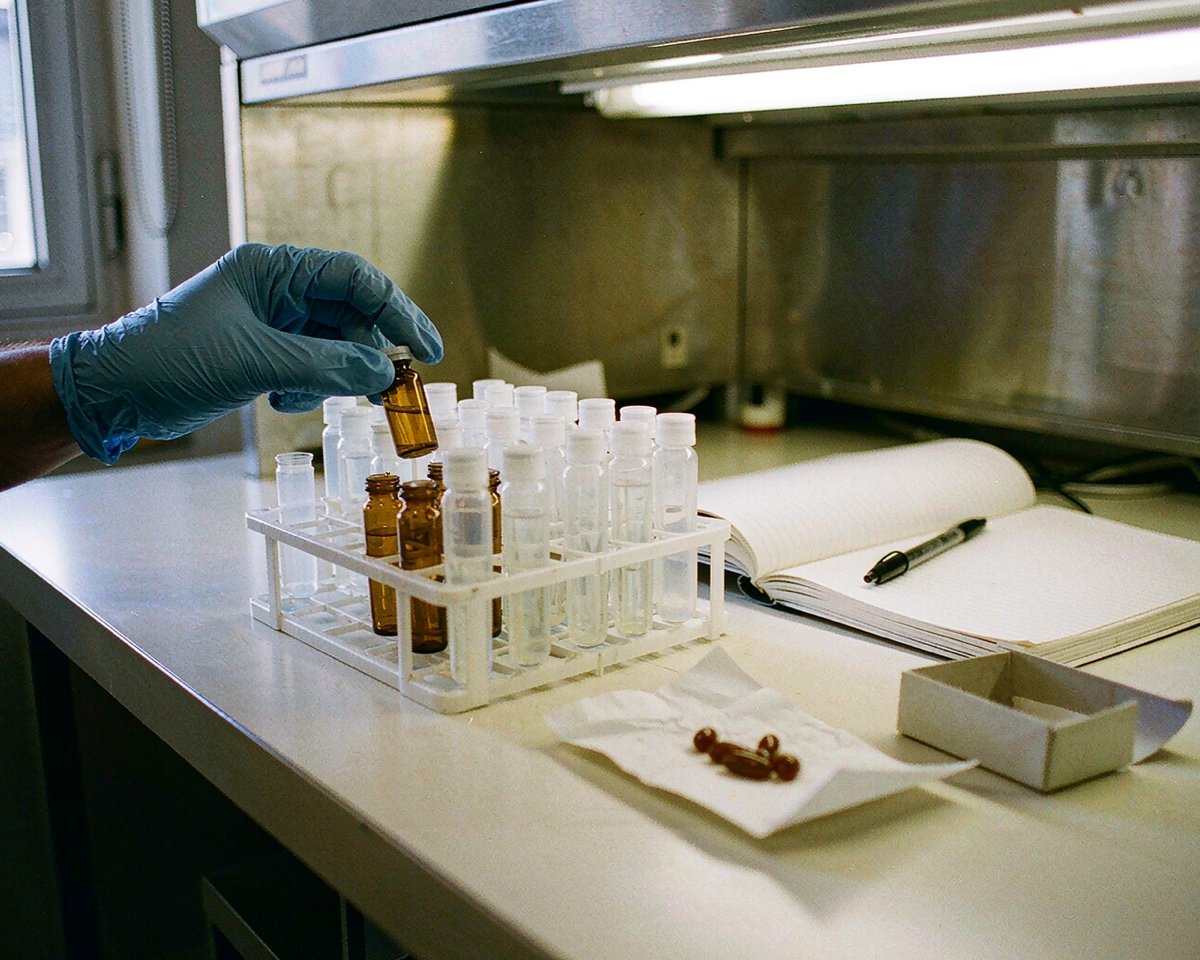
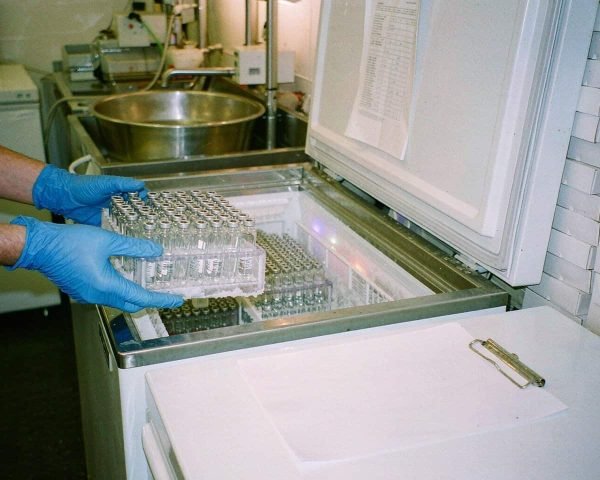

Someone on your team will eventually ask this at the freezer door, holding a rack of filled vials: can these go in here? The answer decides whether you get your analytes back next week or open the freezer to find cracked glass and puddles.
Short answer: yes, you can freeze samples in HPLC vials, but only with the right vial, the right fill level, and a slow thaw. Fill glass vials to about 80 or 90% so ice has room to expand, choose caps and septa rated for low temperatures, and never move a frozen glass vial straight from the freezer to a warm bench. Polypropylene vials tolerate freezing better than glass. And freeze-thaw cycles themselves quietly degrade many analytes, so aliquot your samples before the first freeze.
Let me walk through the details, because “yes, with caveats” is where most labs get burned.
What Freezing Does to the Vial Itself
Water expands about 9% when it freezes. That sounds harmless until you do the arithmetic on a 2 mL vial filled to the brim: the ice has nowhere to go, so it pushes outward, and borosilicate glass, for all its chemical toughness, is brittle under that kind of stress.
Fill level is your first and cheapest defense. Leave 10 to 20% headspace in any vial going below 0°C. For aqueous samples, that’s non-negotiable. I once loaded a tray of 2 mL vials filled to the shoulder into a -20°C freezer for overnight storage, and by morning two had cracked clean around the base. The sample loss was annoying. The real cost was that the frost-covered survivors all had to be treated as suspect, since I couldn’t prove their caps hadn’t leaked during the expansion.
Temperature shock is the other killer. Borosilicate glass handles gradual temperature change well; it fails on sharp gradients. Pulling a vial from the freezer and setting it on a stainless bench under a warm air vent creates exactly the kind of localized stress that cracks glass. Thaw on the bench at room temperature, in a rack, away from heat sources. No water baths, no warm plates. Low-temperature storage guidance from vial manufacturers makes the same point: let frozen vials warm gradually, and avoid bumping cold glass against anything, including the metal freezer shelf.
Cap hardware deserves a mention too. Polypropylene caps and closures get brittle below 0°C. Septa behave differently as well: PTFE/silicone septa generally hold their seal at freezer temperatures, but an over-tightened cap on a vial whose contents are expanding is asking the septa to do a job it wasn’t designed for. Snug, not gorilla-tight.
Glass or Plastic When It’s Going Below Zero?
Glass works fine for freezer storage as long as the rules above are followed, and Type 1 borosilicate remains the default for analytical work because of its low extractables. But plastic earns its place at low temperatures. Polypropylene stays flexible where glass goes brittle, so it tolerates the expansion and the rough handling that come with frozen storage. Its working range runs from roughly -20°C up to autoclave temperatures, which covers most lab freezers comfortably.
The tradeoff is analytical. Polypropylene can adsorb certain analytes and it’s not suitable for every organic solvent, so you’re trading mechanical robustness for some chemical considerations. The glass versus plastic vial comparison breaks down that decision in full. My default: glass for short freezer stints of solvent-based samples, polypropylene for aqueous biological samples and anything making repeated trips into the cold.
The Part Nobody Warns You About: Freeze-Thaw Chemistry
The vial surviving the freezer is only half the story. The analyte surviving freeze-thaw cycles is the other half, and the published data here should change how you handle samples.
The pattern across studies is consistent enough to act on. In one LC-MS study of endocannabinoids in plasma, most analytes held stable through three freeze-thaw cycles, but 2-AG lost roughly 30% of its concentration after a single cycle. An NMR metabolomics study of human plasma found samples suitable up to about three consecutive freeze-thaw cycles, with short-term storage at -20°C good for a week and -80°C recommended for a month or more. Work on Alzheimer’s blood biomarkers showed most markers stable through four cycles, with one (Aβ40) dropping measurably by the third. You can read the freeze-thaw stability data in that study yourself; the per-analyte differences are striking.
The practical translation: the number of safe freeze-thaw cycles depends on your analyte, and for anything biological you should assume the answer is “fewer than you’d like.”
Which leads to the single best habit in frozen sample handling: aliquot before the first freeze. Split the sample into single-use portions when it’s fresh, freeze them all, and thaw each portion exactly once. A 200 µL aliquot in its own vial costs you one extra vial. Repeated cycles on a master sample cost you a month of data.
Practical Rules for Freezing Samples in Vials
Everything above, compressed into what I actually do:
- Fill to 80 or 90% maximum. Headspace is your expansion room.
- Screw caps down snug, not forced. Check septa are seated flat.
- Glass vials: freeze and thaw gradually. Rack on the bench, room temperature, no heat sources. Handle cold glass like it’s already cracked, because it may be, invisibly.
- Polypropylene vials for aqueous and biological samples, or for anything that will see multiple freeze cycles in its lifetime.
- Aliquot before freezing. One thaw per vial.
- Store vials upright in racks or boxes, not loose, and give cold glass a wide berth in the freezer.
If your samples are heading into long-term storage rather than a quick overnight freeze, the proper storage practices for HPLC vials cover the refrigeration-versus-freezing decision in more depth, and the realistic shelf life of samples in a vial puts time limits on what freezing can and can’t preserve.
When the Answer Is “Don’t”
Some situations make freezing a bad idea regardless of vial choice. Samples in high-organic solvent mixes can supercool or behave unpredictably. Volatile analytes in imperfectly sealed vials will migrate into the headspace you so carefully left. And if your method quantifies the sample against an internal standard added before freezing, any volume change or adsorption during freeze-thaw hits your calibration too.
There’s also the plain physical risk. A freezer full of glass vials is a freezer full of future shards if someone drops a rack. For labs that freeze samples routinely, that risk math alone justifies keeping a stock of polypropylene vials on the shelf, and our guide to preventing vial breakage covers the handling side.
Conclusion
Yes, you can freeze samples in HPLC vials. Do it with headspace for expansion, hardware that tolerates the cold, a thaw that takes its time, and a strict one-thaw-per-vial policy backed by aliquoting. Glass works for careful, short-term freezing of solvent-based samples; polypropylene is the sturdier choice for aqueous and biological work. The vial’s survival, though, is the easy half. Your analyte’s survival through freeze-thaw cycling is analyte-dependent, sometimes shockingly so, which is why aliquoting beats any vial technology on the market. Freeze deliberately, thaw patiently, and track your cycle counts like the data depends on it, because it does.
Frequently Asked Questions
Can you put HPLC vials directly in a -80°C freezer?
Glass vials can go into a -80°C freezer if they have headspace and their caps and septa are rated for that temperature, but the thermal shock risk is real. Polypropylene vials handle deep-freeze temperatures more gracefully and are the safer default at -80°C.
Why did my vial crack in the freezer?
Almost always one of three causes: the vial was filled too full and expanding ice stressed the glass, the vial experienced a sharp temperature change during handling, or the glass was already weakened by a knock. Fill to 80 or 90% and thaw gradually to avoid the first two.
How many freeze-thaw cycles can a sample survive?
It depends on the analyte. Published stability studies show some compounds surviving three or four cycles with little loss, while sensitive analytes can lose 30% after a single cycle. The safe practice is one thaw per aliquot, planned before the first freeze.
Is it better to freeze samples in glass or plastic vials?
Polypropylene vials are more forgiving at low temperatures because they flex instead of cracking, making them the default for aqueous and biological samples. Glass remains preferred for solvent-based samples and applications where low extractables matter, provided headspace and gentle handling are respected.
Should I leave headspace when freezing samples in vials?
Yes. Liquids expand roughly 9% on freezing, so 10 to 20% headspace gives the ice room without stressing the vial or forcing liquid past the septa. For volatile analytes, weigh the headspace against evaporation losses and use a well-sealed cap.