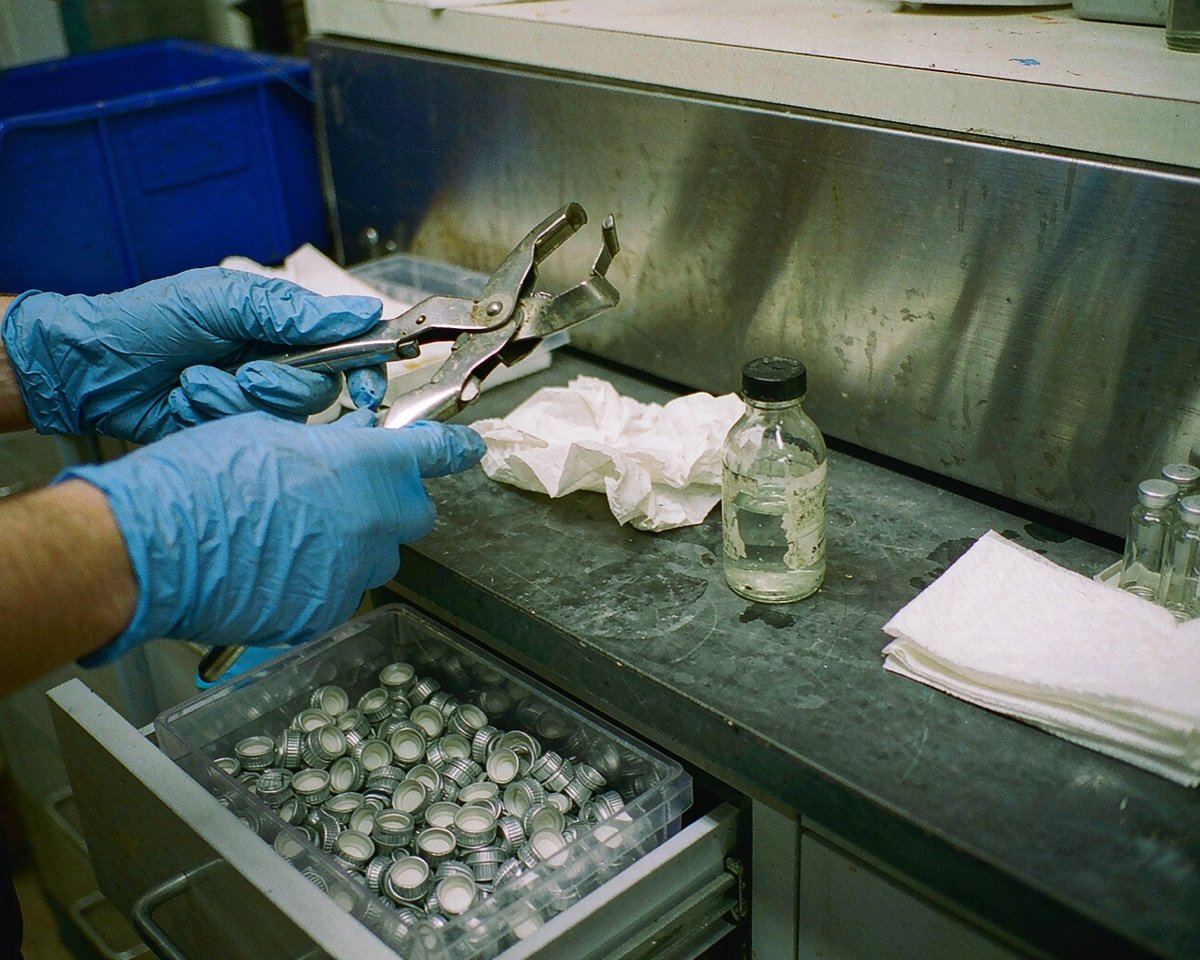
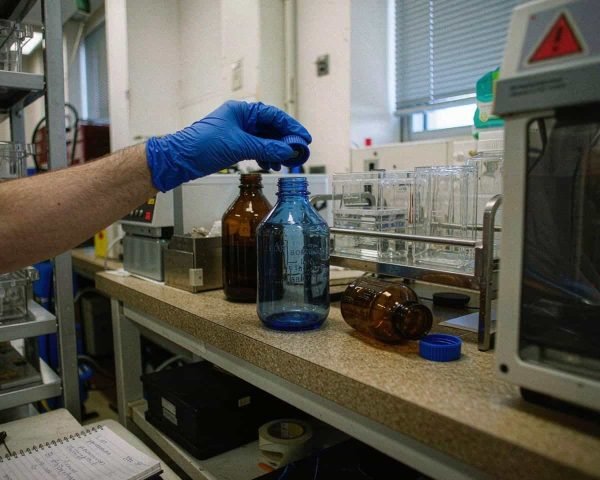

The cap on a reagent bottle looks like the least interesting part of the bottle. Then someone stores media in a sealed bottle inside a CO2 incubator, the pH drifts, the cells sulk, and suddenly cap choice becomes a topic. Here’s the difference, and when each one belongs on your shelf.
Quick answer: Vented caps contain a hydrophobic 0.2 µm membrane that lets gases pass while blocking microbes and liquid. Use them when contents need gas exchange, such as media equilibrating in a CO2 incubator. Solid caps seal completely; use them for storage, transport, solvents, and anything where evaporation or contamination matters more than breathing.
One of these choices protects your culture. The other one protects your reagent. Knowing which is which takes about five minutes.
What a Vented Cap Actually Does
A vented cap is not a cap with holes in it. It’s a cap with a hydrophobic membrane, typically PTFE with 0.2 or 0.22 µm pores, sitting over the vent channel.
The membrane works both ways. Gas molecules diffuse freely through it, so CO2 and oxygen equalize between the bottle and the incubator atmosphere. Bacteria, fungi, and spores, which are orders of magnitude larger than 0.2 µm, stay out. And because the membrane repels water, liquid medium doesn’t wick through even when the bottle sloshes.
That hydrophobic detail is what separates a real vented cap from a drilled one. A raw hole equalizes pressure too, but it also passes aerosols, splashes, and dust. The membrane’s pore size and water repellency are the whole engineering story: gases are small enough to diffuse through, droplets and microbes are not.
A good shake flask cap guide explains the mechanism well: the vent maintains passive, sterile gas exchange without anyone loosening a lid. That last part matters more than it sounds. Every time a human opens a bottle, the contamination odds climb.
When a Vented Cap Is the Right Call
Cell culture is the headline use. Mammalian media rely on a bicarbonate buffer system that only holds pH when CO2 can equilibrate with a 5% incubator atmosphere. Seal that media bottle with a solid cap and the CO2 can’t get in; the buffer chemistry drifts, and your pH indicator walks from pink toward purple over a day or two.
Media bottles with vented caps solve this quietly. The bottle sits in the incubator, gas exchange happens through the membrane, and the medium is properly equilibrated when you pipette it. For media bottle work in cell culture, this is close to non-negotiable.
Vented caps also earn their keep during long incubations of buffers and stains that need to off-gas, and anywhere a sealed headspace would build pressure in a warm environment. The trade is evaporation: over weeks in an incubator, water vapor does leave through the membrane. Top up volumes on a schedule and mark the bottle.
Membrane vents age, too. If a vent cap gets splashed with protein-rich medium or stored dusty on an open shelf, the pores eventually load up and gas exchange slows to a crawl. The failure is silent; the bottle just stops equilibrating. If your incubator bottles are more than a year old and the pH indicator misbehaves, swap the cap before blaming the medium.
When a Solid Cap Wins
Solid caps are the default for a reason. They’re the right answer whenever the contents should not exchange anything with the room.
Storage is the big one. Prepared buffers, mobile phase, stains, and stock solutions live longer and cleaner under a solid seal. Evaporation drops to near zero, which keeps concentrations honest. For HPLC mobile phase especially, a sealed bottle means fewer bubbles forming from absorbed gas coming out of solution and a lower chance of ambient contamination sneaking in.
Organic solvents add a fire-safety dimension. A bottle of acetone or hexane under a vented cap in a warm room quietly releases vapor into the lab, exactly what a fume-hood cabinet exists to prevent. Solvent cabinets and solvent bottles both assume a closed system. The membrane vent was never designed for that job, and giving it the job anyway is a small but real safety miss.
Transport and shipping demand solid caps. Anything that rides in a car, a courier box, or a centrifuge needs a seal that contains spills. We compared the broader closure families in our screw cap vs pour ring guide, and the logic holds across formats.
Solvents and volatile reagents belong under solid caps too. Acetone under a vented cap in a warm room slowly walks away, and its vapor is exactly what the vent exists to release. Contain it instead.
Autoclaving is a special case worth flagging. A bottle of liquid sealed hard can crack or burst in the steam cycle. The usual practice is autoclaving with the cap loose or with a vented cap, then tightening for storage. PYREX media storage bottles and similar glass lines are designed to handle this cycle when the cap is treated correctly.
The Quarter-Turn Trick (and Its Risks)
Every cell culture lab knows the workaround: take a solid-capped bottle into the CO2 incubator and loosen the cap a quarter turn to let it breathe.
It works. It also removes everything the vented membrane provides. A cracked-open bottle exchanges gas, moisture, and whatever airborne particles drift past. Over a weekend, the difference between a 0.2 µm membrane and a quarter-turned cap is measurable in both evaporation and contamination risk.
I watched a teammate’s control culture go down in a week because someone left three “breathing” bottles on the shelf above the incubator fan. Nothing grew in them that shouldn’t have. The whole plate campaign restarted.
If your lab regularly needs gas exchange, buy vented caps for the bottles that need them and keep solid caps for everything else. The caps cost less than one contaminated culture.
When ordering, check the manufacturer’s cap option codes rather than assuming. Many bottle lines sell the same glass body with either closure, and a case marked only by volume can arrive with the wrong cap for your incubator. If you’re standardizing a whole shelf of incubator bottles, order one sample of each cap style first and confirm it threads your existing bottles. A cap that cross-fits across brands is convenient; a cap that almost fits is how bottles end up dumped down the drain.
Quick Decision Summary
- Media equilibrating in a CO2 incubator: vented cap.
- Long-term culture or incubated buffers that must breathe: vented cap.
- Storage of buffers, mobile phase, stains, standards: solid cap.
- Transport, shipping, centrifugation: solid cap, always.
- Solvents and volatiles: solid cap.
- Autoclaving liquids: cap loose or vented during the cycle, solid for storage.
Conclusion
Vented and solid caps aren’t good or bad; they’re answers to two different questions. A vented cap asks “does this need to breathe without getting contaminated?” and answers with a 0.2 µm hydrophobic membrane. A solid cap asks “does this need to stay exactly as it is?” and answers with a complete seal. Cell culture media in an incubator need the first. Nearly everything else on your bench needs the second. Stock both, label the bottles that live in the incubator, and stop using the quarter-turn trick as a system. If you’re choosing bottles to go with those caps, our amber vs clear reagent bottle guide covers the glass side of the same decision, and the GL45 bottle thread guide makes sure the caps you buy actually fit.
Frequently Asked Questions
What is the membrane in a vented bottle cap made of?
Usually hydrophobic PTFE with 0.2 or 0.22 µm pores. The hydrophobic treatment keeps liquid out while gases pass freely, so the bottle can equilibrate with a CO2 incubator without wicking medium through the vent.
Can I use a vented cap bottle for storage?
Short-term, it’s fine. Long-term, no: water vapor escapes through the membrane and concentrations drift. Use vented caps during incubation or equilibration and switch to solid caps for storage and transport.
Why did my media pH change in a sealed bottle?
Bicarbonate-buffered media need CO2 exchange to hold pH. A solid cap blocks it, so the buffer chemistry drifts toward alkaline outside an incubator, or the dissolved CO2 builds up and pushes pH the other way. Vented caps or proper CO2 equilibration fix it.
Do vented caps prevent contamination?
They reduce it substantially. The 0.2 µm membrane blocks bacteria, fungi, and spores while allowing gas through. Nothing passive beats a sealed bottle, but a vented cap is far safer than a loosened one.
Can I autoclave a bottle with the cap on?
Loosen the cap or use a vented cap so pressure can equalize during the steam cycle, then tighten for storage. Fully sealed bottles can crack or burst in the autoclave. Always check the bottle and cap material ratings first.