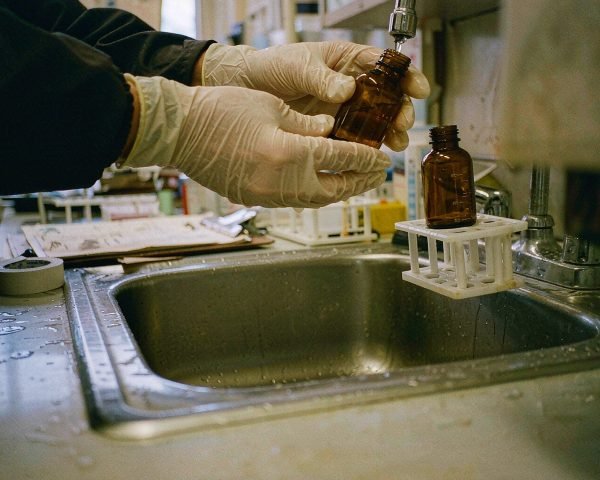

A while back I watched a QC team burn three days chasing a purified water system that kept failing TOC. The instrument passed system suitability. The standards were fresh. The problem turned out to be a case of ordinary HPLC vials someone grabbed because “a vial is a vial.” That mistake is more common than it should be, and it is exactly why TOC vials exist.
The Short Answer
TOC vials are pre-cleaned, low-background glass vials used to collect water samples for total organic carbon analysis. Any residue on the vial leaches into the sample and inflates the result, so these vials are cleaned, certified, and sealed to a known low background.
What TOC Analysis Actually Measures
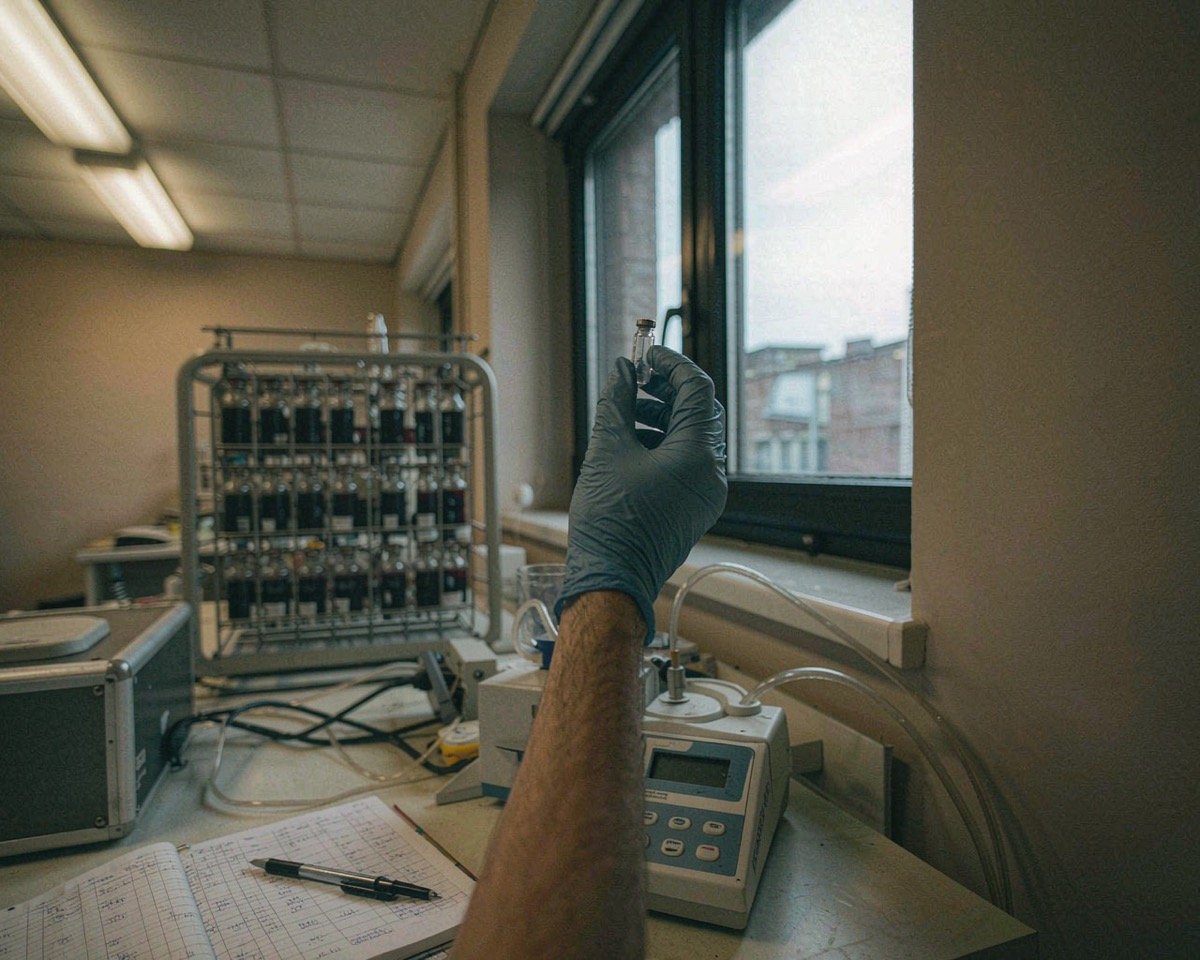
Total organic carbon is a sum parameter. Instead of identifying each organic molecule in a water sample, a TOC analyzer oxidizes all of them to carbon dioxide, measures the CO2, and reports it as carbon. If you want a clear walkthrough of the chemistry, Shimadzu’s TOC explainer covers the oxidation methods and the NPOC technique most labs actually run.
The number is reported in ppm or ppb (parts per billion). To put that in perspective, 50 ppb is 50 micrograms of carbon per liter. We are counting carbon molecules, not contaminants you could see or taste.
That sensitivity cuts both ways. It is why TOC became the go-to quality attribute for high-purity water. It is also why anything organic that touches your sample shows up in the answer.
Where TOC Testing Is Required
Two big worlds run on TOC.
Pharmaceutical water is the strict one. USP <643> sets a 500 ppb TOC limit for Purified Water and Water for Injection, and requires the instrument to detect down to 0.05 mg/L (50 ppb). The chapter is refreshingly blunt about sampling: it tells you to use containers “scrupulously cleaned of organic residues,” because organic contamination of the container inflates the result. You can read the current text of USP <643> Total Organic Carbon on the USP site.
Drinking water is the other. Under the Disinfection Byproducts Rules, utilities measure TOC as a precursor to disinfection byproducts, and EPA Method 415.3 is one of the approved methods for TOC and SUVA in source and drinking water.
In both settings, most measurements happen on-line with an analyzer plumbed into the water loop. But grab samples in vials still matter for cleaning validation, commissioning a new system, investigating an excursion, and qualifying points of use. That grab sample is only as clean as its container.
Why Vial Background TOC Matters
Run the math on pharmaceutical water. The limit is 500 ppb. A vial with a 50 ppb background contributes a tenth of that limit before your sample adds a single molecule. If the vial is sloppier than that, your “result” is partly fiction.
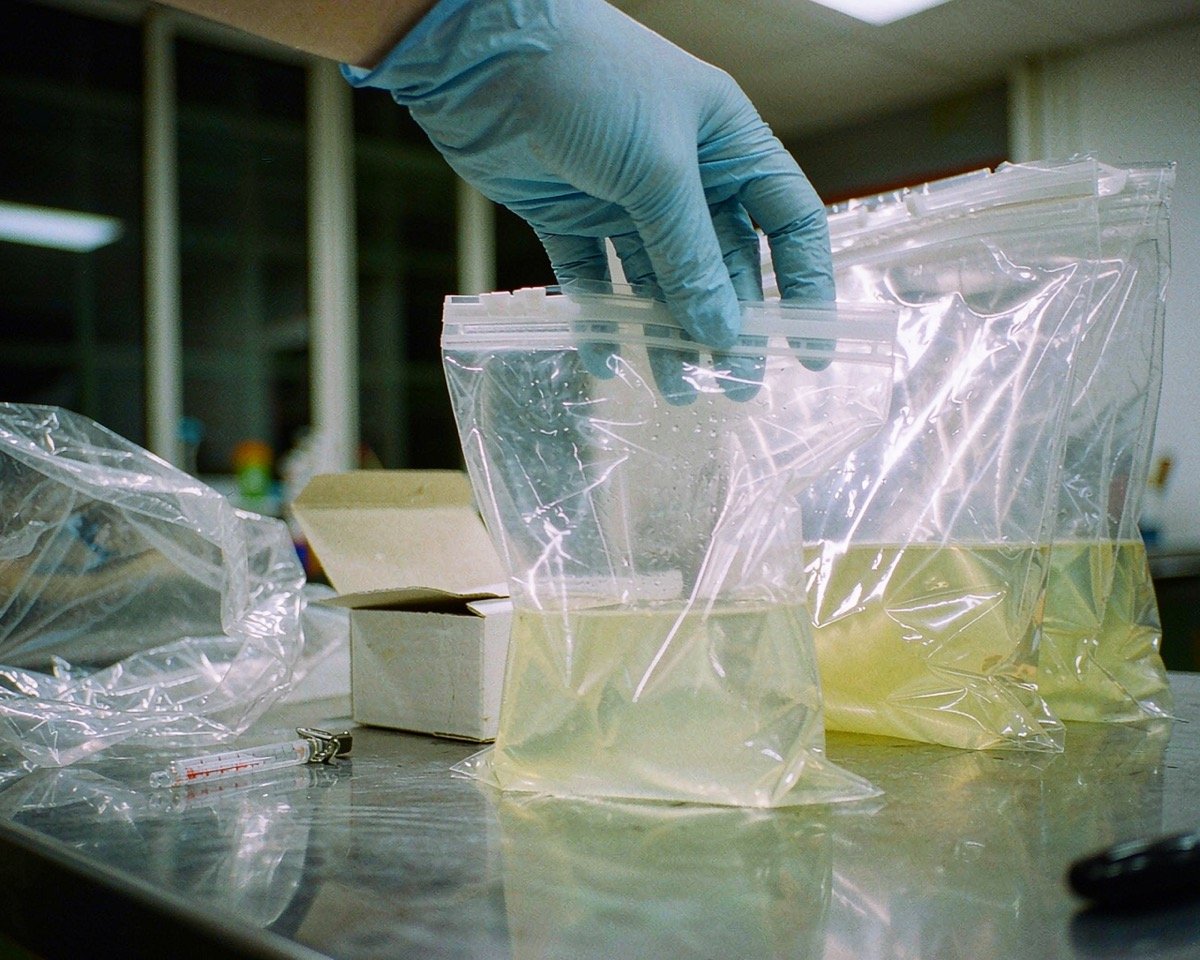
And it gets worse. Ultrapure water samples often contain less organic carbon than a dirty vial does. I have seen a set of blanks read 180 ppb on an instrument that had just passed system suitability. The culprit was an analyst who capped vials with bare fingers after lunch, right across the rim where the septa sits. The water was fine. The fingerprints were not.
USP <643> acknowledges this directly. It warns that water samples are easily contaminated during sampling and transport, and it requires tight containers with minimal headspace so organics from the closure do not migrate in. The vial is not packaging. It is part of the measurement.
What Makes a Vial a “TOC Vial”
Nothing exotic. A TOC vial is a standard glass vial that has been through a documented cleaning process and lot-tested for background carbon. The details matter, though.
Cleaning and certification. Manufacturers wash vials with organic-free processes, rinse with high-purity water, and test each lot against a certified standard. Typical certifications come in at 50 ppb or lower as TOC background, with premium lots certified to <20 ppb or even <10 ppb. Every case ships with a Certificate of Analysis listing the actual measured value for that lot. Thermo Fisher's TOC certified containers page shows how this is documented lot by lot.
Glass and color. Type I borosilicate glass is standard because it barely leaches. Clear glass suits most work; amber is there for light-sensitive samples, and it does nothing to the TOC number itself.
Septa. The liner is usually PTFE/silicone. Silicone gives resealability, PTFE faces the sample because it is inert and low in extractables. Avoid caps with adhesives or paper liners near the sample.
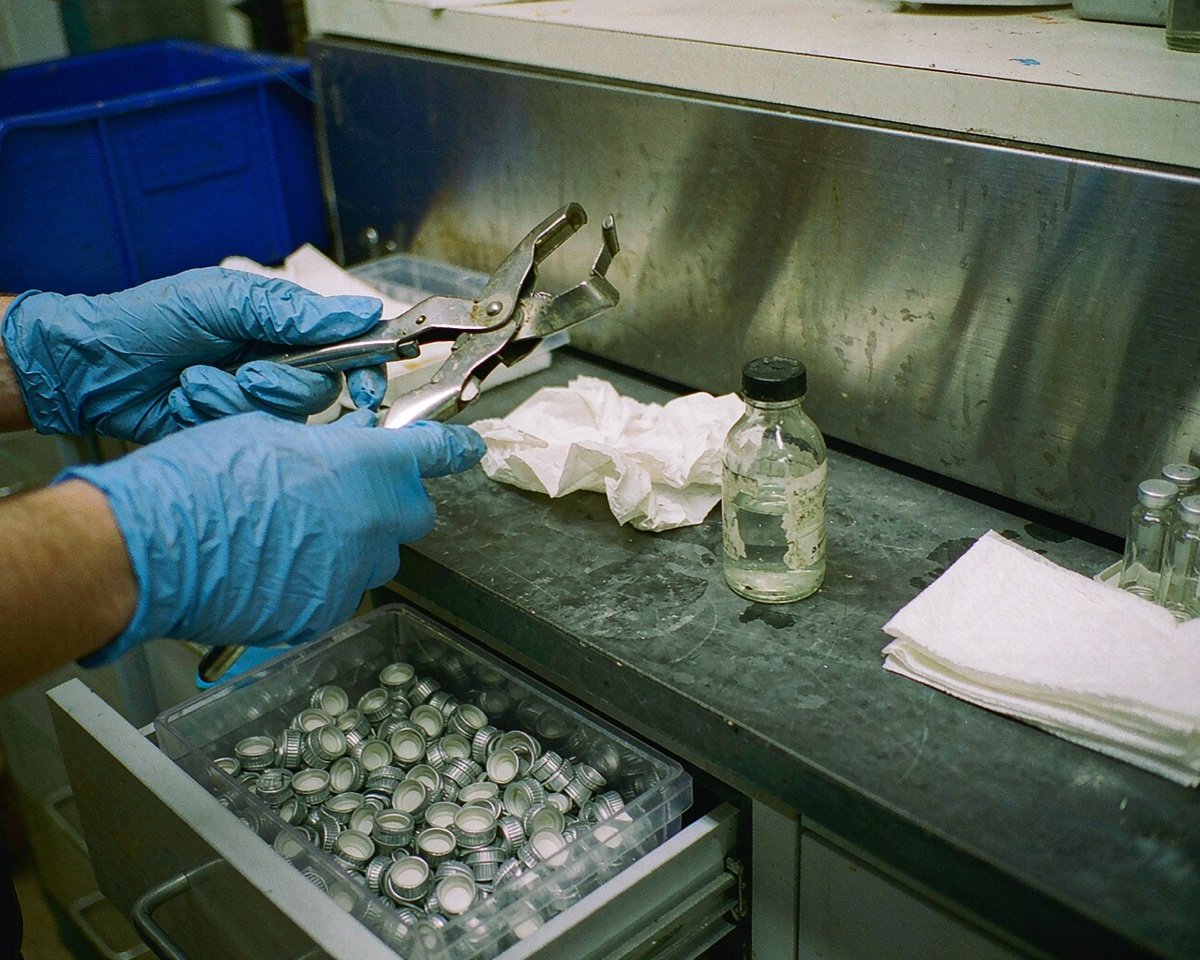
Size and style. The classic is the 40 mL EPA-style vial with a 24-414 open-top cap, which fits the autosamplers from Sievers, Shimadzu, and Teledyne. Smaller 20 to 30 mL options exist for instruments with tighter racks. If you have handled EPA vials for volatile organics before, the format will feel familiar; our post on what an EPA VOA vial is covers that family in detail.
How to Collect and Handle Samples
This is where good vials go bad.
Fill with zero headspace. Fill the vial to the brim, cap it, and let a little water overflow if your method allows. Headspace lets volatile organics and lab air mingle with your sample.
Keep fingers off the business end. Never touch the rim of the vial or the underside of the septa. Powder-free gloves, changed after handling anything else. Skin oils are organic carbon with a great delivery mechanism.
Do not pre-rinse. It feels wrong the first time, but rinsing a certified vial with sample adds risk instead of removing it. The cleaning was done under controlled conditions your bench does not replicate.
Analyze promptly. USP <643> says test in a timely manner to limit contamination from the closure. EPA Method 415.3 allows refrigerated holding up to 28 days for TOC, but sooner is always cleaner. If a vial sits on a bench for a week next to someone’s coffee, plan on re-sampling.
What to Look For When Buying
Certification is the whole point, so make it non-negotiable. Ask what background level the vials are certified to, and insist on a lot-specific Certificate of Analysis rather than a generic spec sheet. If your method targets low-ppb results, skip the 50 ppb lots and buy <20 or <10 ppb vials. The price difference is small next to one failed water system qualification. Not sure what "certified" actually obligates a supplier to do? We break it down in Certified HPLC Vials: What Does Certified Mean?.
Packaging comes second. Look for assembled vial-and-cap units with dust covers, packed in slotted trays that survive shipping without rattling glass against glass. Sealed bags and cleanroom-style packing are a good sign the supplier takes the background claim seriously.
Lot traceability rounds it out. You want lot numbers on every box, downloadable CoAs you can pull up months later during an audit, and enough consistency between lots that your method does not wobble when you reorder. For the paperwork side, our CoA vs CoC guide explains what each document actually guarantees.
Conclusion
TOC vials are not a luxury product category. They are ordinary glass vials taken seriously: cleaned, certified, packed, and documented so the container contributes nothing to a measurement that lives at the parts-per-billion scale. The moment you swap in a random vial, you stop measuring your water and start measuring your container. If you buy certified vials from a supplier who ships lot-specific CoAs, collect with headspace-free technique, and get samples into the analyzer promptly, TOC turns into the calm, reliable number it is supposed to be. For the bigger picture on keeping carbon out of your results, our TOC quality and cost guide pairs nicely with this one.
Frequently Asked Questions
Can I reuse TOC vials after washing them?
You can, but you lose the certification. Once a vial is washed on your bench, its background is unknown, so it is fine for rough screening and useless for compliance testing. Most labs reserve reusables for training or non-critical work.
Are TOC vials and EPA VOA vials the same thing?
They share the same 40 mL glass body and 24-414 cap format, so they look identical. VOA vials are certified for volatile organic compounds, while TOC vials are certified for low organic carbon background. Always buy the certification your method actually names.
Do amber TOC vials change the TOC result?
No. The amber tint filters light and does not add carbon. Choose amber when your sample is light-sensitive, and clear when you want to see the contents.
What background level should I ask for?
Match the vial to your method’s action limit. A 50 ppb certification is fine for drinking water ranges, while pharmaceutical water work near the 500 ppb limit deserves <20 or <10 ppb vials. Lower background costs a bit more and buys margin.
Why are most TOC vials 40 mL?
The 40 mL EPA-style format fits the autosampler racks of the major TOC instrument makers, and the volume supports repeated or diluted injections. Some instruments accept smaller vials, so check your autosampler spec before ordering a case.