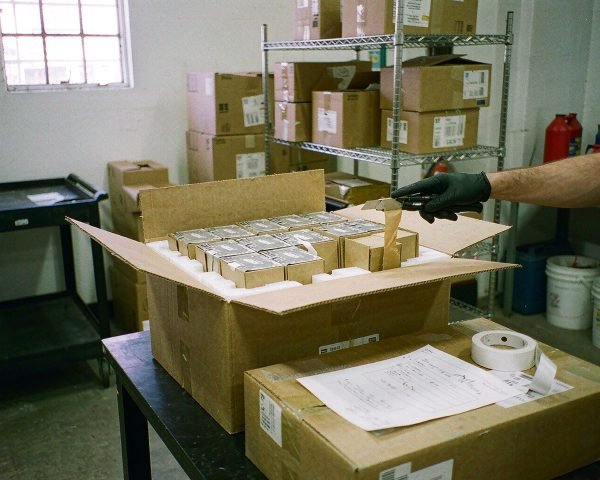

# Air vs Sea Freight for Lab Consumables: What to Know
If you import HPLC vials, syringe filters, or media bottles from overseas suppliers, freight choice shapes your landed cost more than unit price does. I work for a lab consumables exporter, and I have watched the same order succeed by air and fail by sea. The deciding factors are usually planning and packaging, not distance.
Choose air freight for urgent, low-volume, or fragile-critical shipments of lab consumables: it costs roughly 3 to 6 times more per kg but arrives in 5 to 10 days. Choose sea freight for planned bulk replenishment. In both modes, packaging quality decides more than transport mode itself.
Here is the full picture: real costs, transit math, what actually breaks vials inside a container, and the trade terms that decide who pays for all of it.
Air vs Sea Freight at a Glance
| Factor | Air freight | Sea freight |
|---|---|---|
| Cost per kg (Asia to EU/US, typical) | $4 to $10 | $1 to $2.50 |
| Transit, door to door | 5 to 10 days | 25 to 45 days |
| Charged by | actual vs volumetric weight, whichever is greater | per cubic meter (LCL) or container (FCL) |
| Best for | stockouts, fragile lots, small top-ups | planned replenishment, heavy bulk orders |
These numbers move with fuel prices and port congestion, so treat them as ratios rather than quotes. The comparison on air freight versus ocean freight from Freightos tracks the same pattern. My rule after years of booking both: air buys time, sea buys unit economics.
What You Actually Pay: Cost per Kg and Volumetric Weight
Air carriers charge on chargeable weight, which is the greater of the actual weight or the volumetric weight. Volumetric weight is the space your cargo occupies converted into kilograms, usually length × width × height in centimeters divided by 6,000. Consumables punish you here because they are light but bulky.
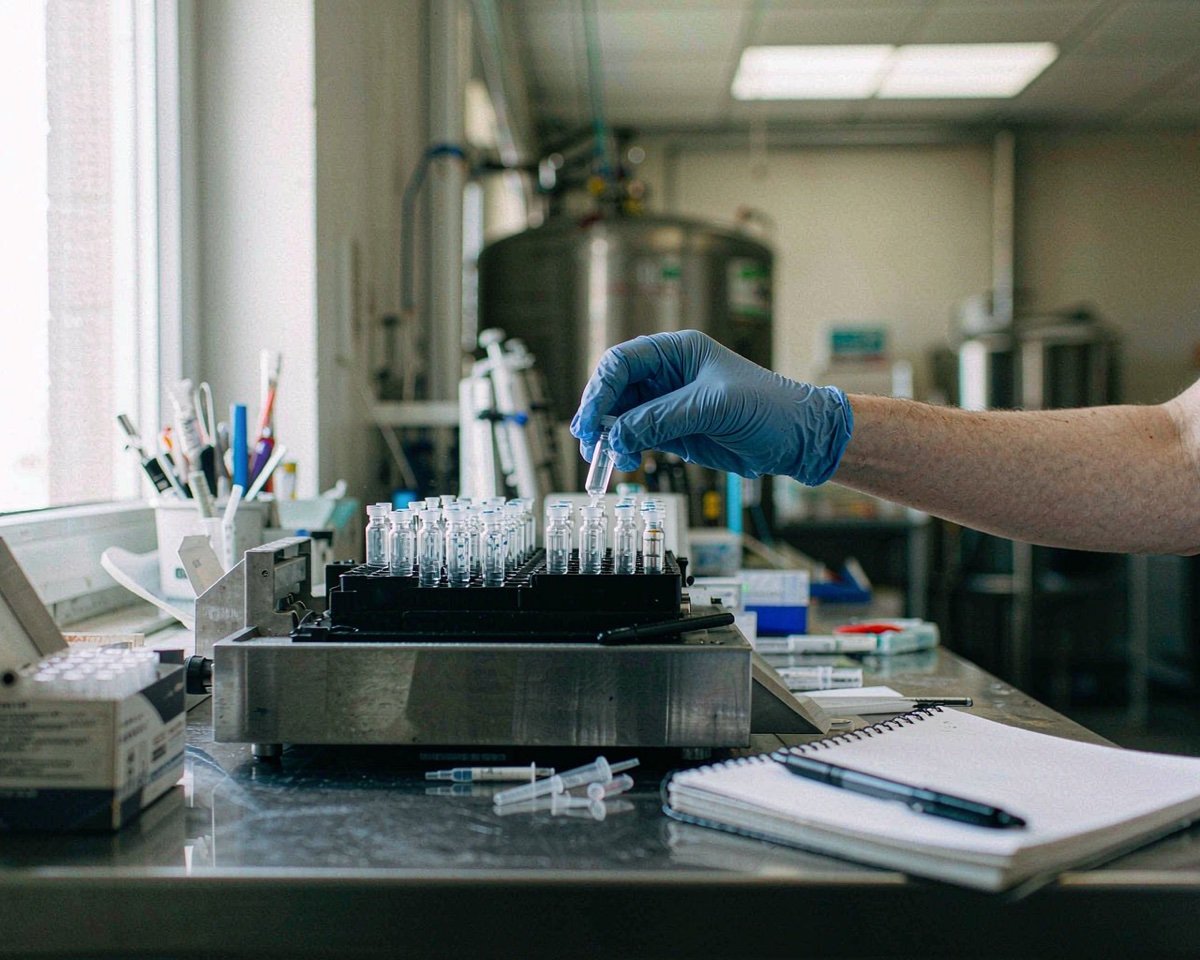
A carton of 1,000 2 mL vials weighs about 12 kg boxed. Pack it at 60 × 40 × 40 cm and it books as 16 kg volumetric, so you pay for space, not glass. Foam inserts and master cartons make it worse, which is fair, because they are also what keep the vials alive.
Sea freight works differently. Less than container load (LCL) shipments are priced per cubic meter, so a dozen heavy cartons of vials and caps cost the same whether they weigh 12 kg or 16 kg. That single difference is why bulky glassware looks overpriced by air and almost cheap by sea.
Transit Times and Reorder Planning
Air moves in 5 to 10 days door to door on most lanes. Sea takes 25 to 45 days once you add port handling, customs, and inland legs, and longer if your container misses the vessel. The MOQ and lead times most suppliers quote assume sea freight on a calm lane.
So I plan the two modes around different questions. If the shipment is a reaction, someone is out of vials mid-validation, and the autosampler is idle, that is an air shipment, no debate. If it sits on a reorder calendar, sea wins, as long as you order 10 to 12 weeks ahead instead of the 4 you would allow for air.
What Actually Damages Consumables in Transit
Moisture is the quiet killer. Steel containers cycle between hot days and cold nights, condensation forms on the ceiling, and it rains inside the box. Cartons soften, labels peel, and boxes stacked above them crush what is below. Freight handlers call it container rain, and it is common enough that desiccant is standard practice for ocean cargo.
Temperature cycling is the second problem, and it is specific to consumables. Silicone septa and the adhesives on pre-slit septa do not love repeated swings from 5 °C nights to 45 °C afternoons in a box on a quay. In my experience the septa usually survive, but I have seen the exceptions.
Two years ago a customer in Chile ordered pre-slit septa by sea to save on freight. The cartons sat six weeks in transit plus a week at a hot port, and the septa adhesive bloomed white and stuck to the liners. We air-shipped replacements and the freight savings vanished, which taught me that a fragile-critical lot should fly or be packed like it will.
Rough handling breaks the rest. Forklifts drop things, cartons get stacked five high, and glass vials crack at the shoulder where the wall is thinnest. If a carton arrives dented, open it before signing anything and photograph the damage for the claim.
Packaging That Prevents Most Freight Damage
Good packaging beats mode selection. Molded foam or vacuum-formed trays hold each vial separately, so a shock that would crack a touching pair of bottles gets absorbed instead. Desiccant packs inside each polybag fight the humidity, and double-wall master cartons resist stacking loads that would flatten single-wall boxes.
For sea freight, palletize and shrink-wrap rather than floor-loading loose cartons. A palletized load gets lifted as a unit, which removes most of the crush and drop risk. If your supplier offers vial packaging options for bulk orders, take the upgrade, because it costs a fraction of one air shipment you will not need to make.
MOQ Economics: When Each Mode Pays
MOQ means minimum order quantity, the smallest order a supplier will accept. Sea freight changes MOQ math because the freight per unit collapses at volume. Shipping 40,000 vials by sea might add a cent per vial to landed cost, while 3,000 vials by air might add several cents each, plus three weeks of your attention.
My default for planned replenishment is sea, with a small air-bought buffer stock to cover surprises. One university lab we supply moved its quarterly glassware replenishment to sea and cut freight spend by roughly 70%, keeping air only for filter lots needed for a specific audit week. That split is the pattern I would copy.
Customs, HS Codes, and Incoterms
Customs classification comes first. Every product gets an HS code, a six-digit Harmonized System number set by the World Customs Organization that determines duty and clearance rules in your country; see the WCO overview of the HS. Glass lab vials usually classify under 7017 (laboratory glassware), but the final call belongs to your broker, so confirm before you ship.
Incoterms are the International Chamber of Commerce’s three-letter rules defining who arranges freight, insurance, and clearance. The ICC Incoterms 2020 rules are the reference. The four you will actually meet:
• EXW (Ex Works): you arrange everything from the factory door onward, including export clearance.
• FOB (Free on Board): the seller delivers onto the vessel; you book the main freight and insurance.
• CIF (Cost, Insurance, and Freight): the seller pays freight and minimum insurance to your port, but risk transfers earlier than cost does.
• DAP (Delivered at Place): the seller carries the goods to your door; you handle import clearance and duties.
For most importers I would choose FOB with your own forwarder, because you control who handles the cargo. Then check national rules before the first shipment: US importers can start with CBP’s basic import guidance, and UK buyers with gov.uk’s import and export overview.
Conclusion
Air or sea is a planning question before it is a logistics one. Air freight, at roughly 3 to 6 times the per-kilo cost and 5 to 10 days door to door, is the right answer for stockouts, fragile-critical lots, and small top-ups where the shipment value is small and time is not. Sea freight, at a fraction of the cost and 25 to 45 days, is the right answer for planned replenishment, and it is what makes bulk MOQs genuinely cheap. But the mode is secondary to the packaging and the paperwork: desiccant, foam, master cartons, and palletization prevent most of the damage I have seen, and the right Incoterm prevents most of the billing surprises. If you are comparing suppliers on quotes, freight terms deserve as much attention as the vial price, and our guide on comparing vial quotes shows how the landed cost should be built.
Frequently Asked Questions
How much more does air freight cost than sea for lab consumables?
Typically 3 to 6 times more per kilogram on the same lane. Because consumables are light but bulky, volumetric weight often sets the air price, so a 12 kg carton can be billed as 16 kg.
Why do glass vials sometimes arrive damaged from sea freight?
Most damage comes from container rain, temperature cycling, and stacking loads, not from the motion of the ship. Molded trays, desiccant, double-wall master cartons, and palletized loads prevent the majority of it.
Which Incoterm should I use when importing from a supplier in Asia?
FOB is the common choice because your forwarder controls the main freight and you know the costs early. EXW is fine if you have an agent near the factory, and DAP suits a first order while you are still learning the clearance process.
Do lab consumables need special documents for customs?
You need a commercial invoice, packing list, and bill of lading or airway bill as a baseline. Lab glassware and plastics are rarely restricted, but the HS code on the invoice must match the goods, or clearance slows down.
Is it worth air-freighting cheap consumables like vials?
Sometimes, yes. If a stockout stops a validated sequence, a few hundred dollars of air freight is cheaper than idle instrument time and rushed local purchases at retail prices.