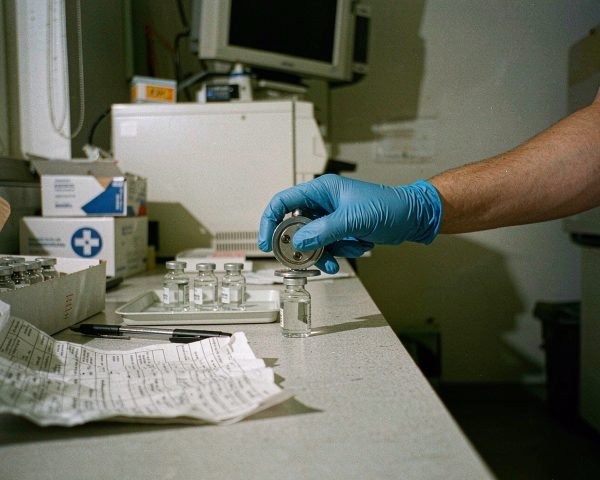

# What Consumables Does Residual Solvent Testing Need?
Every pharma lab runs residual solvent testing, and sooner or later a vial or a septum quietly ruins a sequence. The good news: the consumables list for this test is short and cheap, and it stays foolproof if you buy the right versions. Here is exactly what a USP <467> headspace run needs.
Residual solvent testing by USP <467> needs 10 or 20 mL crimp-top headspace vials, PTFE/silicone septa, 20 mm aluminum crimp caps, a crimping tool, and anhydrous sodium sulfate for water-miscible samples. GC-grade diluents such as water, DMF, or DMSO complete the list.
Below I go through each item, then cover the sample prep details and the mistakes that decide whether your data survives an audit.
What Residual Solvent Testing Actually Is
When you manufacture a drug substance or an excipient, organic solvents show up somewhere in the synthesis or purification. Some of that solvent stays trapped in the finished material. Residual solvent testing measures how much is left, and the number matters because these solvents offer zero therapeutic benefit and some of them are genuinely toxic.
The industry runs the test against two overlapping frameworks. USP General Chapter <467> defines the headspace procedure and the acceptance criteria used by United States Pharmacopeia labs. ICH guideline Q3C from the International Council for Harmonisation sorts solvents into classes by toxicity, and the FDA’s Q3C Tables and List guidance carries those classes into FDA reviews. Learn the classes once and every limit on your spec sheet makes sense.
Class 1 solvents are the ones to eliminate entirely. Benzene and carbon tetrachloride sit here, with permitted daily exposures set at the parts-per-million level because even trace amounts carry a cancer risk. Class 2 covers solvents with real toxicity but legitimate uses, so chloroform, methanol, and hexane get tight ppm ceilings. Class 3 is the low-toxicity tier, the ethanol and ethyl acetate tier, where the limit relaxes to 0.5% or 5,000 ppm.
If your solvent appears on none of the lists, ICH still expects you to justify it. Toxicology data or a published permitted daily exposure will do.
Why the Test Runs on Headspace GC
Why not inject the sample straight onto the gas chromatography (GC) column? Because you would also be injecting the drug itself, plus every nonvolatile in the matrix, onto a capillary column that punishes both. Static headspace skips the problem entirely. You seal the sample in a vial, heat it so the volatile solvents escape into the gas phase, and inject only that vapor.
Restek publishes a solid walkthrough of static headspace GC for residual solvents with the theory and typical instrument parameters in one place. Worth a bookmark.
The vial is effectively part of the instrument here. It is the vessel where the equilibrium happens, which is why consumables matter more in this test than in a routine HPLC injection.
The Consumables List, Item by Item
Headspace vials (10 or 20 mL)
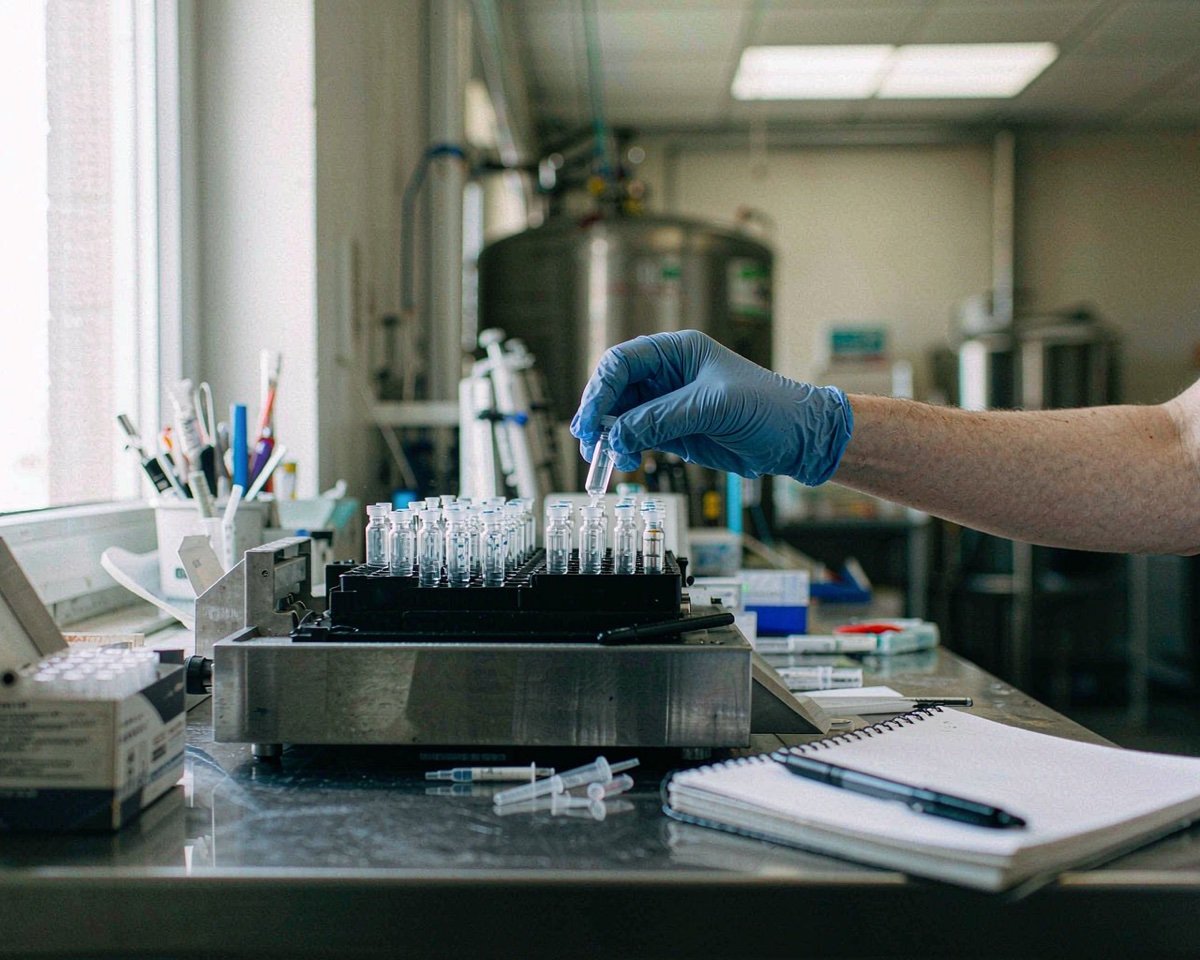
Two sizes cover nearly everything. Both 10 mL and 20 mL crimp-top vials take 20 mm aluminum caps, so your cap stock is shared either way, and the choice comes down to your autosampler and method. USP <467> work is traditionally done in 20 mL vials, and most Agilent headspace samplers are built around that size. If you are weighing the two, my 10 mL vs 20 mL headspace vial comparison covers the tradeoffs in detail.
Septa rated for the oven
The septum takes the worst abuse in this test, because the vial sits at 80 °C or hotter for the entire equilibration. Use PTFE/silicone laminated septa with a high temperature rating; plain silicone or low-temp formulations will bleed and soften right when your sequence starts. I explain what the ratings printed on the box actually mean in this guide to GC septa packaging.
Caps and a crimper
Buy 20 mm aluminum crimp caps lined with the same PTFE/silicone material, and pair them with a proper crimping tool. A hand crimper is fine at twenty samples a day; an electronic one earns its keep once sequences run overnight. Test every crimp with a twist: if the cap rotates on the vial neck, it is loose enough to leak, and a leak in a headspace vial is a lost replicate. My step-by-step crimping guide shows what a correct crimp looks and feels like.
Anhydrous sodium sulfate
This one surprises people. For water-miscible samples, adding a salt such as anhydrous sodium sulfate pushes polar solvents like methanol out of the water and into the headspace, sometimes with a noticeable jump in recovery. The catch is that the salting effect depends on how much salt you add, so weigh the same amount into every vial, standards included. Your calibration curve inherits whatever you do here.
GC-grade diluents
Water handles water-soluble samples. For everything else you dissolve in dimethylformamide (DMF) or dimethyl sulfoxide (DMSO), and here is the detail that gets skipped: DMF is itself a Class 2 solvent with an 880 ppm limit, so a contaminated lot stamps its own peak onto every chromatogram and sends you chasing a phantom impurity. Buy GC grade, run the diluent blank first, and keep the bottle capped. Round the list out with a permanent marker, because at some point you will pull vials out of the tray and reshuffle them mid-sequence.
Sample Prep Notes That Actually Matter
Most USP-style runs weigh about half a gram of sample into 5 mL of diluent, directly in the headspace vial. Dissolve the sample completely before you cap it. Undissolved powder keeps releasing solvent after your standards have equilibrated, and the drift shows up as a precision failure nobody can explain.
Equilibration conditions are where labs trip. Most USP <467> work holds vials at 80 °C with roughly 45 minutes of equilibration, but the rule that outranks any number is this: standards and samples get identical treatment. Same vial size, same fill volume, same temperature, same time. Headspace GC compares vapor concentrations, and vapor concentration moves with every one of those variables.
Write the fill volume into the prep sheet so nobody improvises. I have seen a simple calibration question turn into a full retest because two analysts read the same fill line differently.
Common Mistakes That Cost Real Retest Time
Reusing crimp caps is the classic. Aluminum deforms on the first crimp, so a second crimp never seals the same way. Caps cost pennies; a repeated sequence costs an afternoon.
Skip the salt and the polar solvents hide. Methanol and ethanol partition back into water so efficiently that recovery sags, and precision checks fail with no obvious cause.
I once watched a lab lose three days to a failed Class 1 system suitability. The culprit was a new box of bargain septa that cored at 80 °C and shed silicone into the needle path. The septa were the cheapest line on the purchase order; the retests were not.
Screw-cap vials creep in when someone grabs the wrong box. Thread tension loosens as the vial heats and pressure builds, so every leak costs you a replicate. For this test I am firmly crimp-top only. And when data goes sideways for a reason none of us can name, the nine headspace vial mistakes that ruin GC data list usually contains the answer.
Method Notes Worth Pinning Above the Bench
Run the diluent blank before the first standard, every sequence. Watch carryover from high boilers like toluene and xylene; a post-run bake helps more than any injection trick. Log consumable lot numbers the way you log column serial numbers, because when a batch of standards drifts, “we changed septa brands that week” is an answer you want in writing.
Conclusion
Residual solvent testing does not need exotic gear. The right crimp-top vials, septa that survive the oven, 20 mm caps, a crimper you trust, salt, and clean diluent will carry a USP <467> method further than most instrument upgrades. The pattern I see over and over is a data problem traced back to a ten-dollar consumable bought without a glance at the data sheet. So glance at the data sheets. Choose your vial size deliberately, starting with the 10 mL vs 20 mL comparison, practice crimps until they pass the twist test, and keep a spare box of everything the method depends on. Your next audit will be quieter for it.
Frequently Asked Questions
What solvents does USP <467> cover?
It covers the solvents classified in ICH Q3C, from Class 1 toxins like benzene to Class 3 workhorses like ethanol and acetone. The chapter supplies the headspace procedure and the ppm acceptance limits. Solvents outside those lists still need a justified limit based on toxicology data.
Can I use screw-cap vials for headspace GC?
In my experience, no. Screw caps rely on thread tension that loosens as the vial heats and pressure builds, so you get leaks and inconsistent vapor volumes. Crimp-top vials with a proper 20 mm aluminum cap are the standard for a reason.
Why add anhydrous sodium sulfate in residual solvent testing?
Salt reduces water’s ability to hold onto polar solvents, a classic salting-out effect. More of the methanol and ethanol moves into the headspace, so sensitivity and recovery improve. Keep the same salt mass in every vial, because your calibration depends on it.
What diluent should I use, DMF or DMSO?
DMSO is the safer default because it dissolves most drug substances and adds little background in the Class 1 system suitability window. DMF works too, but it is a Class 2 solvent itself, so a contaminated lot contributes its own peak to every chromatogram. Either way, run the diluent blank before you trust anything else.
How much sample goes into a headspace vial?
Most USP <467>-style methods weigh about 0.5 g of sample into 5 mL of diluent in a 20 mL vial. What matters more than the exact number is that every vial in the sequence, standards included, gets the same fill. Partitioning changes with headspace volume, so consistency beats optimization.