
# What Consumables Does Particle Size Analysis Need?
Particle size analysis looks like an instrument problem, and from the sales brochure it is. Anyone who runs a Mastersizer or a Zetasizer every day knows better. The consumables around the instrument decide whether your data repeats, and they cost a fraction of what the laser did.
The short answer: for wet laser diffraction you need a dispersant (water covers most cases), a surfactant when particles refuse to wet, syringe filters to clean that dispersant, and vials for storage and sampling. For DLS you add the right cuvette. Dry dispersion skips liquids entirely; you need clean compressed air and lint-free wipes.
That list hides more method decisions than you’d expect, so let me walk through it the way I’d explain it to a new hire on their first sizing day.
Wet Dispersion: Dispersant, Surfactant, and Restraint
Most laser diffraction measurements run wet, so start here. The method itself is standardized in ISO 13320:2020, which covers particles from about 0.1 µm to 3 mm and devotes whole appendices to choosing dispersing liquids. That’s a hint about where the difficulty actually lives.
A dispersant has to tick a short list: transparent to the laser, a refractive index different from your particles, no bubbles, low viscosity, and it must not dissolve your sample. Water wins most of the time. I’d still reach for deionized over tap water, especially below roughly 20 µm, because salts in tap water can nudge particles into agglomerating.
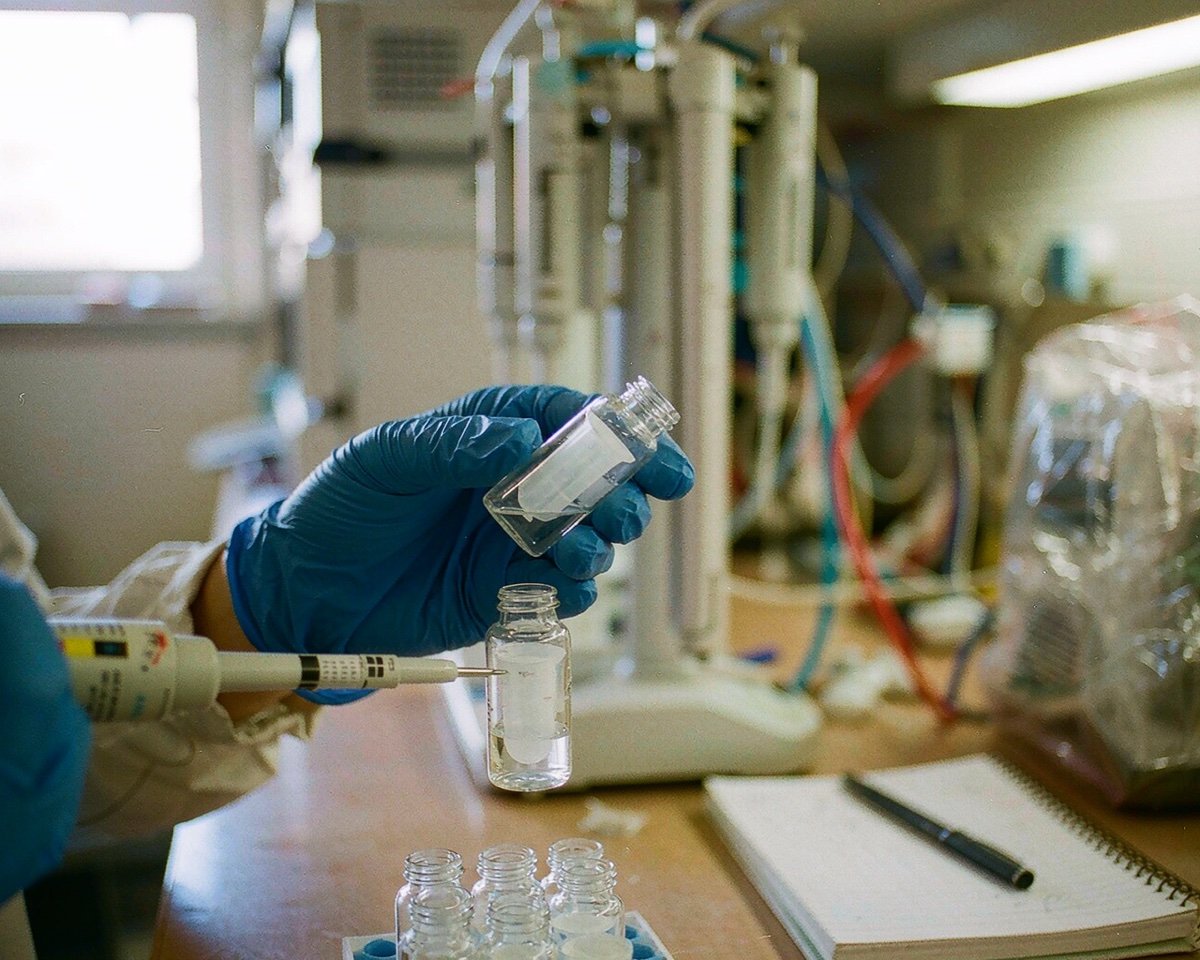
If your powder floats or clumps on top, you need a surfactant. Tween 20 and Tween 80 work for a huge share of pharma and food materials; SDS or CTAB handle more stubborn surfaces. Malvern Panalytical’s guidance is blunt about dose: one to two drops of a dilute solution is usually enough. More surfactant means foam, and foam is a trap.
I learned that one the expensive way. Years ago I chased a phantom coarse tail in an API batch for most of an afternoon. Microscope showed nothing. The tail turned out to be air bubbles from an over-enthusiastic splash of surfactant, and the instrument counted every one of them as a large particle. Since then I sonicate 60 seconds, not 5 minutes, and add surfactant dropwise with the patience the bottle deserves.
For method development, the wet dispersion method development note from Malvern Panalytical walks through beaker tests, surfactant tables, and sonication checks. It’s the document I hand people before they write their first SOP. USP General Chapter <429>, harmonized with the European and Japanese pharmacopeias, sets the expectation your lab will be held to: repeatable results on reference materials, with documented dispersion conditions.
DLS Cuvettes: Small Cells, Big Dust Problems
Dynamic light scattering is a different animal. Here you’re measuring intensity fluctuations of scattered light from nanoparticles, and dust destroys the measurement because a single dust particle scatters more light than a million nanoparticles. Your most important DLS consumable isn’t the cuvette. It’s the 0.2 µm filter you push your dispersant through.
The cuvette choice depends on your sample volume. Malvern’s Zetasizer cuvette guide maps every option: the standard 12 mm square disposable polystyrene cuvette takes 1 mL and covers most aqueous work; solvent-resistant micro-cuvettes go down to about 40 µL; low-volume quartz cells reach 12 µL when your protein sample took three days to purify. For zeta potential you’ll want the disposable folded capillary cells instead.
Handle disposables by the edges and measure promptly. Reusing a polystyrene cuvette after an IPA rinse works in a pinch, but I’ve seen scratched windows quietly ruin correlation data. If you do reuse glass or quartz cuvettes, rinse with filtered dispersant and inspect them against the light. For the filter side of that workflow, my guide to syringe filter sizes covers which pore diameter and diameter make sense for clearing dispersant.
Dry Dispersion: Consumables You Won’t Find in a Bottle
Dry dispersion has an appealing simplicity: no dispersant, no surfactant, no bath to empty. Compressed air blasts the powder through a venturi, collisions strip agglomerates apart, and the Aerosizer-style feeder keeps a steady stream in the beam. If your sample dissolves in every liquid you own, this is your route.
The consumables just wear different clothes. Shop air carries oil and water vapor, so you need a clean, dry air supply or the windows foul within a shift. Keep lint-free wipes and a soft brush at the bench for window cleaning, because fouled windows drift your background. One caution from ISO 13320 worth respecting: high dispersion pressure can fracture fragile particles, so validate the pressure instead of defaulting to maximum. For coarse materials, dry runs also give you better sampling, since a bigger aliquot passes through the beam.
Should You Filter Your Sample? Usually Not
This decision can silently wreck your result. Laser diffraction and DLS both report what you present to them, agglomerates included, and USP <429> is explicit that the technique cannot tell an aggregate from a primary particle. If your material genuinely contains agglomerates, filtering them out means reporting a distribution that no longer exists in the vial your customer receives.
Filter the dispersant, then. Filter the sample only when your method defines it that way, and write the step down either way. There’s a real exception: protein and peptide formulations where you’re sizing the monomer population and oversized species are artifacts of storage. My notes on choosing syringe filters for protein and peptide samples go deeper on filter binding, which is its own trap there. If you’re unsure whether filtration is destroying your answer, run one filtered and one unfiltered aliquot and compare. The difference is your agglomerate fraction.
Vials and Storage: The Boring Item That Bites
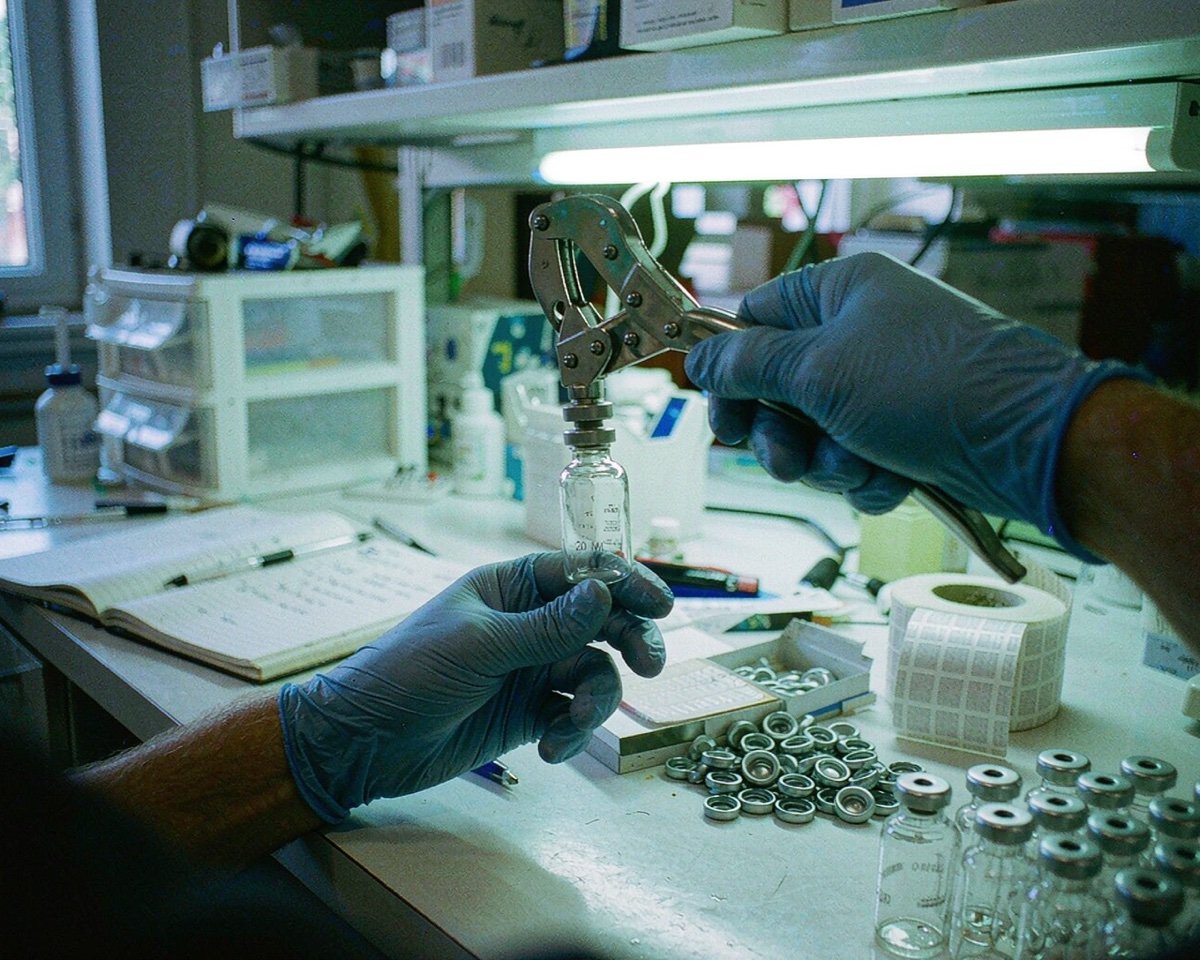
Prepared suspensions settle. A dispersion that sat in a beaker for two hours is not the dispersion you made, so either measure fresh or plan to re-sonicate before each repeat measurement. Store stock dispersions in sealed vials, not open beakers, if evaporation or CO2 uptake would shift your medium. Amber glass earns its price for photosensitive suspensions like some pigments and silver nanoparticles.
Label everything with date, surfactant, and sonication time. When a result looks odd three weeks later, that label is the only reason you can reconstruct what happened. I keep 20 mL scintillation vials for stocks and 10 mL disposable tubes for daily dilutions; the system is unglamorous and it works.
Conclusion
Particle size analysis asks for a short shopping list, but every line on it carries a method decision. Water versus solvent, a drop of Tween versus three, a fresh disposable cuvette versus a reused quartz one, filtered dispersant versus a filtered sample: each choice shows up in the distribution you report. Get the wet dispersion kit right first, since most laser diffraction work lives there, then match your DLS cuvette to your sample volume and guard it against dust like the measurement depends on it, because it does. Keep lint-free wipes and clean air in stock for dry runs, and store your suspensions in sealed, labeled vials so you can trust a repeat measurement next week. When you’re stocking a broader lab bench, our UV-Vis sample preparation consumables guide and the ICP-MS sample preparation checklist cover the neighboring techniques.
Frequently Asked Questions
Can I reuse disposable DLS cuvettes?
Occasionally, if you rinse with filtered dispersant or a compatible solvent and the windows stay unscratched. Scratches and dried residue scatter light exactly like dust, so when correlation data looks noisy, retire the cuvette rather than the sample.
What surfactant should I try first for a new powder?
Tween 20 at a drop or two in deionized water is a sensible default for aqueous work. If the powder is hydrophobic, SDS is the next step, and completely non-wetting materials may need a low-polarity solvent instead.
Why filter the dispersant if the sample is already suspended?
Dust in the dispersant creates scattering that DLS reads as large particles, and it inflates your background in laser diffraction. Filtering the medium through a 0.2 µm syringe filter removes that noise without touching your actual particles.
Does dry dispersion really need no consumables?
No liquids, true, but plan for a clean dry air supply, lint-free wipes, and occasional venturi inspection. Those hidden items are cheaper than surfactant but just as necessary for trustworthy data.