
# Semiconductor and Electronics Testing Lab Consumables: The Complete Guide
Electronics Labs Play by Different Rules
A reagent bottle that would be perfectly fine in a food safety lab can quietly wreck a wafer lot. That sounds dramatic, but it is close to literal truth in semiconductor and electronics testing, where the contaminants you fight are measured in parts per trillion and a fingerprint on the wrong surface shows up as a real signal on the instrument.
I write this as someone who has spent years supplying consumables to labs that live at that level of cleanliness. The single biggest misconception I hear from people new to electronics testing is that “good quality” lab plastic is good enough. It usually is not, and the reasons why are genuinely interesting.
This guide walks through the whole picture. We will cover the main types of electronics labs and what each one actually tests, how UPW gets monitored, why ICP-MS labs are paranoid about their vials, and what cleanroom packaging and documentation actually promise, certifications included. If you buy consumables for one of these labs, this is the map I wish someone had handed me a decade ago.
One number to keep in mind while you read: 18.2 megohm-cm. That is the resistivity of theoretically pure water at 25 °C, and it is the yardstick every electronics lab measures everything else against. When your entire process tolerates contamination in the low single-digit parts per billion, and some specs go lower, the consumables stop being “supplies” and start being part of the measurement.
The Main Types of Electronics Testing Labs
Not every electronics lab looks the same, and the consumable priorities shift depending on what the lab is trying to catch. Here is how I would break down the landscape.
Wafer fabs and process control labs
The fab is the most demanding environment on the list. A modern fab runs hundreds of process steps on 300 mm wafers, and a single defect at one step can scrap a wafer worth thousands of dollars. Process control labs inside fabs monitor everything that touches the wafer: ultrapure water, process chemicals, slurries for chemical mechanical planarization, and the ambient air itself.
For these labs, consumables are consumed at industrial scale and judged at analytical scale. Acid QC labs run concentrated sulfuric acid, hydrochloric acid, and hydrofluoric acid through ICP-MS to confirm trace metals sit below SEMI-grade limits. The UPW group runs ion chromatography and TOC around the clock. Yield analysis teams pull particles off wafer surfaces and count them down to tens of nanometers.
The interesting thing about fab labs is the volume. A busy acid QC bench might run hundreds of samples a week, and every single vial, filter, and pipette tip is a potential contamination event. When your blank is supposed to be cleaner than 10 ppt for iron, the autosampler vial becomes a precision component, not a container.
IC packaging, assembly, and test labs
One step downstream, packaging houses die-cut, wire-bond, mold, and test the finished chips. Their analytical labs care about a different set of contaminants. Ionic residue left behind by flux cleaning is the classic enemy here, because mobile ions like chloride and bromide cause corrosion and leakage currents on fine-pitch metal traces under the mold compound.
So the packaging lab lives on ion chromatography. They extract residues from finished packages in hot water or isopropanol, then run the extract against anion and cation methods. The consumable priorities: clean extraction vessels, low-extractable sample cups, and filters that do not dump chloride into an extract you are about to measure at the nanogram level.
Reliability testing adds another layer. Packages go through temperature cycling and humidity bias (HAST and friends), and any ion that moves during those tests can fail a device. The lab’s job is to find the residue before the customer does.
PCB fabrication and assembly labs
Printed circuit board labs overlap with packaging labs in their concerns. Ionic cleanliness of finished boards is regulated by IPC specifications, and most board shops still run some version of a ROSE (resistivity of solvent extract) test or move to full ion chromatography for the modern no-clean flux chemistries.
What surprises newcomers is how much of the ionic contamination on a finished board comes from handling and processing rather than the flux itself. Human sweat is a sodium and chloride delivery system. A bare fingerprint on a board can deposit enough ionic residue to skew a cleanliness test, which is why gloves and clean handling consumables matter as much here as the analytical ones.
Display and photovoltaic labs
Flat panel display fabs run huge glass substrates through photolithography and etching, so their chemical and UPW monitoring looks a lot like semiconductor fabs, just with different dimensions. Photovoltaic labs add their own twist: they track metal contamination in silicon feedstock and in the texturing and doping baths, because a stray iron atom in a solar cell is a recombination center that kills efficiency.
For both, the analytical consumables story is the same as the fab story, at slightly relaxed tolerances. Relaxed, but not relaxed enough to use ordinary labware. I have seen PV labs burned by pipette tips that leached zinc into a doping bath sample.
Electronic-grade chemical suppliers
The companies that manufacture and bottle the sulfuric acid, ammonia, hydrogen peroxide, and solvents for fabs run some of the most intense QC operations anywhere. Every drum and every cube of acid ships with a certificate, and that certificate is only as good as the lab that produced it.
These labs test their own products at ppt levels, which means their consumables are directly part of the product. If the lab vial contributes 5 ppt of sodium, the lab cannot certify the acid below 5 ppt. That is the cleanest possible illustration of why consumable quality is not overhead in this industry. It is the ceiling on what you can honestly report.
Why Standard Lab Consumables Fail in Electronics Labs
So why does a perfectly good, ISO-certified, general-purpose centrifuge tube fail in an electronics lab? Four reasons, and each one has real consequences.
Extractables and leachables at ppt scale
Ordinary lab plastics are made with lubricants, antistatic agents, mold release compounds, and colorants that never show up on a datasheet. In a pharma lab, the amount of zinc or silicone oil that leaches out of a polypropylene tube is trivial compared to milligram doses. In an ICP-MS lab, that same tube can contribute more metal than your entire sample.
The classic example is iron. A general-purpose polypropylene vial can sit around single-digit ppb for extractable iron depending on the resin lot and the molding process. If you are trying to measure ppt-level iron in hydrofluoric acid, your vial is now the largest source of iron in the experiment. You are not measuring the acid; you are measuring the container.
Glass has its own problems. Borosilicate leaches sodium and boron, which is exactly why UPW and acid QC labs moved away from glass years ago for the most sensitive work.
Static charge
Cleanrooms are dry, and dry air plus plastic equals static. A charged vial or tip box becomes a particle magnet, pulling dust out of the air onto the very surfaces that are supposed to be clean. Charged powders and small parts also cling to implements and make gravimetric transfers unreliable.
This is not a niche complaint. Labs that weigh microgram quantities of photoresist components, or that handle particles for standards work, fight static every day. Choosing antistatic or static-dissipative consumables, and controlling humidity where possible, makes a measurable difference. If you have ever watched a weighing boat skid across a balance pan for no reason, you already know. Our article on static charge on plastic vials and sample handling goes deeper into what actually happens at the sample level.
Particle shedding
Every consumable sheds particles. The question is how many and how big. A cheap syringe filter can dump thousands of particles above 0.2 µm into your filtrate before the flow even stabilizes. In a lab that counts particles in UPW at 0.05 µm, or that inspects wafer surfaces for added particles per pass, shedding consumables are disqualifying.
The fix is specification, not hope. Cleanroom-manufactured consumables carry particle release data. Ordinary catalog consumables usually do not, and the absence of the number is itself information.
Handling assumptions
Standard consumables are packed for ordinary benches: boxes opened in ambient air, bags handled with whatever gloves are nearby, resealable closures that invite repeated exposure. Electronics labs need packaging that survives the journey into the cleanroom without dragging the outside world in with it. That is a packaging and process question as much as a product question, and it is where a lot of labs underinvest.
UPW Monitoring: Where Everything Starts
Ultrapure water is both the cleanest thing in the fab and one of the most aggressively monitored. A typical fab circulates UPW through miles of piping at a rate measured in cubic meters per hour, and the analytical lab watches that stream continuously for anything that could land on a wafer.
Resistivity and the 18.2 megohm-cm ceiling
Resistivity is the fastest proxy for total ionic purity. Fully deionized water at 25 °C tops out at 18.2 megohm-cm, and UPW systems hold that value at the point of use. The measurement is continuous and inline, so it is not really a consumable question. What is a consumable question is everything downstream of the polishing loop, where grab samples get pulled for confirmatory analysis.
Those grab samples go into bottles. The bottle for a UPW sample has to be cleaner than the water, which sounds impossible until you remember that “cleaner” here means “adds nothing detectable.” Sample bottles for UPW work get dedicated cleaning protocols, sometimes in the lab’s own acid baths, and they are filled with the UPW itself, dumped, and refilled before the real sample goes in, so the container equilibrates with the matrix instead of contaminating it.
For reference, ASTM D1193 defines Type I reagent water with 18.0 megohm-cm resistivity, TOC below 50 µg/L, and individual metals like sodium and chloride capped at 1 µg/L. Electronics labs treat those numbers as a floor, not a target. You can read the full ASTM D1193 reagent water specification if you want the details.
TOC in UPW
Total organic carbon is the second headline number. Organic contamination in UPW comes from resin leachate, microbial byproducts, and trace organics in the feed water. On a wafer, organics leave residue after drying and interfere with photoresist adhesion. Fab specs commonly push TOC below 1 ppb in the loop, and online TOC analyzers run continuously to hold that line.
The lab’s role is validation and troubleshooting, and this is where consumable discipline gets strict. A TOC measurement is exquisitely sensitive to anything organic that touches the sample. Vials with plasticizer residue, septa with silicone, gloves with coating agents: any of them can add carbon that does not exist in the water. Labs running TOC on UPW typically use certified low-TOC vials, handle them with powder-free nitrile gloves, and cap them immediately. An open vial sitting on a bench is absorbing airborne organics in real time. Every minute it sits open, the number gets worse.
Instrument makers like Shimadzu publish extensive guidance on measuring TOC at these levels. Their total organic carbon analysis resource center is a good starting point if you are setting up a method.
Particle counting in UPW
UPW particle counts are measured with laser-based liquid particle counters sized for sub-0.1 µm particles, run inline and continuously. The grab-sample complement is filtration and microscopy for particle identification when counts spike.
When the lab needs to identify what the particles are, sample prep consumes a surprising amount of material: membranes, forceps, rinse water, and containers, all of which must be particle-clean to begin with. Filtering a UPW sample through a shedding membrane to study its particles is a genuinely self-defeating exercise, and it happens more often than anyone admits.
Trace Metal Analysis of Process Chemicals with ICP-MS
If UPW is the circulatory system of the fab, process chemicals are the muscular tissue, and ICP-MS is how the lab keeps them honest. Inductively coupled plasma mass spectrometry measures elements down to part-per-trillion levels, which is exactly the scale at which semiconductor specifications are written.
The blank problem
Here is the entire discipline of trace metal analysis in one sentence: your result is only as clean as your blank. At ppt levels, the blank includes the acid used for digestion or dilution, the water used for dilution, the labware, the pipette tips, the autosampler vials, and the person doing the work.
I have a story about this that still stings. A few years ago, a client’s lab called me because their ppt-level iron results in sulfuric acid QC had started drifting upward, batch after batch, and they were ready to reject a shipment of acid worth more than my car. The acid was fine. Their sample prep bench had quietly switched to a different pipette tip supplier, and the new tips carried higher extractable iron. Two weeks of investigation, and the fix was a box of tips. That is the stakes we are talking about. The consumable is not adjacent to the analysis; it is inside it.
Consumables for sample prep
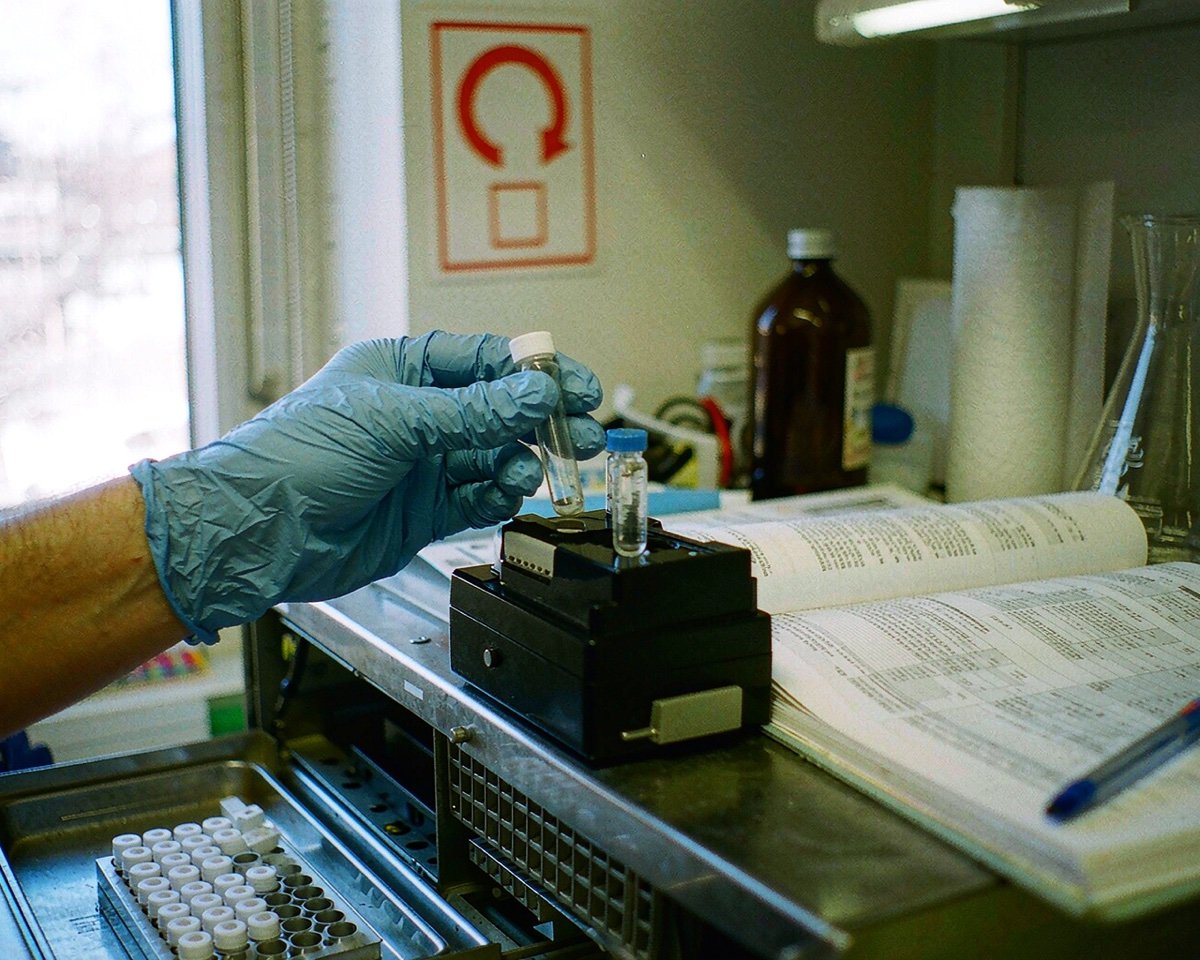
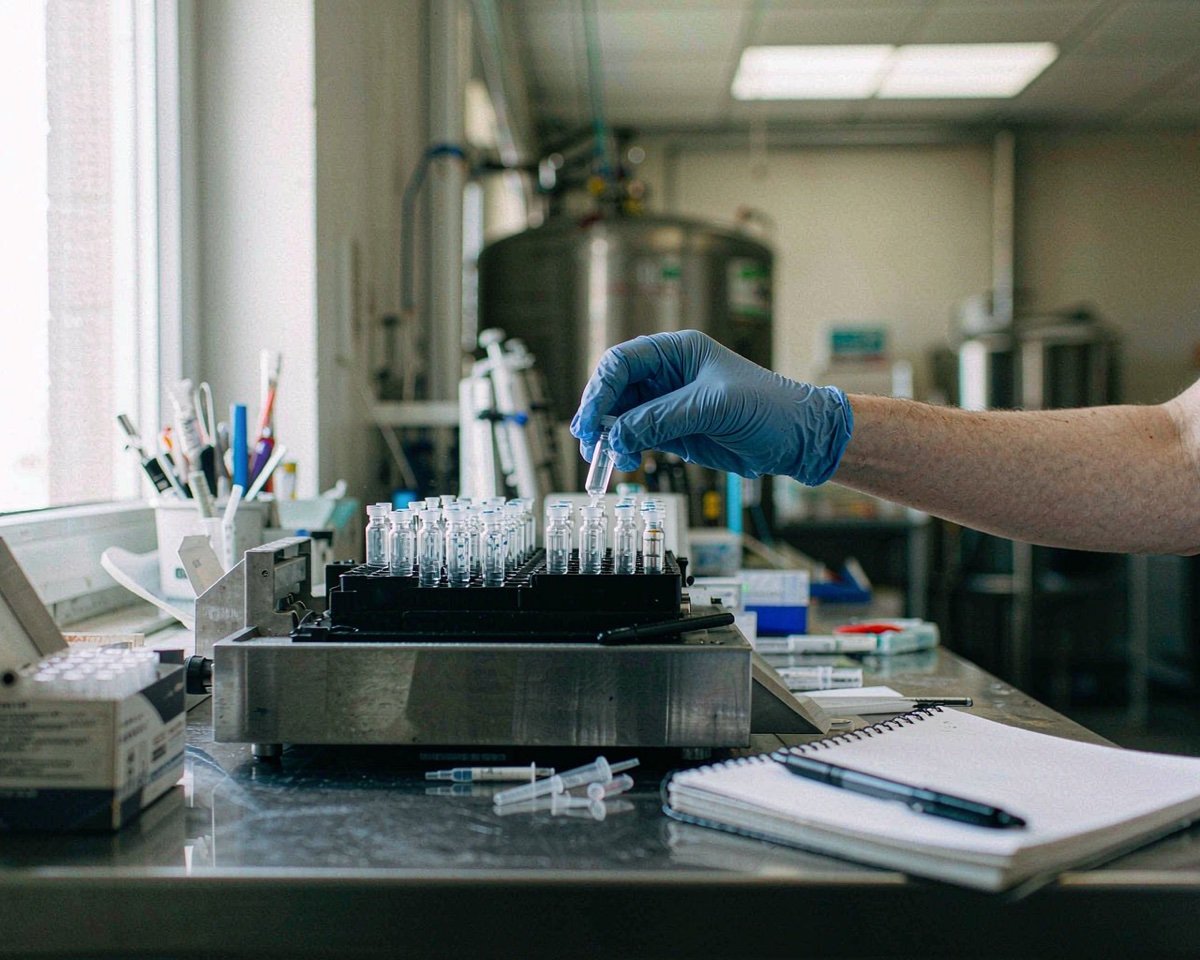
The sample prep chain for semiconductor-grade ICP-MS looks like this: PFA or high-purity PP vessels for digestion and dilution, sub-boiled or high-purity acids, UPW rinses, low-extractable pipette tips, and cleanroom-packed autosampler vials. Each link has to justify itself, because the chain is only as clean as the dirtiest link.
PFA (perfluoroalkoxy) is the gold standard for the most corrosive and most sensitive work because it leaches essentially nothing, but it costs ten times what polypropylene costs. Most labs reserve PFA for the lowest-level work and use certified high-purity polypropylene for routine samples. That division of labor is sensible, and it is what I recommend to most labs: buy the expensive plastic only for the steps where the data depends on it.
We wrote a full breakdown of what consumables ICP-MS sample preparation actually needs, including the vessel and tip decisions, if you want the next level of detail.
Instrument-side consumables
Downstream of prep, the ICP-MS itself consumes a steady stream of parts: nebulizers, spray chambers, cones (nickel or platinum), and peristaltic pump tubing for the autosamplers. Hydrofluoric acid work, common in semiconductor labs for silicon-containing samples, demands HF-resistant sample introduction kits. Running HF through a standard glass nebulizer is a one-time learning experience.
Agilent’s ICP-MS product documentation covers the sample introduction options in detail, including the HF-resistant configurations that semiconductor labs specify.
Ionic Contaminants and Ion Chromatography
Ion chromatography (IC) is the workhorse for anions and cations: chloride, sulfate, nitrate, fluoride, bromide, ammonium, sodium, potassium. In electronics labs it shows up in three places: UPW monitoring, chemical QC, and ionic residue extraction from packaged devices and boards.
Why IC consumables get specific
The classic IC trap is chloride contamination. Chloride is everywhere: in sweat, in some nitrile glove brands, in PVC dust, and, annoyingly, in some eluent bottles and sample containers that were not made for trace work. An IC method chasing chloride at low ppb will happily report the container’s chloride instead of the sample’s.
The defenses are boring and effective: use containers and vials certified for low ionic extractables, rinse with UPW before filling, and never trust a new consumable lot without running it as a blank first. That last habit is cheap insurance. A blank takes ten minutes; a false out-of-specification investigation takes a week.
Filtration also plays a role. Extracts from device surfaces or chemical samples often need filtering before the IC column, and the filter itself is a ionic contamination source. Syringe filters vary enormously in their rinse-up behavior, meaning how much chloride and sulfate the first few milliliters of filtrate carry. If your method does not specify a discard volume, you are rolling dice, since burst pressure and housing extractables tend to reflect the same manufacturing discipline.
Eluent and standard handling
Mobile phase for IC is prepared from high-purity water and concentrates, and its container matters as much as the sample containers. Carbonate absorption from room air slowly changes hydroxide eluent concentration, which drifts retention times. Labs that cap eluent bottles properly and prepare fresh eluent on schedule get calmer baselines than labs that top off a week-old bottle. Small habit, visible result.
Particle Counting and Surface Contamination
Beyond the water and the chemicals, electronics labs monitor particles as a category of their own, both in fluids and on surfaces.
Liquid particle counting
Cleanroom-manufactured consumables for liquid particle counting work need low particle release, and the verification method matters. A vial that is “particle tested” at 10 µm tells you nothing about 0.2 µm performance, and UPW counting happens well below 1 µm. When you read a consumable spec sheet, check the size thresholds the particle data was measured at, not just the word “particle.” Our guide on how to read a lab consumables spec sheet covers the ten terms that actually carry information.
There is a related trap with filtration-based particle analysis: matching the filter to the method. Membrane pore size, diameter, and material all interact with recovery of the particles you are counting. Labs that run particle size analysis have usually learned this the hard way, with a method that recovered half of what it should.
Outgassing and volatile contamination
Not all contamination is visible or ionic. Volatile organic compounds escaping from plastics, adhesives, and packaging can condense on surfaces as invisible films. On a wafer, those films interfere with oxide growth, bonding, and optical surfaces. In hard disk and optics manufacturing, the tolerances are even tighter.
Testing for this happens a few ways. Gravimetric outgassing tests (the classic ASTM E595 approach, borrowed from aerospace) measure total mass loss and collected volatile condensable materials. Vapor-phase methods and surface analysis techniques like SEM with EDX identify what actually landed on a representative surface. For consumables, the takeaway is simpler than the test menu: materials that smell like anything are outgassing something. Soft plastics, adhesives, and printed inks are the usual suspects. I tell labs to be especially suspicious of anything with a label glued inside the cleanroom packaging, because adhesives outgas for weeks.
Cleanroom Packaging of Consumables
A consumable made in a cleanroom can be undone by packaging that was not. This is one of the least glamorous parts of the business and one of the most consequential.
What cleanroom packaging actually means
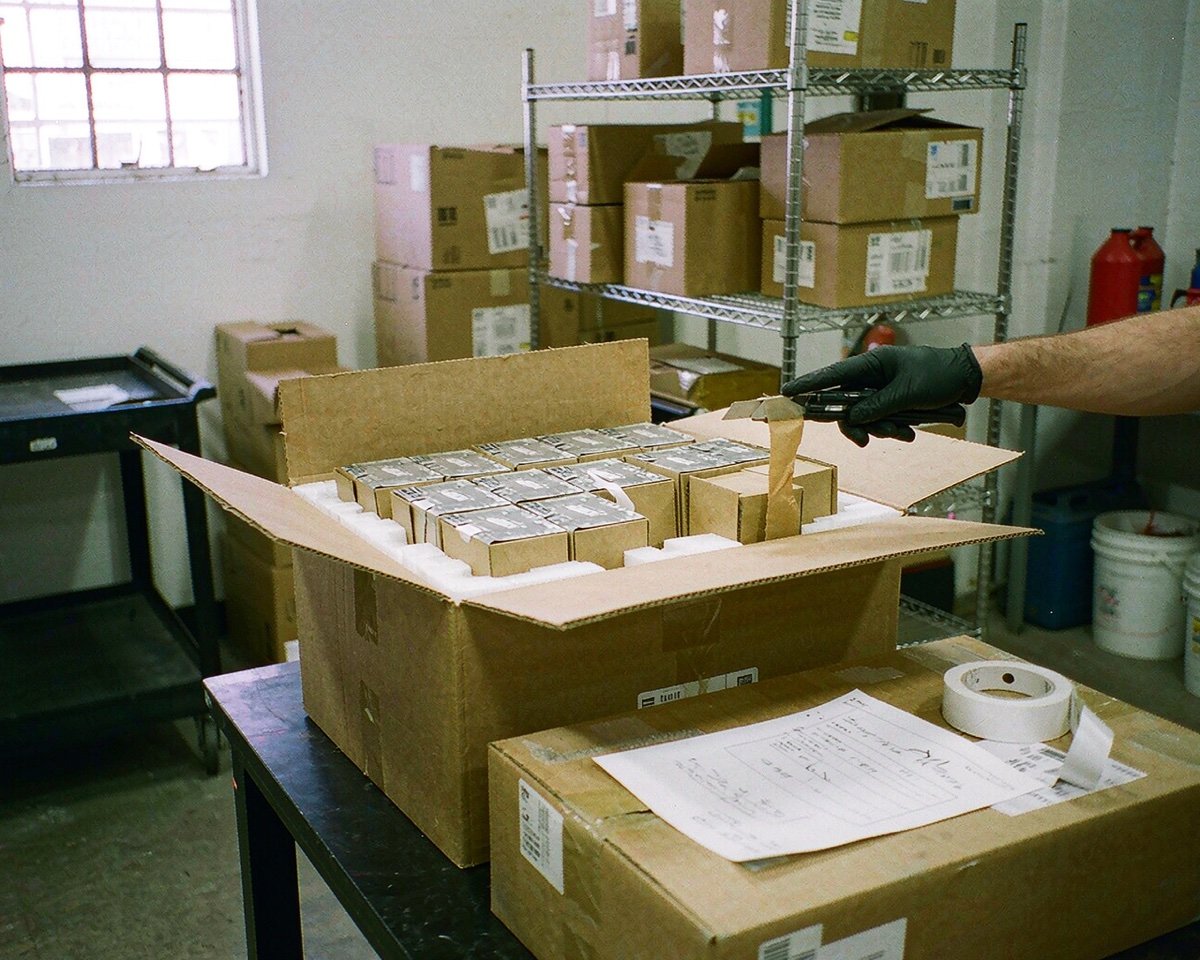
Serious cleanroom packaging is a layered system. The product is cleaned, dried, and packed inside the cleanroom, typically in a double-bag configuration: an inner bag heat-sealed at the point of manufacture, and an outer bag for the journey into the customer’s cleanroom. The outer bag gets wiped down and removed before the inner bag crosses the line, so the contents never touch uncontrolled air.
Bag material matters too. Polyethylene bags shed fewer particles than PVC and do not carry plasticizer contamination. Antistatic bag options exist for the static-sensitive products we talked about earlier. And the whole package should survive its supply chain: a bag that arrives inflated with factory air from a hot truck ride has already failed at its job, even if it looks intact.
Labels, lot numbers, and the cleanroom line
Here is a detail most buyers never think about: where the label is. A label inside the cleanroom packaging is a contamination source (adhesive, ink, paper fibers), so well-designed cleanroom products put lot and date information on the outer bag or on an insert, keeping the product-contact surfaces label-free.
Lot traceability on consumables serves the same function it serves in pharma QC. When a contamination event happens, the lab has to reconstruct what touched the samples. If every consumable lot is recorded, the investigation takes hours. If it is not, it takes weeks, and often ends without an answer.
Storage and shelf life after arrival
Packaging protects consumables until you open it; storage protects them after. Heat accelerates extractable migration in plastics, UV embrittles some polymers, and humidity swells paper-based components. A cleanroom-packed vial stored on a sunny windowsill for a year is no longer a cleanroom-packed vial in any meaningful sense. Our guide on storing lab consumables for maximum shelf life covers the storage conditions that actually preserve the cleanliness you paid for.
Certifications and Documentation That Actually Matter
Electronics labs, like pharma labs, buy documentation as much as they buy plastic. But the documents that matter differ in emphasis, and knowing the difference saves money and audits.
Certificates of analysis and conformance
For consumables, the meaningful document is usually a certificate of analysis with actual numbers: extractable metals by lot, particle release, TOC contribution, or resistivity contribution for water-contact materials. A certificate of conformance, by contrast, just states that the product was made to spec without listing numbers. Conformance certificates are fine for commodity items. For anything touching a ppt-level workflow, I want the numbers.
ISO 14644 and cleanroom manufacturing claims
Consumables described as “cleanroom manufactured” should specify the cleanroom class of the manufacturing environment. The reference framework is the ISO 14644 series, which defines cleanroom classification by particle concentration. The ISO 14644-1 standard page describes the classification method, and the IEST’s ISO 14644 resources are a useful companion for how the classes get applied in industry. An ISO Class 5 manufacturing environment is a real, auditable claim. “Made in a clean environment” with no class stated is marketing.
Change control and lot-to-lot stability
The document nobody asks for and everybody eventually needs is a change notification commitment. If your supplier changes a resin lot, a molding site, or a cleaning process, your method validation is quietly invalidated. Electronics labs that have lived through a mystery contamination investigation learn to ask suppliers, in writing, whether they notify customers of material or process changes. The suppliers who say yes easily are the ones who understand what their product is being used for.
A Contaminant-to-Consumable Map
Sometimes it helps to see the whole problem on one page. This table maps the contaminant concerns that drive electronics testing to the consumable specifications that address them.
| Contaminant concern | Where it shows up | Consumable spec to insist on |
|---|---|---|
| Trace metals (Fe, Zn, Na, K) at ppt level | ICP-MS QC of acids, UPW, process baths | Certified extractable metals data per lot; high-purity PP or PFA; cleanroom packed |
| Ionic residue (Cl⁻, SO₄²⁻, Br⁻) | IC of extracts, UPW, board/package cleanliness | Low ionic extractable vessels and vials; UPW pre-rinse; lot blank verification |
| Particles ≥ 0.05–0.2 µm | UPW monitoring, wafer surface inspection | Particle release data at relevant size thresholds; cleanroom packaging |
| Organic carbon (TOC bleed) | UPW TOC, photoresist adhesion issues | Certified low-TOC vials; no silicone septa or coated liners in the path |
| Static-attracted dust | Weighing, powder handling, dry cleanrooms | Antistatic or static-dissipative consumables; humidity control |
| Outgassed organics (volatile condensables) | Wafer surfaces, optics, storage of cleaned parts | Low-outgassing materials; no adhesives or printed labels inside packaging |
How to Buy Without Getting Burned
Let me close the main sections with the buying question, since eventually someone has to sign the purchase order.
Qualify by lot, not by catalog
The catalog description tells you what the product was on the day the datasheet was written. Your method cares what the product is today. For any consumable in a critical workflow, run each new lot as a blank against your most sensitive method before you release it to routine use. This costs minutes and catches the resin-lot surprises that cost weeks.
For a structured way to compare candidates, our article on the ten key terms on a lab consumables spec sheet gives you a checklist you can hand to procurement.
Match the grade to the workflow
Not every consumable in the lab needs semiconductor-grade certification. The solvent dilution for a solvent strength test does not need PFA. The acid QC for a shipment certificate does. Over-specifying wastes budget that you will want for the places precision actually lives, and under-specifying the critical path is how contamination mysteries start. My default advice: map your workflows once, mark the three or four steps where the measurement limit is set by the consumable, and spend there.
Ask the uncomfortable supplier questions
Three questions sort suppliers quickly. Can you provide extractable data per lot, not per product family? Do you notify customers when you change materials or processes? Is your packaging system designed to be opened inside a cleanroom, and can you describe how? A supplier who answers all three fluently has electronics labs as customers already. A supplier who hesitates is learning on your samples.
Thermo Fisher’s lab water purification documentation is a good example of how a major vendor structures technical claims for water systems, and it is a reasonable template for the level of specificity you should expect from any consumables vendor.
Conclusion
Electronics testing labs live at contamination levels where ordinary lab consumables quietly become part of the problem. The vial, the tip, the filter, and the bag it arrived in each contribute extractables, particles, and ions that your instruments can see and your specifications forbid. The labs that stay out of trouble treat consumables as measured components: they demand per-lot data, qualify new lots as blanks, keep consumables in their cleanroom packaging until use, and store them like the precision items they are. None of this is expensive compared to a single failed lot investigation. If you take one step this month, I would make it this: pick your most sensitive method, run every consumable in its chain as a blank, and see what your current supplies are adding to your results. Then use our guides on ICP-MS sample prep consumables and consumables spec sheet terms to fix what the blanks show you.
Frequently Asked Questions
What does “semiconductor grade” actually mean for lab consumables?
It means the consumable was manufactured and packaged to keep extractable contaminants below the thresholds in semiconductor specifications, with per-lot data to prove it. There is no single universal certification, so always ask what was tested, at what levels, and in which cleanroom class.
Can I use regular HPLC vials for semiconductor sample testing?
For many routine organic analyses, standard high-quality HPLC vials work fine. For ppt-level trace metals, UPW TOC, or IC work at low ppb, you need vials with certified low extractables and cleanroom packaging, because ordinary vials can contribute more contamination than your sample contains.
Why is 18.2 megohm-cm water called “ultrapure” when it still has impurities?
18.2 megohm-cm is the resistivity of water with essentially all ions removed at 25 °C; it is the physical limit. Water can still carry non-ionic contaminants such as dissolved organics, particles, and gases, which is why UPW systems monitor TOC and particles separately from resistivity.
How should consumables be packaged for cleanroom use?
Look for double-bagged products, with the inner bag sealed at the point of cleanroom manufacture and the outer bag removed after wiping during entry. Packaging should be low-particle polyethylene, static-controlled where relevant, and labeled on the outside so no adhesive ever touches product-contact surfaces.
How often should I qualify a new lot of consumables in a trace metal lab?
Every lot that enters a critical workflow should be blank-tested against your most sensitive method before routine use, because resin and molding changes between lots are common. Keeping a small running record of lot blanks also turns a future contamination investigation from weeks into hours.