
# What Is an EPA VOA Vial and When Do You Need One?
If you’ve ever quoted a groundwater job, someone has asked you for “VOA vials” and left it at that. It’s a fair question to want answered properly, because the wrong bottle here doesn’t just cost money. It costs a resampling trip.
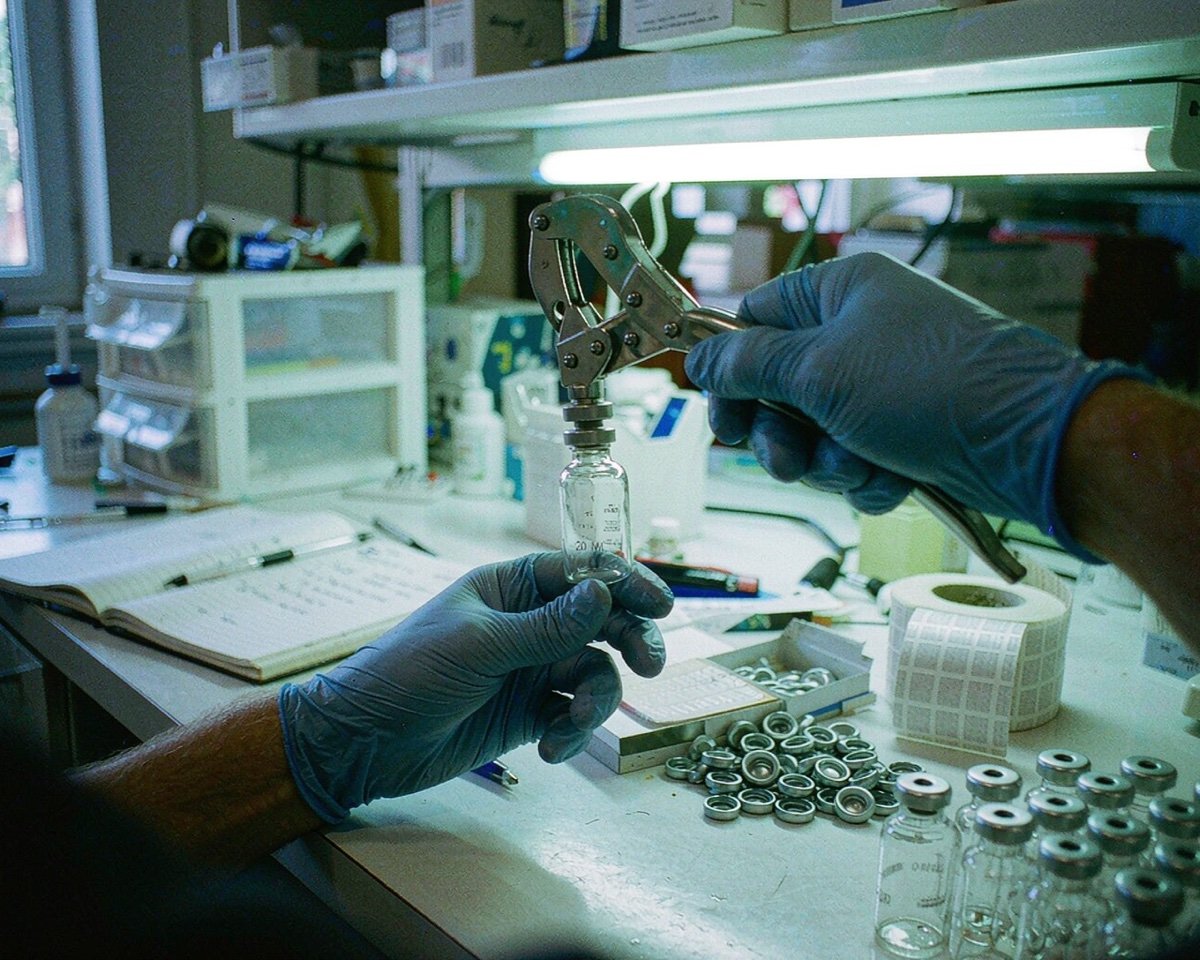
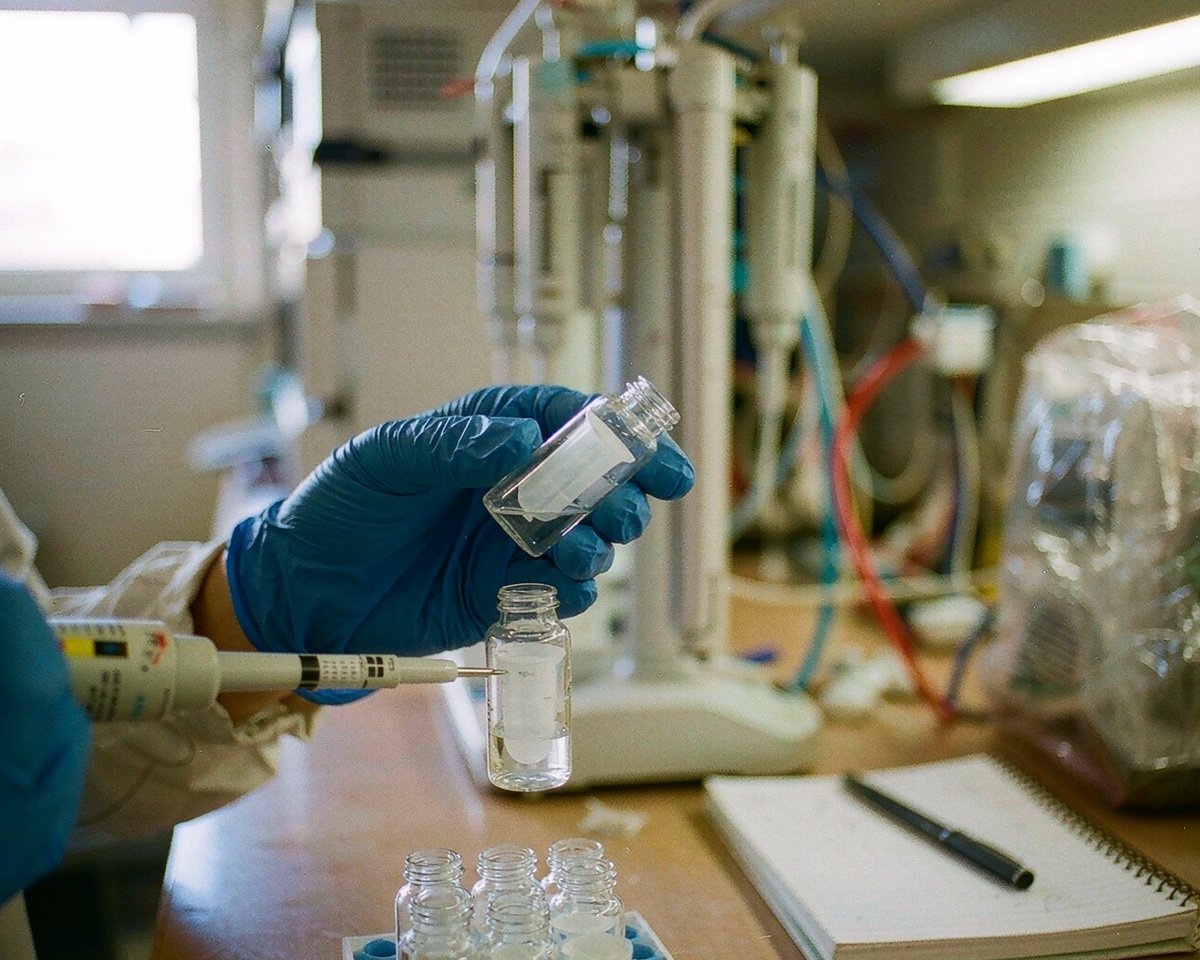
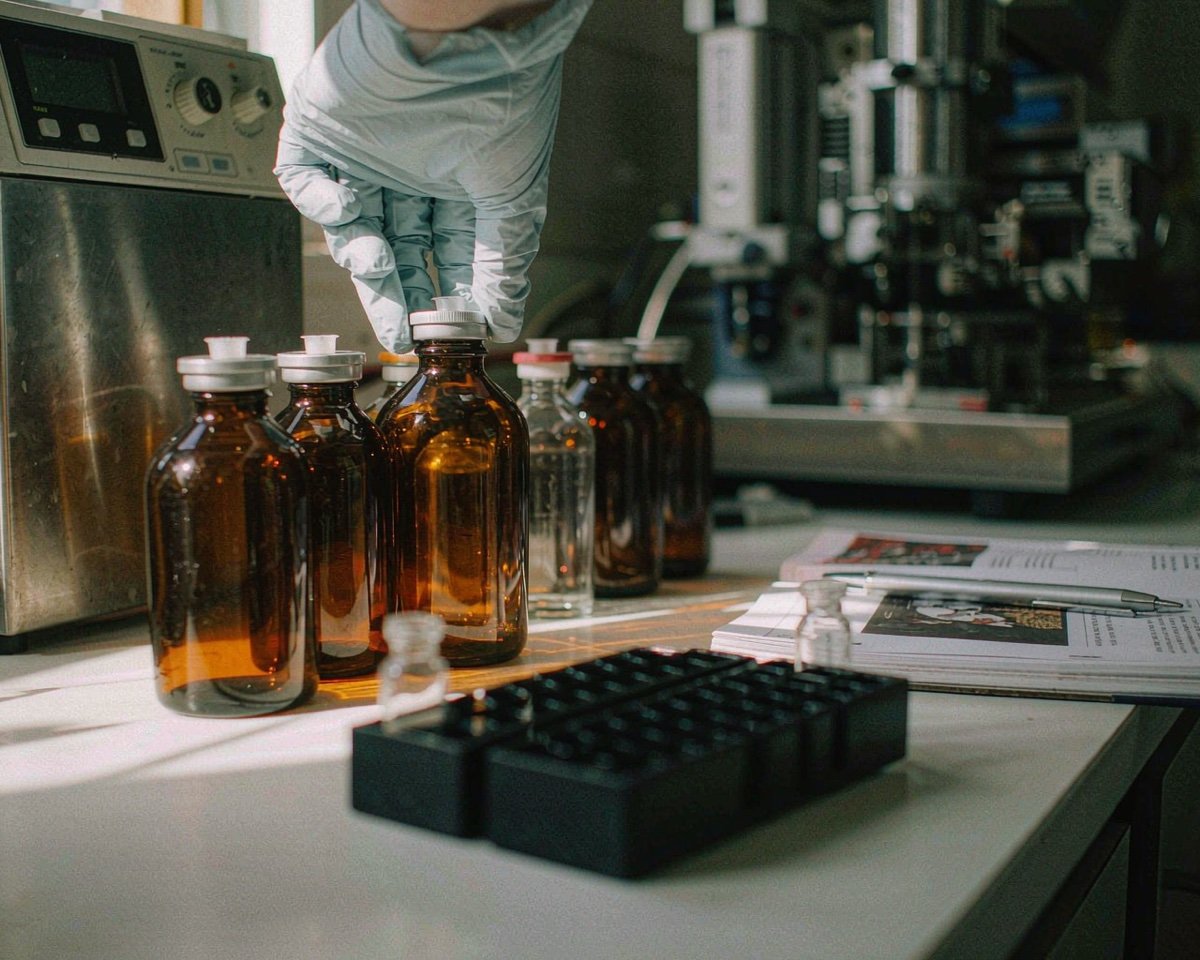
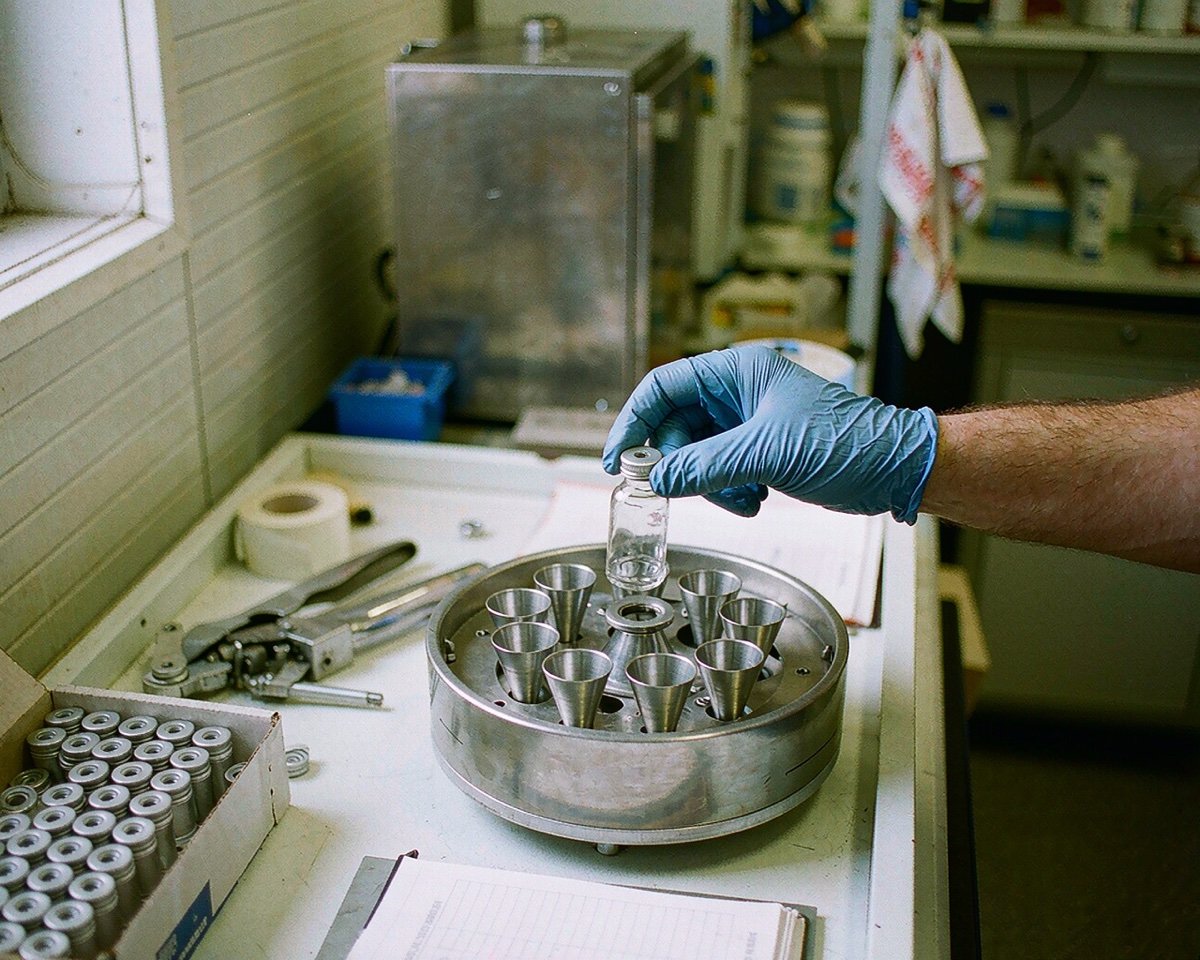
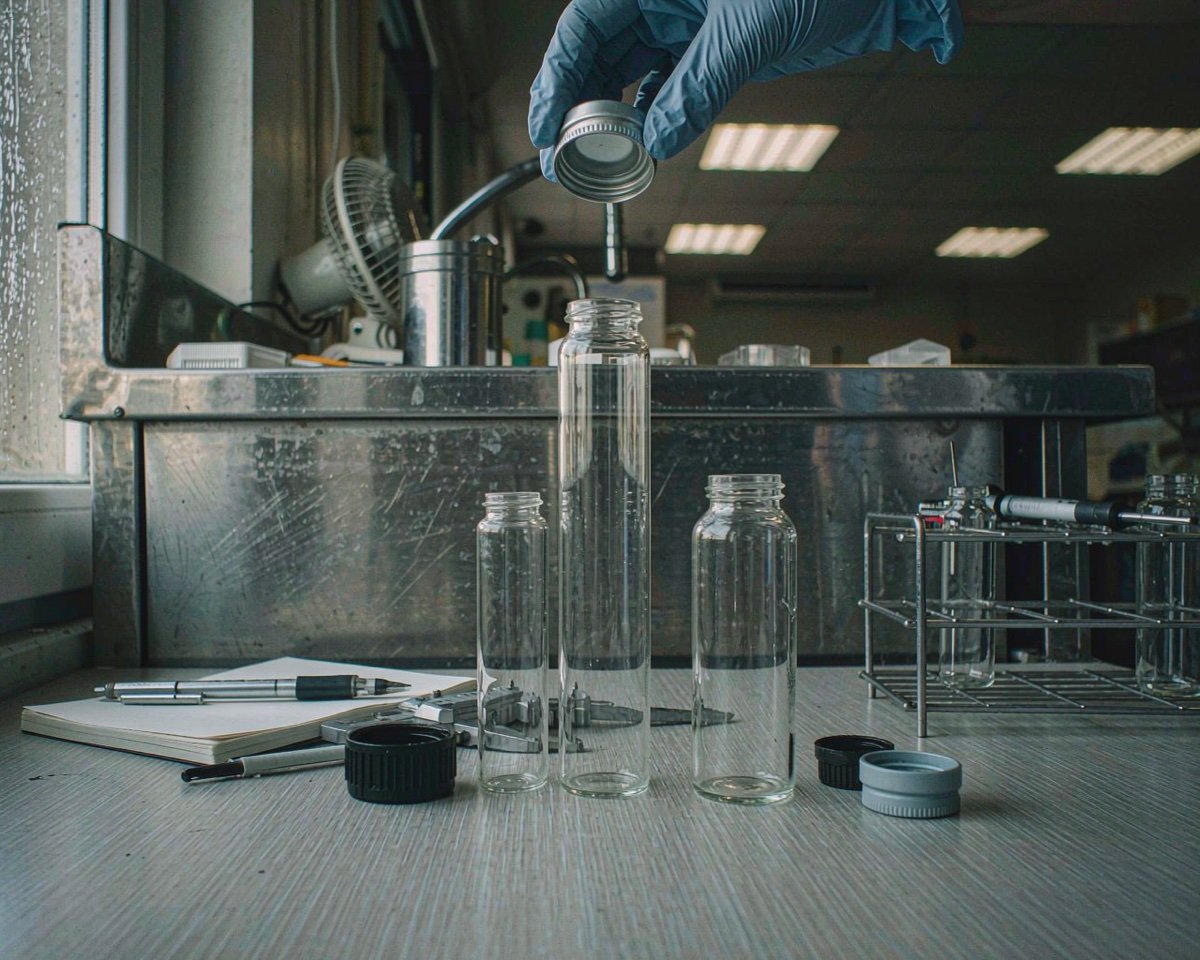
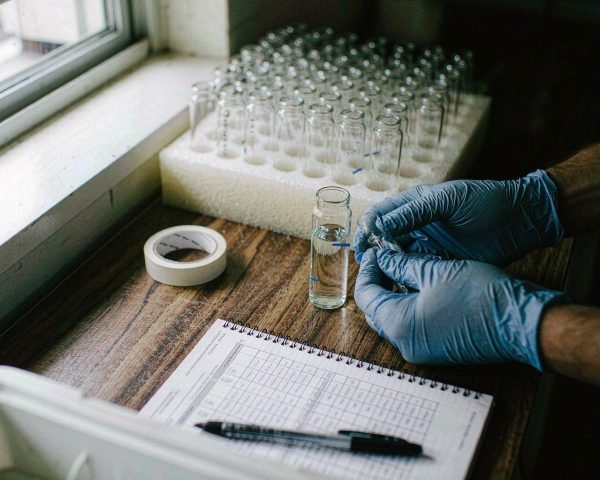
An EPA VOA vial is a small glass sampling vial, almost always 40 mL, that is precleaned and sealed with a PTFE-lined septum cap. Labs use it to collect water and soil samples for volatile organic compound (VOC) testing under EPA methods like 5030B, 5035, and 524.2.
Below I’ll unpack what the “EPA” part actually demands, when your method forces you into these vials, and the handling details that make or break the data.
What “VOA” Actually Means
VOA stands for volatile organic analysis. The name describes the job, not the chemistry: you’re sampling compounds that evaporate easily, things like benzene, trichloroethylene (TCE), and the gasoline additive MTBE.
Volatility creates one specific problem. The moment you open a normal container, your lightest analytes start leaving. So a VOA vial exists to do two things: keep contamination out before the sample goes in, and keep volatiles in after it’s sealed. That’s why the glass arrives precleaned and why the cap has a PTFE-faced septa liner instead of plain plastic.
I think of it this way. A scintillation vial holds liquid. A VOA vial holds evidence.
What the EPA Methods Require From the Vial
The EPA doesn’t sell vials. It writes methods, and the methods dictate the container.
SW-846 Method 5030B describes purge-and-trap for aqueous samples, and it assumes your sample arrives in a vessel that hasn’t added any VOC background of its own. Method 5035 does the same for soil, and it goes further: the sample is sealed in the vial with preservative and never opened in the field.
Three requirements show up across these methods:
1. A clean container. Residual organics from manufacturing or packaging show up as method blank hits, and a blank hit means every result in the batch is suspect.
2. A septum seal. The cap is PTFE-lined because VOCs can diffuse through or react with bare liners. Open-top caps with a 0.125-inch PTFE/silicone septum let the autosampler needle in without letting vapors out.
3. Zero headspace. The vial gets filled completely, with no air pocket. An air bubble gives volatiles somewhere to escape into, and once they’re in the bubble, your purge-and-trap never sees them.
For drinking water work, EPA Method 524.2 and the related Contract Laboratory Program procedures use the same 40 mL container convention with GC/MS detection. The vial is the common denominator across all of them.
Why 40 mL?
The 40 mL size isn’t a law. It’s a convention that won.
Purge-and-trap instruments and autosampler racks were designed around it, so every supplier stocks it, so every method writer referenced it, and so on. Most vendors also offer 20 mL versions when sample volume is tight, and 60 mL for soil dry-weight determinations, but if you order “VOA vials” with no size, 40 mL is what shows up.
Precleaned vs. Precleaned and Certified
This is where buyers get confused, and where vendors hide behind vague words.
Most suppliers follow a tiered system. At the bottom, you get vials that are simply assembled and packaged. One step up, “precleaned” vials are washed to a documented protocol, commonly called EPA Protocol B, where the container, liner, and closure are all cleaned and lot-traceable. At the top, “precleaned and certified” vials add an actual certificate of analysis: the manufacturer tested samples from that cleaning lot against dozens of target VOCs and can show the blanks came back clean.
Which tier do you need? Match it to your data’s destination. If results go to a regulator under a Superfund or state cleanup program, certified vials with lot-specific CoAs are the defensible choice, and the laboratory will usually insist on them. For internal screening or process monitoring, plain precleaned vials are usually fine and noticeably cheaper. When in doubt, ask the lab that runs the samples; they know what their QA plan requires.
One honest hedge here: cleaning tier names vary between vendors. A “Level 2” from one supplier may not match another’s. Read the spec sheet, not the label.
When You Actually Need Them
The trigger is the method, not the matrix. If your project cites any of these, you’re in VOA vial territory:
• Drinking water compliance under EPA 500-series methods like 524.2.
• Groundwater monitoring wells, the classic scenario: low-level VOCs, purge-and-trap GC/MS, zero room for container contamination.
• Soil VOC work under Method 5035, where vials are filled in the field and preserved with methanol or sodium bisulfate.
• Remediation and TCLP leaching tests, where volatiles must survive from sample point to instrument.
Soil work has its own wrinkle. EPA Method 5021A, the headspace procedure for solid samples, explicitly calls for filling a 40 mL VOA vial with soil at each sampling point. Two vials per location is typical: one for analysis, one for dry weight.
If your work is HPLC, none of this applies to you, and a 2 mL autosampler vial is the right tool. I’ve covered the broader environmental lab consumables landscape separately if you want the full picture.
Handling: Where Good Samples Go Bad
The vial is only half the battle. Most rejected VOA samples fail before they ever reach a lab bench.
Fill the vial completely. The field technique I was taught: run water in until the meniscus domes over the rim, cap it, invert the vial, and check for an air bubble. Some state SOPs allow a bubble no bigger than about 6 mm; many labs accept nothing visible at all. I once watched a whole groundwater event get thrown out because two vials came back with thumb-sized bubbles. The client paid for the drilling crew’s return trip, three weeks later.
Preservatives come next. Most aqueous VOC samples get hydrochloric acid added to pH 2 or below, which stops microbial degradation of the analytes. Drinking water with residual chlorine often uses ascorbic acid instead, since the chlorine itself can keep reacting with your compounds after collection.
Then mind the clock. Under EPA’s data review guidelines, properly cooled and acid-preserved aqueous samples carry a 14-day technical holding time from collection to analysis. Unpreserved samples get 7 days. Miss the window and the lab flags the data as estimated, or worse, rejects it outright.
Trip blanks matter too. A trip blank is a VOA vial of analyte-free water that travels with your sample cooler, unopened, and gets analyzed with the batch. If it comes back dirty, the problem happened in transit, and every sample in that cooler is in question. It’s cheap insurance; a vial of water costs almost nothing.
Buying Tips
A few things I’d check before ordering a case:
• Septum and cap included? Some vials ship with open-top caps and PTFE/silicone septa pre-assembled; others ship as bare glass. Confirm before checkout, because 40 mL glass with no cap is a paperweight.
• Clear or amber? Clear glass lets you see the sample and spot bubbles or turbidity. Amber blocks light for photosensitive compounds. For routine VOC work, clear is the default.
• Shrink-wrapped or not? Shrink-wrapped, pre-assembled vials arrive cleaner and save field prep time. Worth it when the sampling crew is billing by the hour.
• Certification documents. Ask whether the CoA is lot-specific and available electronically. If a vendor can’t produce one, treat the “certified” claim as decoration.
If you’re filling vials by hand, our guide on how to fill a vial without introducing bubbles covers the technique in detail.
Conclusion
An EPA VOA vial is a simple product with a demanding job: deliver volatile organics from the field to the purge-and-trap without losing anything or adding anything. The 40 mL size, the precleaned glass, and the PTFE-lined septum cap all exist because volatiles punish sloppy containers. Get the tier right for your project, certified with a lot-specific CoA when regulators are watching, plain precleaned for internal work, then focus your energy on filling technique and holding times, since that is where most samples actually die. If you’re building out an environmental sampling program, start with our environmental lab consumables guide, and keep a CoA reference handy before your next order.
Frequently Asked Questions
What does VOA stand for on a vial?
VOA stands for volatile organic analysis. It signals the vial is precleaned and sealed for sampling compounds that evaporate easily, such as benzene and TCE.
Why are VOA vials 40 mL?
The 40 mL size became the convention because purge-and-trap instruments, autosampler racks, and EPA methods were all built around it. Suppliers also make 20 mL and 60 mL versions for tight volumes or soil dry-weight work.
Can I reuse VOA vials?
No. Precleaned and certified vials are single-use, and reusing them voids the cleaning certification. Washing in-house can leave residual organics that contaminate every sample in the analytical batch.
How do I know if my vial has acceptable headspace?
Cap the filled vial, invert it, and look for an air bubble. Many labs accept nothing visible, and some state SOPs allow a bubble up to about 6 mm. When in doubt, refill and try again.
What is the holding time for VOA samples?
Properly cooled (at or below 6°C) and acid-preserved aqueous VOC samples have a 14-day holding time from collection to analysis. Unpreserved samples must be analyzed within 7 days.