
# ICH Q3D Elemental Impurities: Which Consumables Matter?
If you run QC in a pharma lab, elemental impurities have probably crossed your bench even when the risk assessment said no testing was needed. A new supplier, a formulation tweak, or an inspector’s question sends a sample to the ICP-MS anyway. And when that happens, your result is only as clean as the consumables the sample ever touched.
The short answer: ICH Q3D sets PDEs for 24 elemental impurities. Your risk assessment may justify skipping routine testing, but confirmatory ICP-MS runs still happen, and at µg/g to ng/L levels the biggest error source is usually not the instrument. It’s contamination from consumables.
Read on for the consumable choices that keep those blanks clean, and the prep decisions that quietly decide whether your method passes validation.
What ICH Q3D Actually Requires
A quick refresher, because the consumable logic follows from it. The ICH Q3D(R2) guideline establishes PDEs (permitted daily exposures, the daily dose of each element considered safe over a lifetime) for 24 elemental impurities and sorts them into classes. Class 1 is the four everyone knows: arsenic, cadmium, mercury, and lead. They’re toxic, they’re common, and they get assessed for every product. Class 2 elements get screened based on route and likelihood, and Class 3 matters mostly for oral products, where the limits are generous by comparison. Route matters a lot here. An inhalation PDE can be orders of magnitude tighter than an oral one for the same element.
Regulators have adopted this wholesale. FDA distributes Q3D as guidance for drug products marketed in the US, and USP implements it through General Chapters <232> (limits) and <233> (procedures), as USP’s elemental impurities overview explains.
Here’s the part that surprises newer analysts: Q3D is risk-based. If your risk assessment shows the elements are controlled upstream, you may never run a single confirmatory test. In my experience that’s the paper answer. Sooner or later, a lab still runs ICP-MS, whether for a supplier change, an investigation, or a method transfer.
Why Consumables Decide the Result
Think about the scale for a second. A typical oral PDE works out to a few micrograms per day, which becomes sub-ng/mL concentrations in the solution you actually aspirate. Your instrument can see that. So can a dirty pipette tip, a dusty bottle, or a vial that leaches nickel.
I once spent two days chasing what looked like lead creeping through a batch of digests. The instrument was fine, the standards were fine. The source was a reagent bottle somebody had topped up from a carboy that never got acid-washed. Two days of re-runs and one very awkward conversation later, our lab started treating every container as a reagent.
Acid-Wash Everything That Touches the Sample
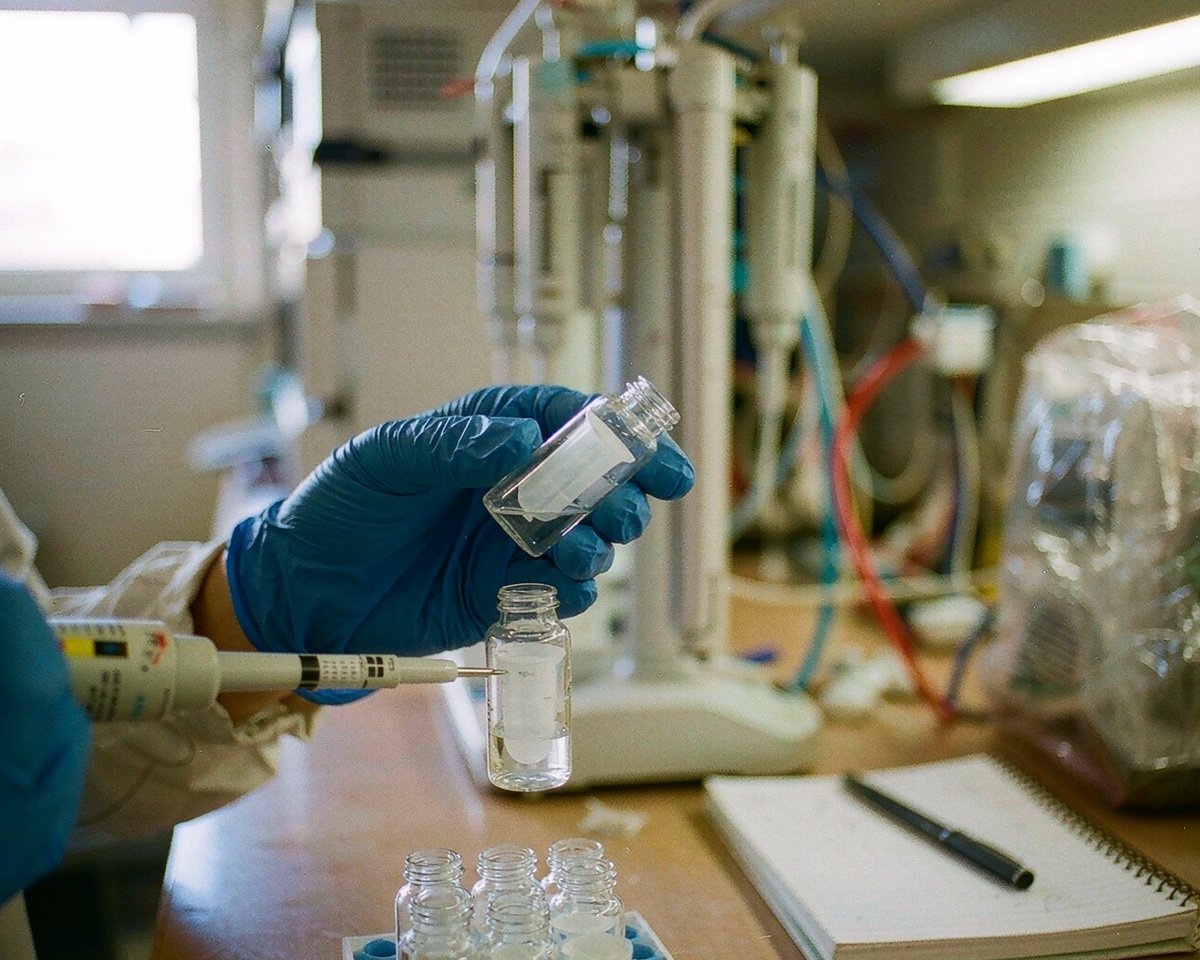
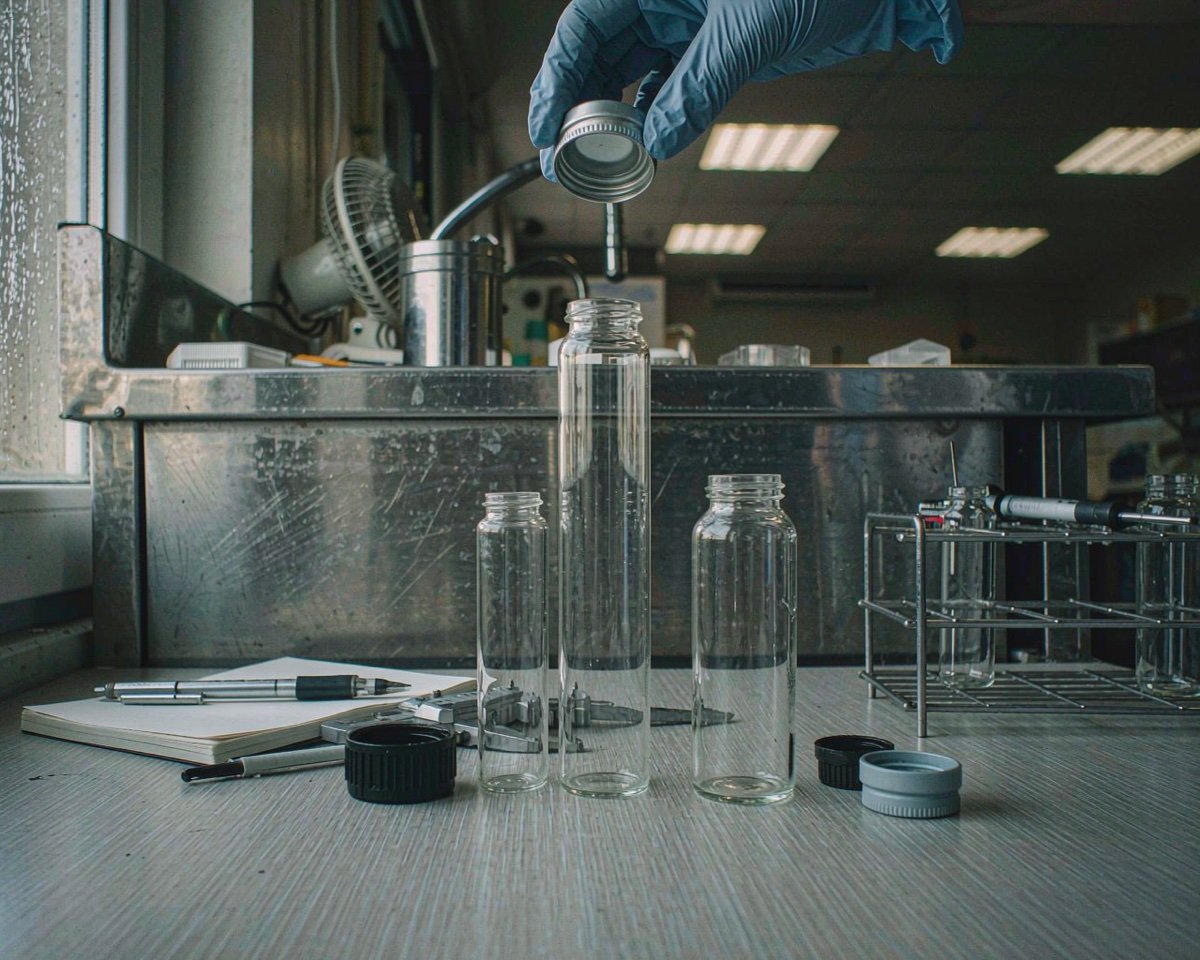
This is the least glamorous, highest-payoff habit in trace analysis. Soak glassware and bottles in 10–20% nitric acid overnight, then rinse several times with ultrapure water and dry in a clean environment. Not occasionally. Every time.
Shimadzu’s elemental impurities case study shows what this looks like done properly: plastic and glass vessels soaked in 1+1 nitric acid for 24 hours, rinsed, dried, paired with reagent-grade acid and ultrapure water. The result was spike recoveries between 91.7% and 109.9% across the limit range, comfortably inside pharmacopeial acceptance criteria (Shimadzu ICP-MS case study). That’s the level of control Q3D work asks for, and it starts with a soak bath.
Reagents Set Your Blank Floor
Your blank can only be as clean as the dirtiest thing you put in it. That means trace-metal-grade acids and 18.2 MΩ·cm water, no exceptions for “just a screening run.” I’ve watched a screening run turn into a full investigation because someone economized on a liter of acid. The savings were about four dollars. The re-run cost two days.
Gloves belong in this category too. Use powder-free nitrile, and if a box has been open on the bench for a month, bin it. Powdered gloves shed talc and whatever rode along with it, and in trace work that shows up exactly where you don’t want it: in the blank.
The Container Is a Reagent
Lead and nickel are the two elements I’ve seen picked up from backgrounds most often. Dust settles in caps. Metal fixtures shed. Containers leach. Nickel is a live regulatory issue too: the 2025 Chinese Pharmacopoeia added a nickel limit to meglumine because its production uses Raney nickel, and Shimadzu published a full ICP-MS method (with microwave digestion and a direct 2% nitric dissolution cross-check) to measure both Ni and Pb in it.
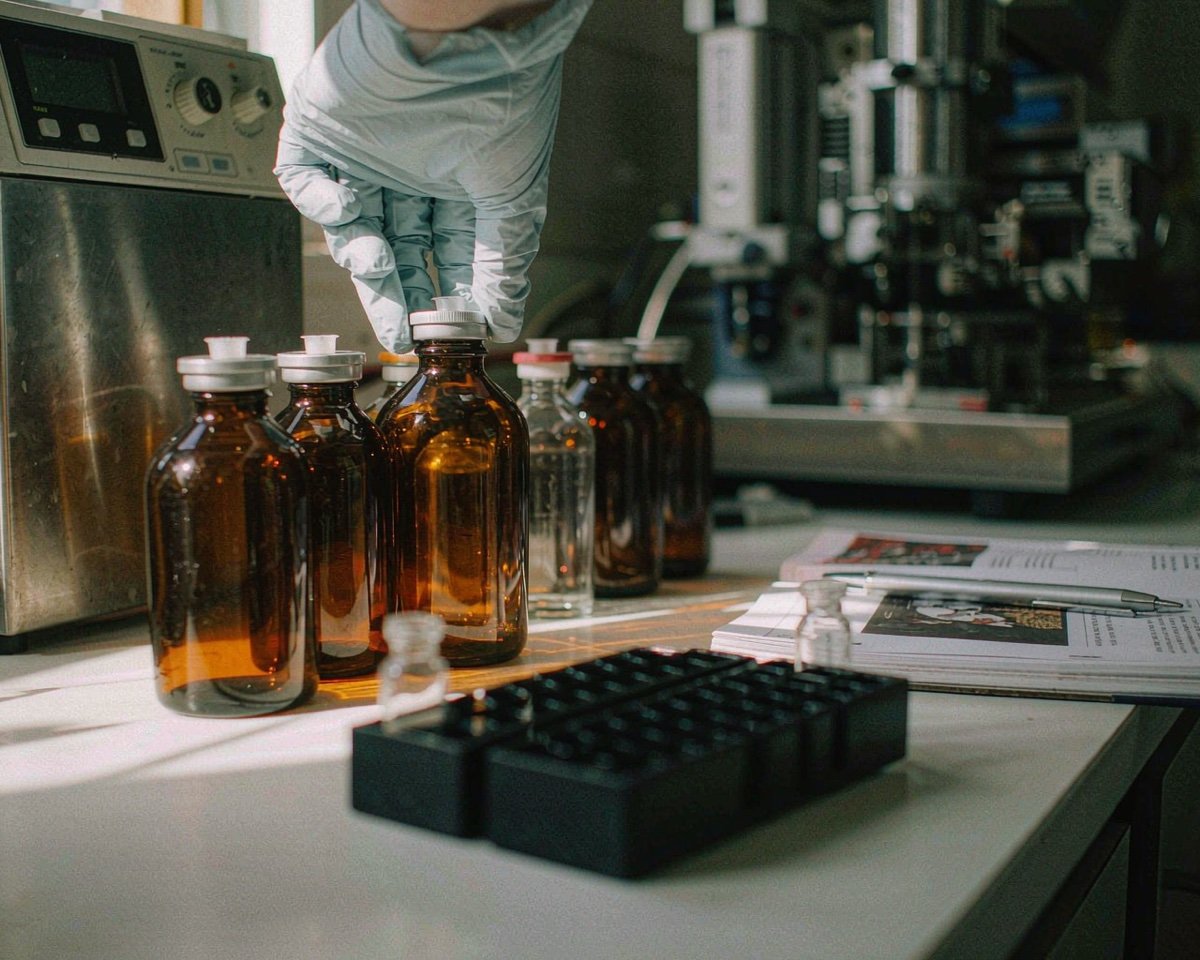
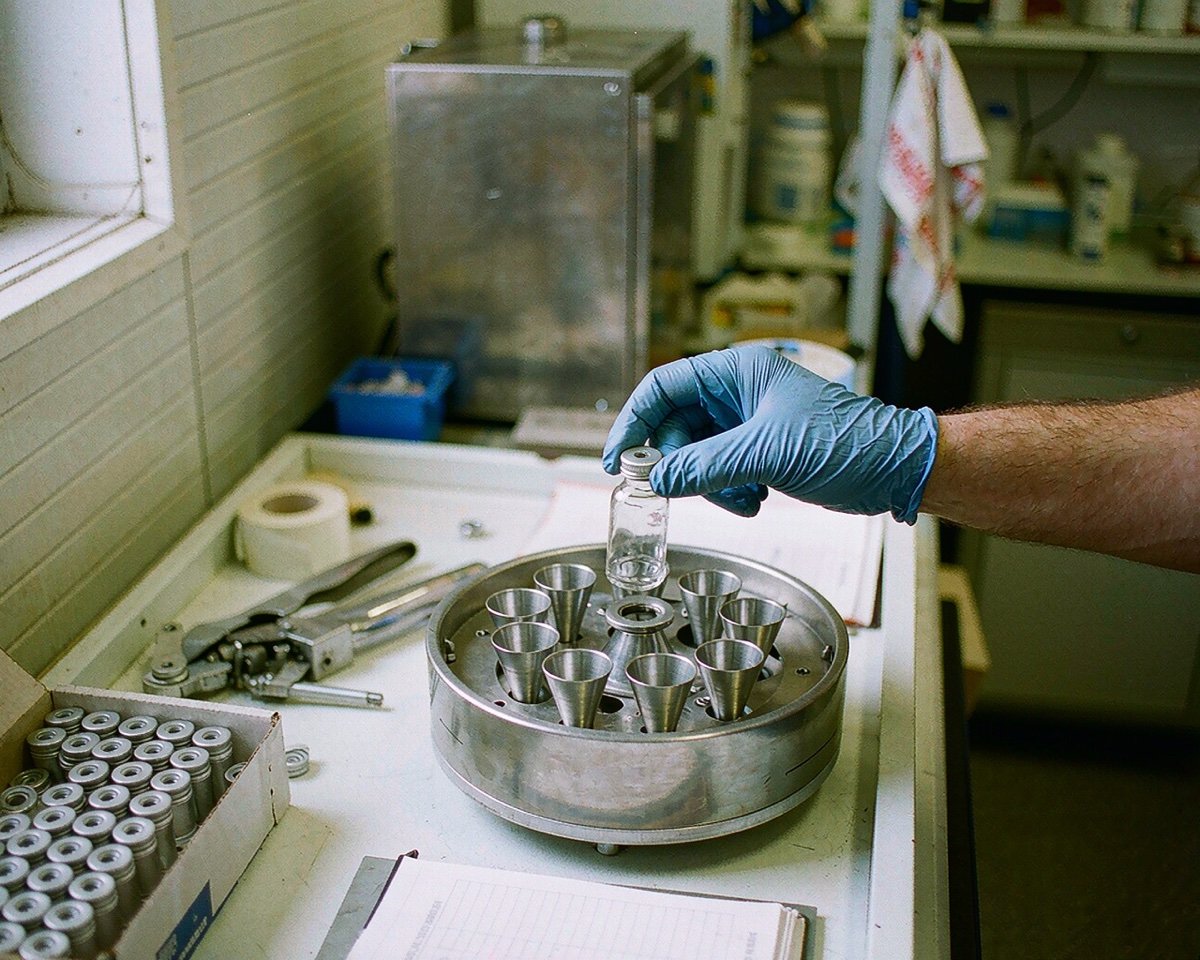
This is where certificates earn their keep. For digests and dilutions, I’d rather use vials with documented low extractables than gamble on a cheap alternative, and what “certified vials” actually guarantees is worth understanding before you order a case. If you’re building out the whole workflow, our pharmaceutical lab consumables guide maps which items deserve scrutiny and which don’t.
Sample Prep Choices That Make or Break the Method
Prefer Dilution Over Digestion
USP <233> allows three sample preparation approaches: direct analysis of the neat sample, direct aqueous dissolution, and indirect dissolution with full digestion. If a direct dilution gets your sample into solution and below the reporting limit, use it. Every digestion step is another chance for contamination, another set of vessels to clean, another blank to run.
Shimadzu’s injectable excipient case is a good template. They diluted 30 mg of sample to 10 g with 1% nitric, added gold stabilizer, and measured straight away. Simple, fast, and the recovery data held up.
Choose Your Acids Deliberately
Nitric acid is the default for a reason. Hydrochloric and sulfuric acid form insoluble salts (silver chloride is the classic offender), and chloride loads the plasma with polyatomic ions like ArCl that sit right on top of arsenic-75. HF attacks glassware and needs special handling. Sometimes the validated method requires them, and that’s fine. But for screening work, a nitric-only digest gives you a cleaner baseline and fewer interference headaches to defend.
Mercury Needs Gold
Mercury volatilizes and adsorbs to surfaces, which is why it ghosts through sloppy methods. The standard fix is a gold stabilizer; the Shimadzu protocol holds gold at 1 mg/L in the final solution. If your method includes mercury and you’re not adding Au, check your recoveries again.
Filters: Rinse Them or Skip Them
Filtration is the quietest contamination source in the whole workflow. Filters can leach metals right into your digest. If you must filter, pre-rinse thoroughly with your diluent and discard the first portion of filtrate. Even better, dilute instead of filtering when the method allows, or let particles settle. Before you commit to a filter, read up on syringe filter extractables and leachables, because “inert” is a claim you should verify, not assume. For a broader look at what trace analysis demands from consumables, see our ICP-MS sample preparation guide.
Run a Blank With Every Batch
One reagent blank and one preparation blank per batch. That’s the whole habit, and it’s the cheapest insurance in trace analysis. If the blank comes back at 0.2 ng/mL for nickel while your limit sits at ten times that, you carry on with confidence. If it comes back dirty, you’ve just saved yourself from reporting a batch result built on garbage. A blank costs minutes. An invalidated batch costs weeks.
Conclusion
ICH Q3D itself is a risk-assessment framework, not an instruction to test everything. But the confirmatory ICP-MS work that follows it lives or dies at the consumable level, long before the sample reaches the plasma. Acid-wash your vessels and rinse them properly. Buy trace-metal-grade acid and ultrapure water, and treat the gloves and bottles around your prep as part of the reagent budget. Dilute when you can, digest when you must, pick nitric over chloride chemistry where the method allows, add gold when mercury is in scope, and pre-rinse or skip filters. Then run that blank every batch, because it’s the one control that catches every mistake upstream. None of this is sophisticated. All of it is what separates a defensible result from an interesting mystery. If you’re equipping a lab for this work, start with the certified vial explainer and the pharmaceutical consumables guide to prioritize what to buy first.
Frequently Asked Questions
Does ICH Q3D require testing every batch?
No. Q3D is risk-based: if your risk assessment shows each relevant element is controlled below the PDE, routine testing may not be needed at all. Testing enters the picture when risk isn’t clear, when a supplier changes, or when an investigation needs hard data.
What’s the difference between USP <232> and <233>?
Chapter <232> sets the permitted concentration limits for elemental impurities, derived from the Q3D PDEs. Chapter <233> provides the validated analytical procedures (ICP-MS and ICP-OES) plus the validation criteria, including spike recovery and repeatability requirements your method has to meet.
Why soak glassware in nitric acid overnight?
Adsorbed metals from previous use and from manufacturing linger on vessel surfaces, and a detergent wash won’t remove them. An overnight soak in 10–20% HNO3 strips that residue, and several ultrapure water rinses bring the container background below your reporting limits.
Can I use ordinary nitrile gloves for ICP-MS sample prep?
Use powder-free nitrile and keep the box closed when you’re not gloving. Powdered or dusty gloves shed particles that carry metals straight into your blanks, and once a box has sat open on the bench for weeks, I’d replace it rather than risk it.