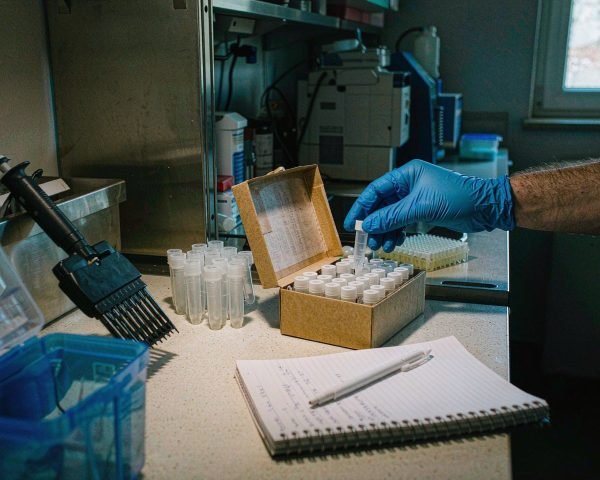

# What Consumables Does Oligonucleotide Analysis Need?
If you’ve ever watched a 21-mer vanish between your calibration curve and your study samples, the method probably wasn’t the problem. Oligonucleotide analysis is one of the few assays where the consumables decide the outcome. Therapeutic oligos (ASOs, siRNA, PMO) are short, heavily charged, and sticky, and they grab onto almost every surface they touch.
Short answer: low-bind polypropylene vials, plates and tips; nuclease-free consumables and water; IP-RP mobile phases made fresh from LC-MS grade HFIP and an alkylamine; columns and hardware rated for high pH and up to 90°C; a passivated flow path; and WAX SPE cartridges for plasma cleanup.
Below, I’ll go through each consumable class, explain why the ordinary version fails, and tell you what I’d actually order.
Why Oligos Stick to Everything
Every phosphodiester in the backbone carries a negative charge, so a therapeutic oligo is a polyanion with a dozen or more charges packed into a few nanometers. That charge density makes it adsorb to glass, to untreated polypropylene, and to bare metal surfaces inside an LC. SCIEX’s oligo LC-MS setup guide lists binding to pipette tips and vials as a first-order problem and recommends low-binding consumables plus an internal standard as standard practice for that reason SCIEX LC-MS setup guide, part 2.
Phosphorothioate ASOs are worse. The sulfur backbone is more lipophilic, so they stick harder and carry more adducts into the source.
I learned this the expensive way. Years ago I supported a plasma PK run where the low calibrator kept disappearing; we spent two days chasing the extraction, then found a tech had decanted standards into regular glass inserts “because we ran out of the polypropylene ones.” A 21-mer at 0.5 nM on-column simply never came off that glass. The batch was salvageable, barely, and only after re-prepping everything into low-bind plastic with a fresh curve.
Low-Bind Plastic: Vials, Plates, and Tips
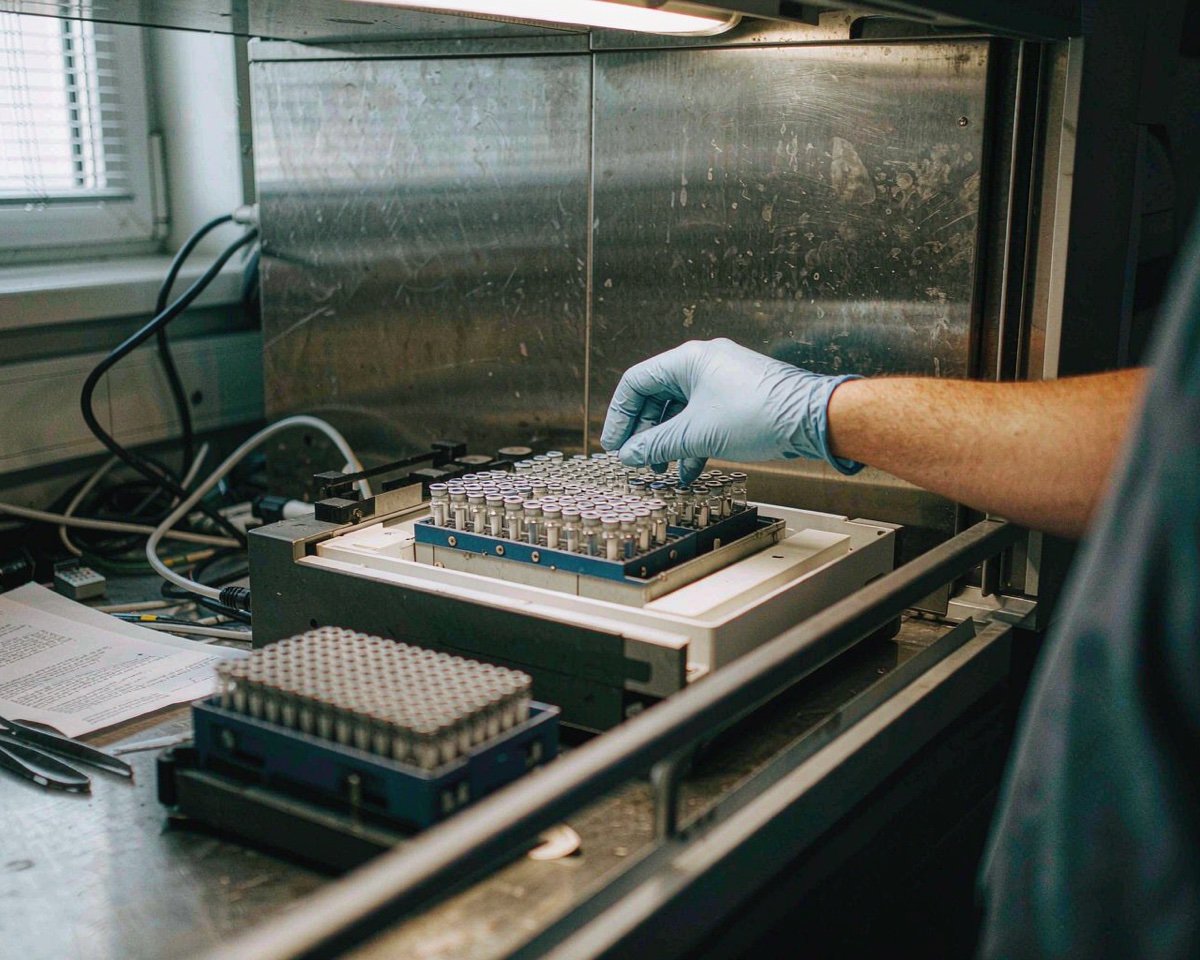
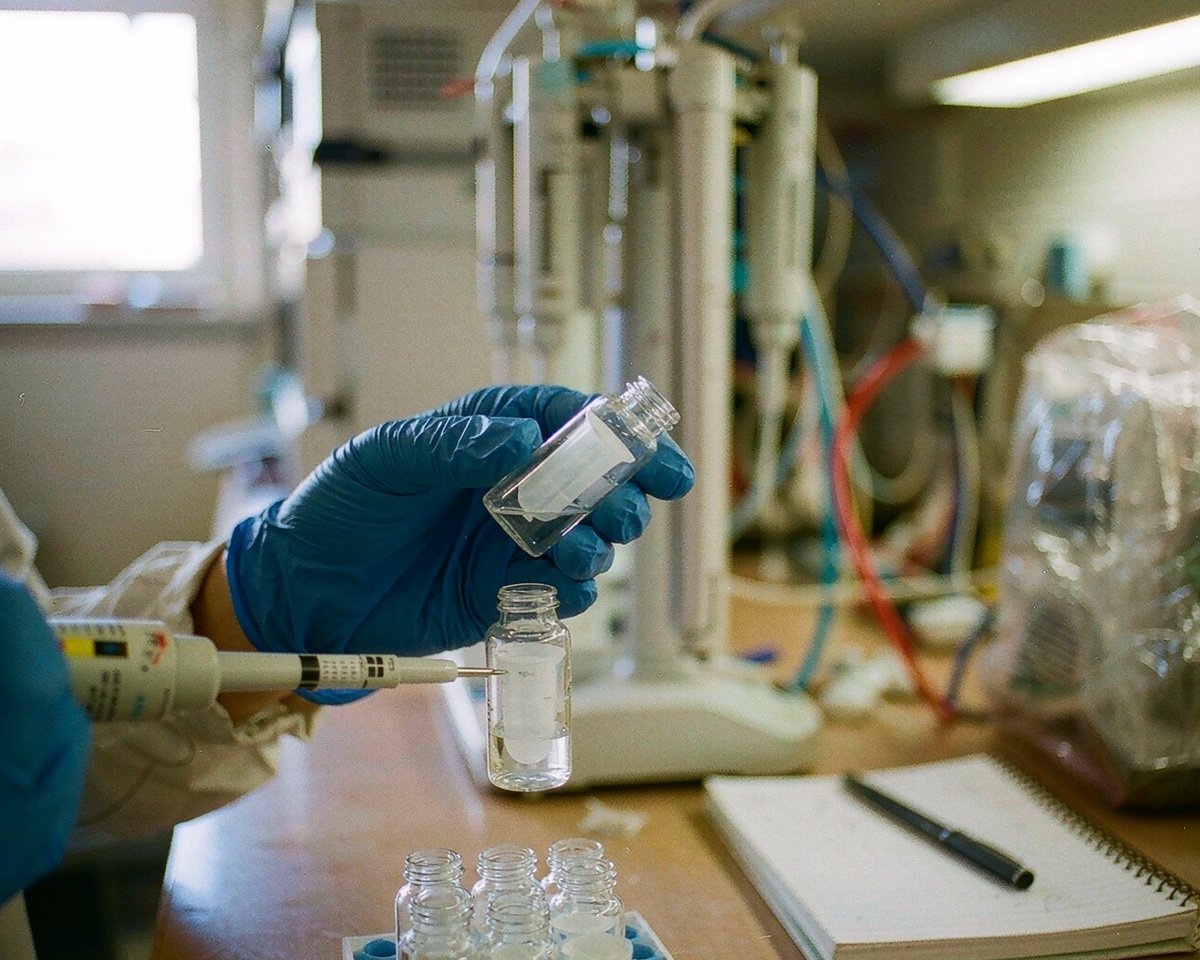
The rule is simple and non-negotiable: oligos go into polypropylene, never untreated glass, and preferably a low-bind grade of it. Standard PP is better than glass but still adsorbs oligos measurably; low-bind PP is treated or formulated to reduce that surface interaction. Vendors like Shimadzu sell dedicated low-adsorption vials and tips for exactly this class of analyte Shimadzu TORAST-H low-adsorption vials.
What that means at the bench:
• Sample vials: low-bind polypropylene, with caps and septa rated for your injection temperature.
• Plates: low-bind PP plates for extraction and storage, especially for long frozen stability series.
• Tips: low-bind filtered tips, because oligo losses during pipetting show up as poor precision at the low end of the curve.
If your lab supports both small molecules and oligos, label the low-bind stock clearly. In my experience, the low-bind box always empties first, and substitutions happen quietly.
Nuclease-Free Everything
Before an oligo ever reaches your column, nucleases get a shot at it. DNases and RNases are everywhere: on hands, on bench tops, in tap water and untreated plastic. They chew an intact therapeutic oligo into shortmer species (n-1, n-2 and shorter) that your purity method will dutifully report as impurities that were never there.
So the consumable list grows: nuclease-free tubes, nuclease-free water for all diluents, certified nuclease-free pipette tips, and powder-free nitrile gloves changed often. The gloves matter more than people think, since skin is a rich source of RNases. We cover who genuinely needs this level of control in our DNase- and RNase-free consumables guide.
One bench habit that pays off: keep a dedicated “oligo zone” with its own water bottle, tube stock, and tip boxes, and never carry tubes from the cell culture room into it.
IP-RP Mobile Phases: Make Them Fresh
Purity and impurity assays for oligos almost always run on ion-pair reversed-phase LC, using an alkylamine ion-pair reagent (triethylamine or DIPEA) paired with HFIP (hexafluoroisopropanol) as the buffer acid. This pairing separates full-length product from n-1mers beautifully, and it’s compatible with MS detection.
It also has an annoying property: both components are volatile, so the solvent evaporates and the composition drifts as the bottle sits on the bench. Retention times creep, peak shapes wander, and adduct patterns get messy. SCIEX’s guidance for oligo work is explicit: prepare mobile phases fresh and expect fast evaporation of the HFIP/amine mix SCIEX LC-MS setup guide, part 2.
My working rules:
1. Buy LC-MS grade HFIP and high-purity TEA or DIPEA. Impure amine is the classic source of sodium adducts that split your charge states into stubble.
2. Prepare daily, in glass bottles that have been rinsed and dedicated to the method.
3. Cap tightly, and never top off yesterday’s bottle with today’s make-up.
Waters now sells a pre-weighed IonHance HFIP-DEA concentrate to take the guesswork out of this, which tells you how common the drift problem is Waters oligonucleotide solutions.
Columns and Metal: Heat, pH, and Passivated Surfaces
The same mobile phase that separates your oligo is hostile to ordinary hardware. Alkylamine at working concentration pushes the pH up, and duplex (double-stranded) separations often need column temperatures around 80 to 90°C to resolve duplexes from single strands SCIEX LC-MS setup guide, part 2. So pick a column chemistry explicitly rated for high pH and high temperature, the way Phenomenex built the BioZen Oligo line for exactly this job Phenomenex oligonucleotide techniques.
The second hardware issue is metal. Bare stainless steel surfaces interact with the phosphate backbone, which broadens peaks and hits low-abundance impurities hardest. The fix showing up in modern instruments is a passivated, bioinert flow path; Waters’ MaxPeak Premier surfaces are the best-known example, and they report measurably better recovery and reproducibility for oligos Waters oligonucleotide solutions.
If a full inert instrument isn’t in the budget, a bioinert pre-column filter and an inert-capable column hardware (PEEK-lined) still remove the worst interaction points.
Cleaning Up Plasma: SPE Before LC-MS
Plasma bioanalysis adds one more consumable class: cleanup. Oligos bind proteins heavily, and direct protein precipitation leaves matrix that suppresses the signal and fouls the source. The accepted approach is mixed-mode SPE with a weak anion-exchange (WAX) character, which grabs the polyanion by charge and washes the protein and salts away. Phenomenex’s Clarity OTX and similar OligoWorks-style WAX plates and cartridges were built for this workflow Phenomenex oligonucleotide techniques.
If SPE is new to your lab, our SPE consumables walkthrough covers cartridge selection, conditioning solvents, and the small hardware that makes recovery reproducible.
Vials Worth Paying For
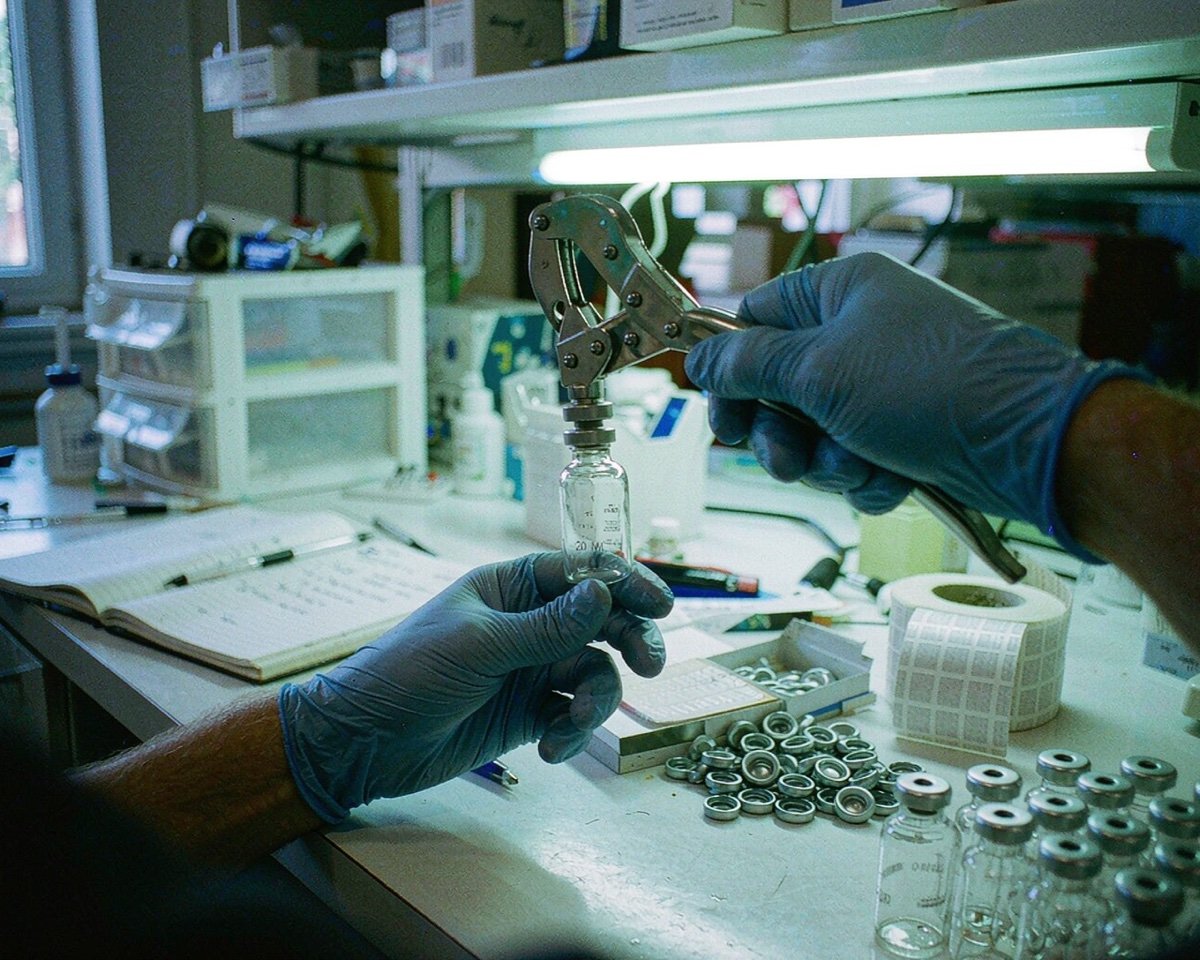
The last piece is the vial that actually enters the autosampler. For LC-MS work at oligo concentrations, extractables leaching from cheap plastic show up as ghost peaks right where your n-1 impurities live. A good background article on the topic explains how a 21-mer at low nM on-column demands low-extractable, MS-compatible plastic KCAS Bio on oligo analysis.
That’s why MS-certified vials earn their premium: lot-tested for low background so your impurity method reports your sample, not your container. For a full procurement view across both small-molecule and bioanalytical work, see our guide to lab consumables for bioanalytical labs.
Conclusion
Oligonucleotide analysis punishes casual consumables more than almost any other assay, because the analyte is charged, sticky, and biologically fragile all at once. Build the kit around four ideas: keep every oligo contact surface low-bind polypropylene, keep the environment nuclease-free, make the HFIP/amine mobile phase fresh daily, and give the method hardware that tolerates high pH, 90°C, and preferably a passivated flow path. For plasma work, add WAX mixed-mode SPE and an internal standard, then verify recovery at your lowest calibrator before you commit a study batch. None of these items is exotic on its own; the discipline is in applying all of them, every run. If you’re standardizing a new oligo lab and want a starting order list, our bioanalytical consumables guide and the MS-certified vial explainer are the two pieces I’d read next.
Frequently Asked Questions
Can I use glass HPLC vials for oligonucleotide samples?
No, untreated glass adsorbs oligonucleotides badly, and losses are worst at low concentrations where your calibrator curve lives. Use low-bind polypropylene vials, or glass only if it’s specifically silanized for biomolecules.
Why does my oligo method’s retention time drift day to day?
The HFIP/alkylamine mobile phase components are volatile and evaporate between runs, shifting the ion-pair concentration. Prepare mobile phase fresh daily and keep bottles tightly capped.
Do I really need nuclease-free consumables if my samples are chemically synthesized?
Yes, if you’re measuring integrity or impurities. Nucleases degrade intact oligo into shorter species that look like synthesis impurities, corrupting purity results and stability data.
What temperature do oligonucleotide columns tolerate?
Choose columns explicitly rated for high pH and temperatures around 80 to 90°C, which duplex separations often require. Standard silica columns degrade quickly under these conditions.
Is an internal standard necessary for oligo bioanalysis?
Strongly recommended. Stable-isotope labeled or close analog internal standards correct for the adsorption losses to tips, vials, and extraction surfaces that make low-concentration results unreliable.