
# How to Buy Lab Consumables from China Without Risk
I have sold HPLC vials from China for years, so you might expect me to tell you the risk is exaggerated. It isn’t. Most of the problems buyers blame on “China” are really sourcing problems, and sourcing problems can be fixed with process.
You can buy lab consumables from China safely by doing five things: verify the supplier is a real factory or a proven trader, write exact specs into the purchase order, demand a per-lot CoA, run incoming QC on the first lot, and use staged payment terms like a 30% T/T deposit.
The rest of this article is the process I would follow if I were buying from a new supplier tomorrow, including the checks that catch most bad actors before they cost you a cent.
The honest version of the risk
Let’s be straight about what can actually go wrong. Glass quality varies between Chinese factories the same way it varies between factories anywhere. Some suppliers sell soda-lime vials as borosilicate. Some swap a cheaper cap liner between the approved sample and the production shipment. And a certificate can be fabricated as easily as a website can.
None of that means you should avoid Chinese suppliers. It means you should treat a first order the way you would treat any new supplier in any country: with verification, written specs, and a controlled first lot. Do that, and the residual risk drops to a level most labs can live with. Skip it, and you’re relying on luck, which is not a QC strategy.
Verify the supplier before you send money
Start with the business license. Every legal Chinese company has one, and any supplier will send a copy within minutes. It shows the registered capital and the scope of business. Check that the company name matches the name on the bank account. If the money is supposed to go to a personal account or a third party, walk away.
Then work out whether you’re talking to a factory or a trading company. Neither is automatically bad, but you deserve to know which one you’re dealing with, because it affects price structure and accountability. Ask for a video call and ask them to walk the production floor. A real factory will do this without drama. A trader will hedge, and then you can price that knowledge accordingly.
For larger orders, commission a third-party inspection. Firms like SGS and QIMA will visit a factory in China, photograph the lines, and verify export history for a few hundred dollars. A short audit is cheap compared to a bad pallet, let alone a bad container.
Write the spec into the PO, not into a chat message
The most common expensive mistake I see is a specification that lives in a WeChat conversation. “2ml vial, 9mm, clear glass” is not a specification. It’s a description, and descriptions are where substitutions happen.
A real spec for HPLC vials pins down the glass grade, meaning Type 1 borosilicate as defined by ISO 3585 and classified Type I in the USP 〈660〉 glass chapter. It also fixes the dimensions in millimeters with tolerances (12 × 32 mm, 9-425 neck finish), the cap and septa materials, and the packaging. Put every line of it into the purchase order. Then the PO becomes your enforcement tool: if the goods don’t match, the supplier is objectively in breach rather than merely “different”.
If a supplier can’t state the glass type or the tolerance, that tells you everything you need to know about the supplier.
The documents to demand
Ask for a Certificate of Analysis for the specific lot you’re buying, not a template. A genuine CoA references the lot number printed on your boxes and states what was tested (hydrolytic resistance, dimensions) and what was found. Learn how a CoA differs from a CoC, because suppliers mix the two up constantly and only one of them tells you anything about your shipment.
Also request the ISO 9001 certificate, then check the certificate number against the certification body’s database. Expired and edited certificates exist; I have seen both. For syringe filters and anything touching sensitive analytes, ask for extractables documentation, and request an MSDS where the product actually contains a chemical worth documenting.
Sample first, then scale
Any supplier worth your money will send free samples from a production run, and most will split ordinary freight costs. Test those samples against your written spec before you order anything. A $30 caliper will catch an out-of-tolerance neck finish, or a vial that measures 32.8 mm instead of 32 mm and jams in the autosampler rack. Puncture the septa with the actual needle your method uses; hardness problems show up immediately that way.
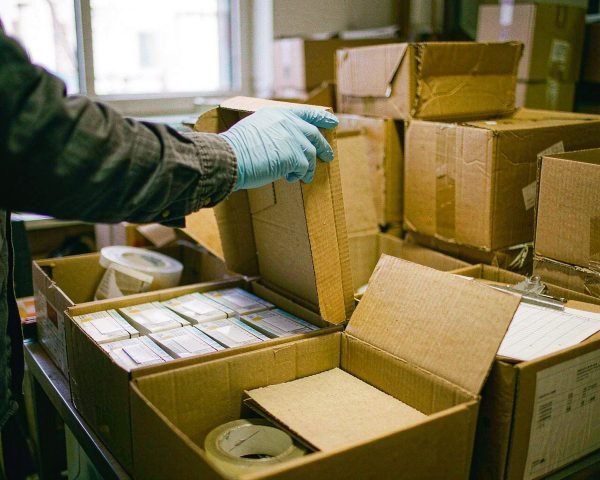
Then place a trial order, a case or two, and run incoming QC on that lot exactly as if it were the first production shipment. Only after the lot passes should you commit to container quantities. This single step removes most of the financial risk from the entire exercise.
Quality gates that survive contact with reality
Incoming inspection doesn’t need to be elaborate. Pick the failures that would hurt you most and check those. In my experience, that’s dimensional fit and base flatness, the two things that decide whether vials sit square in racks and whether your autosampler grips them properly, plus visual defects like striae or a stone in the glass.
Pull a random sample from every lot, say 40 vials from a pallet. Measure, puncture, record. If a lot fails, use your PO spec and the supplier’s own CoA to claim a replacement or credit. Most legitimate factories will make it right, because they want the reorder more than they want to argue about one pallet.
Payment and Incoterms
Standard terms in this industry are 30% deposit by T/T, with the 70% balance due against a copy of the bill of lading. That structure gives the supplier working capital and gives you leverage: most of the money moves only after the goods are on the water. On a first order, you can push for the balance to be released after a passed pre-shipment inspection, and a reasonable factory will accept it.
Know your Incoterms. Under FOB, you control the freight from the Chinese port onward; under CIF, the supplier books it. I prefer FOB once you have a freight forwarder, because whoever books the shipping controls the documents. For large recurring orders, a letter of credit adds bank-level protection at the cost of fees and paperwork. The Trade Finance Guide from the U.S. Department of Commerce gives a clear rundown of the payment options and the risk each one carries.
Shipping and customs realities
The customs side is usually less scary than buyers fear, but plan for it. Small orders often move by air courier under standard HS codes for glassware or plastic articles. Bigger orders go by sea, which adds roughly 3 to 6 weeks for most destinations. Ask for a draft commercial invoice and packing list before the shipment leaves, so your broker can pre-clear it.
If you’re importing into the U.S. and the products touch regulated workflows, review the FDA import process first, because incomplete entry data is the main reason shipments get flagged for manual review. Delays happen even when everything is correct. Build 20% slack into your consumables reorder cycle so a slow vessel never stalls a validation study.
Red flags that should end the conversation
A few signals I treat as disqualifying, no matter how polite the salesperson is:
• A price far below market. I once quoted a 5,000-vial order at a price that made me suspicious of my own cost sheet. If a quote sits 30% under everyone else’s, the shortcut exists somewhere, and it’s usually in the glass or the paperwork.
• No lot-specific CoA, or a CoA they cannot tie to your shipment.
• Refuses samples, or offers “photos of samples” instead of the real thing.
• Bank account name doesn’t match the company name.
• Pressure to pay 100% upfront to “lock in the material price”.
One red flag alone might be explainable. Two should make you slow down. I’ve put together a fuller list of red flags when buying lab consumables online, and it’s worth ten minutes of your time before the first transfer.
Conclusion
Buying from China is not a gamble when you control the process. It becomes a gamble when you skip the process. Verify the company. Put the specification into the purchase order. Demand lot documents. Sample before you scale. Keep most of the payment back until the goods are on the water. That sequence is boring, and that’s exactly why it works: it removes the places where substitutions and surprises live. If you want a deeper starting point, work through our 12-point supplier audit checklist before your next quote, then read the guide to CoA vs CoC documents so the paperwork arriving with your first shipment actually means something. Labs that follow these steps buy from China for years without drama. Labs that skip them usually end up writing one angry forum post and paying double for the same vials.
Frequently Asked Questions
What is the safest payment method when buying lab consumables from China?
For most first orders, a 30% deposit by T/T with the balance against a copy of the bill of lading works well. Larger or recurring orders can justify a letter of credit. Avoid full prepayment to any supplier you haven’t sampled.
Do Chinese vials really meet USP Type I glass standards?
Good factories do, and they can prove it with a per-lot CoA referencing hydrolytic resistance testing. The risk isn’t nationality, it’s unverifiable claims. If a supplier can’t produce lot-specific test data, treat the claim as marketing.
How do I check whether a Chinese supplier is a factory or a trader?
Ask for a video call on the production floor and read the business license scope. A third-party inspection firm can verify it in person for a few hundred dollars. Neither answer is bad, but pricing and accountability differ.
How long does shipping lab consumables from China take?
Air courier shipments typically arrive within a week. Sea freight adds roughly 3 to 6 weeks depending on destination, plus customs clearance time. Buffer your reorder cycle so a slow vessel doesn’t interrupt your work.
Are free samples a reliable indicator of quality?
Only if they come from a production run using the same materials and process as your order. Samples pulled from a special pilot line can be better than the shipped lot. Tie the samples to a trial order and run incoming QC on that lot instead.