
The first SPE method I ran, I treated the cartridge like a big syringe filter and pushed sample through as fast as the vacuum would take it. Recovery came back around 40%. My supervisor pulled out the method sheet, pointed at the words “load at 1 mL/min”, and said nothing at all. That silence taught me more about solid phase extraction than any manual since.
Answer: Solid phase extraction (SPE) is a sample preparation technique that uses a small cartridge filled with adsorbent particles to selectively retain your analytes while letting matrix components wash away, or the reverse. The consumables you need are the SPE cartridges or plates themselves, a vacuum or positive-pressure manifold, collection tubes, solvent reservoirs, and usually a syringe filter for the loading step. The cartridge chemistry, format, and bed mass are the choices that decide whether it works.
Here’s how the technique actually works and what to buy for it.
What SPE Actually Does
Think of SPE as a miniature chromatography column you use once and throw away. You condition the sorbent, load your sample, wash off what you don’t want, then elute your analyte in a small volume of strong solvent. Done right, you get a cleaner extract, a concentrated analyte, and a column and detector downstream that stay alive a lot longer.
Labs reach for SPE when simple filtration isn’t enough: trace analytes in dirty matrices like plasma, urine, soil, or food extracts. A sample prep overview for mass spec workflows describes SPE’s role plainly: it removes matrix materials from blood, urine, and cell lysates, enriching small molecules and metabolites for MS analysis while cutting ion suppression.
The Four-Step Workflow (and Where Labs Rush It)
Every SPE method walks the same skeleton, and each step has a flow-rate consequence.
Condition
Solvent wets the sorbent and activates the retention chemistry, typically methanol followed by water or buffer. Skip or rush this and the sorbent wets unevenly, which shows up later as channeling.
Load
Sample flows onto the cartridge slowly enough for analytes to actually bind. This is where my 40% recovery came from: retention is a kinetics-limited step, and vacuum set to maximum turns your cartridge into an expensive, poorly packed filter.
Wash
A weak solvent removes interferents while the analyte stays bound. Water with a touch of buffer or methanol is typical, and the wash strength is a tuning knob between cleanliness and recovery.
Elute
A strong solvent (often methanol or acetonitrile, sometimes acidified or basified) strips the analyte off in a small volume, which concentrates it. Collect only the relevant fraction; the first drops are usually conditioning carryover.
For method detail, the Waters Oasis SPE product documentation is a good reference for how sorbent chemistry maps to protocol steps across reversed-phase, ion-exchange, and mixed-mode methods.
Consumable 1: The Cartridges Themselves
The cartridge is the decision that matters. Three things define it.
Sorbent chemistry
Reversed-phase sorbents (C18 silica, polymeric HLB) retain nonpolar and moderately polar analytes from aqueous samples. Ion-exchange and mixed-mode sorbents add charge interactions for basic or acidic compounds. Silica-based C18 remains the most widely used reversed-phase choice, and the Agilent Bond Elut sorbent family illustrates how one platform spans dozens of chemistries and formats. Match the sorbent to your analyte’s polarity and charge state, not to what the neighboring lab uses.
Format
Straight-barrel cartridges (1, 3, 6, 12 mL), 96-well plates for high throughput, and µ-elution formats for tiny samples. Cartridges suit method development and lower volumes; plates suit clinical or bioanalytical labs running hundreds of samples.
Bed mass
More sorbent retains more analyte but needs more solvent and holds more matrix. A 30 mg bed handles plasma cleanup; a 200 mg bed handles environmental water. Overshooting the bed mass wastes solvent and dilutes your elution.
Consumable 2: The Manifold
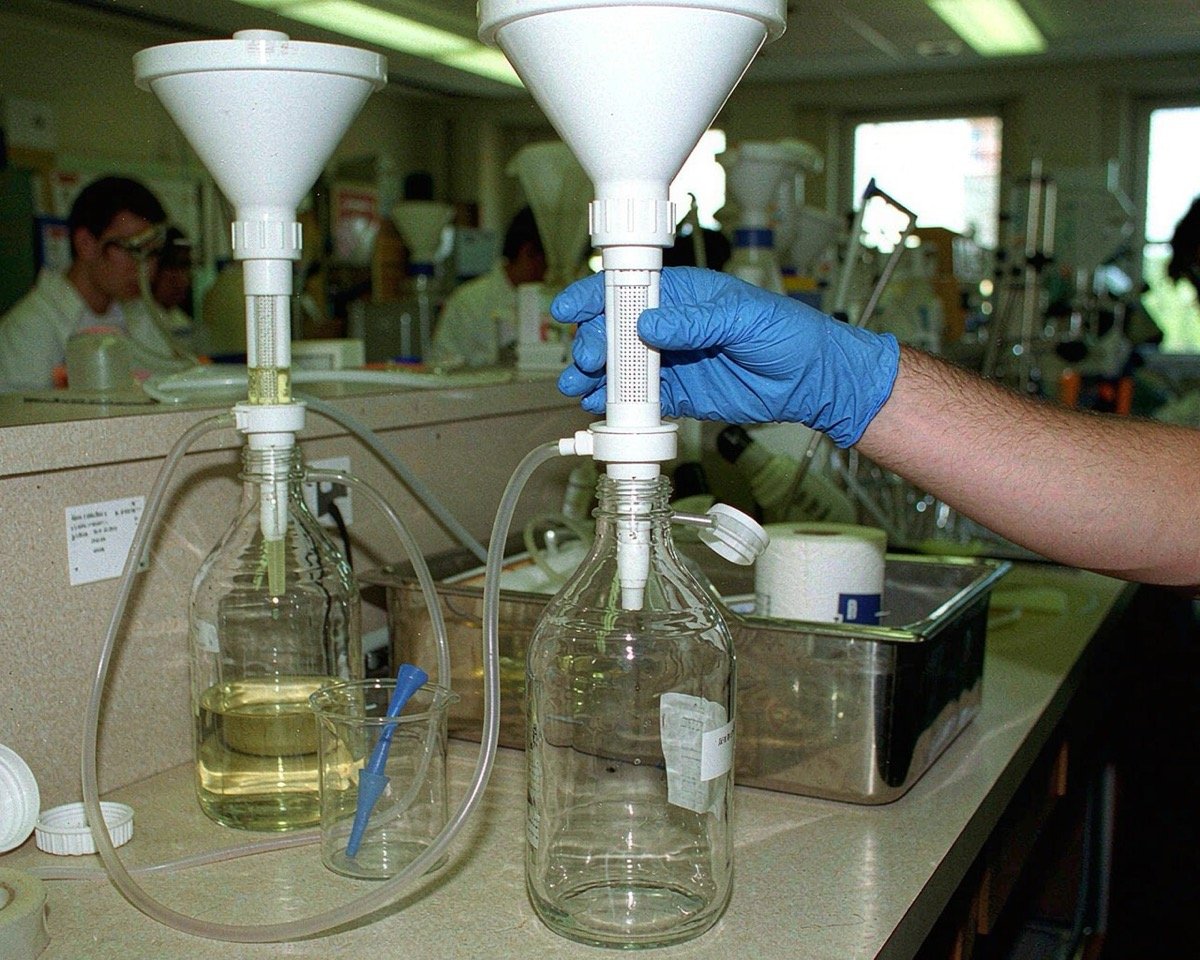
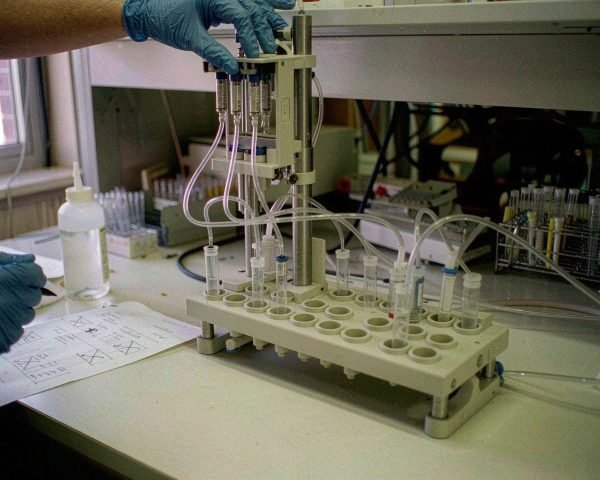
Cartridges need controlled flow, which means a vacuum manifold for classic setups or a positive-pressure unit for plates and reproducibility-critical work. Positive pressure is worth the upgrade when you’re validating a method, because vacuum drifts with pump temperature and trap condition in ways that quietly change your flow rates. Budget manifolds work fine for development; get flow control before you lock a method.
Consumable 3: Tubes, Reservoirs, and Solvent Handling
You’ll need collection tubes matched to the manifold, solvent reservoirs for conditioning and wash solvents, and enough rack space to keep the fractions straight. This sounds trivial until you’re juggling four solvents across a 12-position manifold. Label everything at the start; an SPE bench with three identical-looking wash bottles is where method transpositions happen.
Consumable 4: The Pre-Filter in Front
Dirty samples kill SPE cartridges by clogging the bed face, and a clogged cartridge channels flow around half the sorbent. For plasma, food, or environmental samples, filter the load through a 0.45 µm syringe filter first. Choose the membrane with the same care you’d give the cartridge, since the syringe filter buyer’s guide covers the chemistry choices that keep your analyte off the membrane instead of the sorbent. For protein-heavy matrices, my piece on filters for protein and peptide samples covers the low-binding options that don’t gut your recovery before the cartridge ever sees the sample.
Common SPE Mistakes That Cost Recoveries
Mine from paragraph one: loading too fast. Beyond that, the shortlist is letting the sorbent run dry before loading (re-wet it), eluting with too much volume (dilutes the extract), and reusing cartridges past their capacity. One I see in food labs: skipping the pre-filter after a QuEChERS extraction, then blaming the cartridge for clogging. The QuEChERS consumables guide explains how that workflow’s salts and solids demand a filtration step upstream of any cleanup cartridge.
Conclusion
SPE is filtration’s stricter older sibling: same goal, cleaner sample, but with a binding chemistry that punishes impatience. The consumables list is short once you know it: the right sorbent chemistry in the right format and bed mass, a manifold with real flow control, tubes and reservoirs that keep fractions honest, and a pre-filter for anything dirty. If you change one habit this month, slow your load step and watch your recoveries climb. When you’re ready to build the full front end of the method, my guide on filtering HPLC mobile phase covers the other half of keeping your column happy.
Frequently Asked Questions
What is the difference between SPE and syringe filtration?
Filtration removes particulates physically; SPE removes dissolved interferents selectively through adsorption chemistry. Most clean methods use both, with a filter protecting the SPE cartridge from solids before the sorbent does the chemical work.
How do I choose the right SPE sorbent?
Start from your analyte and matrix. Nonpolar analytes in aqueous samples suit reversed-phase sorbents like C18 or HLB; ionizable compounds often do better on mixed-mode ion-exchange sorbents. Match the mechanism to the charge and polarity, then confirm with a recovery check.
Why is my SPE recovery so low?
The usual suspects are loading too fast, letting the sorbent dry out, wrong sorbent chemistry, or a wash that’s too strong. Run a recovery check at each step with a standard to find where the analyte is being lost.
Can SPE cartridges be reused?
No, not for quantitative work. Sorbent capacity and surface chemistry degrade after the first use, and carryover between samples corrupts trace analysis. Treat cartridges as single-use consumables and budget accordingly.
How much sample can one SPE cartridge handle?
It depends on bed mass and matrix. A 30 mg bed typically handles around a milliliter of plasma or a few milliliters of relatively clean aqueous sample; larger beds scale up roughly proportionally. Exceeding capacity shows up as breakthrough, where analyte appears in the load-through waste.