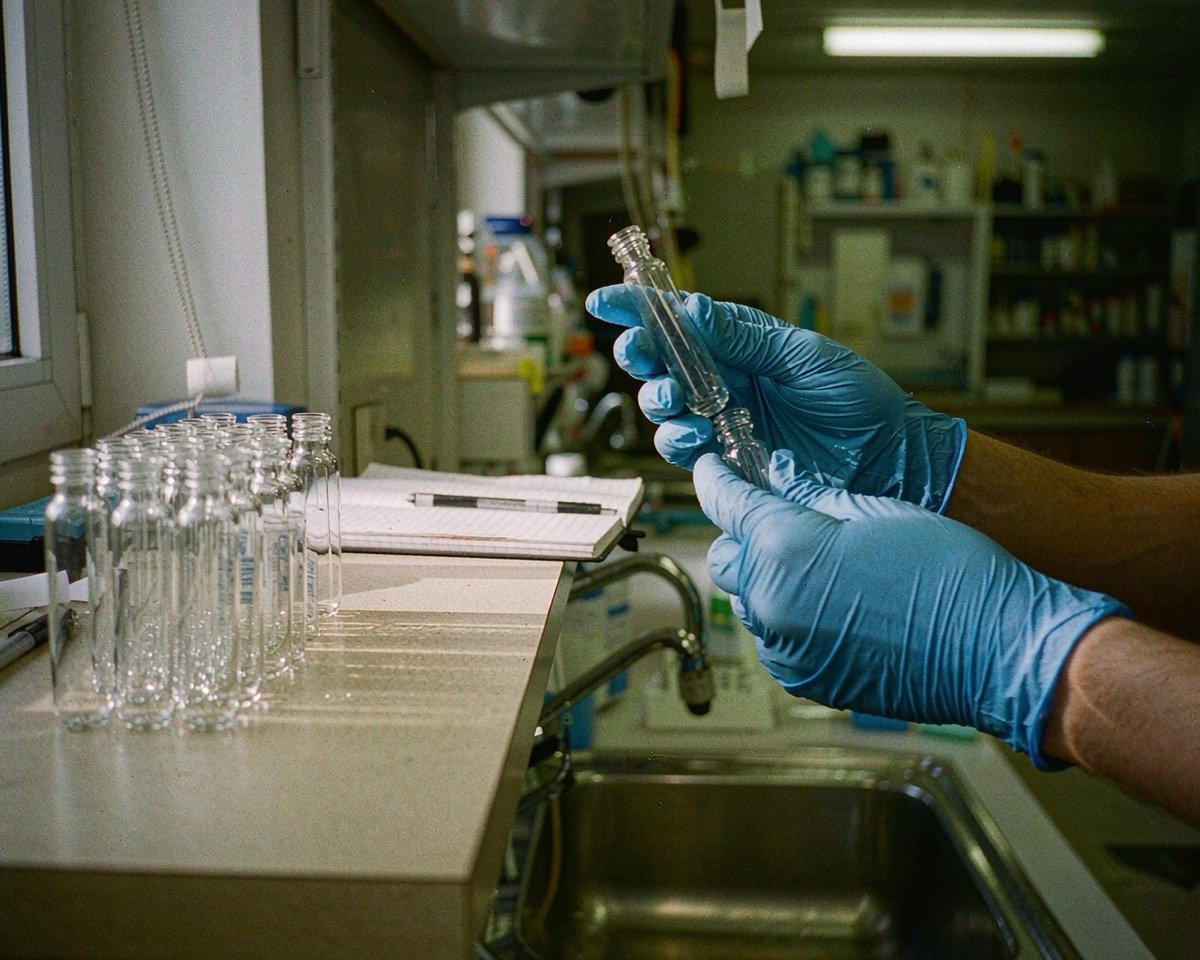
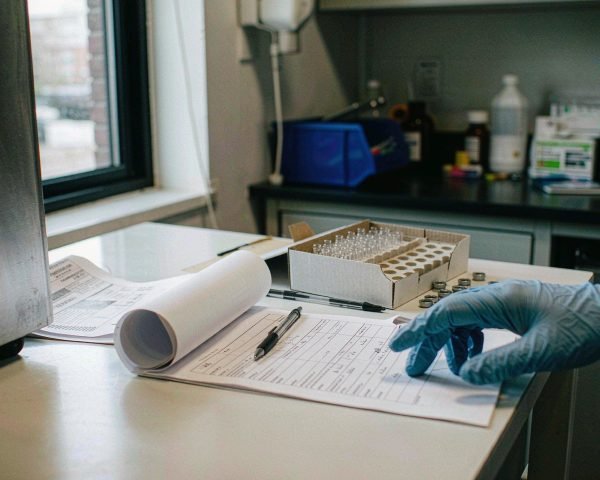

Last quarter I watched a method transfer stall for three weeks over something nobody had written down: the receiving lab was using 11mm crimp vials while the method was validated on 9mm screw-neck. Same column, same mobile phase, completely different injection reproducibility. Nobody thought to ask about the vials.
That’s the pattern with method transfer. The instrument gets a checklist. The method gets a protocol. The consumables get whatever is already on the shelf. USP <1224> defines method transfer as the documented process that qualifies a receiving lab to run a procedure from another lab, and the consumables you choose are part of that qualification whether anyone admits it or not.
Answer: Before any method transfer, ask which vials, caps, septa, filters, and certificates the original method was validated with, confirm your receiving lab can match them lot-for-lot, and put the answers in the transfer protocol. If you can’t document the consumables, you can’t defend the transfer.
Read on for the ten questions that catch almost every consumable-related transfer failure I’ve seen, plus what to do when the receiving lab simply can’t match the original parts.
Why Consumables Sink Method Transfers
A method is a recipe, and consumables are the cookware. Change the pan and the recipe still works, most of the time. Change it for a trace-level LC-MS assay and you get new extractables, different background, and recovery numbers that drift just enough to fail your acceptance criteria.
The regulators treat consumables as part of the method whether you do or not. The USP <1224> chapter on transfer of analytical procedures expects a preapproved transfer protocol that stipulates the details of the procedure, the samples used, and the acceptance criteria. “Details of the procedure” includes the sample container your analyte sits in.
Most transfer failures I’ve run into fall into one of two buckets. The first is chemical: different glass lots, different septa polymers, or filters that leach something the old ones didn’t. The second is mechanical: different vial heights that seat differently in the tray, different cap systems that change pierce behavior, filters with different hold-up volumes that quietly change your effective dilution.
Both buckets produce the same symptom: the receiving lab’s data doesn’t match, and everyone spends a week blaming the column.
The 10 Questions
Question 1: Which consumables are actually named in the method?
Sit down with the written method and highlight every consumable it names. Vial type, thread standard, septa material, filter pore size, sorbent chemistry. If the method says “2 mL amber vial” and nothing else, you’ve found your first gap, because that phrase covers dozens of products that behave differently. Write down exactly what the transferring lab uses, down to the cap style. If the answer lives only in someone’s memory, get it in writing before anything ships.
Question 2: Is the glass the same type and hydrolytic class?
Most chromatography vials are Type 1, Class A borosilicate, but there are marginal products out there, and plastic vials are a different animal entirely. Glass composition affects adsorption of silanol-loving analytes and the background you see at low wavelengths. If the method was validated in glass and you move it to polypropylene, low-level basic compounds can disappear onto the plastic. Match the glass class and the vial material exactly, and if you can’t, flag it as a formal deviation in the protocol.
Question 3: Do the vial dimensions actually match the autosampler?
A 2 mL vial is not a standard. Neck finishes, overall height, and shoulder geometry vary, and an autosampler tuned for one geometry can mis-seat another. The result is inconsistent needle depth, variable draw volumes, or the classic crunch sound of a needle hitting glass. Ask for the exact dimensions of the original vial, then hold your replacement against them. My rule: if total height differs by more than 0.5 mm, test it in the tray before the transfer run, not during.
Question 4: Are the septa and caps the same polymer and thickness?
Septa are the most chemically active part of the vial system. Silicone/PTFE laminates, natural silicone, and pre-slit variants each interact differently with solvents and analytes. Thickness changes pierce force and coring behavior. A thinner septum on the receiving side can mean evaporation losses you never saw during validation. Ask for polymer, laminate structure, and thickness in millimeters, and compare them against the spec sheet, not the product photo.
Question 5: What paperwork travels with each lot?
This is the question that saves you during the audit, not the transfer. Every consumable lot should arrive with a certificate of analysis, and for regulated work you want traceability back to the raw glass lot. Confirm the receiving lab’s supplier issues certificates as standard, not on request. I once inherited a transfer where the certificate had to be emailed from a distributor three time zones away, one lot at a time. The transfer passed. The audit finding didn’t.
Question 6: Which filters did the transferring lab use, and at what pore size?
Filtration changes samples. Membrane chemistry (nylon, PTFE, PVDF, PES, regenerated cellulose) can adsorb proteins or leach wetting agents, and pore size sets how much particulate reaches the column. If the method filters through 0.22 µm PVDF and the receiving lab substitutes 0.45 µm nylon, you’ve changed both the background and the recovery in one swap. Match membrane and pore size, and ask whether the transferring lab pre-rinsed filters, because that changes extractables too.
Question 7: What lot-to-lot variability will you accept?
Consumables vary between lots, and a method that squeaked through validation on one lot may fail on the next. Before the transfer, agree on what variation is tolerable: a recovery window, a background threshold, a maximum adsorption percentage. This turns future lot changes from arguments into pass/fail checks. Labs that skip this step end up re-qualifying a supplier mid-transfer, which is exactly as fun as it sounds.
Question 8: How will you verify equivalence before the official run?
The transfer protocol will define comparative testing, but I always run a small informal check first: six standards, six spiked samples, both labs’ consumables side by side. It takes an afternoon and it catches the 80% of consumable problems before they burn your formal comparative study. Practitioner guidance on method transfer makes the same point from the documentation side: small differences between facilities hinder replication, so surface them early and on purpose.
Question 9: Who supplies spares, and what’s the lead time?
A transfer that needs 500 vials will need 500 more. Check that the receiving lab can actually restock the matched consumables on their timeline, not the transferring lab’s. Lead time is a transfer risk. If the matched septa take six weeks to arrive and you’re holding two boxes, your buffer is two crashed sequences. Build the resupply path into the protocol so the next lot is qualified before you need it.
Question 10: What re-triggers qualification when the supplier changes?
Suppliers discontinue products, change molding lines, and rename part numbers. Your protocol should state what happens then: which properties must be re-verified, who signs off, and what documentation the new lot must carry. A one-page change-control rule now prevents a debate at 5pm on a Friday later. The labs that treat consumable changes like method changes are the ones whose transfers still pass two years later.
One tip on running the questions: ask them in one sitting, with both labs on the call. Spreading them across a week of emails lets each lab answer only the questions they like, and the gaps are always where the transfer later fails. Take notes as if you were the auditor, because eventually you will be. And when a lab answers “probably” or “I think”, write that down as a “no” and go find the document. Precision here costs an hour; vagueness costs a transfer.
The Two Failure Modes Nobody Documents
After a few of these, I noticed most transfer post-mortems describe the same two stories.
Story one: the receiving lab’s recovery runs low by a few percent, nobody can prove why, and the transfer fails acceptance. The culprit, when someone finally looks, is a filter or septa swap nobody logged. Common transfer pitfall reviews call this inadequate documentation, and I’d sharpen it: the documentation existed, it just never mentioned the plastic between the sample and the needle.
Story two: the transfer passes, then fails three months later when the first new consumable lot arrives. No re-verification rule existed, so the new lot went straight onto the bench. Question 7 and Question 10 exist to prevent exactly this. If you only have time to implement two of the ten questions, make it those two.
A Worked Example
A CRO I worked with transferred a bioanalytical LC-MS method from their site in Hangzhou to a partner in Boston. The method named the vial and the filter, so questions 1, 2, and 6 were easy. The trap was question 4: the original lab used a 1.0 mm silicone/PTFE septum, and the receiving lab stocked 0.8 mm. On paper, both “fit”. In practice, the thinner septum lost measurably more acetonitrile over a 48-hour tray hold, and the low concentration QC points failed.
The fix cost nothing: order the correct septa, re-run the hold-time check, and write the septa spec into the method annex. The delay cost two weeks. One question, asked before the transfer, would have cost nothing at all.
A One-Page Version for the Protocol Wall
Checklists that live in a shared drive die quietly. This one is short enough to tape inside a cabinet door. Here’s the condensed form, with where each answer belongs:
| # | Question | Where the answer goes |
|---|---|---|
| 1 | Which consumables does the method name? | Method annex |
| 2 | Same glass class and material? | Method annex |
| 3 | Same vial dimensions? | Method annex |
| 4 | Same septa polymer and thickness? | Method annex |
| 5 | What certificates ship with each lot? | Quality agreement |
| 6 | Same filter membrane and pore size? | Method annex |
| 7 | What lot variability do you accept? | Transfer protocol |
| 8 | How do you verify before the official run? | Bridging study plan |
| 9 | Who restocks spares, and how fast? | Resupply plan |
| 10 | What re-triggers qualification on change? | Change control SOP |
Questions 1 through 6 are specs: they get written once and copied into the method annex so the receiving lab can procure against them. Questions 7 through 10 are rules: they go into the transfer protocol and your quality system, because they govern what happens after the transfer ends.
Print it, walk both labs through it in a thirty-minute call, and you will surface most consumable risks before a single vial ships. I’d rather have that awkward half-hour than a two-week delay, and I’ve never met a lab manager who disagreed after their first failed transfer.
What If You Can’t Match the Original Consumables?
Sometimes the original product is discontinued, or the receiving lab is locked into a different supplier. Then you have three moves.
First, map the spec, not the brand. Write down the properties that matter (glass class, dimensions, septa polymer and thickness, membrane chemistry, pore size) and source equivalents against that list. Second, run a bridging study: the informal side-by-side from Question 8, but formalized, with acceptance criteria in the protocol. Third, document the substitution and its justification. A defensible substitution beats a silent one every time.
If the substitution keeps failing, the problem may be bigger than the consumable, and it’s worth stepping back before you burn more comparative runs. That’s usually the moment to consider requalifying suppliers entirely, or reading my guide on switching consumables suppliers without blowing up your running methods.
Conclusion
Method transfer fails on consumables because consumables are the part of the method everyone assumes are interchangeable. They aren’t. The vial geometry, the septa laminate, the filter membrane, and the certificate in the box all belong in your transfer protocol, and the ten questions above are how they get there. My suggestion for your next transfer: put the checklist in front of both labs before the protocol is drafted, not after the first failed comparative run. Work questions 1 through 6 into the protocol as written specs, and questions 7 through 10 into your quality system as standing rules. If you want a second checklist to pair with this one, my 12-point supplier audit checklist covers the supplier side, and the guide to reading a consumables spec sheet helps you turn vague datasheets into the exact numbers these questions need.
Frequently Asked Questions
Do method transfers always require formal comparative testing?
No. USP <1224> allows comparative testing, co-validation, revalidation, or a documented transfer waiver depending on risk. Comparative testing is the most common route, but the consumables questions above apply to all four paths, because even a waiver assumes the receiving lab’s setup matches.
Can I use a different vial brand if the specs match?
Usually yes, if glass class, dimensions, and cap/septa system are equivalent, and you document the substitution. Run a small bridging check first. If the method is trace-level or the analyte is adsorption-prone, treat brand changes as formal deviations.
What consumables most often cause transfer failures?
Septa and filters, in my experience. Septa changes alter evaporation and pierce behavior, and filter changes alter recovery and background. Vial geometry issues come third, usually as autosampler seating problems rather than chemistry problems.
Who is responsible for consumables during a transfer, the sending or receiving lab?
The receiving lab procures and qualifies its own consumables, but the transferring lab must specify them precisely in the method documentation. If the spec lives only in the sending lab’s head, the transfer isn’t actually ready to move.
Does the transfer protocol need to list consumable part numbers?
It should list enough detail to procure a match: material class, dimensions, membrane or polymer type, and certification requirements. Part numbers make it simpler, but a written spec plus a bridging study also holds up.