
A rep once told me square bottles were a gimmick. Two years later that same lab was ordering square DURAN bottles by the case, because their cold room shelf fit exactly twelve round 1 L bottles and exactly eighteen square ones. Same shelf, 50% more media. Shape is not a gimmick.
Answer: Yes, shape matters, but less than marketing suggests. Square bottles save roughly 13 to 20 percent of storage space, stack more securely, and offer flat labeling surfaces. Round bottles handle vacuum and pressure more evenly, pour more predictably, and are easier to clean by brush. For shelf storage of media and buffers, square usually wins. For vacuum filtration, pressure work, and heavy washing duties, round is the safer choice.
Now the details, because the trade-offs are specific.
The Storage Argument for Square
The main case for square bottles is arithmetic. DWK’s square media bottle line claims up to 20% space savings compared with round bottles of the same volume, because squares pack edge to edge with no wasted gaps. On a crowded shelf, in a water bath, or inside an autoclave chamber, that’s real capacity you didn’t have before.
Flat sides help in less obvious ways too. Labels sit flat instead of curling around a curve, so lot numbers stay readable. Grip is easier with wet hands. And square bottles stack in more orientations, which matters when you’re building a cold room like it’s a game of Jenga.
One honest caveat from my own bench: square bottles look sturdier than they are at the corners. A square corner is a stress concentration, so corner-chipped bottles deserve retirement faster than a round bottle with an equivalent scuff.
The Pressure Argument for Round
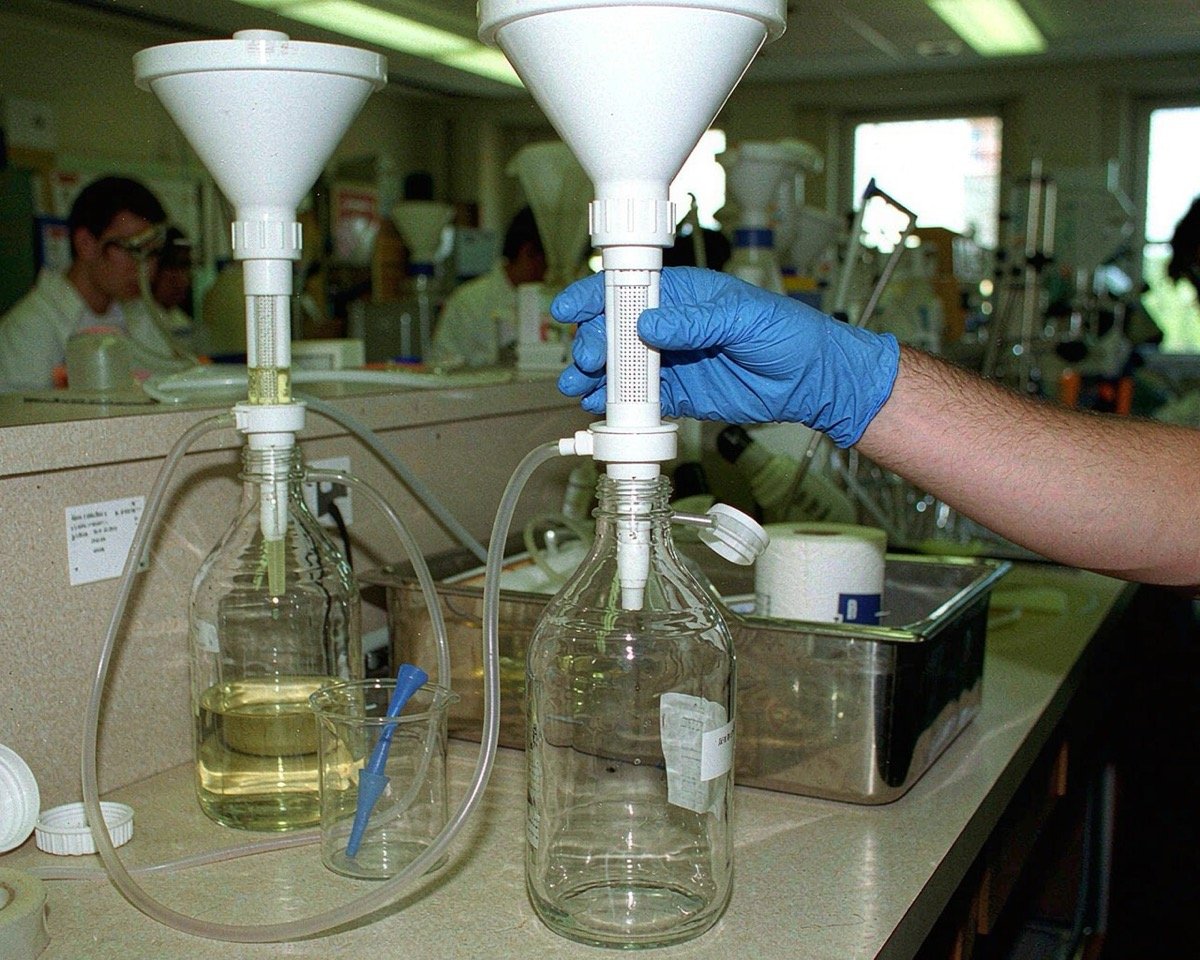
Here’s where the rep was half right. Round walls distribute internal pressure evenly, which is why pressure vessels are cylinders and not boxes. Vacuum filtration, positive-pressure dispense, and any bottle going on a bottle-top filter station put the walls under load, and flat panels flex. The flex usually isn’t catastrophic with glass, but it works the seal against the cap differently and can slowly fatigue the corners over years of vacuum cycles.
If your bottle spends its life connected to a vacuum source or holding pressurized contents, round is the boring, correct answer. For plain storage at atmospheric pressure, the difference mostly disappears.
Autoclaving: Small but Real Differences
Both shapes autoclave fine when you follow the rules: loosen the cap, use a liquids cycle, cool before tightening. The shape shows up in two secondary places.
Loading efficiency is the first. Square bottles pack an autoclave chamber tighter, so if your sterilization cycle is the lab bottleneck, squares move more media per run. Second, drying: round bottles drain and dry with fewer trapped droplets in corners. If you air-dry after washing, square corners hold onto the last milliliter of rinse water a bit longer. Not a dealbreaker, just an extra shake before racking.
Cleaning and Brush Access
Round bottles are friendlier to the brush. A cylindrical brush reaches every wall with the same pressure, and there are no corners to negotiate. Square bottles need either a brush with angled edges or a bit more patience at the four corners, which is where media residue likes to hide. For cell culture media especially, residue in a corner is contamination risk, so this is not cosmetic.
If your lab runs a bottle washer with spray coverage, both shapes clean comparably. Manual washing tilts the advantage to round.
Which Shape for Which Job
After watching both shapes move through several labs, here’s my practical split:
• Square wins: cold room and shelf storage of buffers and media, water bath placement, anything you label heavily and stack densely.
• Round wins: vacuum and pressure duty, heavy manual washing, roller or agitated applications where you don’t want contents whipping around corners, and older shelving designed around cylindrical footprints.
If you can only standardize on one, I’d take round for a general-purpose lab, because it has no failure modes that square doesn’t share, and it ages more gracefully under wash cycles. But a media-heavy lab with space constraints will feel the square advantage every single day.
A quick note on volume honesty while you’re choosing: nominal capacity is measured to the shoulder, and both shapes hold a usable volume below it. Square bottles in particular tend to read slightly larger on the shelf than they decant, because the corners add wall area but little usable volume near the base. If your protocol calls for exactly 900 mL of working buffer, size up one increment and stop doing math in your head at 7am.
The Bottles Most Labs Actually Need
Shape is one attribute among several that decide whether a bottle works for you. Thread standard (GL45 dominates for a reason), glass type, amber vs clear, and cap style all matter at least as much as geometry. I cover the full landscape in my reagent and media bottles guide, including how capacity, mouth style, and headspace interact with daily use.
Two quick pointers if you’re mid-decision. If the bottle will mate with instrument reservoirs or filtration hardware, check the thread first with my GL45 bottle guide, because a shape you can’t connect is just decoration. And if you’re weighing glass against plastic for the first time, the glass vs plastic bottle comparison covers the durability and leachables trade-offs that sit on top of the shape question.
Conclusion
Does shape matter? For storage density, yes, and square bottles earn their shelf space with 13 to 20 percent better packing plus flat labeling surfaces. For pressure work and easy cleaning, round still holds the edge, and no square bottle has ever beaten a round one at being brushed clean. Match the shape to the job: square for dense storage and cold rooms, round for vacuum, pressure, and wash-heavy duty. If you’re buying this week, start with the thread standard and the storage location, then let shape settle the tie. And once the bottles arrive, the work isn’t over: my guide to sterilizing reagent and media bottles walks through the autoclave rules that keep either shape intact for years.
Frequently Asked Questions
How much space do square bottles actually save?
Manufacturers claim up to 20% compared with round bottles of the same volume. Real-world savings depend on your shelf depth and how you pack them, but 13 to 20 percent is a fair planning number for dense shelf or autoclave loading.
Can square media bottles be autoclaved?
Yes. Square glass media bottles from major brands are Type 1 borosilicate and fully autoclavable at 121°C. Follow the same rules as round bottles: loosen the cap, use a liquids cycle, and let them cool before tightening.
Are square bottles worse for vacuum filtration?
Flat walls flex under pressure differences, so square bottles are not the first choice for vacuum or pressurized duty. For storage at atmospheric pressure the difference is minor, but for bottle-top filtration work I recommend round bottles.
Do square bottles cost more than round?
Usually slightly, per bottle, because molding flat panels with clean corners is less forgiving in production. The price gap is small next to the space savings if your storage is genuinely constrained.
Which shape is easier to clean manually?
Round. A cylindrical brush reaches every point on the wall with even pressure, while square corners trap residue and need angled brushes or extra attention. If manual washing is your routine, round bottles will save you time.