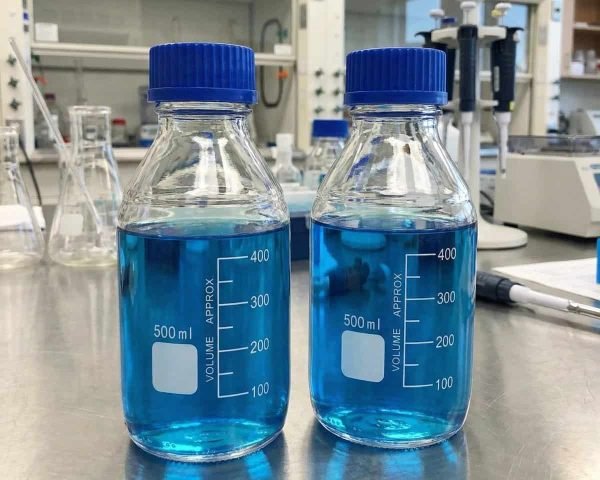

What Does “GL45” Actually Mean?
GL stands for *Gewinde Labor* — German for “laboratory thread.” The number 45 is the nominal outer diameter of the bottle neck in millimeters. The GL series (GL18, GL25, GL32, GL45, GL80) was designed so that laboratory closures interlock mechanically: a GL45 thread winds together with its matching cap in about one and a half turns, sealing through the flank geometry of the thread itself rather than a gasket squeezed into a tube.
The design is governed by ISO 4796-1:2016, the international standard for laboratory screw-neck bottles. That standard specifies a series of bottles suitable for storing liquid and solid chemicals and reagents in general lab use, with nominal volumes from 25 mL up to 20,000 mL, and it explicitly covers the preparation and storage of microbiological growth media.
Here’s why this matters to you as a buyer: because the thread is standardized, a GL45 bottle from any manufacturer accepts any GL45 cap, dispenser, membrane filter cap, or tubing closure. You’re not locked into one brand’s accessory ecosystem. When a supplier offers “ISO 4796-1 compliant” bottles, that’s the compatibility promise you’re buying.
Anatomy of a GL45 Media Bottle
The glass. The standard is borosilicate glass 3.3 — a low-expansion glass with excellent thermal shock resistance and chemical resistance. Premium bottles like the DURAN GL45 laboratory bottles are classified as Type I glass under USP, EP, and JP standards, and meet ASTM E438 Type I, Class A. In plain terms: minimal leaching, no meaningful extractables, and it survives hundreds of autoclave cycles. Borosilicate 3.3 handles temperatures up to about 450 °C in principle, though in practice your autoclave defines the limit.
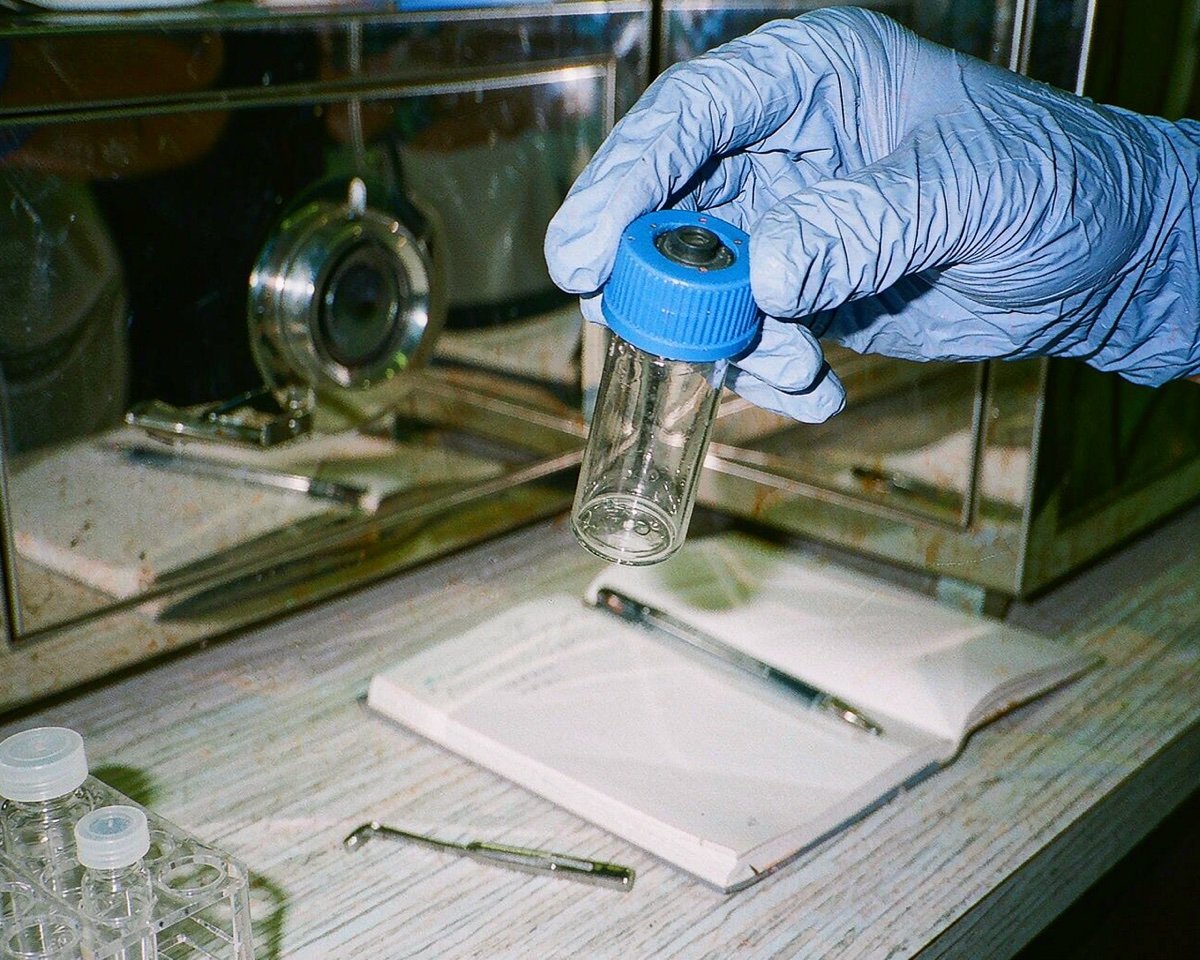
The cap. The iconic blue cap is polypropylene, autoclavable at 121 °C or 134 °C, with a maximum use temperature around 140 °C. Tighten caps loosely or remove them before autoclaving — a sealed bottle of media at 121 °C is a small pressure vessel you didn’t mean to build.
The pouring ring. That thin ring between cap and neck looks decorative. It isn’t. It’s a drip-free pouring ring that makes liquid run cleanly off the bottle instead of down the label, the shelf, and your hand. Every serious GL45 bottle ships with one.
The graduations. White enamel graduations are fired onto the glass, so they survive dishwashing, solvent splashes, and years of use. They’re for estimating content, not measuring — for accurate volumes, use a volumetric flask. A white marking field gives you space for labels.
Sizes and Their Real-World Uses
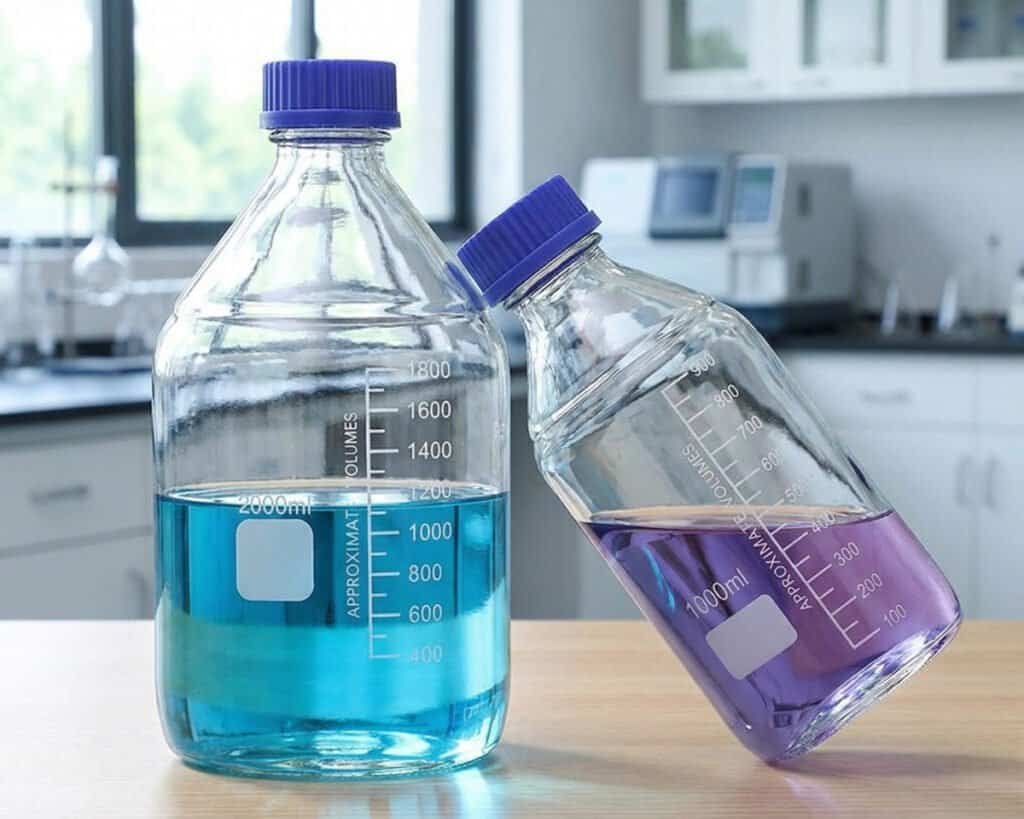
GL45 bottles come in a ladder of standard sizes. Here’s the practical mapping I give buyers:
| Size | Typical use |
|---|---|
| 100 mL | Stock standards, concentrated buffers, small reagent batches |
| 250 mL | Routine reagents, media aliquots |
| 500 mL | HPLC mobile phase batches, buffers |
| 1000 mL | The lab workhorse — media prep, mobile phase, water storage |
| 2000 mL | Bulk media, large batches, water for the whole lab |
| 5000 mL | Water and solvent stock, waste collection staging |
A 1,000 mL bottle stands about 225 mm tall with a 101 mm diameter — it fits standard shelf spacing and most autoclaves. A useful buying pattern: stock mostly 1 L bottles, add 500 mL for weekly mobile phase, and keep a few 100 mL bottles for expensive standards you don’t want sitting in a half-empty liter bottle.
One safety note that belongs in every buying conversation: standard GL45 bottles are not pressure-rated. They must not be used under vacuum or pressure. If your workflow genuinely needs pressure — vacuum filtration collection, samples under pressure, gas-generating materials — manufacturers offer special pressure-rated versions; DURAN’s pressure plus GL45 bottles are geometry-modified and certified to DIN EN 1595 for –1 to +1.5 bar. The standard bottle on your bench is not that bottle.
Clear vs. Amber GL45 Bottles
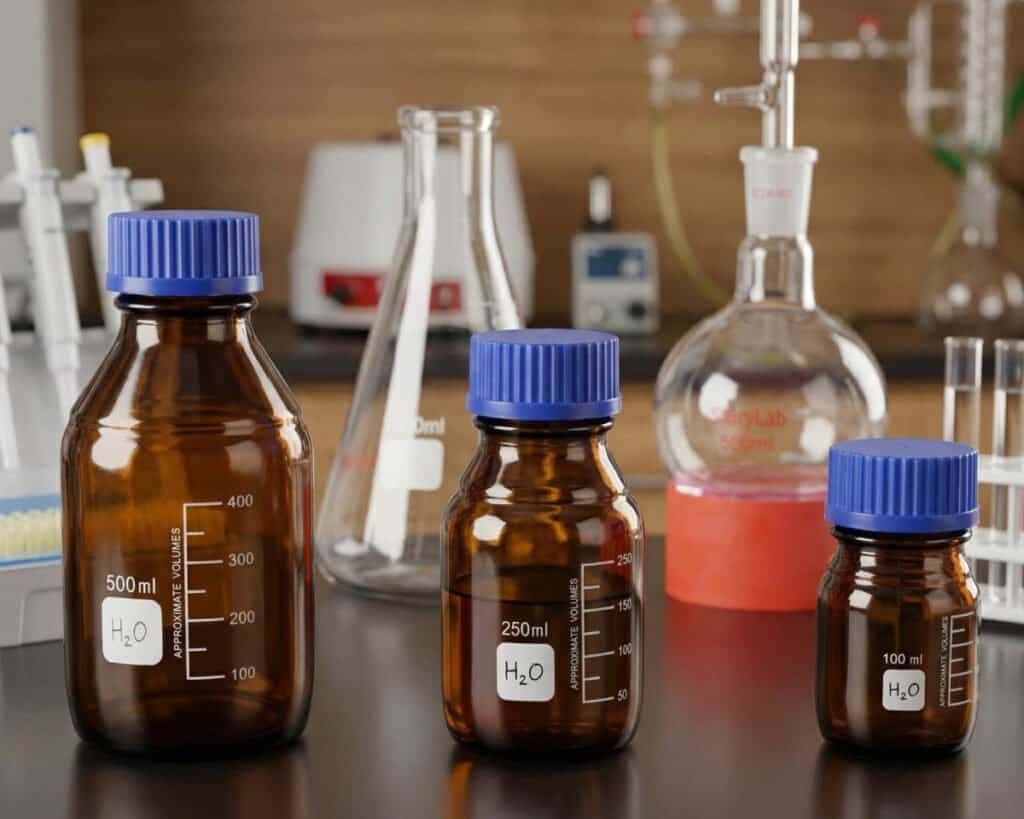
Most GL45 bottles are clear. Amber versions exist for light-sensitive contents — silver nitrate, certain vitamins and dyes, photosensitive reagents. The amber coloration is fused into the outer glass layer, so it can’t scratch or wear off, and it meets the UV-protection limits in the USP and EP standards for the lifetime of the bottle.
My practical advice: buy clear for everything unless you know the contents are photolabile. Amber glass costs more and makes it harder to see precipitation or contamination at a glance. If only one reagent in your lab is light-sensitive, buy amber only in the sizes that reagent uses.
Sterilizing and Caring for GL45 Bottles
GL45 bottles are built for repeated sterilization — that’s half their value. The rules are simple:
– Autoclave at 121 °C or 134 °C. Both glass and PP cap components handle standard cycles; the cap is rated to 140 °C.
– Loosen the cap before autoclaving. Steam must exchange freely, and trapped air plus heat equals pressure.
– For dry heat sterilization up to 180 °C, the standard PP cap isn’t enough — use high-temperature cap variants. DURAN, for example, offers a red PBT GL45 cap with PTFE-faced silicone liner and ETFE pouring ring that withstands dry heat to 180 °C.
– Inspect threads periodically. Chips on the neck glass destroy the sealing flank geometry — a chipped bottle never seals properly again, no matter how new the cap is. Recycle it.
Storage is the other half of bottle life. Keep bottles capped when not in use — open bottles collect dust and atmospheric moisture, which matters enormously for hygroscopic reagents and for media destined for sterile work. We cover general consumable storage discipline in our guide on proper storage for HPLC vials, and the same logic applies to bottles.
Why GL45 Became the Lab Standard
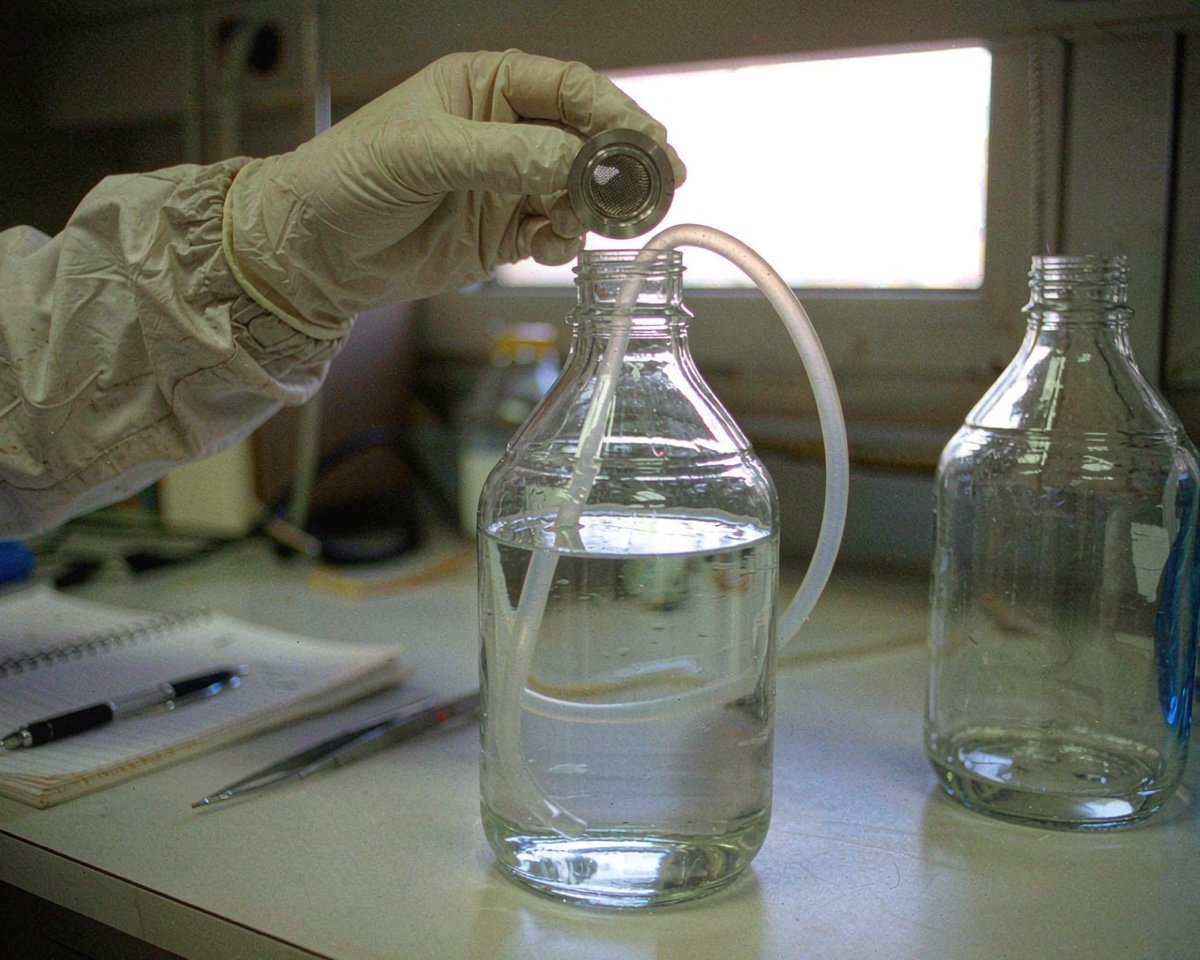
Standards win when an ecosystem grows around them, and GL45 has the richest accessory ecosystem in the lab world. GL45 filter caps turn a bottle into a solvent reservoir for vacuum filtration. GL45 dispensers screw directly onto the neck for repeat dispensing without pouring. Mobile phase caps with solvent inlet lines connect bottles straight to your HPLC pump — we cover that specific accessory in our GL45 mobile phase cap guide. GL80 adds the same compatibility for larger volumes.
That ecosystem is why buying GL45 isn’t really a product decision — it’s a workflow decision. Every accessory you might ever need already exists, from every manufacturer, at competitive prices, because the thread guarantees fit.
And if you’re sourcing bottles internationally, ISO 4796-1 compliance is your quality checkpoint: it’s the spec sheet line that tells you the threads will actually match the caps and accessories you already own. For broader sourcing strategy, see our tips on purchasing HPLC consumables from China without stress.
Conclusion
GL45 is less a product than a platform: one standardized 45 mm thread that connects your bottles to every cap, dispenser, and filter accessory in the laboratory universe. Buy borosilicate 3.3 glass with ISO 4796-1 compliance, size your stock around the 1 L workhorse, choose amber only for genuinely light-sensitive reagents, and respect the two big rules — never under pressure, and always loosen the cap before autoclaving. Treat them well and a GL45 bottle will outlive most of the instruments on your bench. When you’re ready to build out the rest of your consumables workflow, start with our GL45 mobile phase cap guide or our practical storage guide for HPLC vials.
Frequently Asked Questions
What does GL45 mean on a bottle?
GL45 is a standardized laboratory screw thread with a 45 mm nominal neck diameter, defined in DIN 168. Any GL45 cap or accessory from any manufacturer fits any GL45 bottle, which is why the format has become the global lab standard for media and reagent bottles.
Are GL45 bottles autoclavable?
Yes. The borosilicate 3.3 glass and the blue polypropylene cap both withstand autoclaving at 121 °C or 134 °C. Loosen or remove the cap before autoclaving so steam can exchange and pressure doesn’t build up inside the bottle.
Can I use GL45 bottles under pressure or vacuum?
No. Standard GL45 bottles are not pressure-rated and can fail dangerously under pressure differentials. If your application needs vacuum or pressure, buy specifically pressure-rated bottles, which are geometry-modified and certified to standards like DIN EN 1595.
What sizes do GL45 bottles come in?
Common sizes run from 100 mL to 5,000 mL, with 100 mL, 250 mL, 500 mL, 1,000 mL, and 2,000 mL being the standard ladder. ISO 4796-1 covers nominal volumes from 25 mL to 20,000 mL across the screw-neck bottle series.
When should I choose amber instead of clear GL45 bottles?
Choose amber when your contents are light-sensitive — silver nitrate, photosensitive dyes, certain vitamins and reagents. The amber layer provides UV protection for the life of the bottle. For everything else, clear glass is cheaper and lets you inspect contents visually.