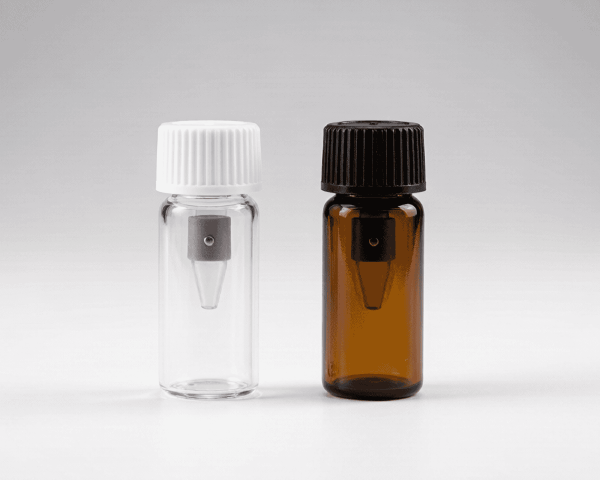

Use amber glass vials when your analyte is light-sensitive (think vitamins, flavonoids, some pharmaceuticals, and natural products). Use clear vials for routine work, when you need to see the fill level, or when light isn’t a concern. For most day-to-day HPLC, clear is the right default.
But there’s more to it than “light-sensitive or not.” Here’s exactly when each color earns its keep — and when amber is honestly overkill.
Why vial color matters at all
Let’s get the science out of the way first, because once you understand the “why,” the “which” becomes obvious.
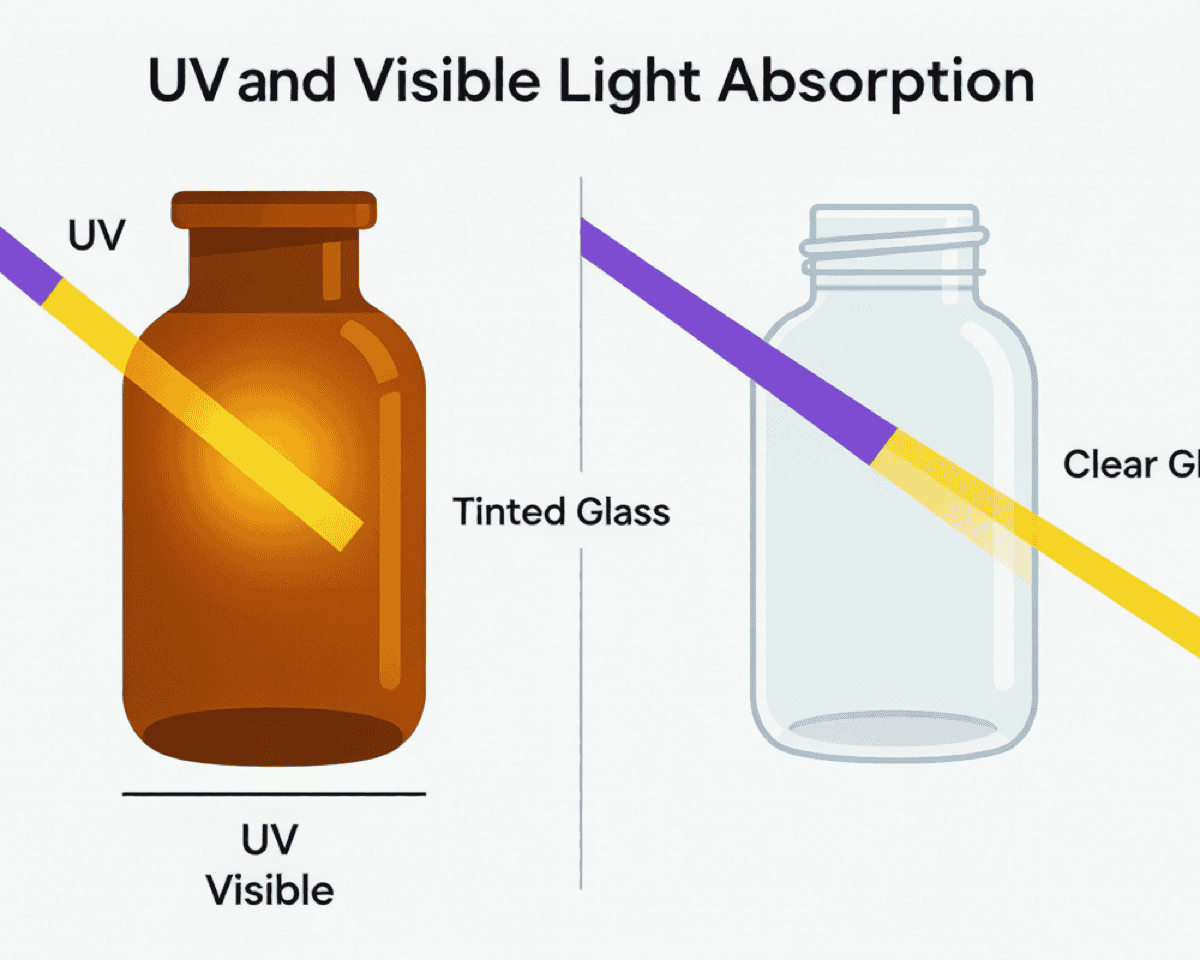
Light — especially the ultraviolet end of the spectrum plus a chunk of visible light — carries enough energy to break chemical bonds. If your analyte is photosensitive, even the ordinary fluorescent lighting in a lab can slowly degrade it while it sits in the autosampler queue. The result isn’t a dramatic failure; it’s a creeping, hard-to-diagnose drift in your peak areas.
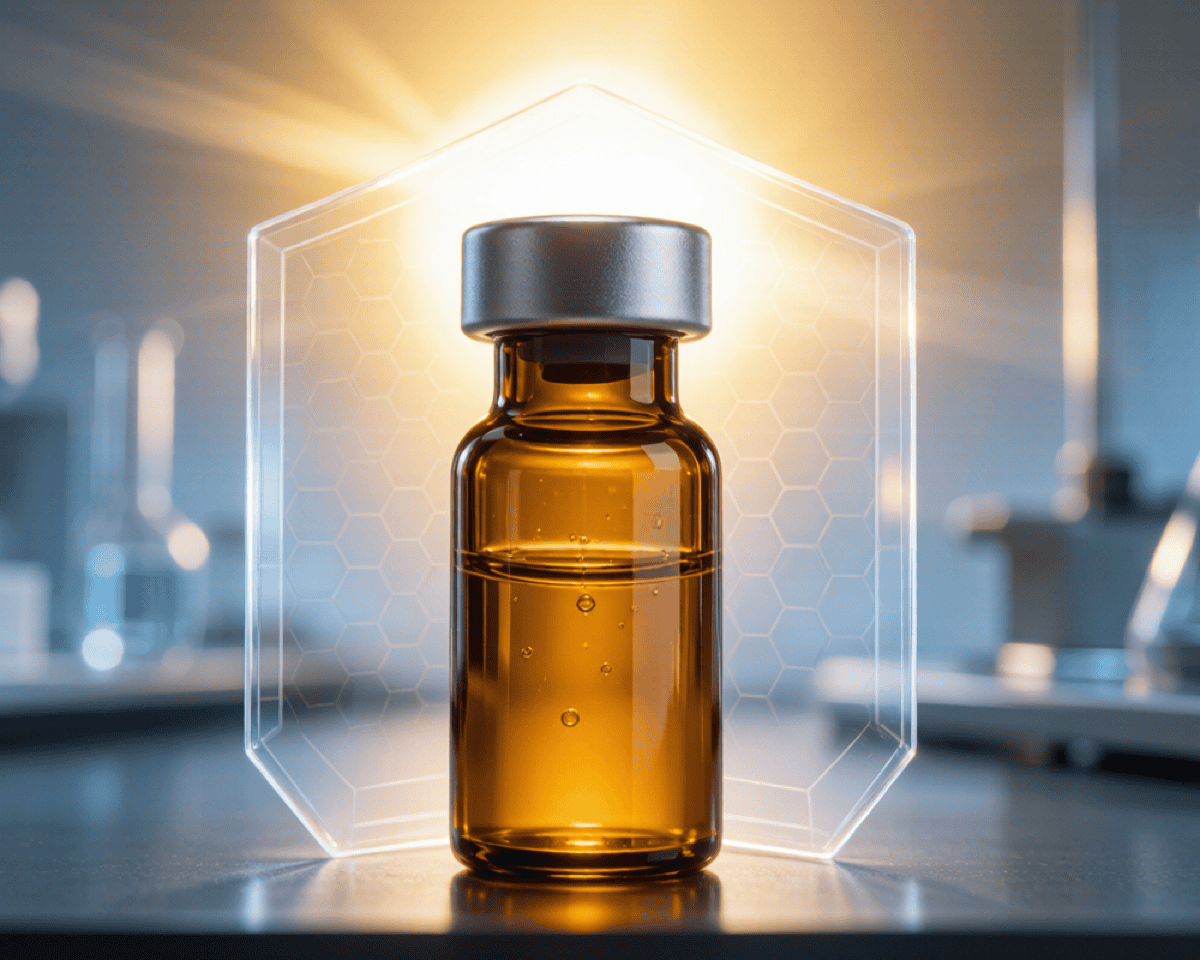
That’s the entire job of amber glass. It isn’t a different kind of glass — it’s borosilicate glass tinted with metal oxides (usually iron) that absorb most of the damaging UV and visible wavelengths. The United States Pharmacopeia recognizes this officially: colored glass containers provide protection from light, and they’re tested for light transmission under USP <660> and <671>.
So here’s the key thing to internalize: the color is about sample stability, not chromatographic performance.
The honest truth about performance
If you’re worried amber glass will somehow change your results, you can relax.
MicroSolv, a respected chromatography consumables maker, ran their clear and amber reduced-surface-activity vials head to head. Their conclusion: there is no measurable difference in performance between clear and amber vials — identical adsorption behavior, identical pH stability, identical surface chemistry. The only reason to pick one over the other is your sample’s light sensitivity.
In other words, amber won’t give you “better peaks.” It just stops your light-sensitive analyte from quietly degrading before it reaches the column.
When to reach for amber vials
Grab the amber vials when any of these are true:
Your analyte is light-sensitive. This is the big one. Common offenders include vitamins (retinol/vitamin A, riboflavin/B2), flavonoids and many natural products, some antibiotics and photosensitive pharmaceuticals, and certain pesticides or environmental contaminants.
Your samples sit for a while. If your autosampler queues dozens of samples overnight, everything sits under lab light for hours. Light-sensitive or borderline compounds benefit from amber even when the method doesn’t explicitly call for it.
The method or pharmacopeia requires it. Some compendial and regulatory methods mandate light-resistant containers for specific analytes. When they do, don’t argue — just use amber.
You’re storing standards long-term. Stock solutions and reference standards that live on the shelf for weeks are prime candidates for amber.
Whichever way you go, taking care of the vial itself matters just as much. If you want a refresher on the daily habits that extend a vial’s life, our guide on how to properly clean and maintain HPLC vials walks through it step by step.
When clear vials are the smarter choice
Clear is the right default for most routine chromatography, and here’s why:
Most analytes aren’t light-sensitive. The vast majority of everyday HPLC and GC work — acids, sugars, alcohols, most small molecules — doesn’t degrade meaningfully under lab light. Clear is perfectly fine.
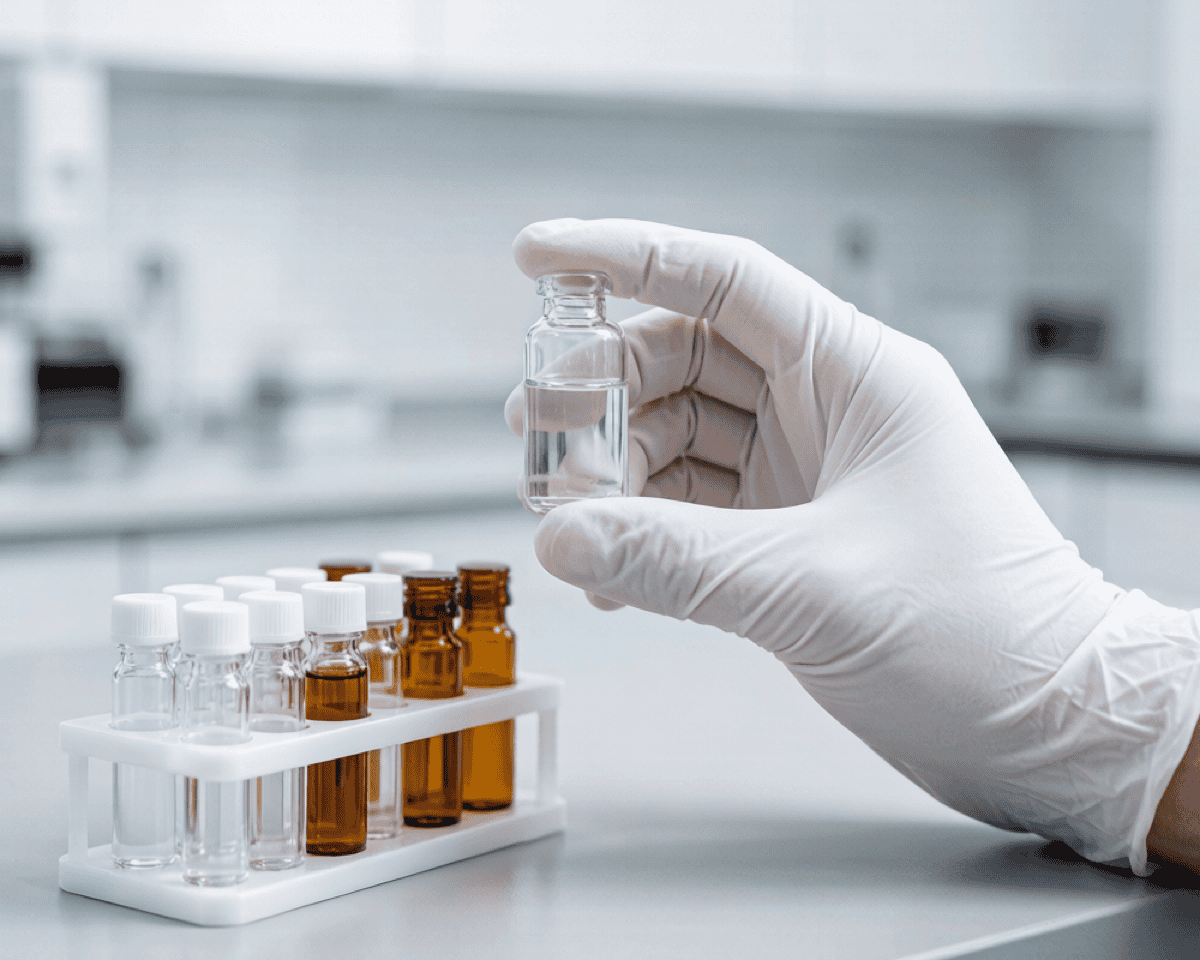
You need to see inside. This is the practical advantage that never makes it onto the spec sheet. With clear vials you can eyeball the fill level, spot a floating particle, or confirm the sample color before you inject. With amber you’re flying blind — which is why good amber vials come with printed graduations or a write-on patch so you can at least confirm volume.
You want simplicity. Clear is typically a touch cheaper, and there’s one fewer decision to make. If nothing in your workflow is light-sensitive, clear keeps things simple. And whichever you pick, getting the storage conditions right is the other half of the battle — our HPLC vial storage guide covers temperature, light, and humidity in detail.
Three things people get wrong
“Amber is always better.” Nope. Amber does one thing: light protection. If your sample doesn’t care about light, amber buys you nothing except the inability to see your fill level.
“Amber blocks all light.” It blocks most of the damaging UV and visible range, but not everything. Treat amber as a helpful barrier, not a guarantee — still store sensitive samples in a dark, cool place.
“Clear means lower quality.” Also wrong. Quality is about the glass type — you want Type I borosilicate glass — and the manufacturing tolerances, not the tint. Clear and amber are usually the exact same borosilicate with different colorants. Agilent puts it plainly: their clear glass vials are for general use and amber vials for light-sensitive analytes, both made from Type 1 borosilicate glass.
Clear vs. amber at a glance
| Clear | Amber | |
|---|---|---|
| Light protection | None | Blocks most UV + visible |
| Visual inspection | Yes — see level, color, particles | No (look for graduations) |
| Best for | Routine, non-sensitive analytes | Light-sensitive analytes |
| Relative cost | Slightly lower | Slightly higher |
| Chromatographic performance | Identical | Identical |
Your 3-question decision guide
When you’re standing in front of the shelf, just ask yourself:
- Is my analyte light-sensitive? Yes → amber.
- Do I need to see the fill level or check for particles? Yes → clear.
- Does my method or pharmacopeia require light-resistant containers? Yes → amber.
Answer “no” to all three? Go clear and don’t look back.
Conclusion
Choosing between clear and amber HPLC vials doesn’t have to be a guessing game. The right answer depends almost entirely on whether your sample is light-sensitive. When it is — vitamins, flavonoids, photosensitive pharmaceuticals, and similar analytes — go amber without hesitation. When it isn’t, save the amber for the standards that genuinely need it and default to clear, which lets you inspect the fill level and costs a little less. The color doesn’t change your chromatographic performance; both clear and amber deliver identical results when made from Type I borosilicate glass. The only real difference is light protection. Keep a supply of both on hand, verify your vial quality, and always match the vial to your autosampler’s specifications. If you want to go deeper, our guides on glass standards for chromatography and choosing the right vials for HPLC and GC will help you nail the rest of the decision.
Frequently Asked Questions
Can I use clear vials for light-sensitive samples if I work quickly?
Honestly, it isn’t worth the risk. Even brief exposure to lab lighting can kick off photodegradation for truly sensitive analytes. If your sample is light-sensitive, just use amber — it’s in the same price range and removes a variable you can’t easily control.
Does amber glass block all UV light?
No. Amber glass blocks most of the damaging ultraviolet and much of the visible range, but not everything. For extremely sensitive samples, combine amber with dark, cool storage and keep exposure time to a minimum.
Are clear and amber vials the same quality?
Yes — when both are made from Type I borosilicate glass. The only difference is the iron-oxide colorant added to amber. The tint doesn’t affect glass quality or chromatographic performance.
Can I reuse amber vials?
Reusing any chromatography vial is generally discouraged because of contamination and carryover risk. If you do reuse, clear and amber clean the same way — just verify no residue remains before refilling.
Which should I buy for a general-purpose lab?
Default to clear for routine work, and keep amber on hand for light-sensitive analytes and long-term standards. Most labs genuinely need both.