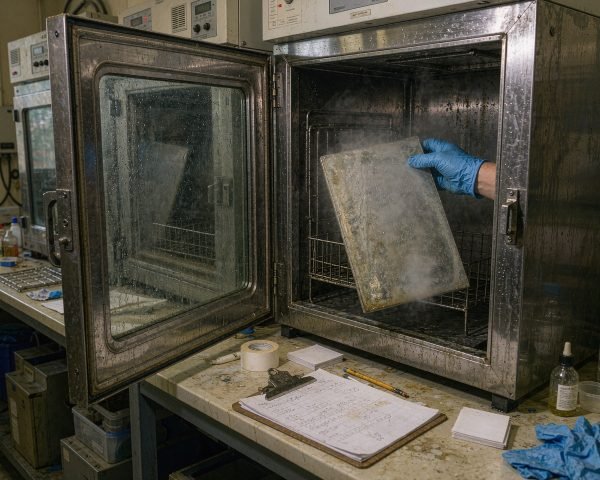

# What Consumables Does Salt Spray Testing Need?
The salt spray chamber gets all the attention when labs set up corrosion testing. In practice, the consumables around it decide whether your results survive an audit: the salt you dissolve, the water you use, the gloves you wear, and the labels that have to stay readable for weeks in hot fog.
Salt spray testing needs high-purity sodium chloride (≥99.5%, ACS grade) in Type I reagent water, pH buffers for verification, inert fixturing and tape, powder-free nitrile gloves, cleaning solvents, ISO 8407 post-test cleaning reagents, and labels rated for 35 °C at high humidity.
Keep reading for the full list, the standards behind each item, and the mistakes I’ve watched cost labs entire test runs.
What Salt Spray Testing Is (and Who Runs It)
Salt spray (fog) testing is an accelerated corrosion test. You atomize a 5% sodium chloride solution into a sealed chamber held at 35 °C, and coated or bare metal coupons sit inside for hours, days, or weeks. The two governing documents are ASTM B117, the most widely used corrosion test method in the world, and ISO 9227, which adds two aggressive variants: acetic acid salt spray (AASS, pH 3.1–3.3) and copper-accelerated acetic acid salt spray (CASS, 50 °C with added CuCl₂).
Who runs these tests? Coatings manufacturers qualifying paint systems, automotive suppliers proving their fasteners and trim, marine hardware shops, and electronics makers checking connector plating. If your customer sells anything metal that lives near a coast or a road that gets salted, the odds are good this test is in your contract somewhere.
The standard fixes the big parameters: solution concentration, temperature, and a fog collection rate of 1 to 2 mL per hour in a 10 cm funnel. Everything else depends on what I’d call the small stuff, which is exactly where this article lives.
The Salt Solution: Where Most Contamination Starts
Your test solution is 50 ± 5 g of NaCl per liter, and the purity of both ingredients is specified. ISO 9227 requires the solid to be better than 99.5% NaCl and the water to be below 20 µS/cm conductivity. Table salt is out; it carries anti-caking agents and trace iodide that shift results in ways you’ll never trace back to the cause. Most labs buy ACS reagent grade sodium chloride in bulk, and the certificate of analysis that comes with it doubles as your traceability record.
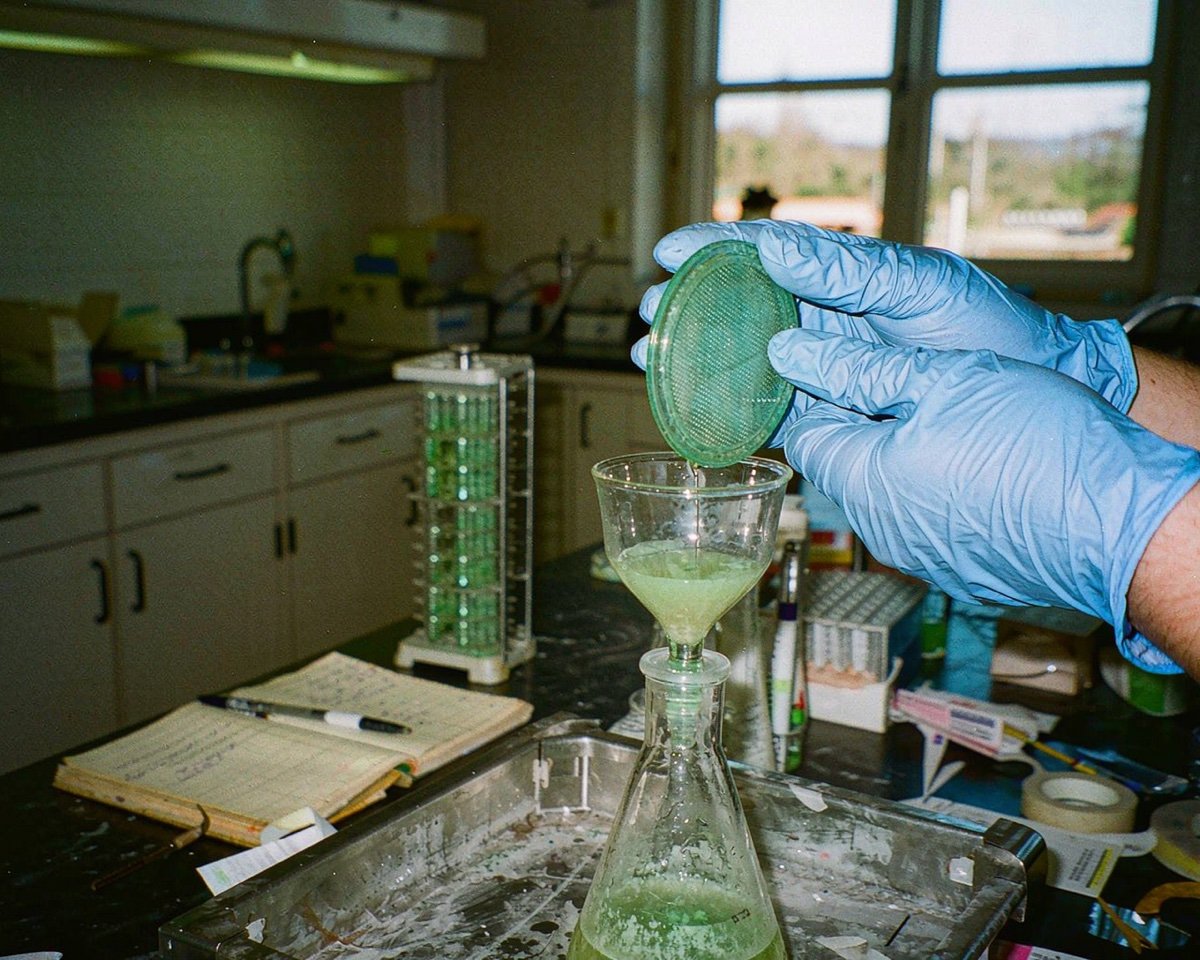
Water matters just as much. Use Type I reagent water (18.2 MΩ·cm resistivity from a freshly serviced ultrapure system, or distilled water meeting ASTM D1193 if that’s what your SOP allows). One subtlety a lot of labs miss: deionized water absorbs CO₂ from air and turns slightly acidic, which can drag the collected fog below the required pH 6.5–7.2. Q-Lab’s note on fog collection chemistry recommends storing makeup water in closed containers rather than an open bucket by the chamber. I’ve seen a lab chase a pH drift for two weeks before someone pointed at the uncovered carboy.
That verification step needs its own consumables: pH buffer solutions (typically 4.01, 6.86, and 7.00) for meter calibration, plus conductivity standards. Buffers expire and absorb contamination once opened, so date the bottle when you break the seal and toss it per the manufacturer’s window.
Fixturing, Collection, and the Chamber’s Daily Consumables
Coupons hang at a 15–30° angle from vertical in most setups, test face up. What holds them matters: inert plastic-coated racks, glass or plastic hooks, and PTFE or polypropylene thread and tape. Bare metal wire of a different alloy will corrode, bleed ions, and contaminate the panel below it. Non-testing surfaces get sealed with wax or inert tape, so keep a supply of both on hand.
The chamber itself consumes reagent water daily. Reservoir, humidifier tower, and rinse water all draw from the same purity standard, and collection apparatus (funnels or gutters feeding graduated cylinders) gets checked at least every 24 hours against the 1–2 mL/80 cm² requirement. Cheap graduated cylinders in the right size, plenty of them, and a spot in your log for each reading. Mass-loss coupons, like the CX series Q-Lab makes, are worth keeping in rotation to prove the chamber corrosivity itself stays honest.
Cleaning Up After the Test
Here’s a section most buyers forget until the first weight-loss study. ISO 9227 tells you to rinse specimens gently in running water, but quantitative evaluation needs ISO 8407: chemical removal of corrosion products without attacking the base metal. For steel that usually means inhibited hydrochloric acid with an inhibitor such as hexamethylenetetramine, mixed fresh, plus soft bristle brushes and a final solvent rinse. Copper, aluminum, and zinc each have their own recipes in the standard.
Every gram counts in gravimetry. You weigh before exposure and after cleaning, so the cleaning step can’t remove base metal or your data is fiction. Buy the acids, inhibitors, and analytical-grade solvents deliberately, and keep the balance area stocked with desiccant and lint-free wipes.
Gloves, Solvents, and Labels
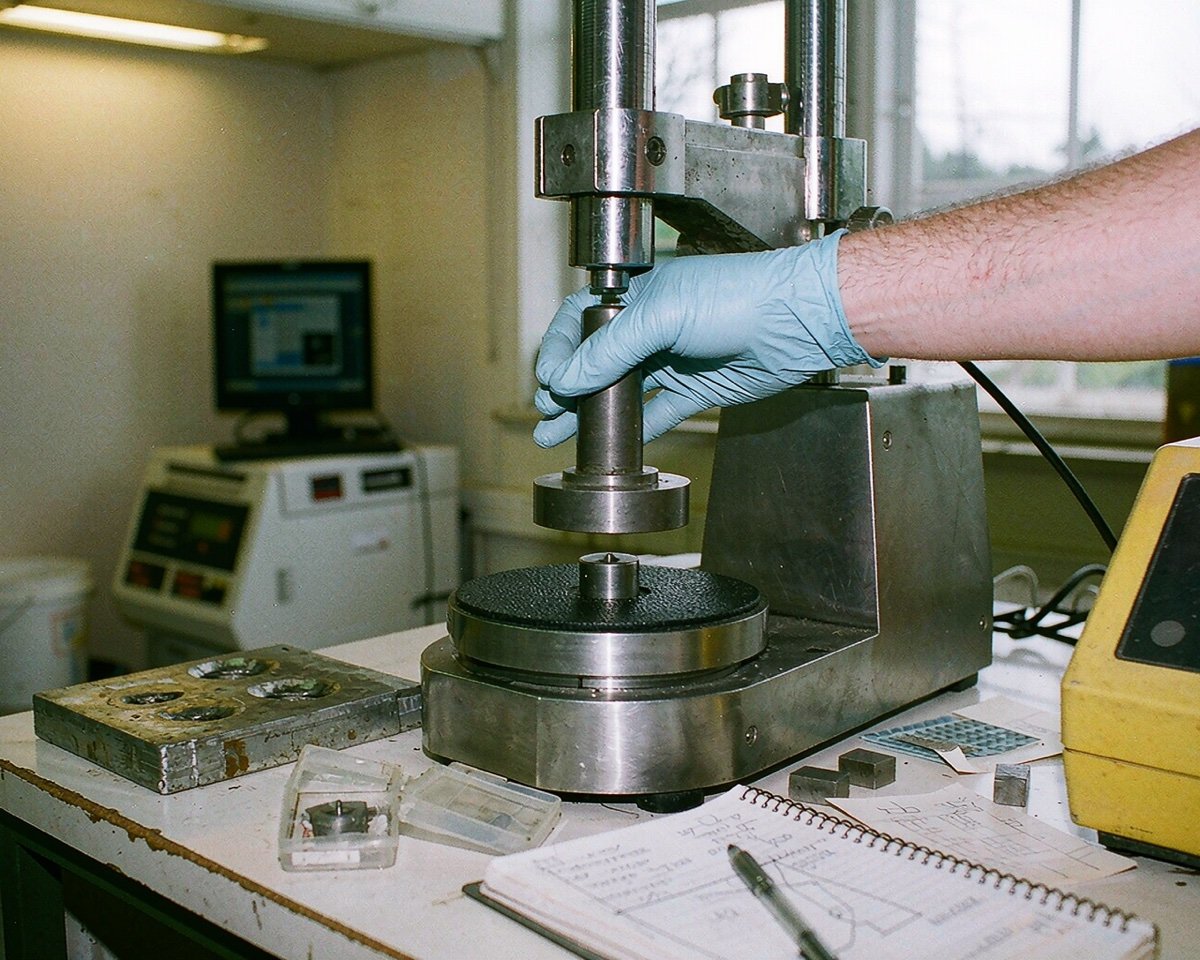
Powder-free nitrile gloves, and I mean from the moment the coupon is cut until it’s mounted in the rack. A fingerprint is a salt deposit, and a salt deposit is a corrosion site. I once watched a 500-hour qualification run on zinc-plated fasteners get thrown out because two panels showed red rust in spots that lined up perfectly with finger marks. Nobody had broken the rule on purpose; a new tech just grabbed coupons bare-handed during setup. That mistake cost a month of chamber time.
Sample prep also goes through solvents fast. Acetone or isopropanol in wash bottles degreases coupons after cutting and mounting, and abrasive preparation (cutting, deburring, edge protection with tape per the standard) chews through blades and masking supplies. Mentioning cutting: protect cut edges explicitly, because they corrode preferentially and can fail an otherwise-passing panel.
Labels are the quiet killer. Standard paper labels with ordinary adhesive will slide off or smudge inside a 35 °C, near-100% humidity chamber. Use polyester or cryo-grade labels with aggressive adhesive, or mark coupons with a permanent marker rated for wet conditions, plus a protected tag on the fixture. Write the ID before the coupon ever gets wet.
After the Chamber: Evaluation Consumables
The test ends, but the consumables keep going. If you’re doing weight-loss gravimetry, you need the cleaning chemistry above, a calibrated analytical balance, and a desiccator to hold specimens between cleaning and weighing. Microscopy follow-up means mounting resin, abrasive papers down to 1 µm or finer, and polish to see whether corrosion crept under the coating.
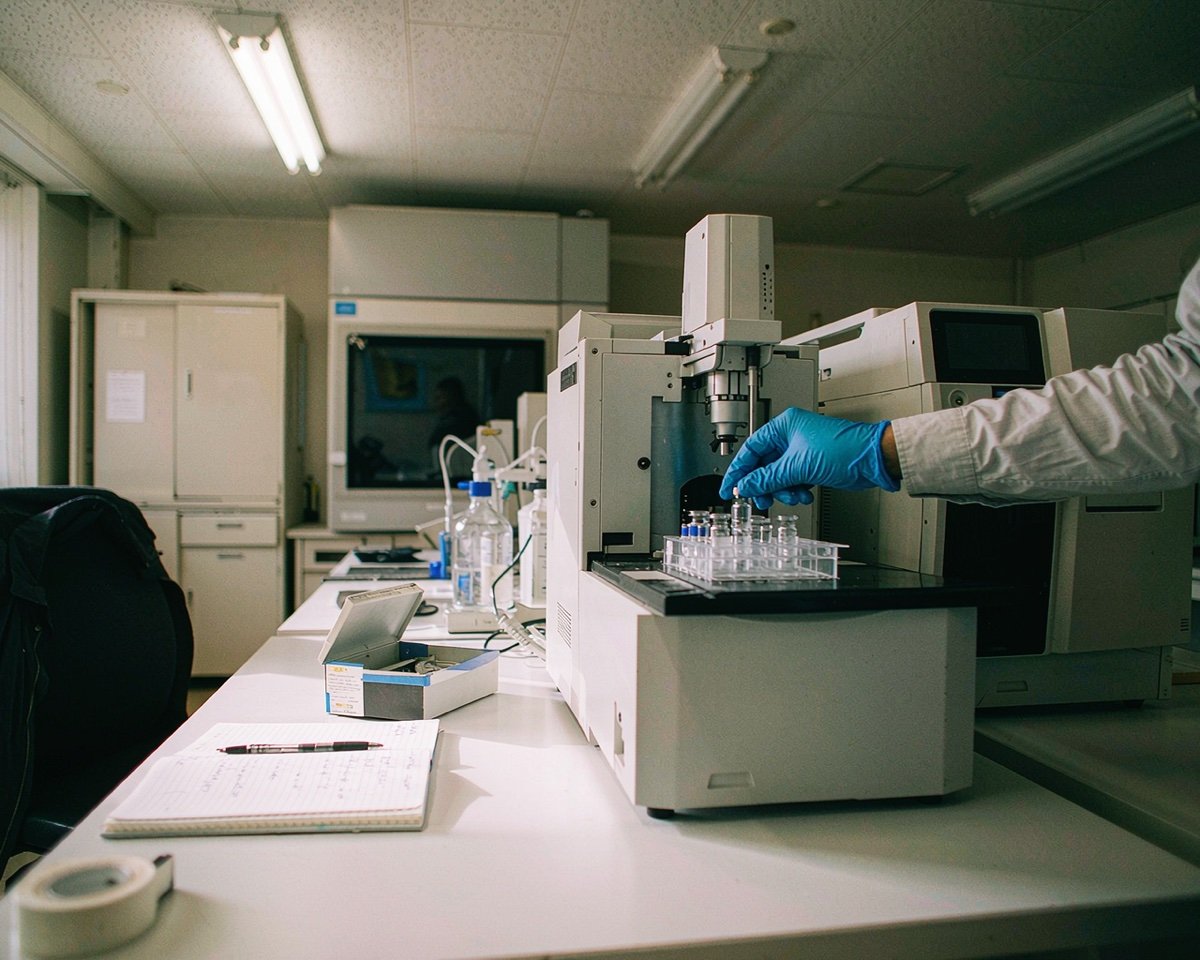
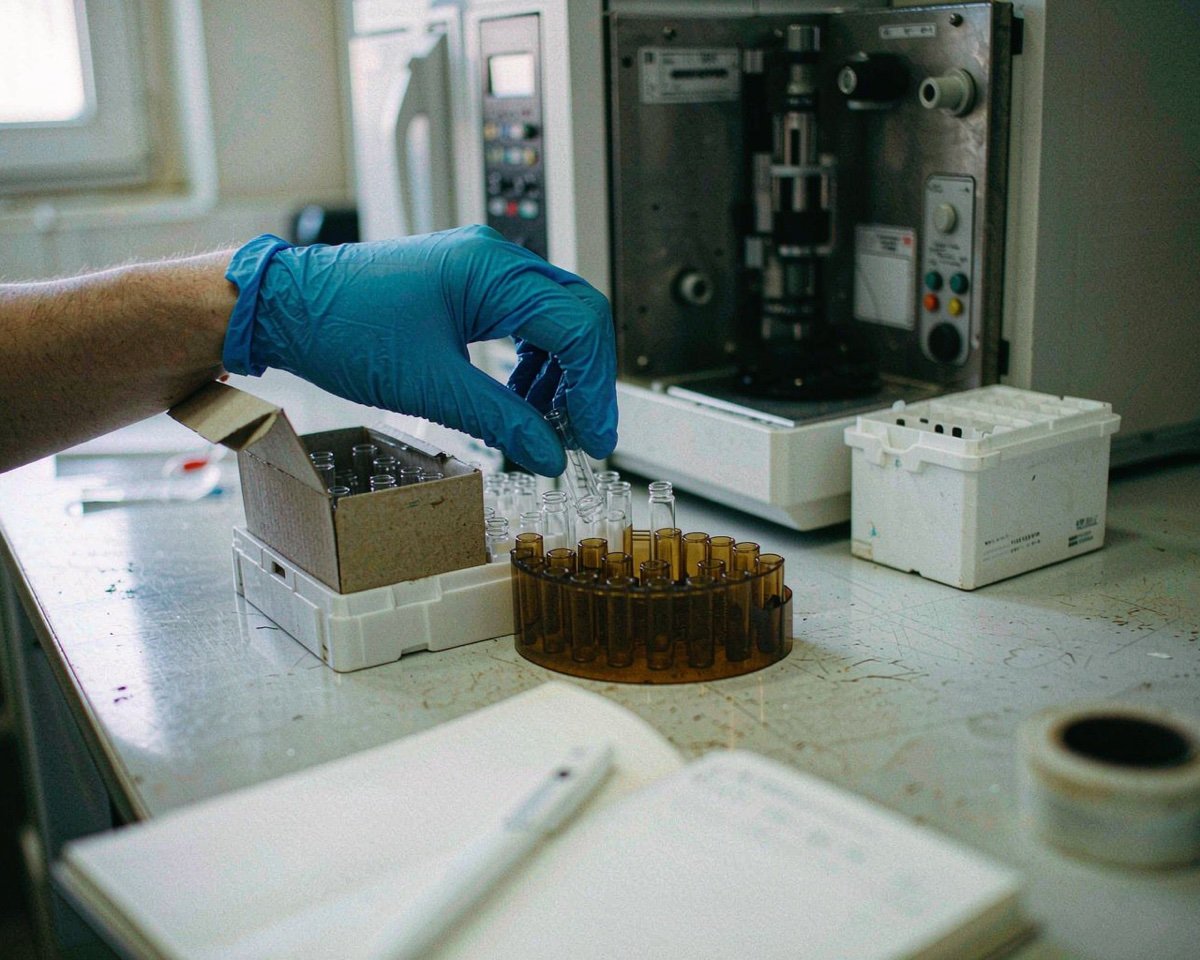
Leachate analysis is growing fast, especially for electronics. Dissolved corrosion products get analyzed by ICP-MS, which pulls in its own world of consumables: trace-metal-grade acids, PFA vessels, 0.45 µm filters, and metal-free autosampler vials. Thermo Fisher’s metal analysis learning center covers digestion and interference basics if you’re setting up that workflow. Sample prep discipline overlaps heavily with what we cover in XRF sample preparation consumables, so much so that the same solvents and gloves often serve both benches.
Practical Tips That Save Reruns
Three habits separate labs that rerun tests from labs that don’t.
Record consumable lots on the test sheet itself. Salt, water system, buffers, tape, coupons: five lines, written at setup, and suddenly a failed run has an investigation path instead of a shrug. Traceability is what auditors ask about first, and it’s cheap to do right.
Watch the solution reservoir like a hawk. Topping off with the wrong water, or letting stock solution sit uncovered while CO₂ works on it, quietly shifts pH across a multi-week run. Make fresh solution at the intervals your standard requires and log the make-up date.
And keep a humidity-and-temperature strip near where labels and tape are stored. Consumables have shelf lives too, and the back of a hot supply cabinet is not kind to adhesives.
Conclusion
Salt spray testing is one of the oldest accelerated corrosion methods still in routine use, and its consumables list is longer than most buyers expect. The core stack: ACS-grade sodium chloride and Type I water for the 5% solution, pH and conductivity standards for verification, inert fixturing and tape, powder-free nitrile gloves, solvents for coupon prep, ISO 8407 cleaning reagents for post-test evaluation, and labels engineered for weeks at 35 °C in fog. None of these items is expensive on its own. What’s expensive is rerunning a 500-hour test because a fingerprint, a bad batch of water, or a peeled label corrupted the data. Get the consumables right, record the lots, and the chamber becomes the easy part. If you’re building out a corrosion bench, our metals and materials testing lab consumables guide maps the wider shopping list, and our thermal analysis consumables guide covers the neighboring characterization workflow that usually follows salt spray studies.
Frequently Asked Questions
Can I use table salt instead of ACS grade sodium chloride for salt spray testing?
No. Table salt contains anti-caking agents and often iodide, which ISO 9227 does not permit. Use sodium chloride of at least 99.5% purity with a certificate of analysis, and keep the lot number in your test records.
How often should I check the pH of my salt spray solution?
Verify the prepared solution before it enters the chamber, and check the collected fog at least every 24 hours against the required pH 6.5–7.2. Calibrate your pH meter with fresh buffers beforehand, since expired buffers are a common source of false readings.
What kind of water should I use in a salt spray chamber?
Use Type I reagent water with conductivity below 20 µS/cm for the solution, the humidifier, and rinsing. Store it in closed containers, because deionized water absorbs CO₂ and drifts acidic in an open tank.
Why do powder-free nitrile gloves matter for corrosion coupons?
Fingerprints deposit salts and skin oils that act as corrosion initiation sites, which skews the test toward false failures. Powdered gloves add their own residue, so powder-free nitrile is the safe default from cutting through mounting.
Do labels really fail inside salt spray chambers?
Yes, ordinary paper labels curl, smudge, or detach within days at 35 °C and near-saturated humidity. Polyester labels with high-tack adhesive, or markings backed up by a tagged fixture, keep coupon identity intact for the full exposure.