
# What Consumables Does Thermal Analysis (DSC and TGA) Need?
Thermal analysis consumables are the pans, crucibles, lids, gases, and reference materials that sit between your sample and the sensor. They decide whether a DSC or TGA run produces clean data or an hour of rework. This guide walks through what a well-run thermal lab keeps in stock and why each item matters.
Short answer: Aluminum DSC pans with the right lid, TGA crucibles in alumina or platinum, a matched reference pan, purge gas handling, and calibration metals such as indium and zinc. Hermetic lids for volatile samples, pierced lids for solvents, aluminum pans below 600 °C.
The rest of this page breaks down each of those choices, so read on before you order your next box of pans.
DSC Pans by Material: When Each One Wins
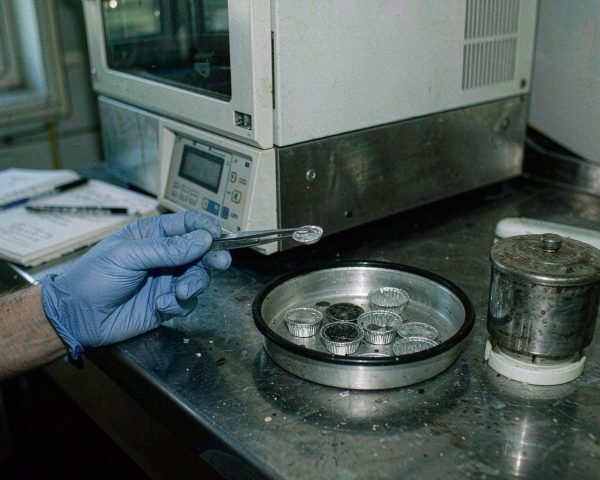
Aluminum is the default DSC pan material for good reason. It is cheap, it conducts heat well, and it comes in enough sizes to fit every major instrument. For routine polymer melting points, glass transitions, and crystallinity checks, standard aluminum pans with crimped lids do the job.
Hermetic (sealed) pans are the upgrade you reach for when the sample wants to escape. Volatile samples, moist materials, and anything that might lose solvent during a ramp belong in a sealed pan, because mass loss mid-run will smear your transitions and wreck the enthalpy numbers. One caution from experience: a hermetic pan with a watery sample is a small pressure vessel. I once ran a damp polymer at a modest ramp, and the pan bulged so hard it jammed the autosampler shuttle and cost us the whole overnight queue. Since then I dry anything questionable first or use a pierced lid.
Stainless steel pans handle the jobs aluminum cannot. They seal at higher pressures, so they suit samples that boil or build pressure inside the pan. For reactive samples, molten metals, or aggressive chemistry, gold and platinum pans are the inert choice, and they pay off despite the price because they refuse to react. Copper pans are a niche tool. Some labs use them in oxidative-induction work where the catalytic behavior of copper is part of the test, but copper reacts with so many materials that it stays a specialist option.
TGA Crucibles: Platinum, Alumina, and the Aluminum Ceiling
TGA crucibles see harsher conditions than DSC pans, so the material list shifts. Alumina (ceramic) crucibles are the workhorse. They are inert, they shrug off temperatures above 1,000 °C, and they cost little. Platinum crucibles are the premium option: chemically inert, thermally conductive, and reusable for years if you treat them well. They do have quirks. Molten metals and some compounds can alloy with or stain platinum, and contamination builds up on the surface over time. An old NIST study of platinum crucible surfaces describes how iron impurities segregate along crystal boundaries and eventually embrittle the ware, which is a good reminder to inspect and clean platinum crucibles regularly. See the NIST study of platinum crucible surfaces for the details.
Aluminum crucibles work in TGA too, but only at low temperatures. Aluminum melts at about 660 °C, so the practical ceiling sits near 600 °C. Ignore that ceiling and you will learn it the hard way. A colleague ran an aluminum crucible to 700 °C chasing a decomposition endpoint, and the crucible slumped into a foil puddle on the sample holder. The cleanup took a day, and the furnace plate never quite looked the same. For anything above 600 °C, switch to alumina or platinum.
Lids and Piercing: More Than an Afterthought
Lid choice changes what your run measures. Standard crimped lids leave a small gap for gas exchange, which is fine for stable, nonvolatile samples. Pinhole (pierced) lids let solvent vapor escape in a controlled way while still slowing evaporation, which makes them the standard pick for samples that carry residual solvent. Hermetic lids seal completely, which raises the apparent boiling point inside the pan and keeps volatiles in place until the seal gives or the transition completes.
The logic is simple: pierced lids when you need controlled vapor release, hermetic lids when you need the sample to stay put. If a transition temperature looks off between two runs, check the lid type before you blame the instrument. A hermetic pan can shift a volatile sample’s transition by tens of degrees compared with an open or pierced pan, and both numbers can be “correct” for their own conditions.
Consumable-Adjacent Items: Gas, Standards, and Trays
Three items never touch your sample directly, yet they still make or break the run. First, purge gas. Nitrogen is the inert default for DSC and TGA work; air or oxygen turns the same instrument into an oxidation tester. Keep fittings, tubing, and flow controllers in good shape, because a drifting purge flow quietly shifts baselines. Second, calibration metals. Indium (melting at 156.60 °C) is the universal DSC temperature and enthalpy standard, and zinc covers higher ranges. NIST sells certified indium (SRM 2232a) for exactly this purpose, and the NIST SRM 2232a indium certificate documents the certified melting temperature and enthalpy of fusion. Third, autosampler trays and press kits. If your instrument loads pans automatically, trays and crimping dies are consumables too, and a warped tray causes more failed runs than a bad pan ever will.
Matching the Pan to the Method
Method standards often dictate the consumable. ASTM D3418, the standard test method for polymer transition temperatures and enthalpies by DSC, expects samples in pans within a normal operating range up to 600 °C, which rules out pushing aluminum pans past their comfort zone. You can review the scope in the ASTM D3418 document page.
Oxidative-induction time (OIT) work follows the same pattern. ASTM D3895 covers OIT of polyolefins by DSC, and it calls for an oxygen or air atmosphere, which means clean purge plumbing and pans that will not contaminate the oxidation chemistry. Read the method first, then buy the pans. Doing it the other way around is how labs end up with a drawer full of pans that fit nothing they run.
Practical Pitfalls That Waste Runs
Three pitfalls show up again and again. The first is pan reuse policy. Aluminum pans are single-use in most labs; reusing one risks residue from the last sample, and residue means baseline drift and mystery peaks. Platinum and alumina crucibles are reusable, but only with a real cleaning protocol between runs.
The second is sample mass consistency. Most DSC methods want roughly 5 to 10 mg, and the mass should be consistent across a study. Comparing a 9.2 mg sample in a hermetic pan against the 8.1 mg you ran Tuesday is asking for enthalpy values you cannot defend, because pan loading affects thermal gradients and peak shape.
The third is dirty pans and drift. A pan that looks clean but carries invisible residue will tilt your baseline, and a tilted baseline shifts every onset temperature you report. If your blanks start drifting, retire the pan. The stakes are the same across the lab, whether the data feeds a release decision or a paper; colleagues running other techniques face the same consumable discipline, as our guide to metals and materials testing lab consumables covers in depth.
Buying Notes Before You Order
Compatibility is the trap in thermal analysis consumables. Pan diameter, height, and crimp geometry vary across TA Instruments, Mettler Toledo, PerkinElmer, and NETZSCH platforms, and autosamplers make the tolerances tighter because a slightly wrong pan jams the feed. Before ordering, confirm the pan matches your instrument model and your autosampler, not just “DSC pans” in general. Vendor catalogs help here; the Thermo Fisher thermal analysis consumables listing and the TA Instruments consumables page both organize pans by instrument family, which is the fastest way to cross-check a part number.
Also read the spec sheet with a skeptical eye, the same way you would for any other lab purchase. Purity, tolerance, and maximum temperature belong in the comparison, and our walkthrough of a lab consumables spec sheet shows which terms to check line by line.
Conclusion
DSC and TGA consumables look like an afterthought, and that is exactly why they cause so much trouble. Pick pans by material and lid type for the sample in front of you, respect the 600 °C aluminum ceiling, keep purge gas and calibration standards in good order, and match every purchase to your instrument and autosampler rather than to a generic catalog description. Do that, and your baselines stay flat and your queues stay full. Thermal analysis is not the only technique where consumables decide data quality, either; the same discipline applies to particle size analysis consumables and to ICP-MS sample preparation. Stock deliberately, and the instrument does the rest.
Frequently Asked Questions
Can you reuse DSC pans?
Aluminum DSC pans are meant for single use, since residue and deformation from the first run contaminate the next one. Platinum and stainless steel pans can be reused with proper cleaning, though many labs reserve them for specific sample types to avoid cross-contamination.
What pan for volatile samples?
Use a hermetically sealed pan so solvent or moisture cannot escape mid-run and distort your peaks. If the sample might build pressure, a pierced lid gives you controlled venting instead of a bulged pan.
Which crucible for TGA above 600 °C?
Choose alumina or platinum, since aluminum melts around 660 °C and slumps well before that under load. Alumina is the economical default for high-temperature work, while platinum adds thermal conductivity and chemical inertness at a much higher price.
Do I need a reference pan for every run?
You need an empty reference pan matched to your sample pan type, but you do not need a new one for every run. Keep the reference pan clean and consistent, because changing its mass or type shifts the baseline the instrument subtracts.
Why did my DSC baseline drift?
Drift usually traces back to a dirty or deformed pan, inconsistent purge gas flow, or a reference pan mismatch. Retire the pan, verify the gas flow with a flow meter, and rerun a blank before trusting the next dataset.