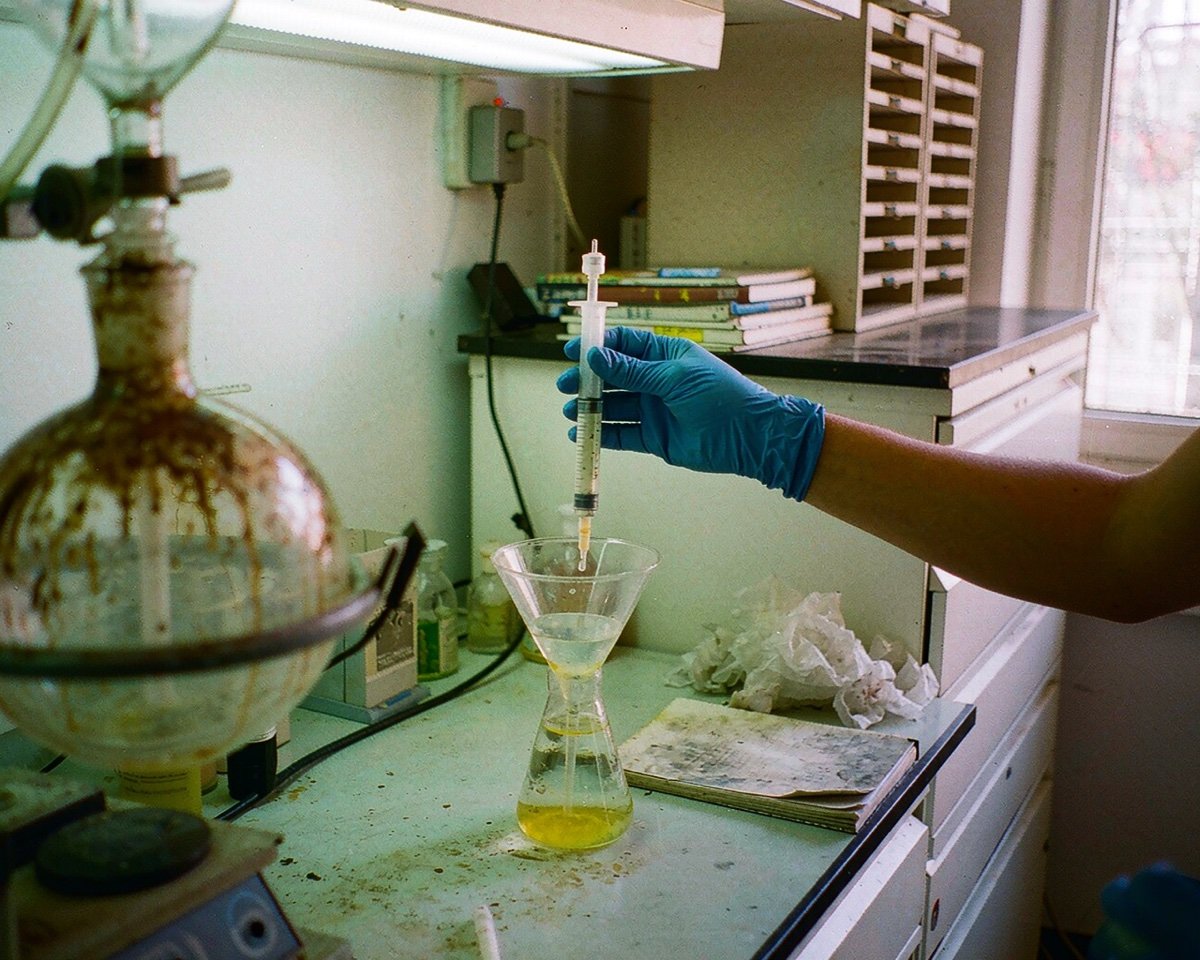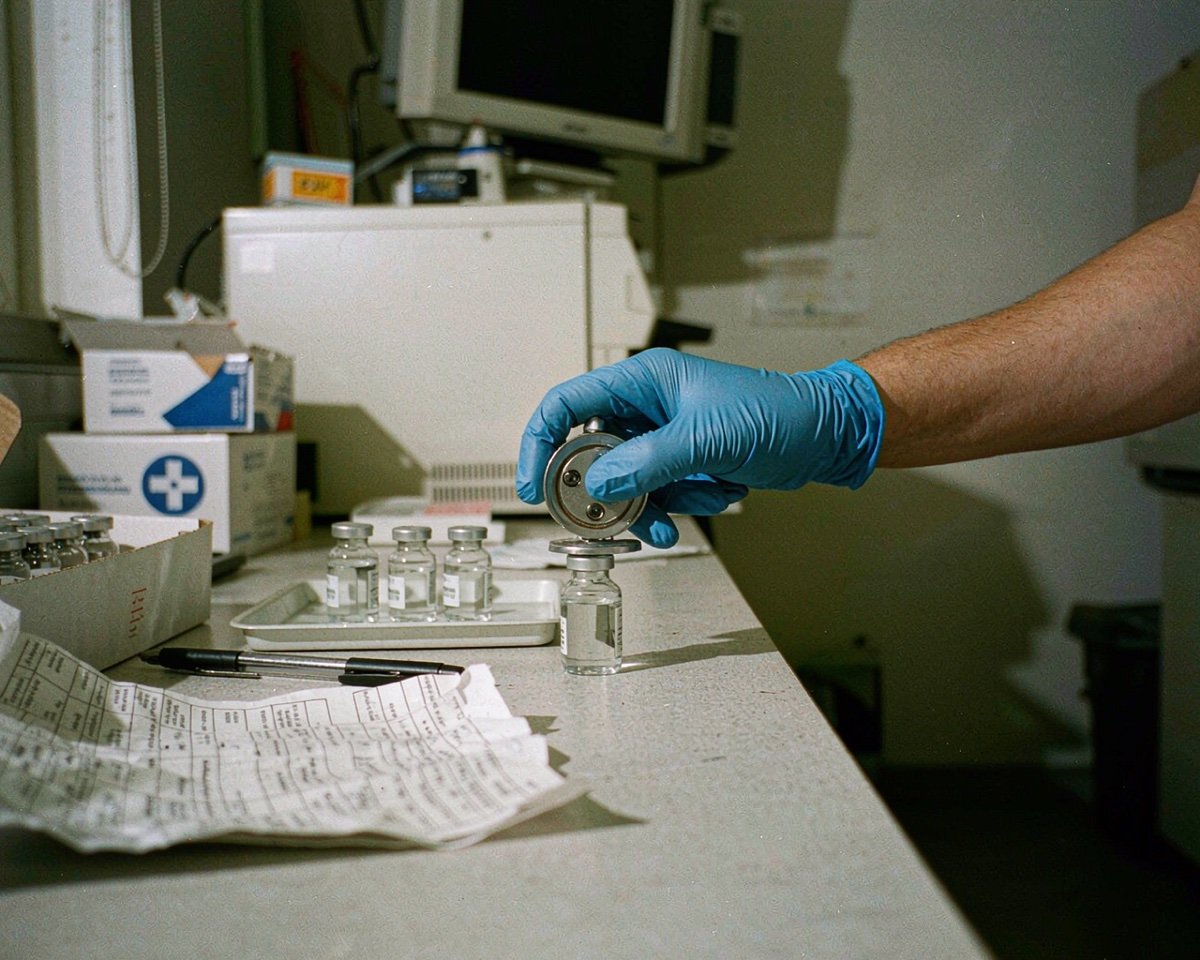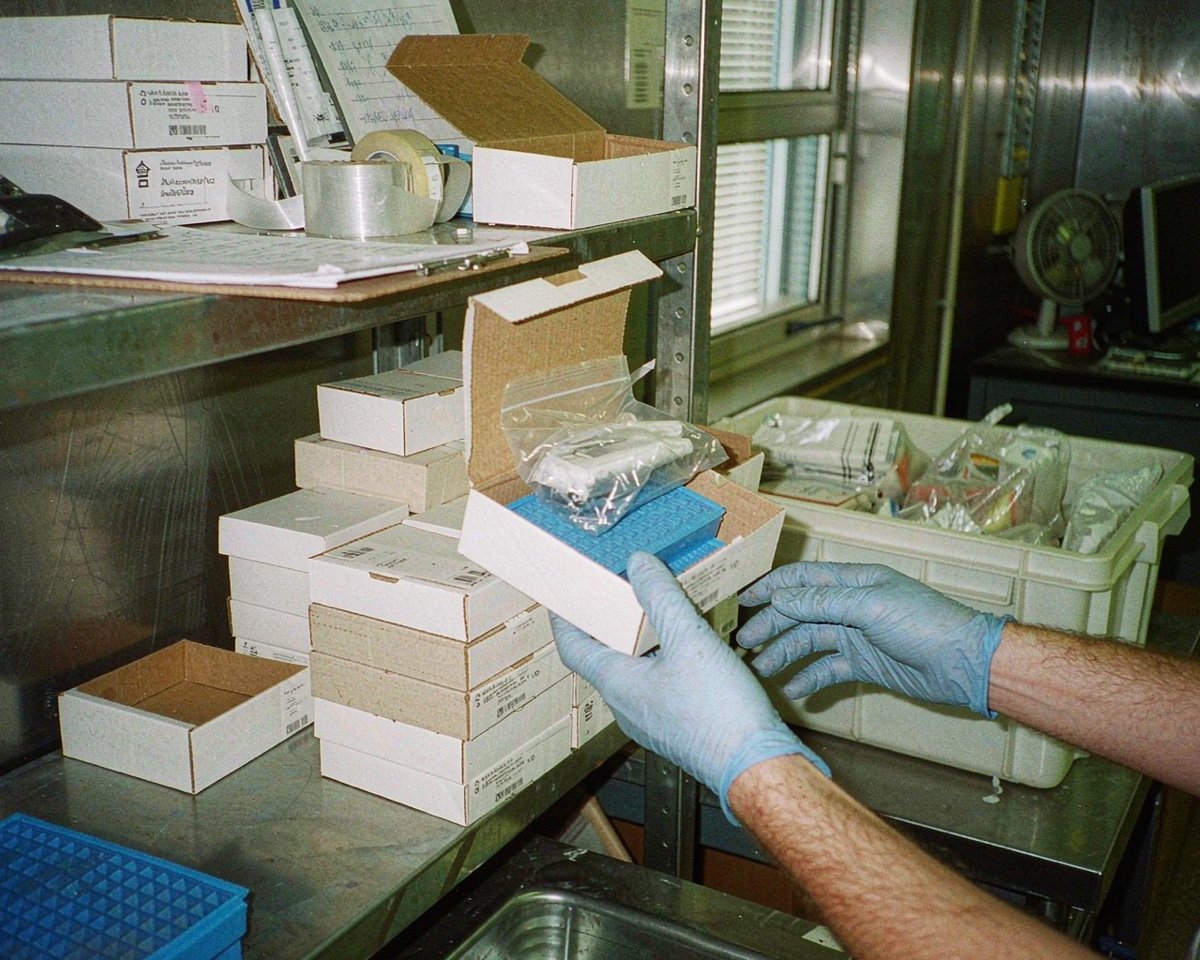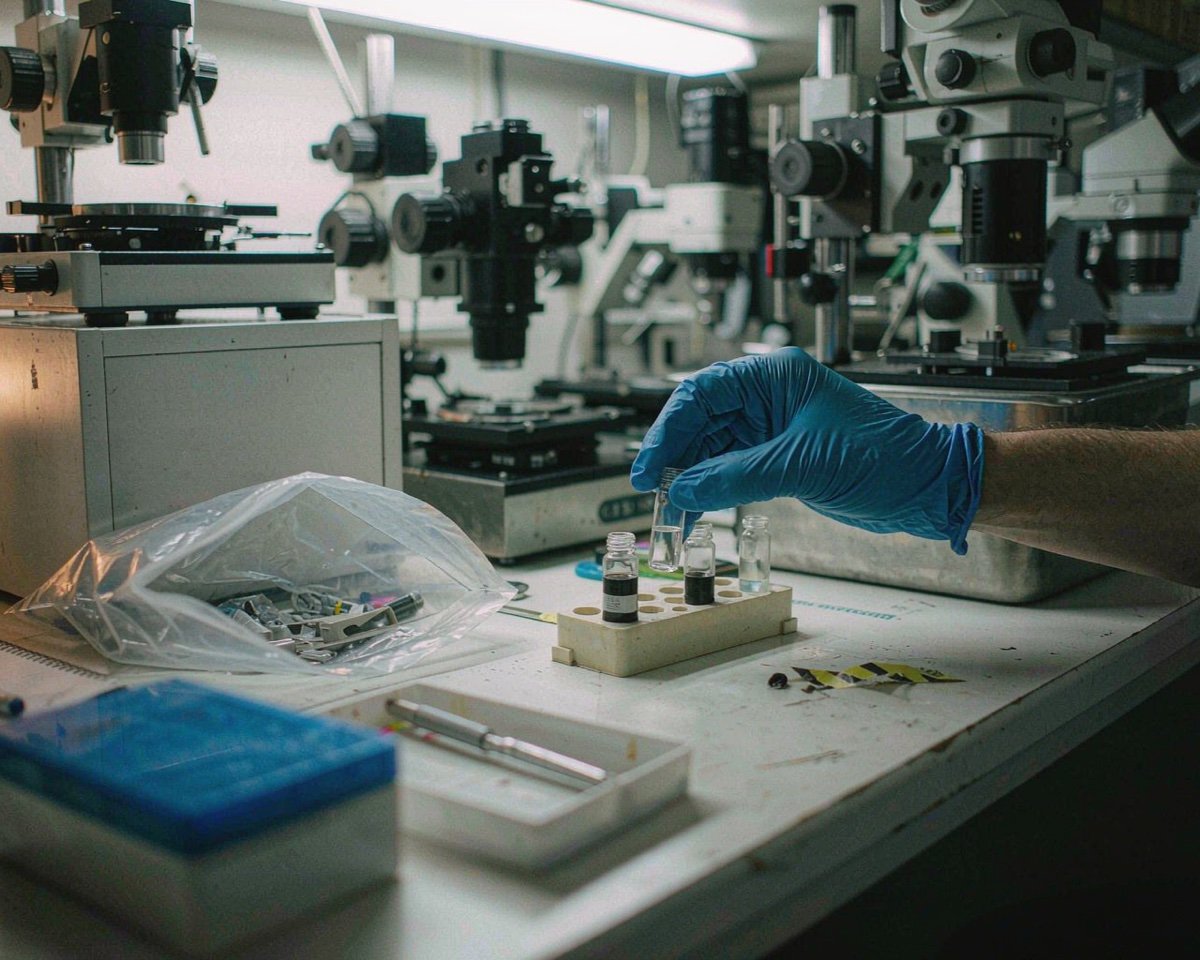


Pharmaceutical lab consumables look like ordinary lab supplies until an auditor walks in. Then the same vial that held a system-suitability sample becomes a piece of evidence that has to stand up to inspection. This guide covers what pharma labs actually need from consumables: the products, the standards behind them, and the documentation that makes them defensible.
The Short Answer
Pharmaceutical QC and R&D labs run on the same core consumables as any chromatography lab (certified HPLC vials, caps and septa, syringe filters, headspace vials, and reagent or media bottles), but they buy them to a higher bar: Type I borosilicate glass, documented cleanliness and dimensional control, low extractables, full lot traceability, and certificates of analysis that tie every box to a tested batch. When in doubt, choose documented quality over price, because an unverifiable consumable is a risk to the method, not just a line item.
Why Pharma Consumables Are Different
What separates pharma from every other lab sector comes down to one idea: the consumable becomes part of the evidence. When a QC lab releases a batch of tablets, the HPLC chromatograms that proved potency and purity depend on the vials that held the samples, the filters that cleaned them, and the septa that sealed them. If any of those components contributed a ghost peak, adsorbed analyte, or dimensional hiccup, the result is an investigation, and possibly a rejected batch.
Regulators treat this seriously. In the US, finished-pharmaceutical manufacturing follows the current good manufacturing practice (cGMP) rules in 21 CFR Part 211, and the section on control of components and drug product containers and closures is blunt: containers and closures must not be reactive, additive, or absorptive in a way that alters the drug’s safety, identity, strength, quality, or purity. They must protect against deterioration and contamination, and where the drug demands it, they must be clean, sterilized, and processed to remove pyrogenic properties, with all of that validated.
Pharma labs inherit that discipline even when they’re not manufacturing the drug itself. If your lab runs release testing, stability studies, or cleaning validation, the same logic applies to your consumables: the sample container must not change the sample. That’s why a pharma buyer reads a vial spec sheet differently than a teaching lab would. The questions are about hydrolytic class, extractables, dimensional tolerances, and traceability, not just whether the vial “works.”
The Regulatory Framework in Plain English
You don’t need to memorize the pharmacopeia, but you should know which chapters exist and why they matter, because suppliers will reference them on certificates and datasheets.
USP <660> Containers—Glass is the chapter that defines glass types for pharmaceutical containers. Historically it classified Type I as borosilicate glass, Type II as surface-treated soda-lime-silica, and Type III as untreated soda-lime-silica, based on hydrolytic resistance measured by the amount of alkali released under controlled conditions. A 2023 revision shifted the classification to performance-based; glass now earns a Type designation by passing the hydrolytic tests rather than by its nominal composition. In practice, Type I borosilicate remains the reference standard for pharmaceutical containers, and DURAN borosilicate 3.3 glass, for example, is documented to meet the USP <660> and Ph. Eur. 3.2.1 Type I requirements used by pharma manufacturers worldwide. For a detailed look at how the hydrolytic tests work, my article on Type I borosilicate vs. soda-lime glass explains the material science in plain language.
Next comes USP <381> Elastomeric Closures for Injections, which covers the rubber and elastomer components used to seal pharmaceutical containers, the same family of materials as the septa on your vials. It sets limits on things like turbidity and reducing substances in extracts, which is a roundabout way of saying the closure must not contaminate what it seals.
USP <467> Residual Solvents is the chapter pharma labs hit constantly: it requires gas chromatography (typically static headspace) to measure residual solvents in drug substances and products. That single chapter is why headspace vials and their septa are a regulated consumable: a dirty vial or a bleeding septum injects solvent peaks into the very test meant to prove their absence. The limits themselves trace back to the ICH Q3C guideline on residual solvents, which classifies solvents by toxicity and sets permitted daily exposures.
Supporting all of this is the manufacturer’s quality system. ISO 9001, the international quality-management standard, is the baseline most credible consumables manufacturers hold, and pharma buyers increasingly treat it as table stakes rather than a differentiator. In the extractables space, peer-reviewed work like Corning’s study of glass container extractables under USP <660> and ISO 4802 conditions shows how seriously container chemistry is taken when the container meets the drug.
The Consumables Toolkit of a Pharma QC Lab
Walk through a modern pharmaceutical QC lab and you’ll find a surprisingly consistent set of consumables, because the analytical methods are similar across companies; they’re anchored to the same pharmacopeia monographs. Here’s the toolkit and what each piece does:
| Consumable | Typical pharma use | What pharma buyers watch | |—|—|—| | HPLC/UHPLC vials (2 mL, 9 mm or 12×32 mm) | Assay, related substances, dissolution, content uniformity | Type I glass, cleanliness, dimensional precision, certified lots | | Caps and septa | Sealing vials before and after injection | PTFE-faced closures, low extractables, reseal, no coring | | Syringe filters (0.22 / 0.45 µm) | Sample and mobile-phase filtration | Membrane compatibility, extractables, sterile grades | | Headspace vials (10 / 20 mL) | Residual-solvent testing per USP <467> | Low-bleed septa, cleanliness, pressure rating | | Reagent and media bottles | Mobile-phase, buffer, and media storage | Type I glass, amber for light-sensitive, autoclavability | | Vial inserts and accessories | Low-volume and trace samples | Low adsorption, recovery, fit |
A pharma lab might run hundreds of vials a day across assay and impurity methods, so consistency between lots matters as much as the spec itself. That’s the difference between a consumable vendor and a consumable partner: the vendor ships boxes, the partner ships boxes you can trust not to change your method.
Certified HPLC Vials: The Workhorse
The 2 mL autosampler vial is the most-used consumable in pharma analysis, and pharma labs overwhelmingly choose certified vials: vials that come with documented QC results for the actual lot you receive. Certification typically covers three things.
First, glass quality. Pharma-grade vials are made from Type I borosilicate glass with high hydrolytic resistance, so the vial doesn’t leach alkali into aqueous samples or adsorb your analyte. For light-sensitive compounds, amber vials provide the spectral protection described in the pharmacopeia chapters, and the clear-versus-amber decision comes down to whether your analytes degrade under visible or UV light.
Second, cleanliness and packaging. Certified vials are washed, packed in cleanroom conditions, and sealed to keep them particle-free until you open the box. This isn’t cosmetic; a particle in a vial can block an autosampler needle or show up in a low-wavelength UV trace.
Third, dimensional precision. Vial height, neck dimensions, and thread profile have tolerances for a reason: autosamplers grip and align vials mechanically, and an out-of-spec vial causes misaligned injections, bent needles, and carryover. This matters more in pharma because the methods run repeatedly for years, and a different vial geometry between lots quietly degrades reproducibility.
For trace and bioanalytical work, you’ll also see silanized or low-adsorption vials, which deactivate the glass surface to prevent analyte loss at low concentrations, the kind of detail that matters when you’re quantifying a drug in plasma at nanogram levels.
When a supplier calls a vial “certified,” read the certificate before you assume what it covers. A meaningful vial certificate states the glass type and hydrolytic class, the dimensional checks performed with their results, cleanliness or particle data where relevant, and the lot number the results belong to. For labs feeding samples into a LIMS or automated system, barcode-ready vials and tray configurations that match your autosampler are worth specifying up front rather than adapting later. And ask how the vials are washed and packaged. The difference between “washed in clean water” and “washed and packed in a controlled cleanroom” is exactly the difference that shows up in a low-blank method.
Caps, Septa, and Closure Integrity
The vial is only half the closure system. The cap and septum control evaporation, contamination, and needle access, and in pharma they carry the additional expectation that the elastomer won’t leach into the sample.
Most pharma labs standardize on screw caps with PTFE-faced silicone septa for routine HPLC work. The PTFE face sits between the sample and the silicone, giving you a chemically inert barrier, while the silicone provides the resealability an autosampler needs across multiple injections. For methods with low detection limits, bonded caps (where the septum is permanently bonded to the cap) reduce the extractables and the chance of septum displacement. And for volatile or pressurized samples, closure choice directly affects evaporation and reproducibility.
Three things go wrong with closures in pharma labs, and all are preventable. Septa that core under repeated injections drop elastomer bits into the needle path. Septa that bleed under temperature add ghost peaks to sensitive methods. And caps that don’t seal consistently let samples evaporate between injections, which shows up as drifting peak areas in a sequence that’s supposed to prove uniformity. If you’re seeing any of those, the closure is a better suspect than the instrument. Replacement schedules, thickness selection, and bonded-versus-assembled choices are practical decisions I’ve written about in depth elsewhere on this site.
Syringe Filters: The Last Line Before the Column
Filtration sits between the sample and the instrument, and it’s the consumable most likely to be blamed last when it’s actually the culprit first. In pharma work, syringe filters do two distinct jobs.
Clarification: removing particles from samples before injection so they don’t clog columns or foul autosamplers. For routine HPLC, a 0.45 µm filter is the standard choice; for UHPLC and LC-MS, labs typically drop to 0.22 µm because sub-2 µm columns and mass spectrometers tolerate far less particulate matter.
Sterile filtration: removing microorganisms from solutions that need to be sterile, using a validated 0.22 µm membrane. This shows up in media preparation, buffer production, and anywhere a solution will meet a biological system.
The membrane material has to match the sample chemistry; a mismatch causes adsorption, extractables, or outright membrane failure. PTFE handles aggressive organics, PES and PVDF suit biological samples with low protein binding, and nylon is a general-purpose workhorse for aqueous and many organic solvents. For pharma, extractables deserve special attention: a filter that leaches trace compounds into a sample can ruin a low-detection-limit method, which is why the choice of membrane, pore size, and filter diameter deserves its own full buyer’s-guide treatment before you commit to a supplier.
One habit worth stealing from pharma labs: discard the first fraction of filtrate when you’re working at trace levels. That first half-milliliter carries most of the membrane and housing extractables, and discarding it is the cheapest insurance against ghost peaks in your chromatogram. The same logic explains why filter diameter matters for precious samples; a large filter holds more liquid in its housing (its hold-up volume), and when your sample is a 200 µL aliquot of a stability-study time point, that retained volume is real analyte you can’t recover. Match the filter to the volume you’re filtering, not just to the solvent, and you’ll waste less sample and fewer reruns.
Headspace Vials for Residual-Solvent Testing
If your lab runs USP <467> or ICH Q3C residual-solvent methods, headspace vials are a regulated consumable in the truest sense, because the test measures volatile organics in the gas phase above the sample, so the vial and septum are part of the analytical system.
The standard geometry is a 20 mL vial with a 20 mm crimp or 18 mm screw closure, sealed with a septum that has to do three jobs at once: hold pressure during incubation, survive elevated temperatures without bleeding, and reseal cleanly after the sampling needle pierces it. PTFE-faced silicone is the default septum for residual-solvent work, with butyl and specialty elastomers for lower-temperature methods and high-temperature laminates for aggressive conditions.
Two pharma-specific pitfalls matter here. First, cleanliness: vials must be free of solvent residues, which is why certified headspace vials are washed and QC-tested per lot; a vial contaminated with acetone will report acetone in every sample. Second, septum bleed: at incubation temperatures, an off-spec septum can release volatile oligomers that show up as peaks in the very region you’re quantifying. This is why pharma labs buy headspace consumables from suppliers who can document low-bleed performance rather than whatever fits the tray. For the full picture of vial geometry, closures, and applications, my complete guide to headspace vials is the place to start.
Reagent and Media Bottles
Behind every analytical method is a bottle of mobile phase, buffer, or media, and in pharma, those bottles have their own expectations. Reagent and media bottles used for pharmaceutical work are typically Type I borosilicate glass, chosen for hydrolytic resistance so they don’t change the pH or ionic content of what they hold. Amber glass adds light protection for photolabile reagents.
The GL45 thread has become the de facto standard because it fits a whole ecosystem of caps: solid caps for storage, vented caps for sterile gas exchange, and caps with septa for sampling without opening the bottle. For labs that prepare media, autoclavability is non-negotiable, and borosilicate bottles are built for repeated autoclave cycles. The practical decisions (clear vs. amber, glass vs. plastic, screw vs. pour-ring) are covered in depth in my complete guide to reagent and media bottles.
One pharma-specific note: what you store in a bottle can become part of a validated process, so the bottle’s cleanliness and material documentation matter. If a buffer prepared in a suspect bottle causes a failed dissolution run, the investigation starts with the container. Buying documented bottles is cheaper than investigating that failure.
Documentation: CoA, Traceability, and Change Control
Here’s where pharma purchasing diverges most from other sectors: the paperwork is part of the product. A pharma buyer expects four things from a consumables supplier, and each one has a specific purpose.
Certificate of analysis (CoA): a document for the specific lot you received, showing the tests that lot passed. Not a generic brochure, not a template: the actual results for your batch. If a supplier can’t produce one, they aren’t testing.
Lot traceability: a batch number on every box that ties the product back to its manufacturing and QC records. When something goes wrong, traceability is how you isolate the problem to a specific lot rather than shutting down the whole method.
The fourth item is change notification: a commitment from the supplier to tell you before they change anything: raw material source, manufacturing line, packaging, or specification. In a regulated environment, an unannounced change to a consumable can invalidate a validated method, so change notification isn’t a courtesy, it’s a requirement.
Quality-system certification: documented ISO 9001 (and, where relevant, ISO 13485) certification that shows the supplier’s processes are audited and controlled. It doesn’t guarantee a perfect product, but it guarantees there’s a system for catching and correcting problems.
The way I think about it: in pharma, you’re not just buying vials. You’re buying the evidence that the vials are what the label says they are. Include the documentation questions in your request-for-quote process before you compare prices, because a quote without documentation isn’t comparable to one with it.
Qualifying Suppliers and Lots
Because switching costs are real in pharma (a change in consumable source can trigger re-validation), the qualification process matters as much as the product. Here’s the risk-based approach that works.
Start with the supplier qualification: verify the company, its quality-system certifications, its manufacturing and QC processes, and its willingness to share documentation. Visit or audit if the volume justifies it. Then run a lot-level qualification on samples: check dimensions, inspect visually, and test the consumable in your actual method: run blanks, run system-suitability samples, and compare results against your current supplier’s product. Finally, establish incoming inspection: a documented check on each delivered lot that confirms identity and condition before stock is released to the lab.
The scale of qualification should match the risk. A filter used in a sterility-critical process gets more scrutiny than a vial used for a non-validated research method. But the principle is universal: verify before you rely, and document what you verified. When a new lot behaves differently, the documentation tells you whether it’s the lot, the method, or the instrument, which is exactly the question an investigation needs to answer fast.
Common Pharma Consumables Pitfalls (and How to Avoid Them)
After years around pharma labs, these are the recurring mistakes I see, and they’re all avoidable.
Switching suppliers or lots without re-verification. The most expensive mistake in pharma consumables isn’t buying the wrong product; it’s changing to a “same” product without checking. A different vial brand may hold the same nominal volume with different glass surface chemistry, a different septum durometer, or different cleanliness. In a regulated method, that difference can shift results you’d previously validated. Whenever you change source or receive a new lot of a critical consumable, run a side-by-side comparison against the incumbent before you commit: blanks, system suitability, and a real sample if possible.
Storage failures are quieter. Consumables kept where they can absorb contamination pay for it. Sealed boxes of septa parked next to a solvent cabinet will quietly absorb solvent vapors (silicone is notorious for this), and every vial you cap with that septum later bleeds the solvent into your chromatogram. Store caps, septa, and filters in their original sealed packaging, away from solvents, heat, and direct light, and rotate stock so nothing sits past its shelf life.
Autoclaving what wasn’t meant to be autoclaved. In sterile workflows, labs sometimes autoclave any plastic that looks sturdy, then wonder why caps warp or vials leak. Polypropylene tolerates steam sterilization; polystyrene, PET, and other common plastics do not. If a product’s packaging doesn’t state autoclave compatibility, don’t assume it; test one piece and inspect it after the cycle before you commit a batch.
The fourth trap is treating all “certified” products as equal. Certification varies by supplier. One vendor’s “certified” means dimensional QC only; another’s means full lot-level testing of cleanliness and glass quality with a CoA to match. Read what the certificate actually covers, not just that one exists, and match it to your method’s risk.
Single-sourcing critical items without a plan. Relying on one supplier for a validated consumable is efficient until that supplier has a quality event or a stockout. Keep a qualified second source, or at minimum enough documented safety stock to cover a qualification cycle, so an external hiccup never forces you to choose between an unvalidated substitute and a stopped lab.
Building a Cost-Effective Pharma Consumables Program
None of this means pharma buyers should ignore cost. It means they should compute cost correctly. The real cost of a consumable includes the price of failures: a failed run from a bad vial costs instrument time, analyst time, and investigation time, all of which dwarf the per-vial price difference. This is why the cheapest quote is rarely the cheapest purchase.
The cost-effective approach combines three habits. Standardize on a small number of qualified products so you buy volume and reduce qualification burden. Hold documented safety stock of certified lots so a supplier hiccup doesn’t stop the lab, because the cost of an idle QC lab exceeds the cost of inventory. And review suppliers periodically, not just when something fails, so quality problems surface while they’re still cheap to fix. Building a program like this from scratch (forecasting, supplier scorecards, and inventory policy) is a management project in its own right, and the numbers behind it are worth understanding before you start.
Conclusion
Pharmaceutical lab consumables are ordinary products bought to extraordinary standards. The vial, septum, filter, and bottle that touch a pharma sample carry a responsibility that consumer-grade equivalents don’t: they must not change what they hold, and they must be able to prove it. That translates into a practical buying checklist: Type I borosilicate glass for containers, PTFE-faced low-bleed closures, membrane chemistry matched to the sample, documented lot-level QC, full traceability, and a supplier willing to stand behind change notifications. It also translates into process: qualify suppliers before you rely on them, verify lots when they arrive, and compute cost with failures included rather than excluded. The labs that treat consumables as part of the method, not an afterthought, are the labs whose investigations stay rare and whose data stays defensible. Whether you’re equipping a new QC lab or upgrading an existing one, my procurement guide for lab managers is a good next read, and the complete reagent and media bottle guide shows how one of the core product categories maps onto the daily workflows that keep pharma QC running.
Frequently Asked Questions
What makes a vial “pharmaceutical grade”?
Pharmaceutical-grade vials are made from Type I borosilicate glass with high hydrolytic resistance, manufactured to tight dimensional tolerances, washed and packed under controlled conditions, and supplied with lot-level documentation such as a certificate of analysis. The goal is a container that won’t react with, adsorb from, or add particles to the sample it holds.
Are certified HPLC vials worth the extra cost in pharma labs?
For regulated work, yes. Certified vials come with documented QC results for the specific lot, which gives you traceability when an investigation arises and consistency across lots for long-running methods. The premium is small relative to the cost of a failed run or a re-validated method.
What is USP <660> and why does it matter for lab glassware?
USP <660> Containers—Glass defines the hydrolytic-resistance tests that classify glass containers as Type I, II, or III for pharmaceutical use. Type I borosilicate glass has the highest hydrolytic resistance and is the standard for containers that contact pharmaceutical products and their samples. Lab glassware labeled “Type I” has been made and tested to meet that bar.
Which syringe filter pore size should a pharma QC lab use?
For routine HPLC sample clarification, 0.45 µm is the standard. For UHPLC, LC-MS, and sterile filtration of buffers or media, use 0.22 µm. Match the membrane material to your sample chemistry (PTFE for aggressive organics, PES or PVDF for biological samples) and discard the first fraction of filtrate at trace levels to avoid extractables.
What documentation should I request from a lab consumables supplier?
Ask for a certificate of analysis for the specific lot (showing the tests that lot passed), a batch number on the packaging for traceability, a written commitment to notify you of any manufacturing or specification changes, and evidence of quality-system certification such as ISO 9001. If a supplier hesitates on any of these, treat it as a warning sign.