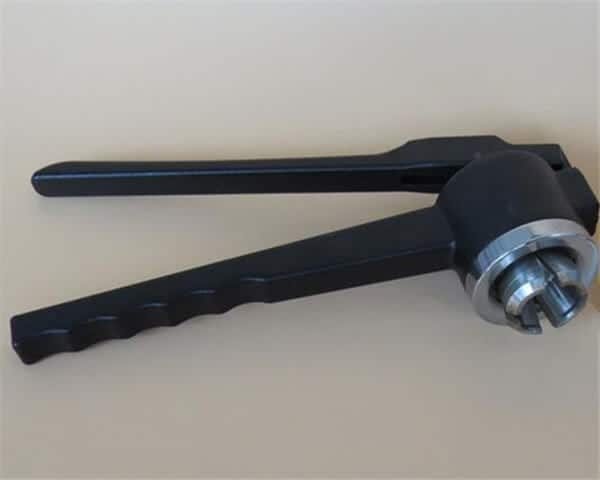

If you’ve ever stared at a crimp-sealed vial and wondered how to get the aluminum cap off without slicing your fingers, you were looking for a decapper. It’s a small hand tool (sometimes called a decrimper or decapping plier) that removes the metal crimp seal from glass vials cleanly and safely.
Quick answer: A vial decapper is a tool that grips and removes the crimped aluminum seal from a vial. You need one if you regularly open crimp-cap vials, to recover and clean reusable glass vials, replace septa, or access samples sealed for storage or sterility. If your lab runs screw-cap vials, you don’t need one; those open by hand. Prices are low and the tool saves your fingers and your vials.
—
Here’s how to tell whether a decapper belongs on your bench.
Why Crimp Caps Need a Tool in the First Place
A crimp cap isn’t screwed on. It’s mechanically deformed around the vial neck by a crimper, which is exactly why it seals so well. That permanent deformation keeps the seal airtight, holds pressure, and makes the closure tamper-evident. The flip side: you can’t just twist it off.
Crimp caps show up wherever a strong, reliable seal matters: headspace and GC vials, sterile pharmaceutical vials, and long-term sample storage. When the cap has to survive temperature swings or hold a sample for months, the crimp’s permanent grip is a feature. When you want the sample back out, or the vial back in service, that same grip is the problem a decapper solves.
If you’re deciding between cap styles in the first place, my crimp top vs screw top vs snap top comparison covers the trade-offs, including why HPLC autosamplers mostly standardized on screw caps you can open by hand.
What a Decapper Does (and the Two Main Styles)
A decapper works by gripping the aluminum seal and peeling or pushing it off the glass neck without touching the contents. There are two broad designs:
Decapping pliers. These look like heavy pliers with curved jaws sized to a specific cap diameter. You position the jaws under the crimped edge and squeeze; the tool strips the seal off in one controlled motion. Smaller sizes, like 11 mm, typically grip around the neck and pull the whole cap up; larger sizes, like 20 mm, pinch the cap’s sides and push it off the vial. Tool makers like Prime Lab Med describe the same three-step routine for their decapper pliers: set the vial squarely in the jaws, press firmly, and lift the seal away.
Manual decrimpers. These are forged pliers with a fitted gripping surface, and they come in two flavors: decrimpers that grip around the top of the seal and pry upward, and decrimping pliers that you place squarely on top of the seal and squeeze. Thermo Scientific’s manual crimpers, decrimpers and decrimping pliers line covers sizes from 8 mm up to 32 mm and is explicitly designed to remove seals “with minimized risk of damage” to the vial rim.
The common thread: match the tool size to the cap. A decapper sized for 11 mm seals won’t grip a 20 mm headspace cap correctly, and the wrong size slips or applies uneven pressure to the glass.
When You Genuinely Need One
Let me give you the use cases where a decapper earns its spot in the drawer:
Reusing glass vials. If you clean and reuse crimp-style vials, the decapper is step one; you can’t wash a vial you can’t open. My guide on reusing HPLC vials walks through whether reuse makes sense and how to do it safely, and the decapper is the tool that makes that workflow possible.
Replacing septa. A crimp cap is single-use by design; when the septum wears out, you remove the old seal with a decapper, drop in a fresh septum, and re-crimp. Labs doing long stability studies re-cap vials this way between time points.
Then there’s sample access. Some samples arrive crimp-sealed (pharmaceutical standards, serum vials, archived material), and the only way in is through the seal. A decapper opens them without shattering the neck or contaminating the contents.
Headspace and GC work. Crimp vials dominate this space, and labs that rework or re-analyze samples keep a decapper next to the crimper. If your vials are crimp-style, you almost certainly need both tools.
When You Don’t Need One
Here’s the honest counterpoint: a large share of modern HPLC autosampler work runs on screw-cap vials, and those open with a quarter turn of the wrist. If your lab is all screw caps, a decapper is dead weight.
The same logic applies if you only use snap caps or if you never reuse vials. In those workflows the crimp seal never needs to come off, because the vial is discarded after one use.
The deciding question is simple: do you ever need the seal off a crimped vial while keeping the vial or its contents intact? Yes → buy a decapper. No → skip it.
Choosing the Right Decapper
If you’ve decided you need one, the selection is refreshingly simple:
1. Match the cap size. Know your cap diameter: 8, 11, 13, 20, or 28 mm are the common ones. Buy the decapper that matches the caps you actually open. Some pliers handle two sizes, but dedicated sizes grip best. 2. Choose pliers vs decrimper by feel. Decapping pliers are the everyday workhorse for stripping aluminum seals. A decrimping head placed on top of the seal is gentler on the vial rim and a good pick when you’re opening many vials or working with thin-walled glass. 3. Buy steel. Look for stainless or forged steel construction that survives autoclaving and solvent exposure. Cheap tools bend after a few dozen caps. 4. Consider volume. Opening one vial a week? A basic plier is plenty. Opening trays of vials? A bench-mounted or electric decapper saves your hands.
Using a Decapper Safely
The tool removes the danger of prying with a screwdriver, but the aluminum seal itself is still sharp. A few rules I follow:
- Wear safety glasses and heavy gloves; aluminum edges cut easily and glass can chip.
- Work on a stable surface and keep fingers below the crimped edge.
- Don’t twist or jerk the tool; steady pressure removes the seal without shattering the neck.
- Dispose of removed seals in a sharps container. Sources that cover safe vial cap removal are unanimous: the detached metal ring is a puncture hazard and doesn’t belong in the regular trash.
Conclusion
A vial decapper is one of those tools you don’t think about until the day you need to open a crimped vial and reach for a screwdriver. If your lab reuses glass vials, replaces septa, works with headspace or GC crimp vials, or handles crimp-sealed samples, a correctly sized decapper belongs on your bench; it protects your fingers, your samples, and the vials themselves. If your workflow is all screw caps and single-use vials, you can skip it entirely. Match the tool to your cap size, buy steel, and treat the removed seals as sharps. And if you’re weighing whether screw or crimp closures fit your lab better in the first place, my HPLC vial neck types guide is the place to start.
Frequently Asked Questions
What is the difference between a decapper and a decrimper?
The names are used interchangeably for tools that remove crimped seals. Decapping pliers generally grip and strip the seal off, while a decrimper or decrimping plier places a head on top of the seal and squeezes it off with less stress on the vial rim.
What size decapper do I need?
Match the tool to your cap diameter: 8, 11, 13, 20, 28, and 32 mm are the common sizes. Check the caps you actually use and buy the matching size; an undersized or oversized tool slips and can damage the vial.
Can I open a crimp vial without a decapper?
You can pry the seal off with heavy pliers, but it’s slower, riskier, and more likely to shatter the glass neck or cut you. A correctly sized decapper removes the seal cleanly in one motion.
Are crimp vials reusable?
The vial itself can be reused if it’s cleaned properly, but the crimp cap is single-use; you remove it with a decapper, clean the vial, add a fresh septum, and re-crimp with a new seal.
Do screw-cap vials need a decapper?
No. Screw caps open by hand and the cap can be reused. That’s one reason HPLC autosamplers largely standardized on screw-cap vials, while headspace, GC, and sterile pharmaceutical work still rely on crimp seals.