
# Battery and Energy Testing Lab Consumables: The Complete Guide
Battery labs go through consumables that most procurement catalogs don’t even list. Coin cell cases, separator disks, low-moisture vials, Karl Fischer reagents. I’ve supplied these labs for years, and this guide covers what they actually buy and how to choose each item well.
Battery testing lab consumables are the disposables behind cell R&D and QC: coin cell cases and CR2032 parts, electrode punchings, low-moisture vials and bottles for electrolyte, Karl Fischer reagents, crucibles, and filters for slurries and digests. Moisture control and metal cleanliness drive most buying decisions.
Below I break down each category, what goes wrong when the cheap option shows up, and the specs I’d check before signing any purchase order.
What Battery and Energy Testing Labs Actually Do
Before you can buy well, it helps to know what the bench work looks like. Two environments dominate: research labs and production QC labs. Their consumable needs overlap, but not completely.
R&D labs: coin cells and material screening
University groups and corporate R&D teams screen new cathode and anode materials. The workhorse is the coin cell, usually the 2032 format (20 mm diameter, 3.2 mm thick). A researcher mixes a slurry, coats it onto foil, punches out electrodes, and assembles dozens of half cells inside an argon glovebox. Then the cells cycle for weeks on battery cyclers while the team watches capacity fade.
Everything that touches the cell becomes part of the experiment. The case, the spring, the gasket, the separator, the electrolyte. If any of them carry water or metal contamination, the data lies.
QC labs: production and field returns
A QC lab has different rhythms. Incoming raw material checks. Electrolyte batch release. Elemental impurity testing on cathode powder by ICP-OES or ICP-MS. Moisture release testing on every electrolyte lot, often by coulometric Karl Fischer titration. Add aged-cell teardowns when a field failure lands on their desk, and safety testing (nail penetration, thermal cycling) with its own pile of fixtures and consumables.
The volumes here dwarf R&D. One electrolyte plant QC lab I work with runs hundreds of KF titrations a week. For them, consumable price and lot-to-lot consistency matter more than anything else. A reagent lot that behaves differently from the last one costs them a day of requalification.
The common thread
Both lab types live and die by two things: water and metals. Keep water out of the electrolyte, and keep stray metal out of every sample. Almost every buying decision in this guide traces back to one of those two.
Coin Cell Consumables: Small Parts, Big Consequences
A coin cell looks trivial. A few stamped metal pieces pressed together. But the tolerances are tight, and the parts touch your active material directly.
The CR2032 ecosystem
A typical lithium half cell build uses:
• 2032 cases (bottom, with a raised platform) and caps (top, with or without a gas vent hole)
• Spacers, usually 15.5 or 16 mm stainless steel or nickel discs
• Springs or wave washers that maintain pressure after the crimp
• Gaskets, most often polypropylene, that seal the crimp
Buy these as a matched set from one supplier where you can. Mixed parts from different vendors crimp unevenly, and a leaky cell loses electrolyte slowly, then loses capacity even more slowly. You’ll blame the cathode material first. I did, early in my career. The material was fine. The gaskets were soft.
For a clear walk-through of what these cells can tell you (capacity, voltage limits, cycle behavior), Gamry’s coin cell testing application note is one of the better free references, and it shows exactly how much rides on cell construction quality.
What I’d check before ordering
Case flatness matters more than the spec sheet suggests. A warped case face gives you uneven contact pressure, which shows up as noisy impedance data. Ask the supplier how they stamp the cases, and whether they clean them after stamping. Stamping oils and polishing compounds leave residue that reacts with electrolyte.
On springs: resistivity matters. Cheap springs work, in my experience, until you run EIS at low impedance. Then contact resistance drifts and your spectra shift between cells. Most labs get away with it until they don’t.
Electrode punchings and dies
An electrode punching press and a good die punch 12 to 16 mm discs from coated foil. The consumable angle here is the blade and the backing. Blades dull, and dull blades burr the electrode edge. Burrs pierce separators, and pierced separators mean shorted cells, which mean mysterious capacity loss and a very long week of troubleshooting.
I once saw a customer scrap three weeks of cycling data because a punching die had gone dull. Every cell on that rack had micro-shorts from separator punctures at the electrode edge. New die, fresh batch of cells, clean curves. Three weeks of researcher time, gone, over a blade.
Replace dies on a schedule, not on failure. Log it.
Separator handling
Battery separators (polyethylene or polypropylene films, often 16 to 25 µm thick) arrive as disks or rolls. Handle them with powder-free nitrile gloves and clean tweezers only. Skin oils block ion transport in a spot, and the cell underperforms in a way no one can explain later.
Buy separators pre-cut as disks if your volume justifies it. Cutting your own with a biopsy punch works fine for small runs, but the cut edge quality varies with blade wear, same as electrodes.
A note on assembly pressure
Cell performance depends on assembly pressure, and labs argue about the right number. Somewhere in the range of a 2032 coin cell pressed with 5 to 20 MPa on the electrode stack is typical for many cathode studies, but the honest answer is that it depends on your system. Whatever you choose, keep the parts consistent so pressure stays repeatable. That’s a consumables decision as much as a protocol decision.
Electrolyte Handling: Where Moisture Runs the Show
Electrolyte is the most moisture-sensitive material in the building. The salt inside, usually LiPF6, reacts with trace water and forms hydrofluoric acid. HF then attacks the cathode and dissolves transition metals out of it, which degrades capacity and poisons the anode.
The chemistry is well documented. A paper in ACS Applied Materials & Interfaces describes how trace moisture causes hydrolysis of LiPF6 and deteriorates cell stability, with HF scavenging needed to protect the cathode ACS Applied Materials & Interfaces study. And an industry specification of water below 20 ppm (sometimes below 10 ppm) is now common practice in battery manufacturing, according to a Nature Communications review on reproducible electrolyte preparation.
That number, 20 ppm, is the reason half the consumables in this section exist.
Consumables that go into the glovebox
A battery glovebox runs at a dew point of -60 °C or better, meaning less than 1 ppm water in the atmosphere. Anything you carry in must not bring moisture with it. That changes how you buy everything:
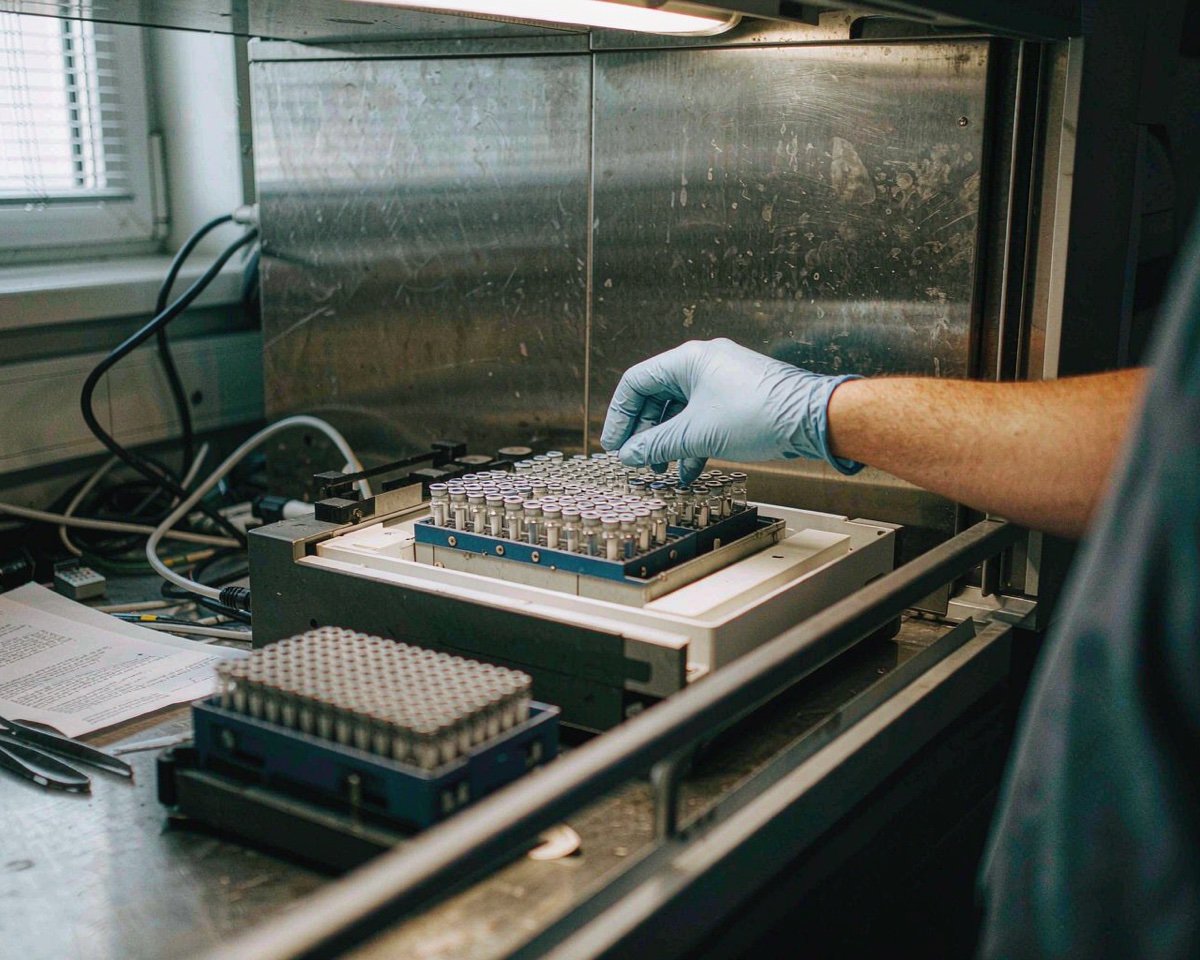
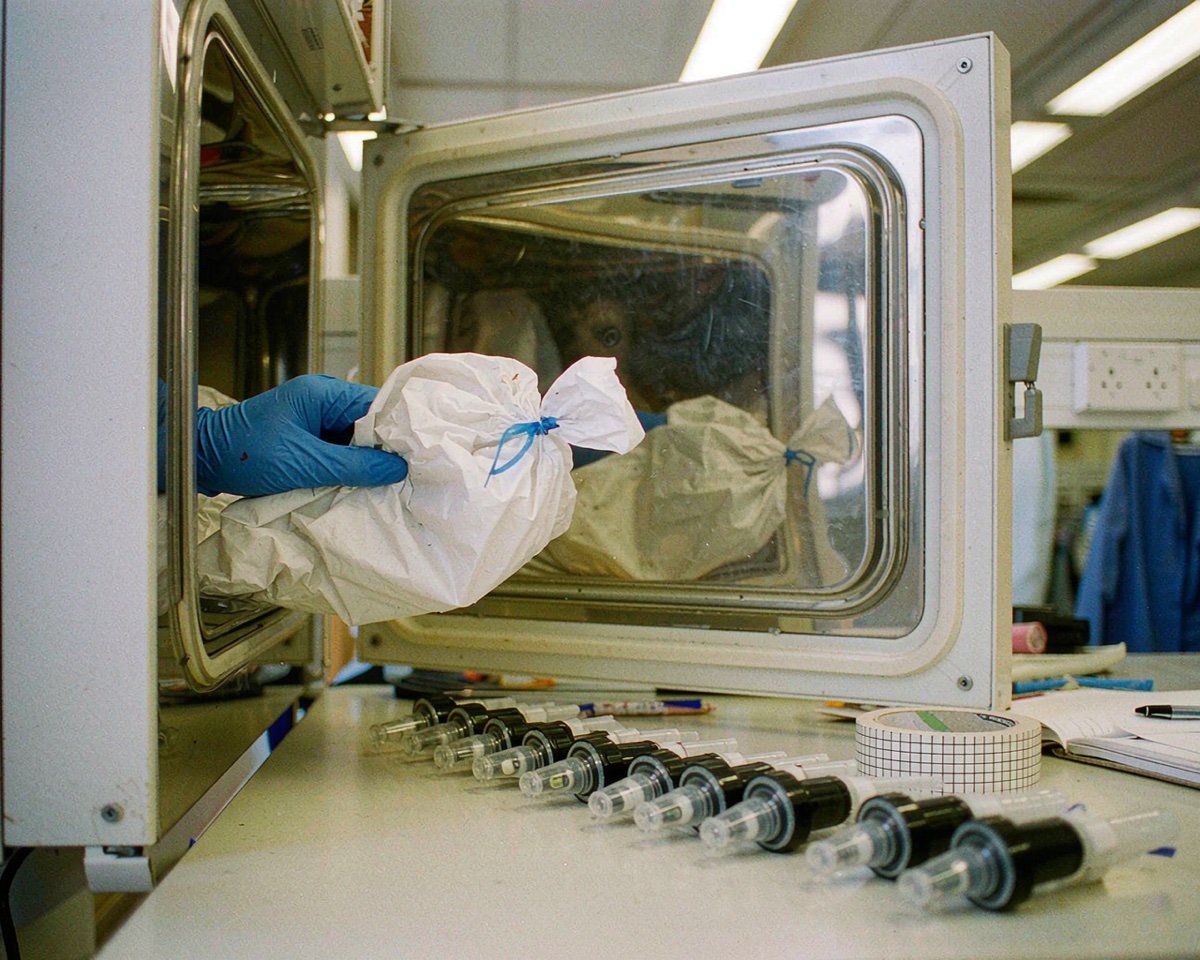
• Glass vials and bottles should be dried in an oven (120 to 200 °C overnight is typical) and transferred in warm, or cooled under vacuum or in an antechamber. Warm glass plus a -60 °C dew point is the standard pairing.
• Plastic consumables (pipette tips, weighing boats, spatulas) absorb water from room air. The Nature review specifically calls out drying any container or material that will contact electrolyte, down to weighing paper and stirrers.
• Syringes and needles for electrolyte transfer should be oven-dried and used straight from the antechamber.
In my experience, the unglamorous failure is the common one. Someone loads room-air packaging into the glovebox at 9 a.m., and by noon the oxygen and water readings on the box are drifting up. The box recovers. The electrolyte doesn’t.
Vials and bottles for electrolyte
For storing and dispensing electrolyte, glass wins on inertness. Type 1 borosilicate with a PTFE-lined cap is the default. Electrolyte solvents like DMC and EMC will attack some plastics, and carbonate solvents can wick into poorly sealed caps.
That said, polypropylene bottles have a real place when breakage risk matters, like shipping or crowded glovebox shelves. If you’re weighing the tradeoffs, I wrote a full comparison of glass vs plastic reagent bottles that covers solvent compatibility in detail.
One more practical point: wide-mouth bottles beat narrow-neck ones for anything you’ll fill inside a glovebox, where you’re working through glove ports. Fumbling 10 mL of electrolyte into a narrow neck at arm’s length is a skill nobody needs to develop.
Aluminum and stainless in contact with electrolyte
Labs storing electrolyte long-term should stick to glass or PTFE-lined containers. Aluminum reacts with carbonate electrolytes over time (aluminum alkoxide formation), which is why cell cases for lithium chemistry avoid bare aluminum contact with electrolyte. Stainless is better but not immune at elevated temperature. Glass and PTFE are boring, and boring is the goal here.
Filtering electrolyte before cell filling
A practice worth borrowing from production labs: filter your electrolyte through a 0.2 µm PTFE syringe filter before filling coin cells, especially electrolyte that’s been opened more than once or prepared in-house. The filter catches particles from vial wear, salt crystals that precipitated during storage, and anything that drifted in from the antechamber.
Particles in a coin cell do the same damage as electrode burrs. They create local current densities, seed dendrites, and turn a clean cycling study into a scatter plot. Use a small-diameter filter (13 or 25 mm) to keep hold-up volume low, since electrolyte is expensive and you don’t want 1 mL of it soaking into a big filter housing. Pre-rinse the filter with a little dry solvent if your method is sensitive to filter wetting agents.
Measuring Moisture: Karl Fischer Consumables
Every electrolyte release decision runs through Karl Fischer (KF) titration. Coulometric KF measures water down to the microgram level, which is exactly the range battery labs need.
Why regular KF reagents fail on electrolyte
Here’s the trap. Standard KF reagents are methanol-based. Battery electrolytes contain additives like vinylene carbonate (VC), fluoroethylene carbonate (FEC), and lithium salts like LiBOB that react with alcohols. The reaction generates drift, delays the endpoint, or produces false water readings.
Alcohol-based KF reagents can give side reactions with VC, FEC, and borate additives, while alcohol-free acetonitrile-based formulations titrate these samples accurately; Metrohm’s Karl Fischer reagent line is where most battery labs start when they need a coulometric reagent that plays nicely with electrolytes.
So the first buying decision is the reagent itself. If your electrolyte contains VC or FEC (most commercial formulations do), an alcohol-free coulometric reagent is not optional. It’s the difference between a number and a guess.
The supporting consumables
Around the reagent, a coulometric KF workflow consumes:
• Water standards for verifying the cell, and for battery work these should be alcohol-free too (the Honeywell paper shows alcoholic standards inflate drift)
• Molecular sieve and desiccant for the drying tube on the titration cell
• Diaphragms or frits for the generator electrode, depending on your cell design
• Oven samples vials and septa if you use a KF oven for solids like separator tape or cathode powder
Molecular sieve is the quiet one. Old sieve lets ambient moisture bleed into the cell, and your drift reading climbs past the 10 or so µg/min you want. Replace sieve on schedule. A drift of 2 µg/min is fine; 20 µg/min means your low-ppm results are drifting with it.
For a deeper dive on this workflow, see my guide to Karl Fischer titration consumables.
Sample handling before the titrator
KF is unforgiving about handling. The sample between the glovebox and the titrator picks up water from air in minutes. Use sealed vials with PTFE/silicone septa, crimped or screw closures with good seals, and run the sample the same hour you draw it. If you only change one thing this week, stop leaving opened electrolyte vials on the bench “for just a minute.” That minute costs about 50 ppm of water on a humid day.
Metals Analysis: Sample Prep for ICP-MS and ICP-OES
Cathode purity determines battery life, so elemental impurity testing is non-negotiable in this industry. ICP-OES handles the major elements (nickel, cobalt, manganese, lithium) and the common impurities. ICP-MS reaches lower for trace contamination.
Thermo Fisher’s battery analysis compendium shows what modern QC looks like: their ICP-MS work ran 51 elements in cathode solutions at up to 5.3% total dissolved solids using argon gas dilution, and their ICP-OES note measured 23 impurity elements in lithium iron phosphate. Impressive numbers, and none of it works if the sample prep consumables add contamination of their own.
The consumables that matter for metals work
Metals analysis has a golden rule: the container can add more of your analyte than the sample contains. At sub-ppb reporting levels, a vial that leaches boron or sodium ruins the result silently.
• Sample vials: Type 1 borosilicate for most metals work, or polypropylene for boron, silicon, and alkali traces where glass leaching matters. Pre-cleaned or “trace metal grade” vials earn their price here.
• Digestion vessels: PTFE or PFA microwave digestion vessels for cathode powder, since nitric acid digests at temperature will etch glass and pull boron and sodium out of it.
• Syringe filters for the final digest: PTFE membranes for aggressive solvents and acid matrices. A filter that sheds fibers or extractables shows up as spurious elements.
• Centrifuge tubes: polypropylene, checked for lot cleanliness if you’re working below ppb.
I covered the full workflow in my guide to ICP-MS sample preparation consumables, including which matrix blanks to run when you change vial lots.
The filter is part of the sample
One point worth repeating, because I see it get skipped: whatever filter touches your digest becomes part of the sample chemistry. A nylon membrane can bind metal ions and drop recoveries. PTFE is the safer choice for acid digests, but it’s hydrophobic, so pre-wet it with a little organic solvent or buy pre-wetted versions.
Run a filter blank on every new lot. Ten minutes of work that protects every result after it.
Filtering Slurries and Cathode Samples
Battery slurries are hostile to filters. Cathode slurry is a mix of active material (NMC or LFP powder), conductive carbon, binder, and solvent (NMP usually). It’s dense, sticky, and abrasive.
Matching the membrane to the mess
For slurry samples where you need a clean filtrate for viscosity or solids testing, glass fiber prefilters in front of a membrane filter are the standard pairing. The glass fiber catches the bulk solids; the membrane polishes. A 0.45 µm PTFE or PP membrane usually suffices for slurry supernatant work; reserve 0.22 µm for analyses that demand it.
Membrane chemistry matters as much as pore size. NMP dissolves several common membranes, so check compatibility before you buy. My guide on nylon vs PTFE vs PVDF vs PES filters walks through solvent resistance membrane by membrane, and it’s directly applicable to NMP work.
Ceramic crucibles and thermal work
Labs doing residual carbon, ash content, or sintering studies use ceramic (alumina) crucibles. Buy more than you think you need. Crucibles crack in furnaces, and a cracked crucible mid-run at 900 °C is not a small problem. Alumina crucibles also need pre-firing or cleaning between uses to avoid cross-contaminating samples with residue from the last one.
Cleanliness: The Contamination Nobody Sees
The coin cell industry has a saying about impurities: you can’t cycle-test your way out of a dirty cell. Metallic particles from consumables (tweezers shedding, punches smearing, contaminated spacers) create soft shorts and accelerate degradation.
Cleanliness specs on consumables for this industry are stricter than general lab supply. What I’d ask any supplier:
• How are coin cell components cleaned after stamping, and is there a certificate for it?
• What’s the packaging? Coin cell parts in open poly bags shed and collect dust. Sealed, double-bagged, clean-room packed parts cost slightly more and prevent exactly the contamination you can’t trace later.
• Can they provide a residual metals certificate (acid-washed glassware, ICP-checked vials)?
In my experience, this is where budget suppliers separate from serious ones. Anyone can stamp a CR2032 case. Very few suppliers control what’s on the surface of it.
A plain opinion, since you asked for one: I’d rather pay 20% more for coin cell parts with cleaning certificates than buy the cheapest cases and rerun a single failed experiment. One repeat study wipes out years of savings.
Handling habits that protect the parts
Powder-free nitrile gloves, changed often. Ceramic or PEEK tweezers where metal contact is a concern (stainless tweezers are fine for cases but can scratch electrode coatings). And a dedicated storage box for assembled-cell parts, closed when not in use, because the dust in a battery lab is often conductive.
Moisture Control Beyond the Glovebox
Not everything happens inside the argon box, and that gap is where moisture sneaks in. A few controls worth building into consumables purchasing:
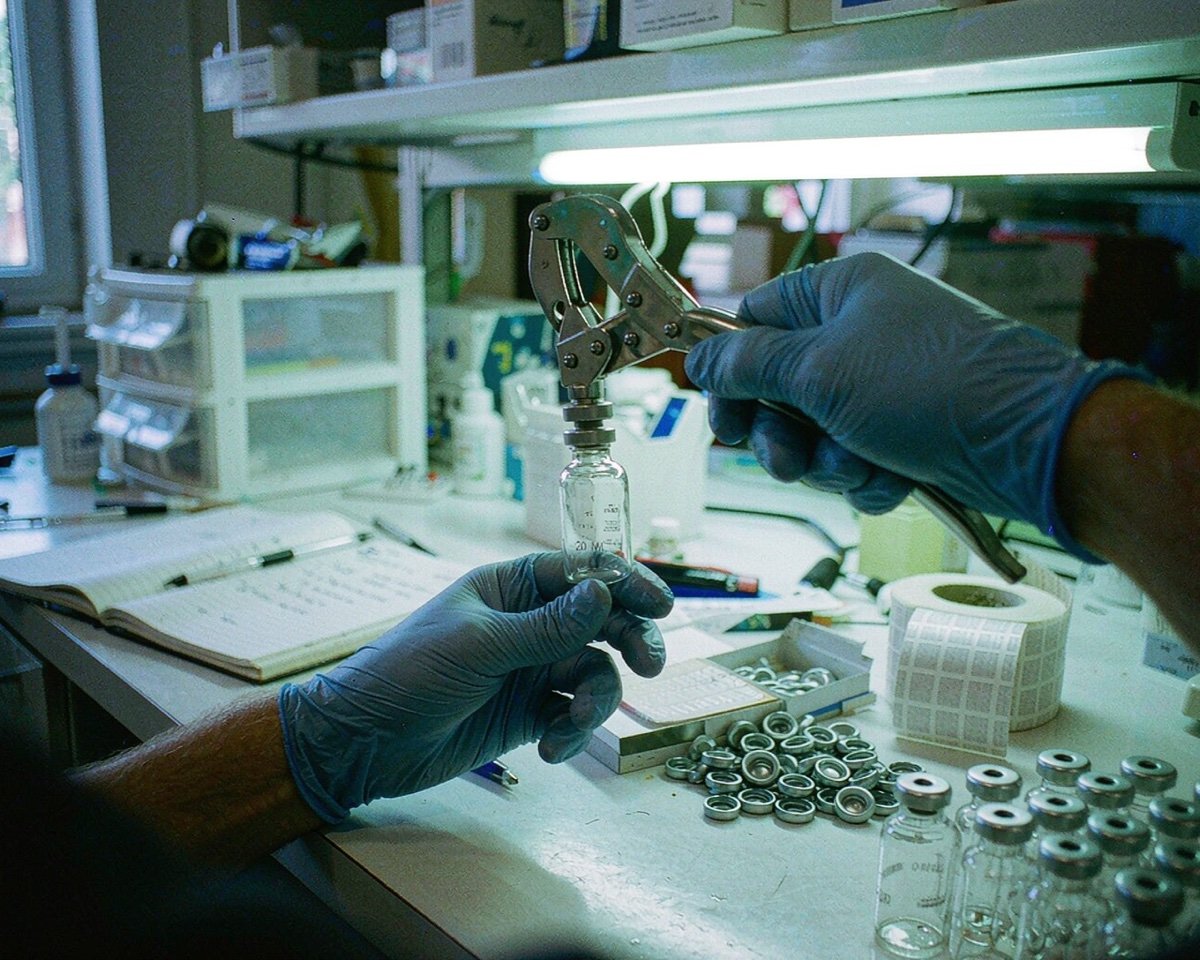
Sample transport between buildings or sites: use vacuum-formed sealed vials with induction-sealed caps for electrolyte and electrolyte-soaked separator samples. An induction seal is the only closure that survives an hour in a courier van with confidence.
Bench time: define a maximum open-bench exposure for any moisture-sensitive material and write it into the SOP. Five minutes, not “as quick as possible.” Vague rules get ignored; numbers get followed.
Desiccant storage: sealed cabinets or desiccators with indicator silica for separators, dried vials, and KF consumables. Indicator beads turn from blue to pink (or orange to green, depending on brand) and tell you when to regenerate. Cheap insurance.
Dry rooms: production-adjacent labs often work in dry rooms at dew points between -40 and -60 °C. Consumables packaging rated for cleanroom or dry-room use (double bagged, low particulate) is worth specifying in tenders, and your purchasing team should demand lot certificates along with it.
Sourcing and QC: What to Ask a Consumables Supplier
Battery labs buy some unusual consumables, and quality problems are expensive in ways the invoice never shows. When I vet a supplier for coin cell or electrolyte-handling parts, I ask these questions:
1. Lot traceability: can they trace every case, gasket, and membrane back to a production lot, with certificates on file?
2. Cleaning process for metal parts: ultrasonic? Solvent? What’s the acceptance test?
3. Moisture control in packaging: is anything shrink-wrapped or desiccant-packed, or does it ship in room-air packaging that becomes your glovebox’s problem?
4. Consistency across lots: what’s their process capability on critical dimensions (case depth, gasket thickness)?
5. Documentation: CoA per lot, and will they supply samples for incoming validation?
That last point deserves emphasis. A supplier confident in their process ships free samples without flinching. Validate incoming lots against your old ones, especially for filters and KF reagents where lot variation is real.
Pricing and logistics matter too, of course. Most battery-grade consumables now ship from Asia, and lead times stretch during capacity crunches. Order coin cell parts and KF reagents with buffer stock; both have long enough lead times to stall experiments when supply tightens.
One more habit that pays off: keep a simple incoming-inspection log. Date received, lot number, what you checked (dimensions on a case, drift on a KF reagent, blank on a filter), pass or fail. When something goes wrong three months later, that log turns a mystery into a two-minute lookup. Labs that skip it end up re-running experiments to find out what they already knew.
A Buyer’s Checklist
Here’s the condensed version of this guide, as a list you can hand to procurement.
Coin cell consumables:
• Matched 2032 case/cap/spacer/spring/gasket sets from one supplier
• Cleaning certificate for all stamped metal parts
• Dimensional tolerances stated on the spec sheet (case depth, gasket thickness)
• Fresh punching dies on a replacement schedule
Electrolyte handling:
• Oven-dryable Type 1 borosilicate vials and bottles, PTFE-lined closures
• Wide-mouth bottles for glovebox filling
• Oven-dried syringes and needles for transfer
• Double-bagged, low-particulate packaging for glovebox loading
Moisture measurement:
• Alcohol-free coulometric KF reagent if your electrolyte contains VC, FEC, or borates
• Alcohol-free water standards for cell verification
• Fresh molecular sieve, replaced on schedule
• Sealed sample vials with quality septa for transport to the titrator
Metals analysis:
• Trace-metal-grade or pre-cleaned vials; polypropylene for boron and silicon work
• PTFE/PFA digestion vessels for acid digests
• PTFE membranes for acid filtrates, with filter blanks on new lots
• Polypropylene centrifuge tubes with verified cleanliness
General:
• Lot CoAs on everything
• Free samples before first bulk order
• Buffer stock on long-lead-time items
Conclusion
Battery and energy testing labs succeed or fail on details that never make it into the methods section. A dried vial. A clean spring. An alcohol-free KF reagent that actually reaches an endpoint. Each one is a small purchase, and together they decide whether your capacity curves mean something.
My advice is simple. Spend the money where water and metals touch your samples, and save it where they don’t. Validate new lots before they reach the bench. And hold suppliers to certificates, not promises, because in this industry the certificate is the product.
If you’re building out sample prep for elemental testing next, start with my ICP-MS sample preparation guide. And if moisture testing is your current bottleneck, the Karl Fischer consumables guide picks up where this one ends.
Frequently Asked Questions
What consumables does a battery testing lab need most?
The highest-volume items are coin cell components (2032 cases, caps, spacers, springs, gaskets), separator disks, KF reagents and molecular sieve, glass vials and bottles for electrolyte, and filters for slurry and digest samples. Electrode punching dies are the wear item most labs forget to budget for.
Why do Karl Fischer reagents need to be alcohol-free for battery electrolytes?
Common electrolyte additives like vinylene carbonate, fluoroethylene carbonate, and lithium borate salts react with the methanol in standard KF reagents. The reactions inflate drift and can delay or block the titration endpoint, so the water result is wrong. Alcohol-free, acetonitrile-based reagents suppress these side reactions.
Can I use regular HPLC vials for electrolyte storage?
Not straight from the box. Room-air packaging carries moisture into the glovebox, and the electrolyte picks it up immediately. Use Type 1 borosilicate vials with PTFE-lined caps, oven-dry them overnight, and transfer them warm through the antechamber. The vial itself is fine; the default packaging is not.
How much water is acceptable in lithium-ion battery electrolyte?
The battery industry commonly specifies below 20 ppm water, and some manufacturers push below 10 ppm. At those levels, trace water hydrolyzes the LiPF6 salt, forms HF, and corrodes the cathode, which shortens cycle life. Coulometric Karl Fischer titration is the standard method for verifying the spec.
Are coin cell cases from different suppliers interchangeable?
Dimensionally, mostly yes, since 2032 dimensions are standardized. In practice, crimp behavior, surface cleanliness, and spring force vary between suppliers, and those differences change cell-to-cell consistency. Buy matched sets from one source and validate a new supplier’s parts against your current ones before switching.