
# What Consumables Does Flash Chromatography Need?
Flash chromatography looks cheap from a distance. No HPLC-grade column at 800 dollars, no exotic detector. But walk through a purification-heavy synthetic or natural products lab and you will find a shopping cart’s worth of consumables going out the door every month: cartridges, dry-load media, TLC plates, collection tubes, and a steady river of solvent. I have budgeted for two of these labs, and the consumable line item always surprises new managers.
Flash chromatography needs prepacked cartridges (usually 40-63 µm silica or a bonded phase), a sample loading method such as dry-load silica, TLC plates for method development, collection tubes or flasks, and clean solvent. Guard cartridges and fraction racks round out the list.
Below is each item in order of how much it affects your results, with the buying decisions that actually matter.
The cartridge is the main consumable
The prepacked cartridge replaced hand-packed glass columns years ago, and for good reason. Modern flash cartridges are disposable polypropylene barrels filled with media and held in place by polyethylene frits, often 20 µm at each end. The technique itself is a pressurized form of column chromatography that runs silica particles around 250-400 mesh with gas or pump pressure in the 10 to 15 psi range on classic setups, with modern instruments pushing higher as this industry overview of flash chromatography notes. Typical normal-phase media is irregular silica in the 40-60 µm range, which balances resolution against backpressure. Spherical silica packs more uniformly and gives sharper peaks, and deactivated silica improves peak shape for amines and acids that tail on untreated silica. Suppliers offer far more than plain silica. Phenomenex’s Claricep flash columns, for example, come in irregular and spherical media with C18, C8, amino, cyano, diol, phenyl, and HILIC chemistries, in cartridge sizes from 4 g to multiple kilograms. Agilent’s Mega Bond Elut Flash cartridges use the same scaled-up SPE cartridge format with silica, C18, SCX, and Florisil phases. In practice, most labs keep a stock of silica plus one reversed-phase option and add specialty media only when a separation demands it.
My default advice: if your compounds are amines or acids and you see tailing on TLC, spend the extra money on deactivated silica cartridges. The premium is small next to the price of re-running a purification.
How big should the cartridge be?
Cartridge size follows your crude mass and how hard the separation is. A common rule of thumb for an easy separation is a sample-to-silica ratio around 1:20 to 1:50, meaning 200 mg of crude on a 10 g cartridge, and difficult separations can want 10 times more silica per gram of sample. Overloading shows up as a smeared orange band and fractions that all look the same on TLC.
I once watched a grad student load roughly 500 mg of dark crude onto a 12 g cartridge because the target spot “looked small.” The whole run coeluted into one blob and he lost the day anyway. If you only change one habit, weigh the crude before you pick the cartridge.
Getting your sample onto the column
You have two options, and each has its own consumables.
Liquid injection is fastest if your crude dissolves cleanly in a weak solvent (hexanes or heptane for normal-phase work). You inject through the system’s sample port and skip extra prep. The catch: if your compound only dissolves in a strong solvent like methanol or DMSO, injecting it can wreck the separation, because a strong solvent band carries everything down the column together.
Dry loading solves this problem outright. You adsorb the crude onto coarse silica or Celite, evaporate the solvent, and load the free-flowing powder into a load cartridge (a small pre-fritted barrel that screws in ahead of the main cartridge). It costs 10 minutes and a few cents of media, and it fixes the strong-solvent problem completely. In my experience, labs that run a lot of plant extracts or polar crude end up using dry load on half their runs. If your crude is gummy or oily, dry load is not optional; it is the difference between a separation and a mess.
TLC plates: the unglamorous method-development tool
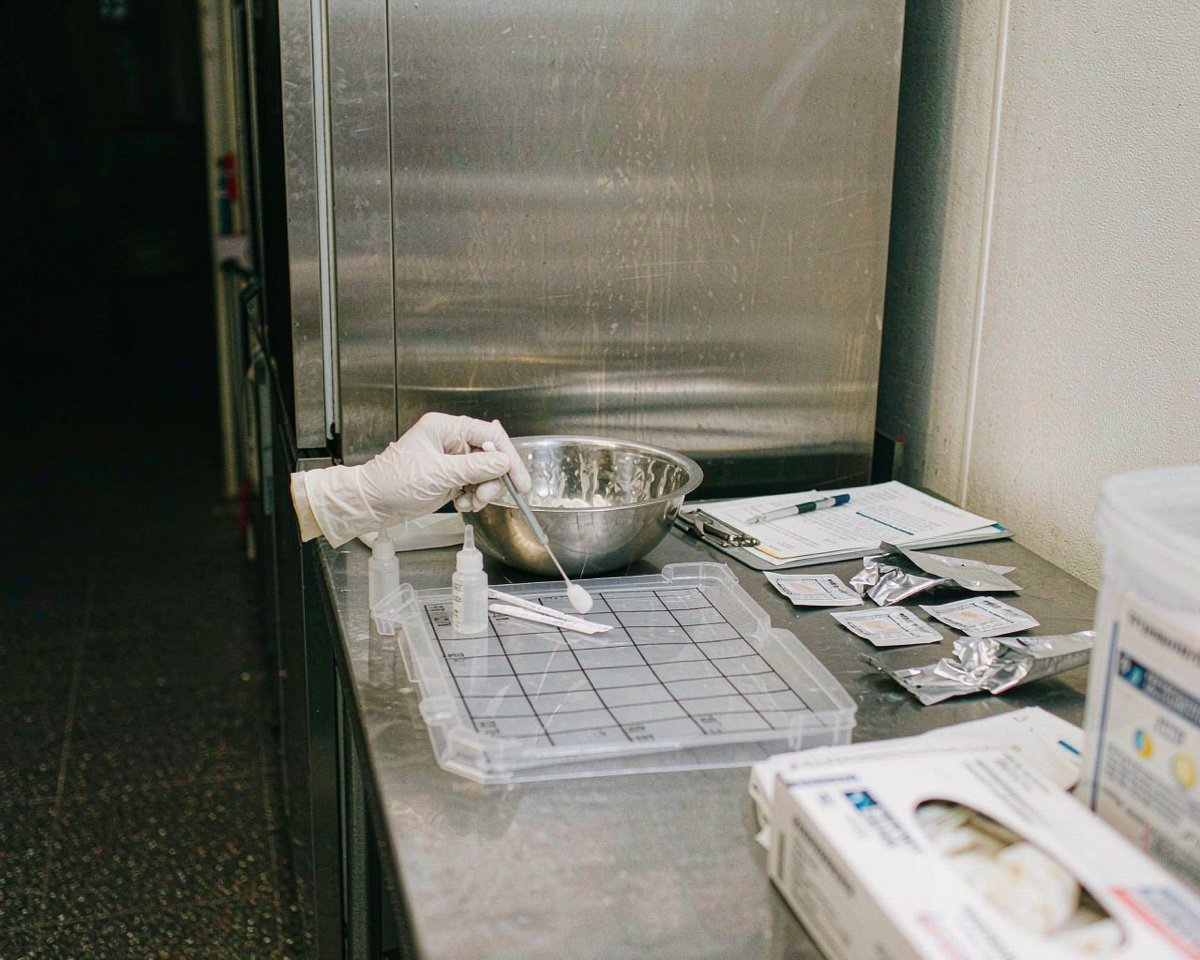
Every good flash run starts on TLC. Thin-layer chromatography plates (silica on glass or aluminum, usually with a UV254 indicator) tell you which solvent gradient will work before you commit 200 mL of solvent to a cartridge. The general trick is to tune your TLC solvent until the target spot sits around an Rf of 0.2 to 0.35, then scale that solvent system into the flash gradient. A rack of plates costs almost nothing and saves cartridges, which are the expensive part.
Dedicated flash solvents also live here. UV-active impurities hide in cheap solvent, and a baseline wiggle from stabilizer-contaminated ether has cost more than one lab a re-run. If your budget only stretches to one premium reagent, make it the solvent.
Collection tubes, racks, and the small stuff
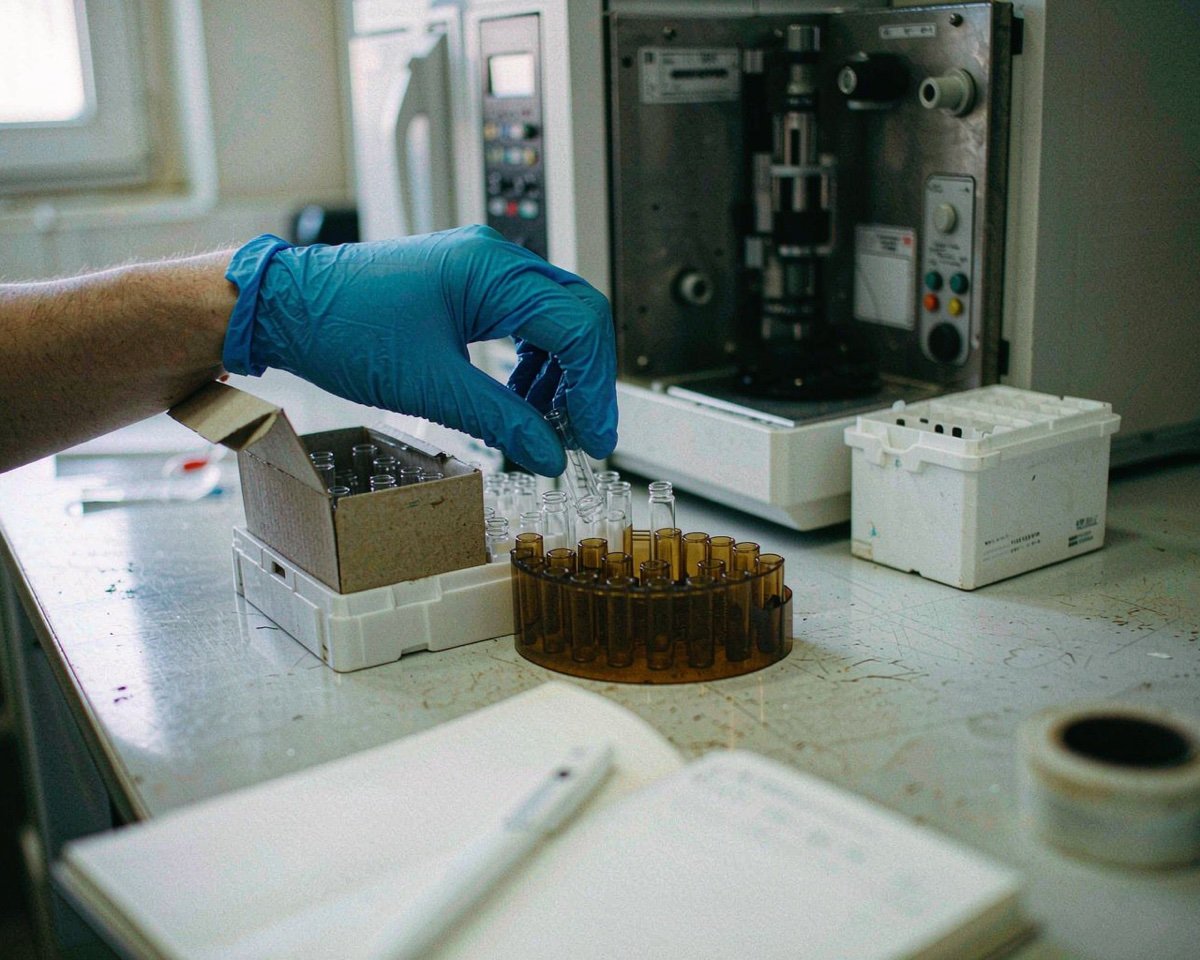
Automated flash systems collect fractions into 15 to 20 mL polypropylene tubes (or glass tubes on some systems), dozens per run. You need a healthy stock of them, the correct racks for your instrument, and ideally a second rack so one can be emptied while the next run starts. Manual setups under gravity or low pressure use conical flasks or test tubes and a fraction rack instead.
Then the odds and ends: solvent inlet filters and lines, waste containers with proper labeling, a crimping or sealing tool if your system uses sealed tubes, and gloves you actually like, because you will handle a lot of wet cartridge ends. None of these are exciting. All of them stop a run halfway through if they run out.
If you want a picture of where flash sits among its cousins, our guide to the 5 main types of chromatography puts it next to gravity column work and prep HPLC in one table.
A note on filtering your crude
Do you need to filter samples before flash? Not the way HPLC demands it. The cartridge’s inlet frit (often 20 µm) catches particulates, and dry loading sidesteps the question entirely by binding everything to media. What you should not do is push unfiltered, strongly acidic or basic solutions straight onto a silica cartridge, since dissolved fines and harsh conditions will channel the bed. For samples you do filter, pore size choice follows the same logic as any LC prep, which we cover in our 0.22 vs 0.45 micron filter guide.
Flash is also a natural neighbor to solid phase extraction: if your goal is cleanup rather than purification, the same cartridge format shows up there, just with different media and method logic.
Conclusion
Flash chromatography asks for fewer consumables than almost any other purification technique, but the ones it asks for matter. The cartridge (media chemistry and size) decides whether your separation works. The loading method decides whether your sample survives the intro. TLC plates decide whether you knew what you were doing before you started, and collection tubes decide whether you can keep three runs a day moving. Buy cartridges with some headroom on size, keep dry-load media within arm’s reach, and treat the GGA-style habit of running a TLC plate before every flash the way auditors treat documentation. If you are weighing flash against its lower-pressure cousin, start with our low pressure column chromatography guide, and for the wider equipment picture, our beginner’s guide to column chromatography setup covers the glassware and packing basics that flash inherits.
Frequently Asked Questions
Can I reuse a flash cartridge?
Usually not for anything that matters. Silica capacity drops sharply after the first run and residual crude bleeds into the next one, which is why manufacturers sell them as single-use. Some labs re-run a cartridge for a crude scouting step, but I would not reuse one for a final purification.
What size flash cartridge do I need for 1 gram of crude?
For a straightforward separation, plan on 20 to 50 g of silica per gram of sample, so a 40 g cartridge is a reasonable starting point for 1 g. If TLC shows the compounds moving close together, step up to 80 g or split the load across two runs.
Do I need to degas solvents for flash chromatography?
No. Flash is a medium-pressure, open-collection technique, so dissolved gas does not cause the detector noise or pump cavitation problems it does in HPLC. Just use clean, fresh solvent and keep the inlet line filtered.
What is dry loading in flash chromatography?
Dry loading means pre-adsorbing your crude sample onto coarse silica, Celite, or a dedicated load cartridge, evaporating the solvent, then letting the mobile phase carry the sample onto the main cartridge. It prevents the strong-solvent band from ruining the separation and is standard practice for polar or gummy samples.
Are flash cartridges compatible with different instrument brands?
Most are. The industry has largely settled on Luer-style fittings and a few common cartridge formats, so a single cartridge line often fits systems from several manufacturers. Check the maximum pressure rating of the cartridge against your system before you commit to a brand.