
# What Consumables Does Dissolved Oxygen Testing Need?
Dissolved oxygen looks like the simplest parameter on a water quality panel: stick the probe in, read the number. Anyone who has chased a drifting DO reading at 7 a.m. knows better. The number is only as good as the membrane and the electrolyte behind it.
Dissolved oxygen testing needs four consumable groups: membrane caps and electrolyte for electrochemical probes; Winkler titration reagents; 300 mL BOD bottles with stoppers; and calibration standards such as water-saturated air and zero-oxygen sodium sulfite solution.
Below I’ve split the list into probe-side and titration-side consumables, with replacement intervals and a few buying lessons I’ve paid for myself.
How Dissolved Oxygen Testing Actually Runs
Dissolved oxygen is measured two ways. The Winkler iodometric titration fixes oxygen chemically in the bottle and titrates it. The membrane-electrode method, defined in Standard Methods 4500-O G, uses a probe with an oxygen-permeable membrane and an internal electrolyte, where oxygen is reduced at a cathode; EPA’s DO meter QA bulletin describes both approaches and their quality-control needs. Optical (luminescent) sensors work differently again: they read how oxygen quenches a fluorescent coating on a replaceable cap, with no membrane or filling solution at all.
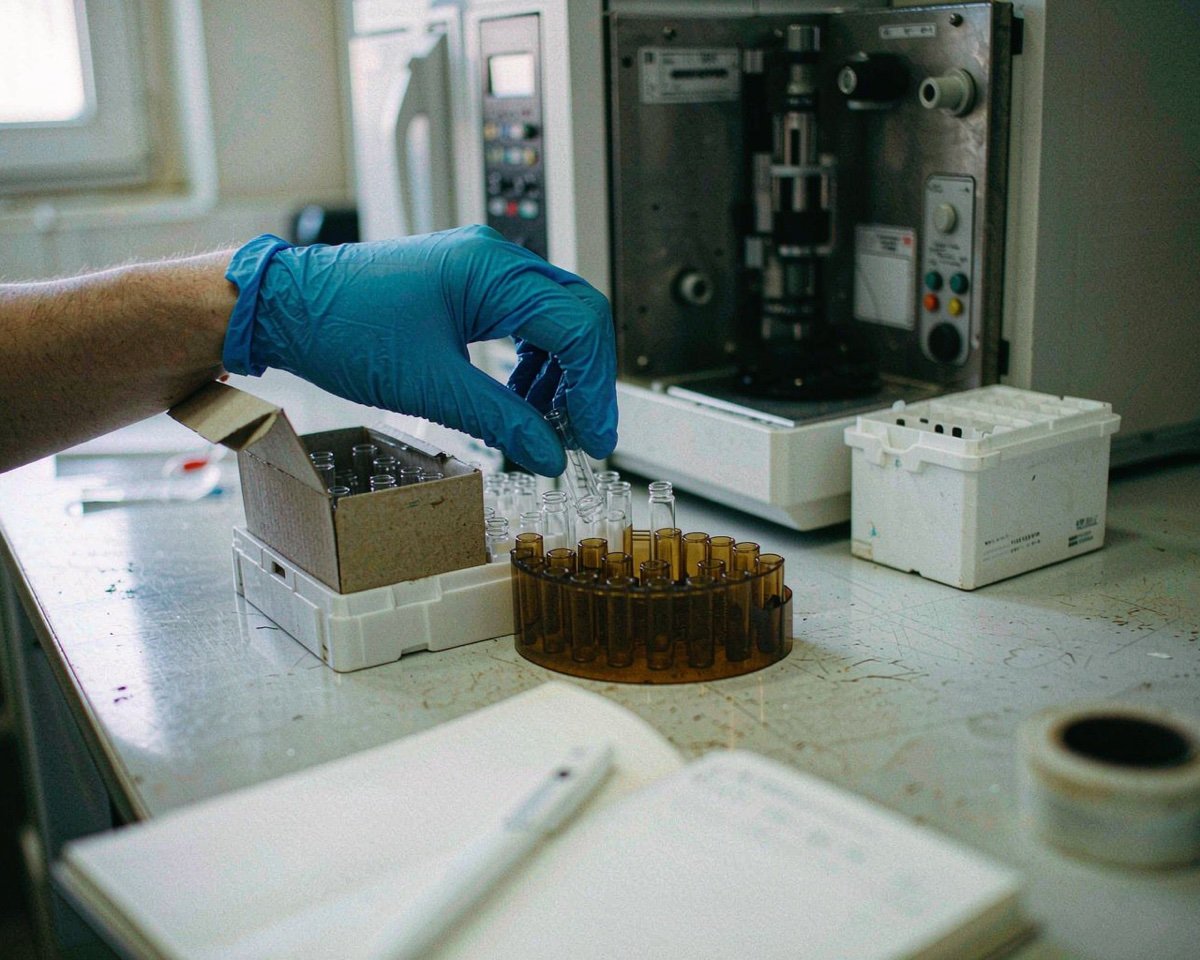
The two methods share the same consumable logic. Something at the sensing surface gets used up, and something glass has to hold the sample without letting air in. If you also run BOD5 testing, the same bottles and much of the same titration kit do double duty, because a BOD test starts and ends with a dissolved oxygen reading inside the same stoppered bottle.
The Probe Side: Membrane Caps, O-Rings and Electrolyte
A polarographic or galvanic probe consumes oxygen at the cathode, so its electrolyte depletes and its membrane stretches, fouls and tears. The standard service items are the membrane cap, the filling electrolyte and the seals. A typical Orion probe maintenance kit bundles exactly that: two membrane caps, a bottle of electrolyte and a polishing disk for the electrode.
Replacing the cap is a small ritual. Fill the new cap with electrolyte and agitate gently to release trapped bubbles. Then screw it on slowly, so pressurization doesn’t bulge the membrane. Thermo’s own sensor user guide also asks you to inspect the O-ring on the sensor mount before every reassembly, because a gritty O-ring leaks and leaks read as drift.
I once lost a full week of BOD5 results because a technician refilled a membrane cap with electrolyte that had been sitting open since the previous summer. The probe still calibrated, sort of. It just never agreed with the Winkler check, and we found out why after the incubator batch had already been scrapped.
Optical probes shrink this list to one item: the luminous sensor cap. No electrolyte, no O-rings on the sensing side, and the meter tracks cap condition by calibration slope. Hach’s LBOD101 manual uses that slope value to flag when the cap is near the end of its service life. The cap still costs real money, so budget it as an annual line item rather than a surprise.
The Titration Side: Winkler Reagents
The reagent lineup
The azide-modified Winkler method needs five reagents: manganous sulfate solution, alkaline iodide-azide solution, concentrated sulfuric acid, starch indicator and a standard sodium thiosulfate titrant, typically 0.025 N for the 200 mL aliquot USGS specifies. Potassium bi-iodate serves as the primary standard for checking the thiosulfate. Every one of these has an approved place in EPA monitoring work; the agency’s DO meter QA bulletin leans on the same chemistry when it recommends iodometric verification of probe readings.
If I’m stocking a bench from scratch, I default to pre-measured pillow packets over bulk salts. Mixing alkaline iodide-azide from 500 g of NaOH is a job for a trained chemist with a fume hood and a free afternoon, and the packets make duplicate titrations far easier to run consistently. The USGS field guide to the Winkler method shows the packet workflow: two pillows per bottle, invert 25 times, settle, acidify, titrate.
Bottles, stoppers and benchware
The bottle matters more than people expect. The spec calls for 300 mL (plus about 3 mL) BOD incubation bottles with tapered pointed glass stoppers and flared mouths, filled to overflowing so no air bubble hides under the stopper. Chipped stopper points are a quiet source of error: the water seal breaks and oxygen sneaks in overnight.
You’ll also want a magnetic stirrer with a Teflon stir bar (stir without aerating) and a 25 mL burette or automatic titrator. A white tile behind the flask helps too, so the pale straw-to-blue starch endpoint is actually visible. Duplicate titrations should agree within 0.1 mg/L; if they don’t, run a third.
Calibration Standards: Air, Water and Sodium Sulfite
Most DO meters calibrate in water-saturated air, which costs almost nothing: fill a BOD bottle about three-quarters with water, stopper it, shake for 30 seconds, and let the probe sit in the humid headspace until stable. Hach’s Method 8157 procedure documents the zero point too, for readings below 1 mg/L: dissolve 0.25 g of sodium sulfite in 150 mL of water with a drop of cobalt catalyst, stir, and wait ten minutes.
Here’s an opinion I’ll defend: buy the sodium sulfite zero solution ready-made if your permits ever go to court. EPA’s bulletin recommends a two-point calibration (saturated air plus zero solution) whenever DO is a critical parameter, and a prepared check standard with a lot number is much easier to defend in a data review than a beaker you mixed at 8 a.m.
Buying Tips From Someone Who Reordered Late
• Keep at least two spare membrane caps per probe model on the shelf. They tear at the worst time, and a torn membrane means a recalibration, not just a replacement.
• Buy maintenance kits matched to your exact probe catalog number. Caps and electrolytes are not interchangeable across brands, and “close enough” costs you a week of drift.
• Store thiosulfate titrant and bi-iodate standard in amber bottles, and write the prep date on the cap. USGS and Vermont lab manuals both cap their shelf lives for good reason.
• Order BOD bottles with a few extra stoppers. Stoppers get dropped and chipped, and a bottle without a matching stopper is a paperweight.
• If you manage multiple sites, standardize on one probe platform so one spare-cap stock covers every meter. It simplifies water quality consumables planning enormously.
Conclusion
Dissolved oxygen testing is not a one-instrument job, and the consumable list behind it is longer than most buyers expect. Membrane probes need caps, O-rings, electrolyte and polishing supplies; optical probes need a sensor cap on an annual cycle. Winkler titration needs the full five-reagent set, 0.025 N sodium thiosulfate, bi-iodate standard and a bench of 300 mL BOD bottles with matched glass stoppers. Calibration needs water-saturated air and a sodium sulfite zero solution. None of it is expensive individually, but any single piece gone bad can quietly corrupt a permit limit. My advice: inventory by probe model, keep duplicates of the failure-prone items, and verify the probe against a Winkler titration now and then even when the meter looks happy. For the wider picture, our wastewater and effluent consumables guide shows where DO fits into the whole effluent bench.
Frequently Asked Questions
How often should I replace a DO probe membrane cap?
There’s no fixed rule, but busy labs typically service the cap and electrolyte every one to three months, and immediately after any tear or fouling event. If calibration slope or response time degrades, replace the cap that day.
Do optical (LDO) DO sensors really have no consumables?
They have fewer, not none. The luminescent sensor cap is a consumable with a defined service life, usually tracked by the meter through calibration slope, and it still needs periodic cleaning.
What strength sodium thiosulfate is used in the Winkler method?
Common lab practice is 0.025 N sodium thiosulfate for a 200 mL titrated aliquot, standardized against potassium bi-iodate. Some manuals use 0.0375 N so that 1.00 mL equals 1.0 mg of DO in a full 300 mL bottle.
Can I calibrate a DO meter without special standards?
Yes, for the upper point: water-saturated air needs only a BOD bottle and 30 seconds of shaking with some water inside. For a true zero point you need sodium sulfite solution, which you can prepare fresh or buy pre-made.