
# What Consumables Does BOD Testing Need?
BOD is the test every wastewater lab runs and the one that fails most quietly. The instrument setup barely matters compared to the consumables behind it: the bottles, the dilution water, the seed, and the dissolved oxygen probe parts. Get any one of them wrong and five days later you have a shelf of invalid bottles and a compliance report you cannot file. I once watched a full week of samples get voided because the seed control on the third shelf showed almost no oxygen uptake, and the batch before it had used the same seed bottle.
BOD5 testing needs 300 mL BOD bottles with airtight glass stoppers, freshly prepared dilution water with nutrient reagents, a microbial seed with seed controls, glucose-glutamic acid check standards, nitrification inhibitor where required, and DO probe consumables like membranes or optical caps.
Here is what each one does and where labs most often get it wrong.
The BOD bottle: the test’s defining consumable
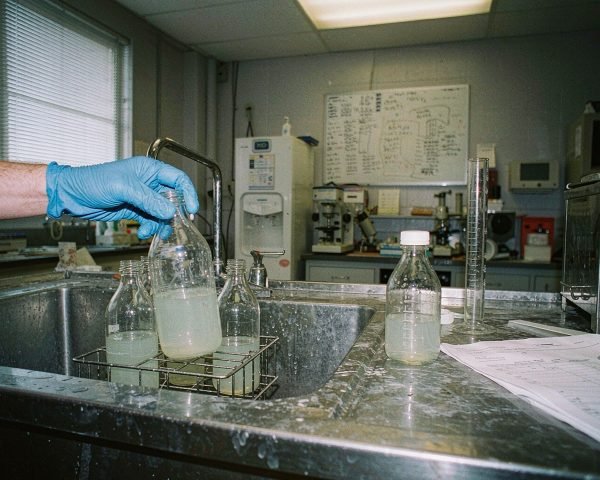
The BOD bottle is a 300 mL (plus or minus about 3 mL) glass bottle with a flared mouth and a ground-glass stopper designed to trap no air bubbles. You fill it to overflowing, incubate it at 20°C in the dark for five days, and measure dissolved oxygen before and after. EPA’s monitoring manual for dissolved oxygen and BOD describes the routine well: black or amber glass prevents photosynthesis from inflating the oxygen readings, and a water seal around the stopper keeps the bottle airtight during incubation.
Points worth checking before you reorder:
• Bottles must be scrupulously clean and free of residual organics. Many labs acid-wash and rinse five times or more.
• Stopper-to-bottle fit matters. A loose ground-glass joint leaks oxygen and ruins the run silently.
• Plastic caps that clip over the stopper keep the water seal from evaporating in the incubator. Cheap, and they prevent one specific failure mode.
Glass lasts for years if you treat it well, so this is the closest BOD gets to a one-time purchase. Chips on the pouring lip, however, mean the bottle gradually stops holding its seal, and I would retire any bottle with a chipped stopper socket rather than debug its results later.
Dilution water and its nutrient reagents
Dilution water is distilled or deionized water (copper-free, low conductivity) dosed with four nutrient solutions: phosphate buffer at pH 7.2, magnesium sulfate, calcium chloride, and ferric chloride. Many labs buy these as concentrated pillows or dropper bottles and prepare dilution water the morning of the run. It should be aerated and used at 20°C, and Standard Methods section 5210 wants its background oxygen depletion to stay under 0.2 mg/L over the incubation.
Freshness is the whole game here. Reagents made days ago grow their own microbial population, which shows up as a drifting blank. The Glucose-Glutamic Acid (GGA) standard is part of this same shopping list: a 150 mg/L glucose and 150 mg/L glutamic acid solution prepared fresh on analysis day, expected to land at 200 mg/L plus or minus 30.5 in a valid test per Standard Methods 5210.
Seed, seed controls, and nitrification inhibitor
Seed is the microbial inoculum that lets the test work, usually settled domestic sewage or a commercial freeze-dried preparation like PolySeed. The seed control bottle tells you how much oxygen the seed itself consumes, ideally between 0.6 and 1.0 mg/L over five days, and that correction feeds every calculation. Hach’s BOD testing reference notes that seed quality decides reproducibility more than almost any other variable, and that different seed sources can disagree by double-digit percentages.
For chlorinated effluents, add two more consumables: sodium sulfite to dechlorinate the sample, and a nitrification inhibitor (2-chloro-6-(trichloromethyl) pyridine, sold as TCMP or Hach formula 2533) when you need carbonaceous BOD without nitrogenous demand. Secondary effluents nitrify readily, and uninhibited results overstate the oxygen demand from organic matter.
One decision to make this week: if your permit reports CBOD5, check that your inhibitor stock is current. Old TCMP loses bite, and the first symptom is nitrogenous demand sneaking into your reported numbers.
Dissolved oxygen probe consumables
Your DO measurement method determines your consumables. Clark-type membrane electrodes consume Teflon or polyethylene membranes, electrolyte solution, and eventually O-rings; a worn membrane reads slow and low, and most labs replace them every two to four weeks of routine use. Optical (luminescent) DO probes swap that for a sensor cap that lasts one to two years but costs more up front. Winkler titration labs consume titrant cartridges and starch indicator instead.
Whichever route you take, calibrate against water-saturated air or the Winkler method daily. The probe is the only instrument in the chain, so probe drift is the one drift you cannot blame on consumables.
Sample handling consumables
The test starts at the sampling point, not the bench. Samples need glass or high-quality plastic sample bottles, cooling to below 6°C (ideally near 4°C) with ice packs and coolers, and a holding time of at most 48 hours, with analysis within 6 hours preferred for best accuracy per the EPA BOD method summary. Grab samples are collected in clean containers with no residual organics; composite samplers consume tubing and bottle sets of their own.
If your program also pulls volatile organics from the same site, the sample bottle side of that workflow is different, and we explain it in our EPA VOA vial guide. For a fuller picture of what this whole bench consumes day to day, our wastewater and effluent testing consumables guide and the sibling COD testing consumables article cover the adjacent tests you almost certainly run alongside BOD.
Conclusion
BOD is a five-day bioassay pretending to be a simple titration, and its consumables are what make the bioassay reproducible. Bottles with good stoppers and clean interiors set the stage. Dilution water mixed fresh from proper nutrient reagents keeps the blank low. Seed with a working control, fresh GGA checks at 200 plus or minus 30.5 mg/L, and current nitrification inhibitor are the difference between reportable data and a shelf of do-overs. Probe membranes or optical caps protect the measurement itself, and proper sampling containers protect everything upstream of the bench. My suggestion: stock a full spare set of every perishable (seed, GGA components, inhibitor, probe membranes) and reorder when the backup is opened, not when it is empty. If you are comparing BOD against its chemical counterpart, our COD consumables guide lays out the trade-offs, and the water quality testing consumables overview shows where BOD sits in a complete water bench.
Frequently Asked Questions
Can I reuse BOD bottles?
Yes, indefinitely, as long as the ground-glass stopper still seats well and the bottle is thoroughly cleaned between uses. Most labs wash with detergent, rinse several times with tap water, then finish with distilled water. Retire any bottle with a chipped or worn stopper joint because it will leak oxygen during incubation.
Why did my BOD blank use up too much oxygen?
A blank consuming more than about 0.2 mg/L usually means contaminated dilution water: old nutrient reagents, a dirty mixing container, or impure water with trace organics or copper. Make a fresh batch of dilution water from clean reagents and a properly rinsed vessel, then re-run the blank before trusting any sample results.
What is the glucose-glutamic acid (GGA) check in BOD testing?
GGA is a quality control standard made from 150 mg/L glucose and 150 mg/L glutamic acid, run with each batch to prove the seed and technique are valid. A correctly run test lands at 200 mg/L BOD5 plus or minus 30.5. If it falls outside that window, seed quality or technique is off, and results from that batch should not be reported.
Do I need to seed every BOD sample?
Not if the sample already contains enough viable microorganisms, as raw sewage does. Treated effluents, chlorinated samples, and industrial wastes usually need added seed, and whenever you seed, you must also run a seed control to correct for the oxygen the seed itself consumes.
How long can a BOD sample wait before analysis?
Regulatory holding time is 48 hours from collection, with samples kept cold (below 6°C) and in the dark. For the best data, analyze within 6 hours of collection. Samples held past the limit should be flagged or discarded, because microbial populations shift during storage and the result stops representing the discharge.