
# What Consumables Does Fermentation Monitoring Need?
Ask five fermentation labs what monitoring costs them and you’ll get sensor answers: pH probes, DO probes, off-gas analyzers. Almost nobody mentions the consumables that decide whether all that expensive data means anything. A contaminated sample port ruins a data point as thoroughly as a drifted probe does, and it does it silently.
The short answer: sterile sampling consumables (syringes, needles, filters, tubes), clean media and buffer bottles, DO probe membranes and electrolyte, calibration buffers, cryovials, and low-bioburden storage gear. Each protects reactor sterility or measurement integrity, usually both.
Below I’ll walk through what each consumable actually does for your data, where labs cut corners, and the two or three places where a cheap upgrade pays for itself within one run. If you’re setting up a monitoring program for the first time, this doubles as a shopping checklist.
What Fermentation Monitoring Actually Tracks
Before the shopping list, it helps to know what the consumables are protecting. Fermentation monitoring splits into online parameters and offline measurements, and the two place very different demands on your consumables.
Online parameters are the ones your probes handle continuously: temperature, pH, dissolved oxygen, agitation, and increasingly off-gas oxygen and carbon dioxide. Off-gas analysis has a special status because it’s non-invasive; a recent study on shaken bioreactors notes that measuring OTR (oxygen transfer rate) and CTR (carbon dioxide transfer rate) gives you absolute numbers with clear units, which is what makes respiration data usable for mass balances across scales.
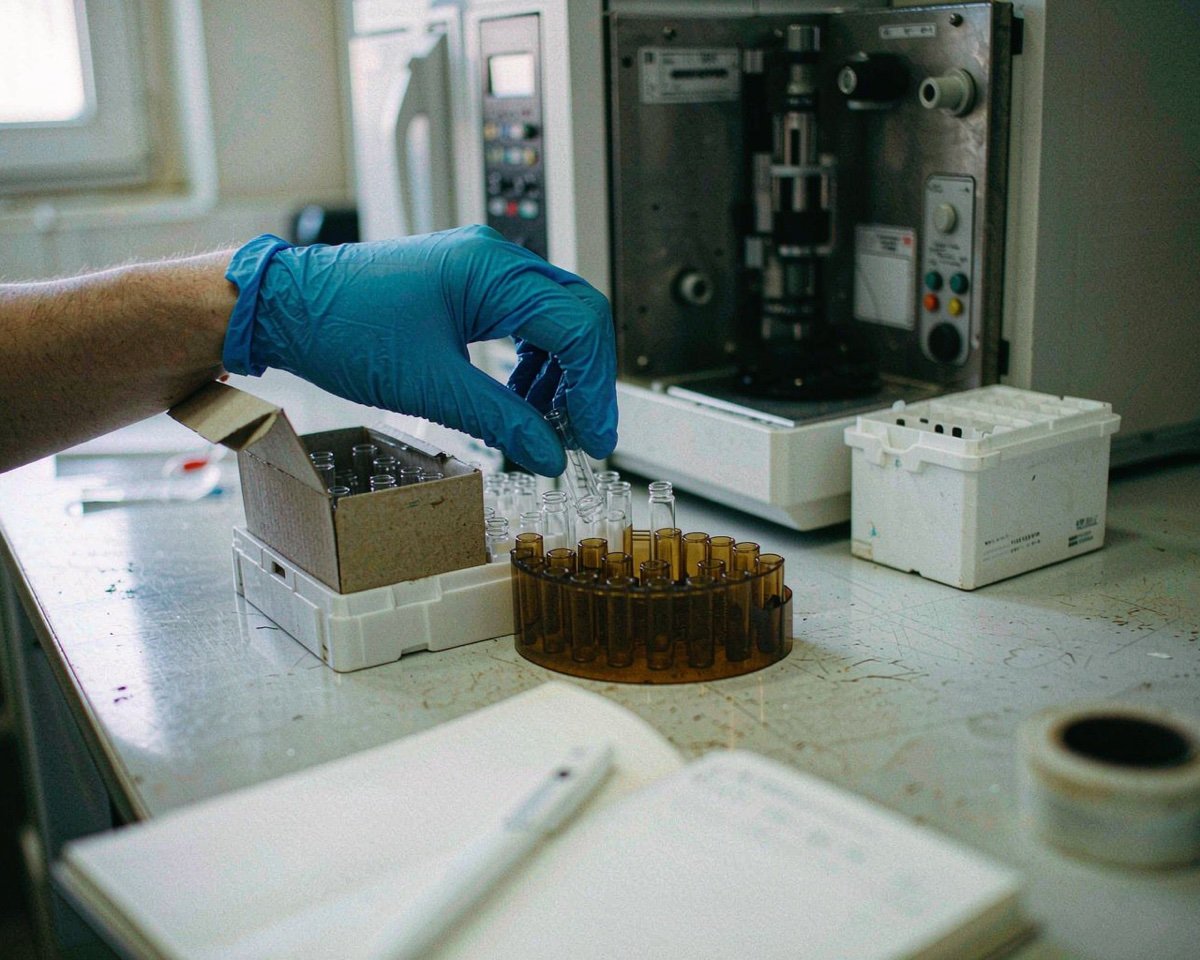
Offline measurements are the ones that need consumables: OD samples, HPLC samples for product and byproduct titers, residual sugar, nitrogen source, contamination checks. Every one of these starts with a person pulling broth through something sterile. That person, and the gear in their hand, is where monitoring programs succeed or fail.
Modern optical sensors are changing the online side. A 2025 review in Sensors covers fiber-based pH and DO sensors as a serious platform for bioreactors, and the direction of travel is clear. But they don’t change the offline side at all. Your 1 mL sample at hour 14 still travels through a needle, a tube, and a filter before it becomes data.
The Core Consumables, Item by Item
Here’s what a well-stocked fermentation monitoring bench actually holds.
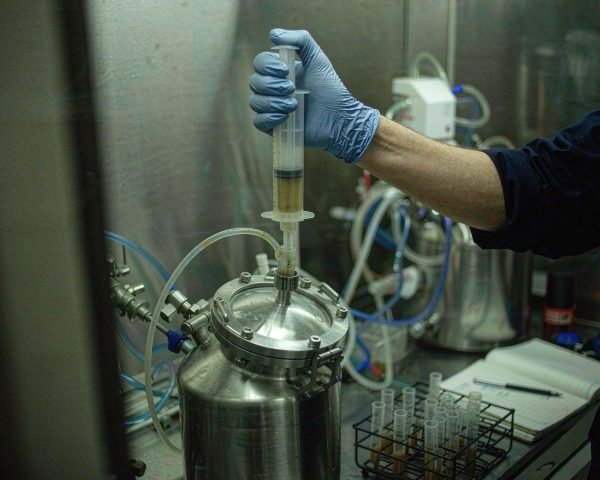
Sterile syringes and needles for pull samples. The decision point: dedicated, single-use syringes per sample, no exceptions. Reusing a syringe between time points cross-contaminates your own data and risks the reactor if you’re unlucky.
Syringe filters for sample prep. Broth contains cells and debris that will wreck an HPLC column, so most labs filter every offline sample. A 0.22 µm sterilizing-grade filter handles both jobs at once: it clears the sample and keeps the pull sterile if any broth wants to suck back. Match the membrane to your analyte; PES and PVDF are the usual low-binding choices for fermentation samples.
Sample tubes and cryovials. Time-course samples pile up fast, and you’ll want to re-run them when something looks odd, which happens more than anyone schedules for. Label everything with the hour number, not just the date. Hour 14 means something to a fermentation scientist; a date stamp means a hunt through the notebook.
DO probe consumables. Polarographic and galvanic DO probes consume membranes and electrolyte, and a torn membrane shows up as a drifting or noisy DO trace that looks exactly like a process shift. Keep membranes, electrolyte, and O-rings as spares in the same drawer as your calibration buffers, because they fail at the same rates.
Calibration buffers. pH 4, 7, and 10 buffers, expired nothing. If your pH probe calibrates against stale buffer, every pH reading in your batch inherits the error, and pH is one of your process-control axes.
Sanitization consumables: 70% IPA spray bottles, sterile wipes, and autoclave bags. Boring, and used hourly.
Sampling Without Breaking Sterility
A bioreactor is a warm, nutrient-rich liquid with one job: grow what you put in it. Every sample pull is a chance to grow something else.
That’s why the sampling chain matters more than the individual parts. Sterile syringe, sterile needle, swabbed port, alcohol-flamed septum, and a filter on the back end to stop any suck-back. For GMP work, the FDA’s guidance on aseptic processing is blunt about the principle behind this: any intervention that exposes a sterile stream to the environment is a contamination risk that has to be engineered down, not tolerated. A sampling port is exactly such an intervention, just a small and frequent one.
My own scar tissue here: I once watched a 12-day fed-batch go invalid at hour 9 because someone sampled through a port with a reused needle and a heavy hand. The contamination check plate at hour 30 told the story nobody wanted to read. The syringe had cost about a dollar. The run did not.
The consumable decision that changes outcomes here is single-use versus dedicated sampling assemblies. If your runs are short and your budget is tight, a fixed protocol of sterile disposables is simpler to validate than a reusable assembly, and the per-run cost difference is smaller than most people assume. If you only change one habit this month, make it this: one sample, one sterile needle, straight into the sharps bin.
Bottles, Buffers, and the Storage Side
Monitoring consumes reagents continuously: calibration standards, media for titer assays, diluents, buffer for the analyzer. Where those liquids live between uses is a consumables question.
Glass media bottles with GL45-style closures are the workhorse, because they survive autoclaving, don’t leach like some plastics, and seal well enough to keep a 2 L batch of buffer clean for a week. The size and thread choices are genuinely fiddly (GL45 versus GL32 versus the older DIN threads), so it’s worth a proper read before you standardize; the Mastelf GL45 media bottle guide covers the thread systems and what fits what.
One fermentation-specific trap: green growth in your buffer bottles. Warm rooms, light, and phosphate-rich buffers are exactly what algae want, and an algae colony in your DO electrolyte or calibration buffer will poison measurements slowly enough to look like probe aging. The Mastelf guide to stopping algae in solvent reservoirs and media bottles has the prevention routine. The short version: opaque or amber bottles for anything phosphate-based, and never top off a part-used buffer, ever.
Storage consumables round this out. If you archive strains and time-course samples at -80 °C, cryovials rated for the temperature, storage boxes, and a labeling system that survives frost are all consumables with failure modes. A cryovial label that lifts in the freezer erases its own sample. Write on the cap and the side, or use cryo-rated labels from the start.
When the Process Is GMP: Documentation Follows Consumables
For research fermentations, consumable choice is a technical decision. For GMP production or anything feeding a regulated workflow, it’s a documentation decision too, because your monitoring data has to survive an audit.
The FDA’s process validation guidance makes the underlying expectation clear: a process and its monitoring are expected to stay in a state of control through the product lifecycle, which means your records need to show both what was measured and what the measurement chain touched. Lot numbers for filters, syringes, and buffers, CoAs on file, and a note of when DO membranes were last changed all belong in the batch record. A beautiful OTR curve is worth little if an auditor can’t establish where the sample in vial 47 came from.
This is where consumable standardization pays off. If every run uses the same filter brand and pore size, your records stay simple and your trending stays comparable. Switching filter lots mid-campaign invites exactly the kind of method drift that validation is supposed to prevent. If you’re weighing sterile claims on new consumables, the Mastelf comparison of sterile versus low-bioburden claims explains what each label actually guarantees, which is not the same thing.
One practical habit from my GMP years: keep a “consumable lot” column in the monitoring spreadsheet from day one. It costs nothing while the process is small and is nearly impossible to reconstruct retroactively when the tech who knew the answer has left.
Conclusion
Fermentation monitoring is really two systems wearing one name: the online sensors that watch the reactor and the consumable chain that carries every offline sample from broth to data. The sensors get the budget conversations, but the consumables decide whether the data survives contact with reality. Sterile single-use sampling gear, matched filters, fresh calibration buffers, clean glass bottles, and honest lot documentation form a chain, and like any chain, its value is set by the weakest link. If you’re building or upgrading a monitoring setup, start with the sampling chain (it’s where most silent failures live), then standardize your bottles and buffers so the records stay clean. And if your reactor also feeds cell-culture work, the Mastelf media bottle guide for cell culture covers the overlap in detail. Your off-gas analyzer will thank you, in its own quiet way.
Frequently Asked Questions
What pore size syringe filter should I use for fermentation broth samples?
A 0.22 µm sterilizing-grade filter is the default because it removes cells and debris while keeping the pull sterile. Use a low-binding membrane (PES or PVDF) if your analyte is a protein or peptide, since nylon and some other membranes bind biomolecules and can drag your titer down. For very viscous or cell-dense broths, a prefilter layer saves you from clogging mid-sample.
How often should I replace my DO probe membrane?
Replace it on failure signs (noisy or drifting DO trace, slow response after calibration) and on a preventive schedule, typically every few weeks to a few months depending on the probe type and how abrasive your process is. Keep membranes, electrolyte, and O-rings stocked as regular consumables. A spare probe that’s already assembled and calibrated is cheap insurance for a long run.
Do I need sterile consumables for monitoring, or just clean ones?
For anything that touches the bioreactor side of the sample port, sterile is non-negotiable, because a contaminated pull can cost you the whole batch. Downstream of that (filtration, storage, analysis), low-bioburden or clean consumables are usually sufficient for research work. GMP processes have their own rules, so follow your validation package where one exists.
Which bottles are best for fermentation calibration buffers and media?
Autoclavable borosilicate glass bottles with GL45-style screw closures are the standard choice: they tolerate repeated sterilization, don’t leach into phosphate buffers, and seal well. Use amber or opaque bottles for anything phosphate-based to prevent algae growth, and avoid topping off part-used bottles, which is how old buffer quietly contaminates new.
What documentation should I keep for consumables used in monitoring runs?
At minimum, record the lot number of every consumable that touches the sample or the reactor: filters, syringes, cryovials, calibration buffers, and DO membranes, with CoAs filed where an auditor can reach them. For GMP work this belongs in the batch record itself. The habit costs a minute per run and turns a consumable question mark into a closed file.