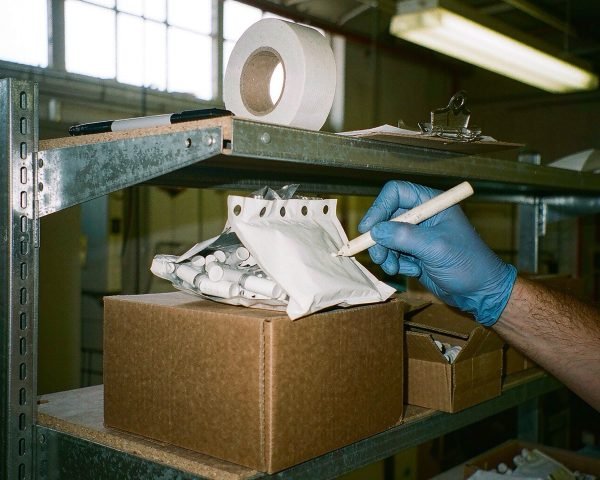

# How to Store Opened Packs of Sterile Consumables
The expiry date printed on a sterile pack only tells you half the story. The moment you peel the pouch or flip open the tray lid, the vendor’s sterility claim stops covering the contents, and your bench habits take over. This post is about that window: everything that happens between the first tear and the last vial in the box.
Reseal the opened pack, store it in a clean, dry cabinet away from UV light and moisture, use opened stock before new stock, and set your own in-use period in the SOP. Once the seal breaks, the sterility claim becomes your lab’s responsibility, not the manufacturer’s.
Below I’ll go through what the standards actually say, where a desiccator helps and where it doesn’t, and how to handle the awkward gap between what labs do and what auditors expect.
What Breaking the Seal Actually Changes
Start with what “sterile” means on the box. Sterile consumables are irradiated or gas-treated inside their final packaging to reach a sterility assurance level of 10⁻⁶, which means a probability of no more than one in a million that a single viable microorganism survived. Thermo Fisher describes this process on its page about their sterile designation for lab consumables, and the dose validation behind it is governed by ISO 11137-1:2025 for radiation sterilization.
Notice the fine print, though. The standard validates a sterilization process for product in sealed packaging. It says nothing at all about your bench.
The packaging is the barrier. Whether it’s a Tyvek peel pouch or a shrink-wrapped tray, the wrap keeps airborne settle-out and glove contact away from the plastic and glass inside. Pull that barrier away and every surface inside is exposed. In an ordinary lab, non-critical surfaces pick up contamination in hours to days, not weeks. A vial sitting in an open tray for three months might still look spotless and still be carrying a biofilm you’ll never see.
What the Standards Say (and What They Don’t)
The frustrating part is that no universal “opened pack shelf life” number exists for lab consumables. Regulators mostly write rules for drugs and devices, not for a bag of sterile centrifuge tubes.
The closest thing to hard numbers comes from clinical practice. Under USP General Chapter <797>, a single-dose vial punctured outside an ISO Class 5 environment has to be used within 1 hour, or up to 6 hours in an ISO Class 5 hood, because bacterial growth goes exponential after that window. CDC guidance for vaccine handling is blunter still: open a single-dose vial only when you’re ready to use it, and discard anything left by the end of the workday, as their vaccine preparation guidance makes clear.
Manufacturers won’t fill the gap for you, either. Thermo Fisher’s own FAQ for sterile-filtered DPBS states plainly that they cannot provide an official expiration date for open bottles and that once a product is opened, they can no longer guarantee its performance. If a vendor with unlimited resources won’t commit to a number, they’re not being cagey. They genuinely can’t know what the air over your bench is like.
So your lab writes the number. That’s the honest reading of every standard, and it’s what a good SOP does.
A Storage Routine That Actually Holds Up
Reseal the packaging properly
Most sterile packs are designed to be re-closed, even if nobody uses them that way. Zip the resealable pouch. Fold the Tyvek flap over and tape it with autoclave tape or a clean label. Snap the lid back on the tip tray. An open box sitting on a shelf is a settling plate with product in it.
Choose the cabinet first, the desiccator second
For most opened sterile plasticware (tubes, vial caps, pipette tips), a closed, clean, dry cabinet is enough. Polypropylene doesn’t care about humidity. Put the cabinet away from the window, away from the sink, and out of the doorway traffic that stirs up dust. Wiping down the outside of the pack with 70% IPA before it goes back on the shelf takes ten seconds and costs nothing.
A desiccator earns its space for the moisture-sensitive stuff: membrane syringe filters, cellulose-based products, anything the spec sheet warns about humidity. Even then, silica gel needs replacing, and a desiccator opened fifty times a day isn’t dry. (Long-term storage of unopened stock is a separate problem with its own rules; our guide to storing lab consumables for maximum shelf life covers that side.)
Label the opening date
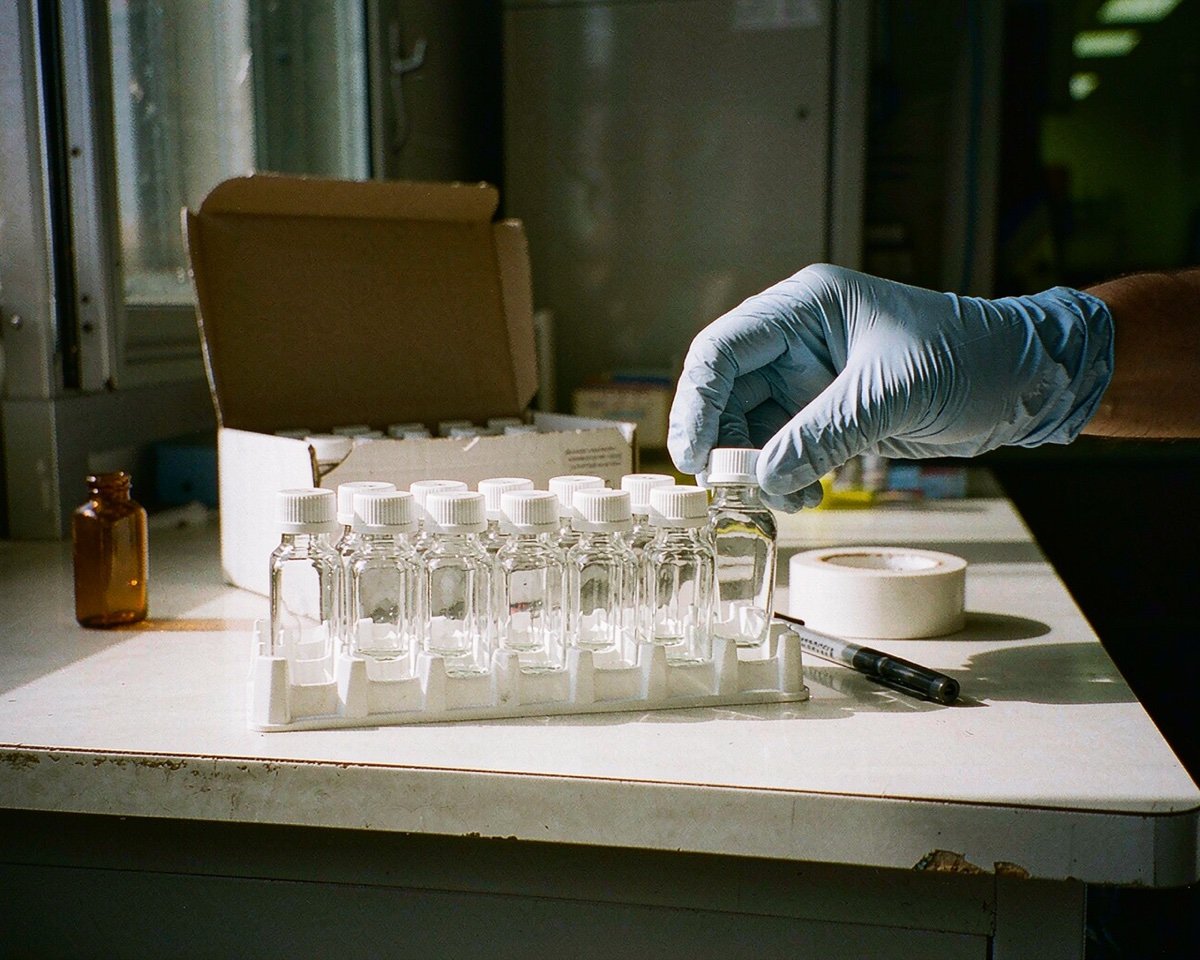
This is the cheapest habit on the list and the one auditors ask about most. Masking tape with the date and your initials does the whole job. “Opened 03-March” turns an unknown into a decision. If your lab runs FIFO (first in, first out), the labeled pack also quietly sorts itself.
Know which packs survive opening and which don’t
Individually blister-wrapped syringe filters are the forgiving case. Millex sterile filters from Merck, for example, ship gamma-irradiated and individually blister-packaged with a 3-year shelf life, and each unopened blister keeps its claim until you crack it. A bulk bag of 100 loose sterile tubes is the opposite: the whole bag’s claim is gone the day you open it.
What Labs Do vs What Auditors Expect
Real labs, in my experience, mostly do the minimum. The box gets opened, the lid goes back on loosely, the box lives on the shelf until it’s empty. For non-sterile work, that’s usually fine. Nobody’s HPLC method fails because a consumable sat in a half-closed box for a month.
Auditors expect something more specific. Not perfection, but traceability: an opening date on the pack, an in-use period defined somewhere in the SOP, a storage location that isn’t “wherever there’s space”. I sat in on a supplier audit a few years ago where the auditor picked up an opened tray of sterile Petri dishes in media prep and asked one question: “When was this opened?” Nobody in the room knew. That single unknown turned into a finding, and the finding turned into a week of paperwork. A roll of tape and ten seconds would have prevented all of it.
If you only change one thing this week, change the labeling.
When to Throw It Out Instead
Some opened packs aren’t worth rescuing. My cutoffs:
• The outer wrap is torn, wet, or was stored under the sink “temporarily”.
• You can’t establish the opening date and the work is sterility-critical (cell culture or microbiology work).
• The pack was opened in a dirty area or handled without gloves.
The math is easy. A 50-pack of sterile filters costs less than one contaminated media batch or one repeated 60-injection sequence. When the stakes are sterile work, discarding isn’t waste. It’s insurance.
Conclusion
Storing opened packs of sterile consumables comes down to accepting an uncomfortable truth: the sterility claim on the label was made in a factory, for a sealed pack, and it expired the moment you broke that seal. After that, whatever sterility remains is a function of your bench. So reseal the packaging and keep opened packs in a clean, dry cabinet, with a desiccator reserved for membranes and anything the spec sheet flags as humidity-sensitive. Date everything you open, and make sure your SOP states an in-use period so the decision is already made before someone has to make it under pressure. None of this costs real money. It costs a roll of tape and a little discipline, and it’s the difference between a shelf you’d defend in an audit and one you’d quietly tidy up before the auditor arrives. If you want to go deeper on the claims themselves, our explainer on sterile vs low bioburden claims shows what each label actually guarantees, and this guide to when sterile HPLC vials are worth using covers the vial side of the same decision.
Frequently Asked Questions
How long do sterile consumables stay sterile after the pack is opened?
There’s no official figure, because the manufacturer’s claim only covers the sealed pack. In practice, individually wrapped items keep their claim until each wrapper is opened, while a bulk pack’s contents are only as clean as your storage conditions. Most labs set their own in-use window, often between one and six months depending on the application.
Should opened sterile packs go in a desiccator?
Only for moisture-sensitive items like membrane filters or cellulose products. Polypropylene tubes, caps, and vials store fine in a clean, dry cabinet, and a desiccator that’s opened constantly won’t stay dry anyway.
Does the printed expiry date still apply after opening?
Only partially. The expiry date assumes the packaging is intact and stored as specified. Once opened, your in-use date (which should be written into the SOP) governs, and it can be far shorter than the printed date.
Can I re-sterilize an opened pack instead of throwing it out?
Sometimes, depending on the material, but the original sterility certificate no longer applies to anything you re-sterilize yourself. For non-critical work it might be a reasonable option; for sterility-critical applications, most labs would rather start with a fresh, certified pack.