
Walk past any fraction collector or standards bench and you will spot them: the taller, wider cousins of the standard 2 mL autosampler vial. A 4 mL vial holds double the volume of a standard vial, and labs reach for it whenever a sample, a standard, or a fraction outgrows 2 mL. The catch is that “bigger vial” does not mean “fits your autosampler,” and that surprise costs people time at the worst moment.
Quick Answer
A 4 mL vial is a larger screw-thread sample vial, typically about 15 to 16 mm in diameter and 40 to 45 mm tall, with a 13-425 threaded neck. Labs use them for sample storage, standards preparation, and fraction collection. Most modern autosamplers cannot hold them directly, so aliquots are transferred into 2 mL vials for injection.
Let me walk through the dimensions, the caps, and the honest answer on when 4 mL is the right call.
The Shape Of A 4 mL Vial
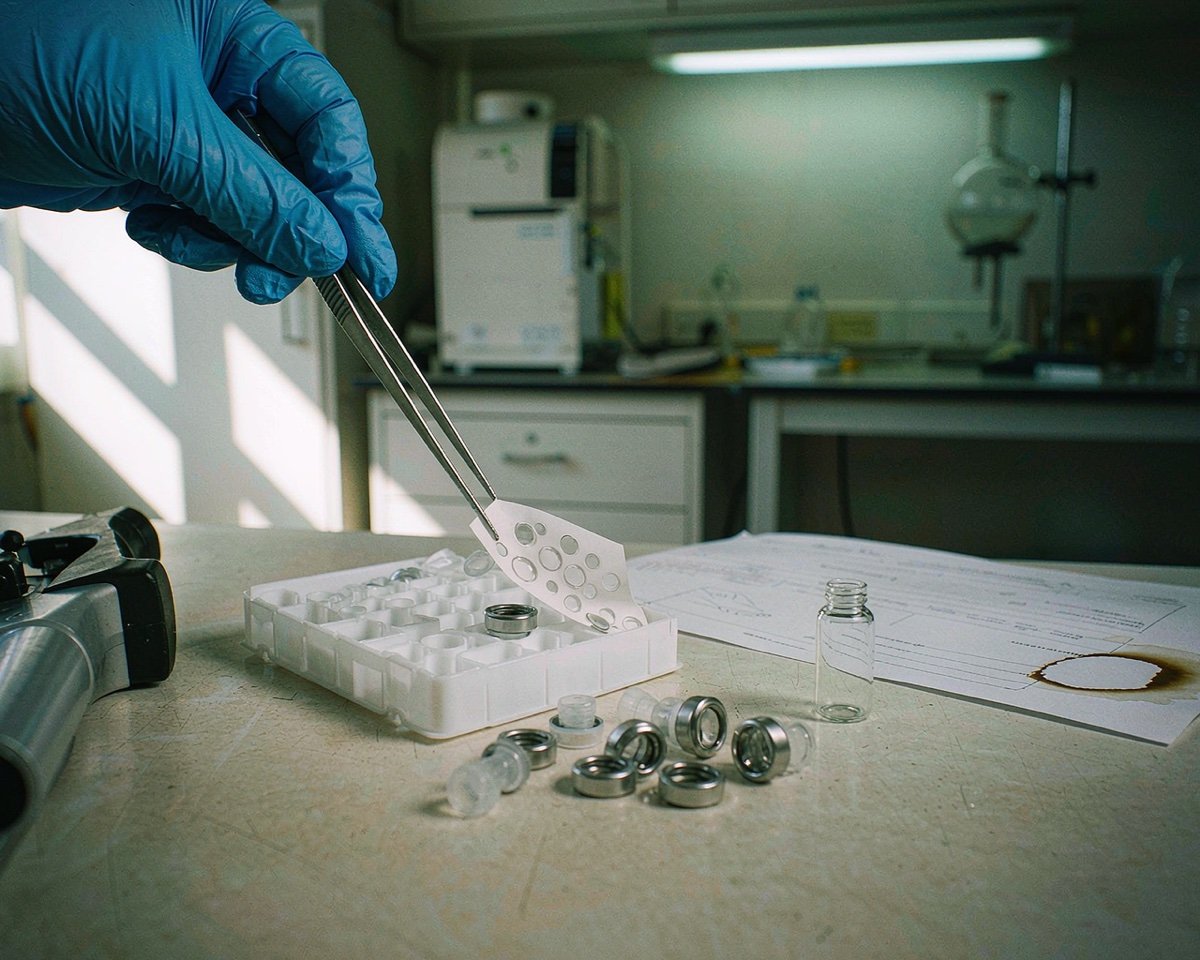
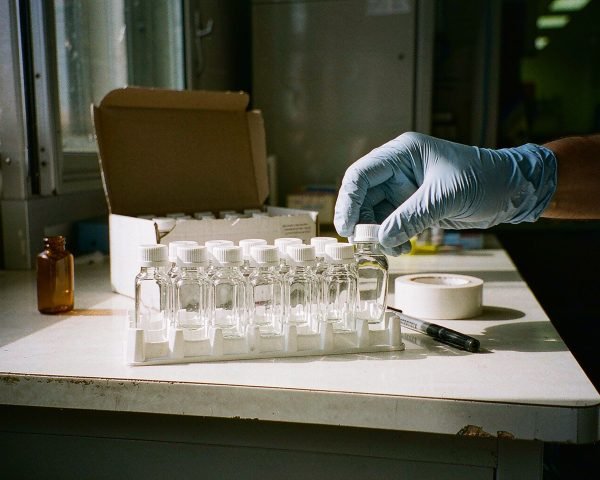
The classic glass 4 mL vial runs about 15 mm in outer diameter and 45 mm tall, and it carries a 13-425 screw thread. That thread code means a 13 mm neck finished to the 425 GPI thread spec, the same code you see on smaller screw-neck vials. Restek’s WISP 48 style 4 mL screw-thread vial lists exactly this geometry: 15 x 45 mm, clear or amber borosilicate glass, with a white graduated marking spot for labeling.
Not everything sold as a “4 mL vial” is glass. Plastic versions are common, and their dimensions drift. A Nalgene polypropylene copolymer 4 mL vial from Thermo Fisher’s catalog measures 16 mm across and 41 mm tall with its own 13 mm cap. So if you plan to mix brands in one rack or one vial box, check the height, because a 45 mm vial will not close the lid of a box sized for 41 mm ones. Ask me how I know, and I will describe an afternoon of returning to the supplier’s spec sheet.
What Labs Actually Use Them For
Storage is the big one. A 4 mL vial holds enough for multiple working aliquots from one container, which means you open the master stock fewer times. Standards preparation is another: weigh, dilute to 4 mL, and you have stock left over for tomorrow’s check standard without re-weighing.
Fraction collection is where they earn their keep. Collectors that run unattended overnight fill 2 mL vials in minutes, and an overflowing vial means a lost fraction. With 4 mL vials, a slower peak gets one vial instead of two, and nobody recombines fractions at 7 a.m. They also suit any manual workflow where you pipette 3 mL of sample at once and just want a container that fits the job.
Racks, Boxes, And Labeling
Plan the storage around the vial, because a 4 mL vial will not stand up in a rack cut for 2 mL formats, and it will not fit most standard vial boxes. Dedicated 13-425 racks exist and are inexpensive, but people forget to order them with the vials. Use the graduated marking spot on the side for a marker label rather than a wrap-around sticker, since wrap-around labels catch on box lids and lift off in the freezer. If the vials will see cold storage, leave headspace at the fill line; a full glass vial can crack as the liquid expands.
Caps And Septa: The 13-425 Thread
The 13-425 thread is the standard here, and closures come in two flavors. Solid PP caps with a bonded PTFE/silicone septum suit storage and standards. Open-top screw caps let a syringe needle reach through, which matters if you draw aliquots with a needle rather than uncapping. Restek’s 13-425 caps for 4 mL vials come preassembled with red PTFE/silicone septa, which is the common default for this format.
A note on the thread itself: 13-425 is the same neck code as small microvials, but the cap sizes are not the only difference in the vial body, so a 13-425 cap fits the neck of both while the vials themselves serve different jobs. If you want a refresher on what those neck codes actually encode, our guide on what 9-425 means on a vial covers the numbering system.
Also think about how many times a needle will pierce the septum. A standards vial you draw from ten times needs a tougher septum than a storage vial you uncap once, and a worn needle will core a thick PTFE/silicone septum faster than you expect. Swap the cap between draws if the punctures start looking ragged.
Storage Vial Or Autosampler Vial?
Here is the honest part. Most modern HPLC autosamplers are built around 2 mL vial formats and will not seat a 4 mL vial correctly. The WISP 48 name survives from older Waters WISP autosamplers that took these vials natively. If your instrument is not built for them, you have two options: transfer an aliquot into a 2 mL vial for injection, or find an adapter tray for your specific model. In my experience the transfer wins, because it is cheap, works on any system, and lets you keep the 4 mL reserve sealed.
That split is really the storage-versus-analysis question applied to one vial family. We look at the tradeoff in more depth in storage vials vs analysis vials, and the short version is that one vial can do both only when your hardware agrees.
Amber, Clear, Glass, Or Plastic?
Clear glass is the default when you want to see fill level and inspect the contents. Amber glass earns its price for anything light-sensitive, and we compare the two in clear vs amber glass vials.
Plastic (PP or PPCO) earns a place in two cases. High-pH samples attack glass, so polypropylene keeps the container chemistry quiet. And for trace metals work, plastic avoids the borosilicate leachables that glass can contribute at low concentrations. The tradeoff is that plastic holds static, scratches more easily, and is less transparent to UV, so for anything you will read at low wavelength, glass stays my default. Wide-mouth variants exist too, useful for powders and solids you actually need to get back out; see when wide-mouth vials beat standard vials.
Conclusion
A 4 mL vial is a simple product with a simple role: more volume in a screw-thread container, almost always with a 13-425 neck. Use them for storage, standards, and fractions, and reach for glass when you need to see or inject the contents cleanly. The one decision that matters most is knowing your autosampler before you buy a case, since most systems still expect 2 mL vials and an adapter tray is rarely worth the hassle. Buy amber if the work is light-sensitive, polypropylene if the work is high-pH or trace-metals, and clear glass for everything else. If you are weighing which sizes to stock at all, start with one case of 4 mL and see whether the fraction collector or the standards bench claims it first. In most labs, both will.
Frequently Asked Questions
What thread do 4 mL vials use?
Almost all use the 13-425 screw thread, a 13 mm neck finished to the 425 GPI specification. Caps and septa for 13-425 are widely available from every major supplier.
Can I put a 4 mL vial in my HPLC autosampler?
Usually no. Most modern autosamplers hold 2 mL formats, and 4 mL vials only fit instruments designed for them, such as older Waters WISP systems. Transfer an aliquot into a 2 mL vial instead.
What is the difference between a 4 mL vial and a scintillation vial?
A glass 4 mL vial is smaller (about 15 x 45 mm) with a 13-425 thread, while a classic 20 mL scintillation vial is much larger with a 24-400 neck. They are not interchangeable in racks or boxes.
Are plastic 4 mL vials as good as glass?
For storage and high-pH or trace-metals work, yes. For UV detection at low wavelengths and repeated solvent exposure, glass remains the better choice because plastic can add extractables and scatters more light.