
HILIC has a habit of humiliating methods that ran beautifully in reversed phase. Peaks split, retention wanders, and the blame lands everywhere except the actual suspect: the consumables and the solvent they touch.
HILIC consumables should be chosen around one fact: the method runs in 85 to 95% acetonitrile, with a thin water layer on the stationary phase doing the actual separation. That means matching your sample solvent to the mobile phase, using filters that wet properly in high-organic solvent, choosing septa that survive acetonitrile after puncture, and capping mobile phase bottles so ACN doesn’t quietly evaporate.
I’ve broken most of these rules at least once. Here’s what each one looks like in practice.
Why HILIC Punishes Consumable Mistakes
In HILIC, the polar stationary phase holds a water-enriched layer, and your analytes partition in and out of it. Water is the strong solvent, the opposite of reversed phase, and Phenomenex’s HILIC guide explains why acetonitrile is preferred: it’s aprotic, so it doesn’t compete with analytes for that water layer the way methanol does.
The layer takes time to establish (Thermo Fisher’s HILIC troubleshooting guide recommends around 20 column volumes of equilibration, and at least 3% water in the mobile phase to maintain it), and it’s fragile. Anything that dumps a slug of water or dissolves the wrong material into your sample disturbs the separation. That’s why consumable choices that don’t matter in RP suddenly do.
The Sample Solvent Mismatch Problem
This is the big one. Inject a sample dissolved in water or buffer into a 90% acetonitrile mobile phase and the plug of strong solvent carries analytes through the column before they can partition into the water layer. Peak broadening, fronting, and retention loss follow.
The same troubleshooting guide puts the limit clearly: keep the sample solvent’s organic content as close to the starting mobile phase as possible, and at least above 50%. Agilent’s HILIC method development guide recommends diluting samples in acetonitrile and, if solubility forces a compromise, replacing some water with methanol.
My bench rule: I try to get samples into 75% ACN or higher, and I keep injection volumes small when I can’t. For a 2.1 mm column, Thermo Fisher suggests 0.5 to 5 µL; a 10 µL aqueous injection is where the damage gets ugly. If you’re unsure where your ceiling is, the trade-offs in how to choose the right injection volume apply doubly here.
I once inherited a metformin method that dissolved standards in mobile-phase buffer instead of starting solvent. First injection of every sequence looked like a mountain range; injections three onward looked normal. Nobody had connected the two facts for two years. Diluent switch, problem gone in an afternoon.
Vials and Inserts for ACN-Rich Samples
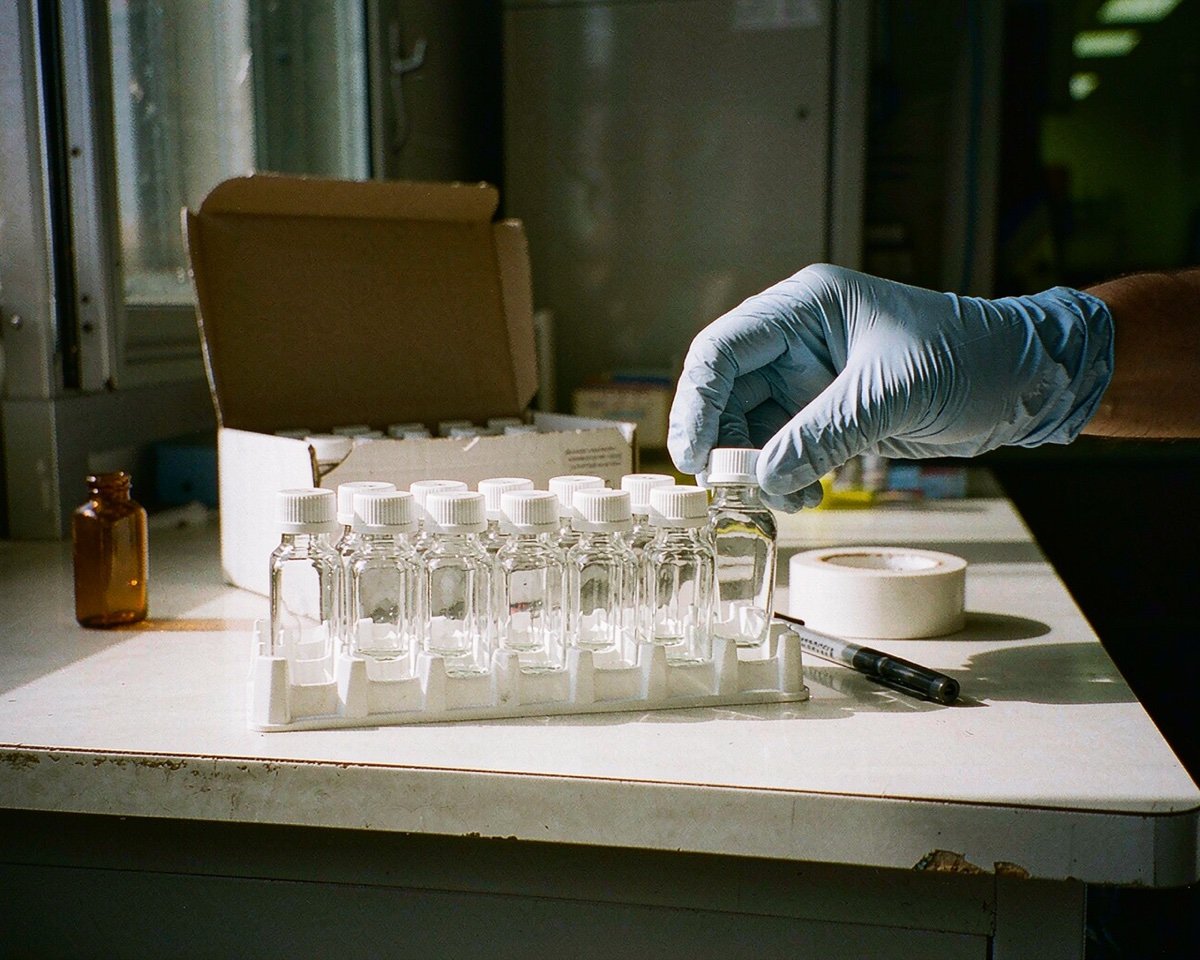
Good news: acetonitrile is one of the easiest solvents on containers. Both borosilicate glass and polypropylene vials hold up fine, so glass-vs-plastic matters less here than it does for, say, DMSO or high-pH samples. I default to clear glass for routine polar analytes and amber if anything is light-sensitive.
Where the vial actually matters is volume and evaporation. Acetonitrile evaporates fast, and HILIC injections are small, so samples often sit in a few hundred microliters for a 12-hour sequence. Use vial inserts (or low-volume conical vials) so the autosampler needle reaches the liquid, and use caps with a reliable PTFE-faced septum to slow solvent loss. For tricks that keep 200 µL samples honest overnight, see how to prevent sample evaporation in autosampler vials.
One caution on polypropylene: it’s chemically fine with ACN, but for trace LC-MS work some labs see additive-related background from cheap plastics. If your blanks are dirty, test glass and PP side by side before blaming the mobile phase.
Septa and Caps in High Acetonitrile
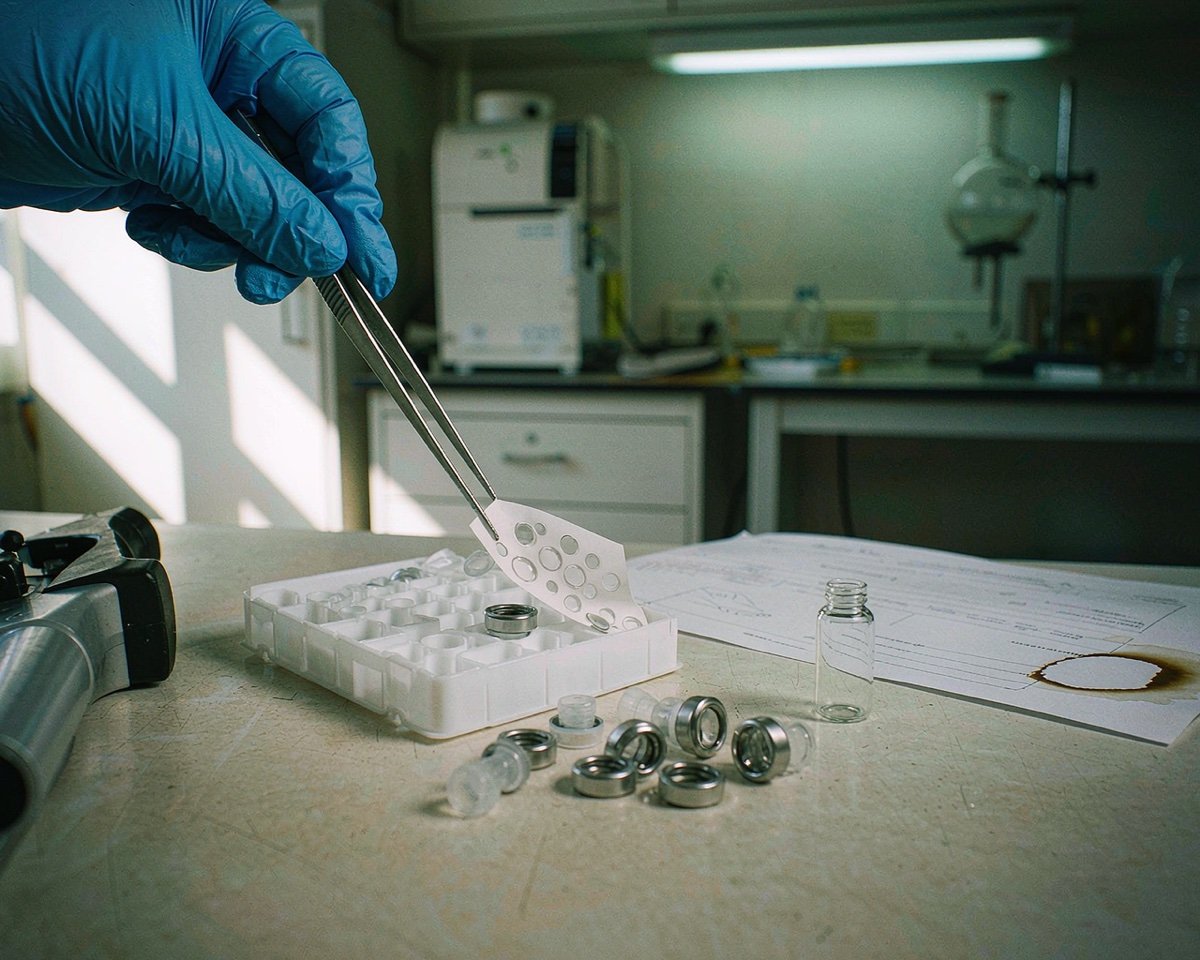
Here’s the compatibility detail most method sheets skip. A standard PTFE/silicone septum resists solvents only until the needle punctures it. After that, the sample and headspace vapor touch the silicone core, and Restek’s septum compatibility table lists acetonitrile among the solvents silicone doesn’t tolerate.
In practice that shows up as gradual swelling and leaching over a long sequence, not an instant failure. For HILIC work where the vial lives in nearly pure ACN, I use PTFE/silicone/PTFE three-layer septa so the silicone core never meets the solvent from either side. It’s a cent or two per cap. If your method runs for days or the vials sit over weekends, that upgrade is trivially worth it.
Syringe Filters for High-ACN Samples
Membrane choice gets less press than it deserves in HILIC sample prep, because the wetting behavior flips depending on which side of the solvent spectrum you’re on.
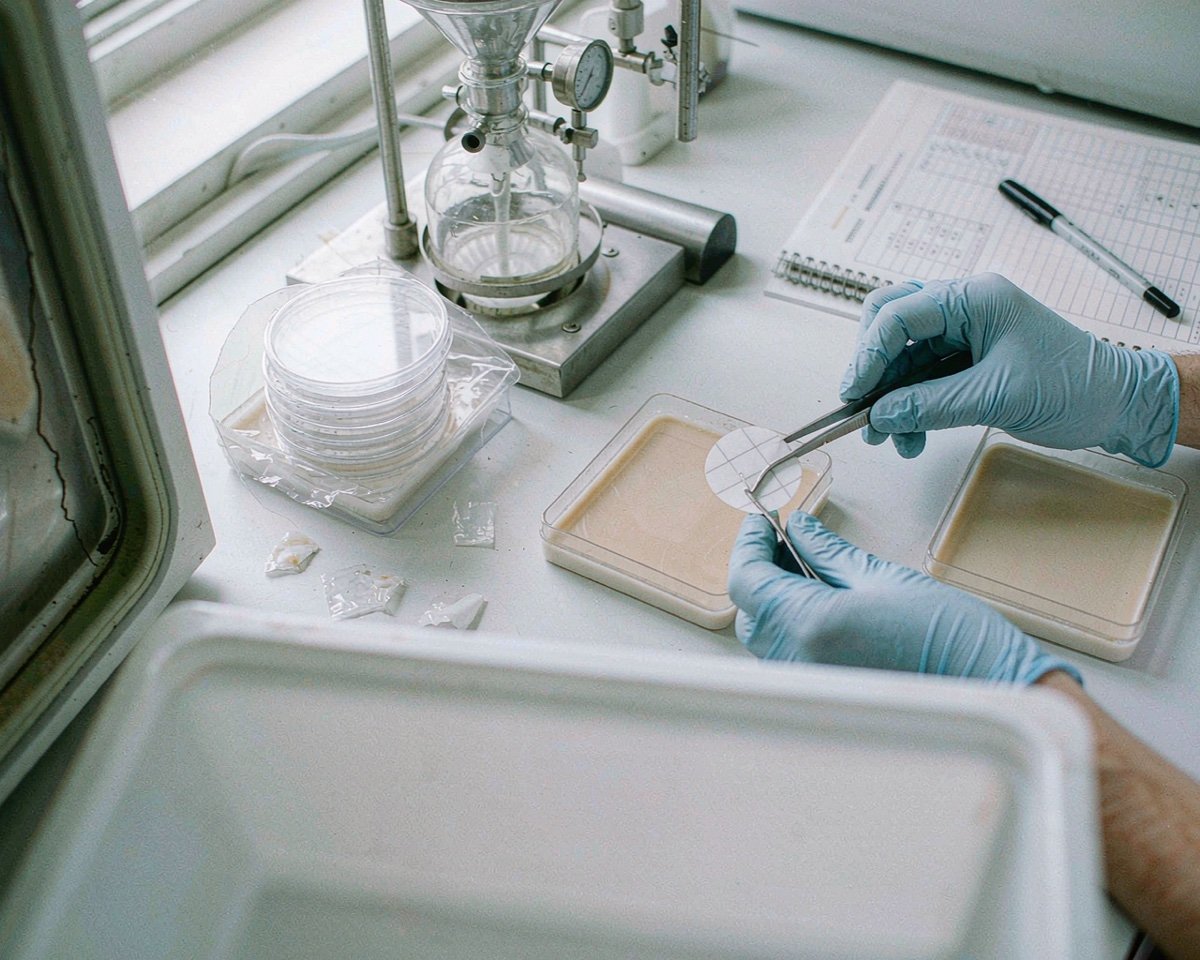
Hydrophobic PTFE is the safest universal membrane for organic-rich samples; it wets immediately with acetonitrile and resists nearly everything. Nylon also handles ACN and is a common general-purpose pick, though it binds proteins, so avoid it for peptide or protein HILIC work. PES and cellulose acetate are happiest in water; in very high organic content they can be slow to wet or incompatible, so check the membrane guide before running pure organic through them. Thermo Fisher’s sample preparation guide has a full membrane-by-membrane compatibility chart worth bookmarking.
The practical trap is mixed workflows. If you filter aqueous standards in the morning and 90% ACN samples in the afternoon with the same filter type, pre-wet the membrane with a few drops of the actual sample solvent and discard to waste before filtering into the vial. Ten seconds, and it prevents both poor flow and surprise extractables in the first fraction. For a deeper membrane comparison, my guide to nylon vs PTFE vs PVDF vs PES filters covers the details.
Mobile Phase Bottles and the Precipitation Trap
HILIC mobile phases are a perfect storm for bottle problems: volatile acetonitrile, low buffer concentrations (often 5 to 20 mM ammonium formate or acetate), and long stand times.
Evaporation is the slow killer. ACN escapes through loose caps and breather closures, the water fraction rises, and your retention times drift upward over days. Keep dedicated HILIC bottles (label them, never rotate them with the RP bottles, or you’ll inherit the water), and use caps with good seals. Waters’ HILIC mobile phase prep guide also recommends sonicking freshly mixed phases to eliminate cloudiness, which is your warning sign that buffer solubility is marginal.
And precipitation is real. Ammonium acetate at useful concentrations can crash out of nearly pure acetonitrile, especially on cold weekends or inside the proportioning valve where mixing happens locally. Waters’ guide builds stock buffers in water first, then adds them to ACN, which is the right habit. If you see crystals in a bottle, don’t redissolve and continue; remake the phase fresh. The case for filtering mobile phase before use is even stronger in HILIC, because a salt crystal reaching the column inlet frit ends the run immediately.
Conclusion
HILIC doesn’t need exotic consumables, but it needs consumables chosen for a high-acetonitrile world. Dissolve samples in starting-strength solvent (or at least above 50% organic) and keep injections small so the water layer stays intact. Filter through PTFE or a membrane you’ve confirmed wets in high organic, and pre-wet when switching between aqueous and ACN-rich work. Use three-layer PTFE/silicone/PTFE septa for vials that sit in nearly pure acetonitrile, and keep mobile phase bottles sealed, labeled, and sonicated so evaporation and buffer precipitation never surprise you. Most of these cost nothing to adopt and each one protects retention reproducibility, which is the metric HILIC users get judged on. Fix the diluent first if you change only one thing; it’s the mistake I see most often and the cheapest to correct.
Frequently Asked Questions
What sample solvent should I use for HILIC?
Ideally the starting mobile phase, which is usually 85 to 95% acetonitrile. If your analyte won’t dissolve, stay above 50% organic and keep the injection volume small; some water with methanol is a better compromise than pure buffer.
Can I use nylon syringe filters with HILIC samples?
Yes for chemistry: nylon is compatible with acetonitrile. But nylon binds proteins and peptides, so for bioanalytical HILIC use PTFE, PVDF, or regenerated cellulose instead.
Why do my HILIC peaks get worse with bigger injection volumes?
The injected solvent acts as a local slug of mobile phase. Water-rich injections overwhelm the water layer on the stationary phase and carry analytes through unretained, causing broadening and fronting. Reduce volume or strengthen the sample solvent in ACN.
Do I need special caps for acetonitrile mobile phase bottles?
You need caps that seal well, because ACN evaporates quickly and shifts your buffer concentration over days. GL45-style closures with intact PTFE-faced seals and dedicated (never swapped) HILIC bottles work well.