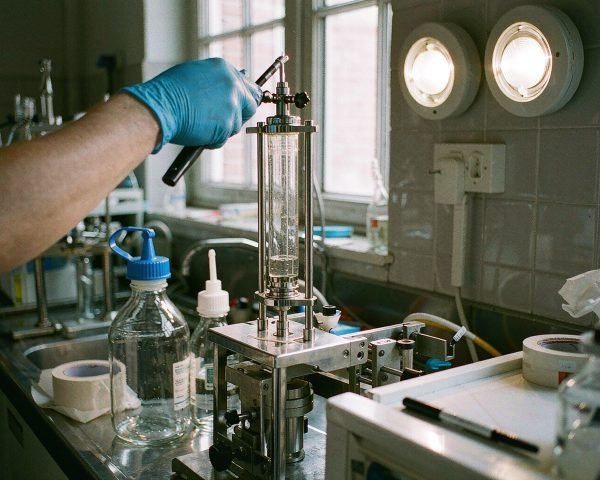

Chiral separations are chromatography with the difficulty turned up. Your two analytes are chemically identical in every way except mirror-image geometry, so the column does the heavy lifting, and the consumables around it have to survive solvents most HPLC labs never touch.
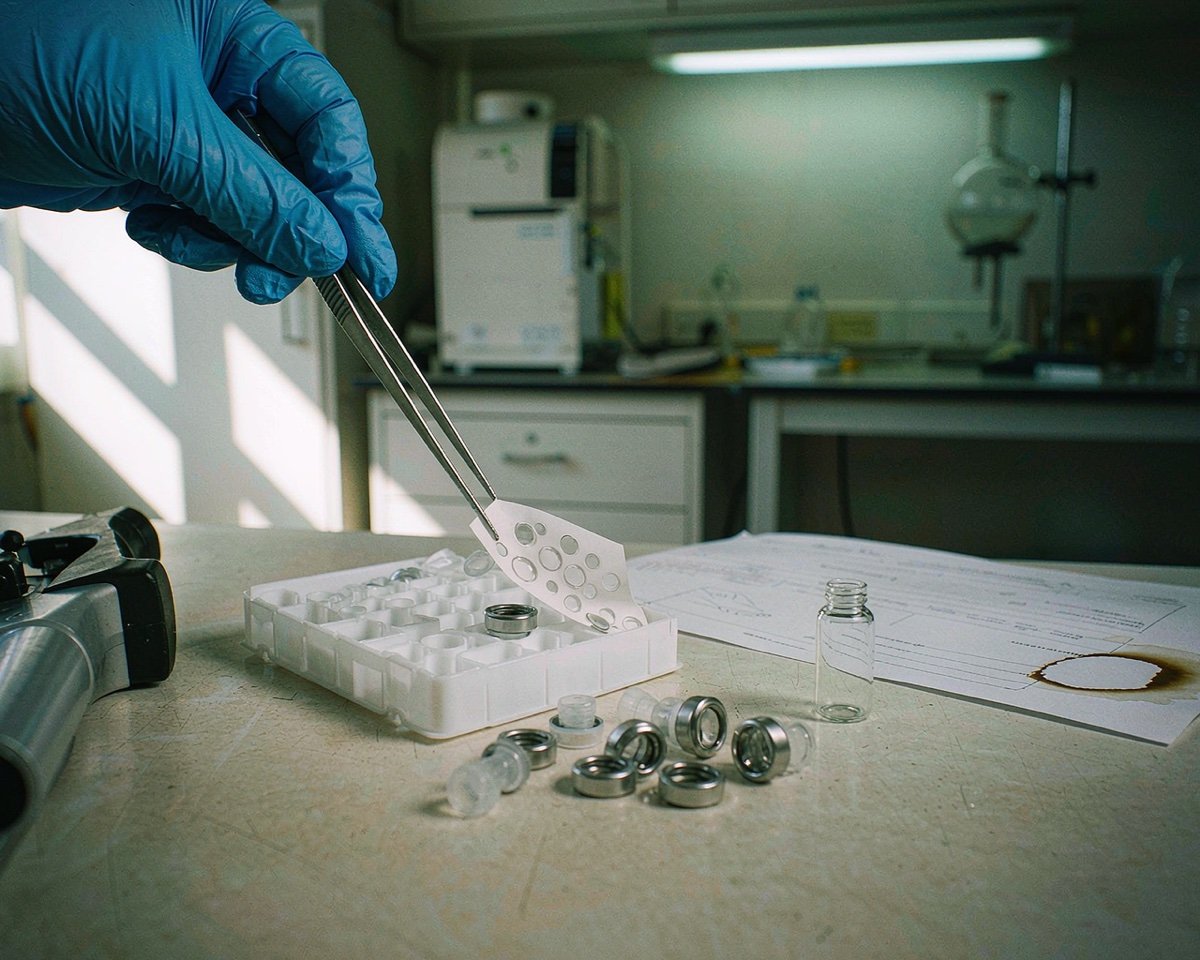
Chiral separation work needs solvent-resistant vials and septa (glass with PTFE-faced caps for normal-phase work), PTFE membrane filters for hexane-based mobile phases, low-volume inserts for costly enantiomer standards, and amber glass when your analyte can racemize or photodegrade. The mobile phase you run (normal phase, reversed phase, or SFC) decides most of these choices.
Here’s how the pieces fit together, and where labs lose expensive samples to the wrong vial or a swollen septum.
Why Chiral Separations Punish Sloppy Consumables
Two enantiomers have identical boiling points, identical pKa, identical UV spectra, and identical behavior on any ordinary column. The only thing that separates them is a chiral interaction with a stationary phase, and those interactions are weak by chromatographic standards. So the method typically runs at low selectivity margins, and anything that adds background, dilutes the sample, or degrades the analyte eats directly into the resolution you have left.
The stationary phase also constrains your solvent world in ways regular reversed-phase labs never encounter. That constraint cascades into every consumable downstream: the vial the sample sits in, the septum the needle pierces, and the filter you push the sample through.
The Three Main Stationary Phase Families and Their Solvent Rules
Polysaccharide phases dominate chiral HPLC. They’re derivatives of cellulose or amylose (carbamates and esters coated onto silica), and they separate an enormous range of racemates. The catch: on coated versions, the polymer can dissolve or swell in certain solvents. Classic coated phases tolerate hexane/alcohol normal-phase mixtures, polar organic runs (methanol or acetonitrile with acid/base additives), and SFC, but they forbid solvents like dichloromethane, THF, and ethyl acetate unless the phase is immobilized. A recent review in the Journal of Chromatography A covers how immobilization frees up solvent choice at some cost in selectivity (PubMed 24997110). Phenomenex’s Lux line documentation spells out the mode compatibility per phase (normal phase, polar organic, reversed phase, and SFC) if you want the phase-by-phase matrix (Phenomenex Lux chiral columns).
Protein phases (α1-acid glycoprotein, human serum albumin bonded to silica) run in aqueous buffers with only small amounts of organic modifier. They’re gentler on consumables (no hexane anywhere) but pH-limited and lower capacity, so sample dilution and clean samples matter more.
Cyclodextrin phases separate through inclusion complexes: the enantiomer nests inside the cyclodextrin cavity. They work in reversed phase and polar organic modes. CHROMacademy’s chiral HPLC module gives a good grounding in the recognition mechanisms across all three families (CHROMacademy Introduction to Chiral HPLC).
And then there’s SFC, which has quietly become the default for chiral purification in med-chem labs. Supercritical CO2 with a methanol or IPA modifier runs on many of the same polysaccharide phases, with back-pressure regulators instead of solvent-elimination waste. The NCBI’s small-molecule characterization handbook describes SFC with chiral stationary phases as the standard approach for enantiomeric separations at scale (NCBI Bookshelf NBK623671).
Three mobile phase worlds, three different consumable profiles. Let’s get specific.
Vials: Glass Wins for Normal Phase, PP Has One Narrow Win
The classic chiral mobile phase is hexane with 5 to 20% isopropanol, maybe with a dash of TFA or diethylamine. Hexane is brutal on plastics. Polypropylene softens and swells with prolonged hexane contact, and polystyrene plates dissolve into a puddle (ask anyone who’s ever transferred a hexane solution into a cheap 96-well plate; I once watched a whole tray of fractions curl and crack within minutes because someone grabbed the wrong box of plates).
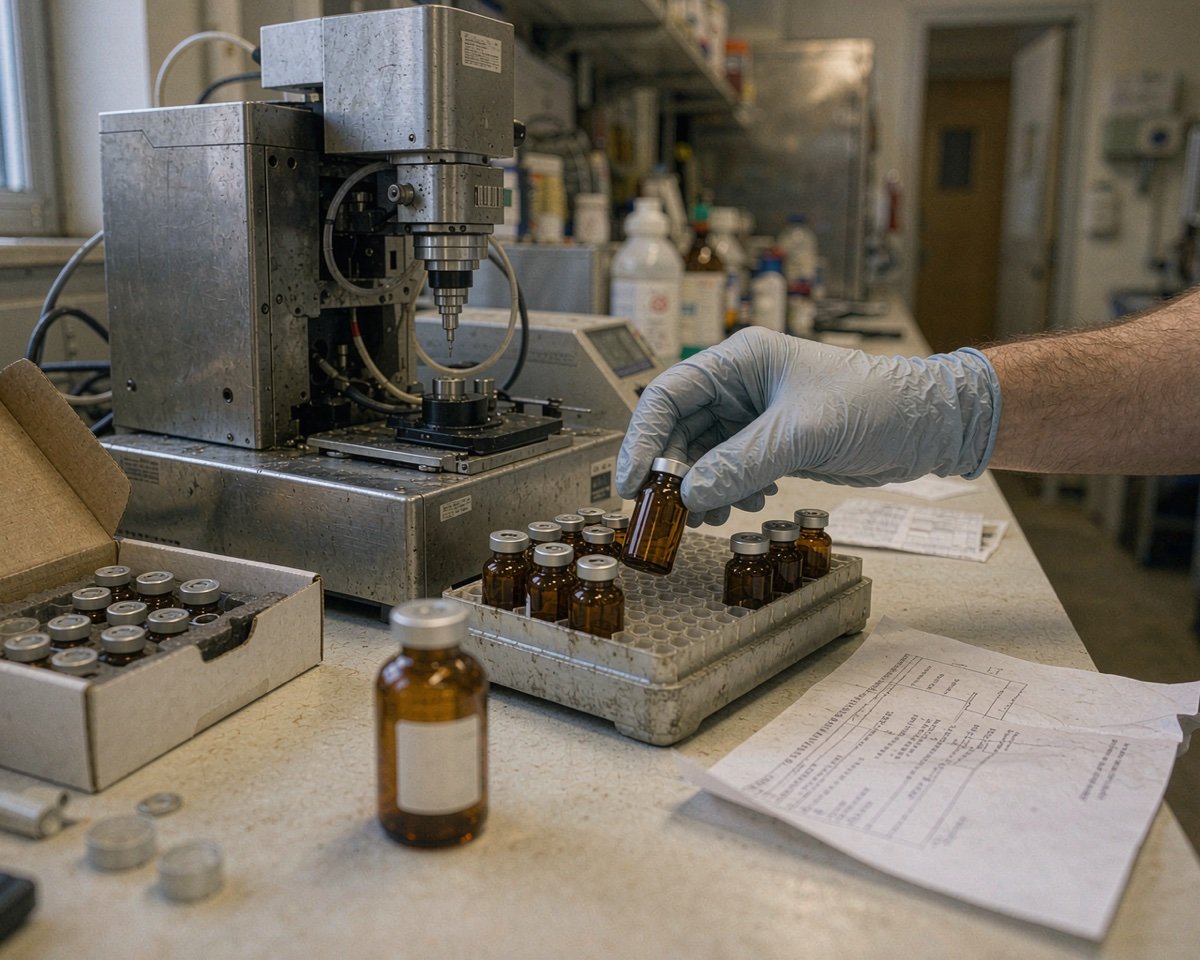
So for normal-phase and polar-organic work, use borosilicate glass vials, full stop. Glass doesn’t care about hexane, doesn’t leach UV-absorbing material into your baseline, and won’t soften in DCM when an immobilized-phase method calls for it. The material tradeoffs are covered in detail in our HPLC vial materials guide.
Where PP genuinely earns its place: aqueous reversed-phase chiral methods (protein and cyclodextrin phases under RP conditions) and, interestingly, some SFC workflows where labs collect fractions into PP tubes at the collector. Even there, test the contact time. If your autosampler queue is long and your samples sit overnight in hexane, plastic of any kind is a risk you don’t need.
Septa: PTFE Is the Face, Silicone Is the Seal, and Order Matters
Standard HPLC septa are PTFE/silicone laminates, and the construction matters enormously in chiral work. The PTFE face must point toward the sample, because silicone swells badly in hexane and nonpolar solvents. A PTFE-faced cap keeps silicone out of contact with the mobile phase vapor and the liquid.
If your sequence runs more than a day, or your method uses pre-slit septa for lower needle pierce force, double-check the slit: a slit pre-cut through the PTFE face gives hexane a direct path to the silicone underneath. For long queues in normal phase, I’d rather use a solid PTFE/silicone cap and accept the slightly higher coring risk than invite swollen silicone into the vial. Our septa selection guide covers the lamination details, including which constructions survive which solvents.
Red PTFE-only septa are the other option for aggressive organics; they seal differently (harder puncture) and reseal less well after multiple injections, so they suit single-injection workflows more than long sequences.
Filters: PTFE Membranes for the Nonpolar World
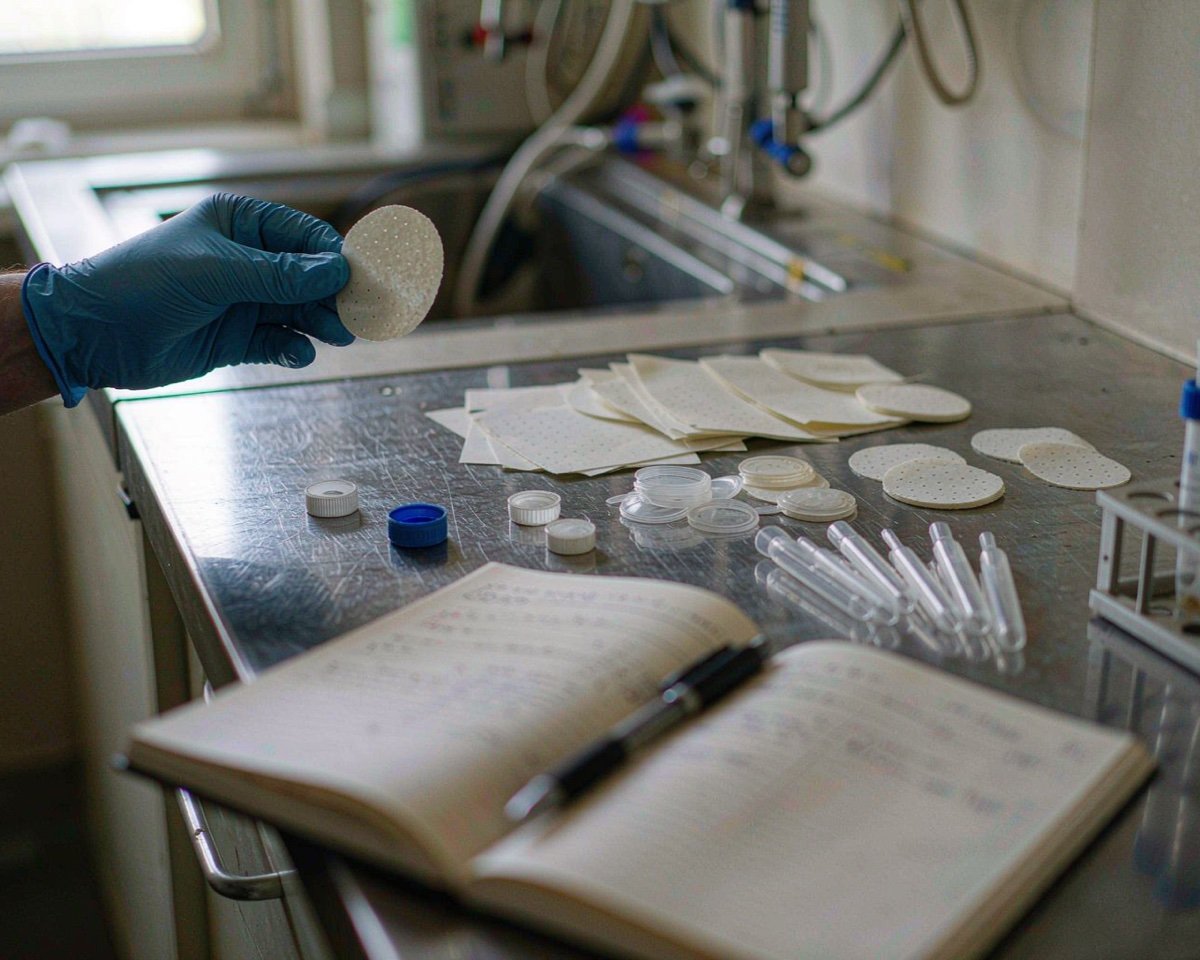
Syringe filter compatibility follows the mobile phase, and normal-phase chiral work means hydrophobic membranes. PTFE (hydrophilic or standard) is the default for hexane-based samples; it passes nonpolar solvents without leaching or swelling. Nylon also handles hexane and is often cheaper, but it can bind strongly polar analytes and it’s off-limits if your extract carries any aggressive solvent that attacks it.
PVDF handles alcohol-rich polar organic phases well. Glass fiber prefilters earn their keep when your sample comes straight from a reaction crude or a formulation slurry, which in chiral QC it often does; clogging a 0.45 µm PTFE filter mid-push wastes sample you may not be able to make again. We compare the four common membrane chemistries in our nylon vs PTFE vs PVDF vs PES filter guide.
One caution specific to chiral work: some chiral analytes interact with filter media, and a membrane that holds back 10% of one enantiomer can bias your ee measurement while leaving total recovery looking fine. If your method reports enantiomeric excess, validate recovery through the filter for both enantiomers separately.
Inserts and Small-Volume Handling for Expensive Standards
Enantiomerically pure reference standards can cost hundreds of dollars per milligram, and chiral methods often need a rack of individual calibrators for each stereoisomer. Standard 2 mL vials waste most of that liquid: below roughly 300 µL, the needle of a standard autosampler starts pulling air or missing the meniscus entirely.
Low-volume inserts (250 µL conical springs or polymer inserts) fix this, and for chiral standards they’re usually the difference between buying 1 mg and 5 mg of a standard. Glass inserts for normal phase, polymer only after a solvent-compatibility check. If you’re new to the details, our vial inserts guide walks through spring inserts, conical inserts, and the filling heights that keep the needle wet.
Handle the standards cold, dilute them once into amber glass, and aliquot rather than repeatedly opening the stock. Repeated freeze-thaw and light exposure both nudge some enantiomers toward degradation, and you’ll see it as creeping drift in your calibrator responses.
Racemization and Sample Stability: The amber-vial problem
Some molecules racemize in solution, especially under light, heat, or extremes of pH. Others degrade photochemically. Either way, your measured ee stops being the sample’s ee and becomes a function of how long the vial sat on the bench.
The mitigation is procedural as much as material: amber glass vials for standards and samples, cold storage between runs, and injection order that puts the oldest time-sensitive samples first. If you’re validating a chiral stability-indicating method, build a “vial residence time” check into it: reinject the first calibrator at the end of the sequence and confirm the ee didn’t move. That single test catches most racemization and evaporation problems before they contaminate a data set.
Conclusion
Chiral separations don’t leave much margin for consumable mistakes. The selectivity that separates two mirror-image molecules is thin, the solvents are harder on hardware than anything in routine reversed-phase work, and the standards are too expensive to waste in oversized vials. Glass vials with PTFE-faced septa for normal phase, PTFE filters for nonpolar samples, low-volume inserts for precious calibrators, and amber glass for anything with a stability question: that short list covers most of the failures I’ve watched labs diagnose the hard way.
If you’re setting up a chiral workflow, buy the consumables around the mobile phase, not around the instrument. The column tells you which solvent world you live in, and the solvent world tells you which vials, septa, and filters survive there. Get that logic right and the rest of the method falls into line quickly.
Frequently Asked Questions
Can I use polypropylene vials with hexane-based chiral mobile phases?
Not for any extended contact. Polypropylene softens and swells in hexane, and over a long autosampler sequence that risks leachables in your chromatogram and distorted vial geometry that jams the tray. Use borosilicate glass vials for normal-phase and polar-organic chiral work.
Which syringe filter membrane works with hexane samples?
PTFE is the standard choice for hexane and other nonpolar solvents because it’s chemically inert to them and doesn’t leach UV-active material. Nylon also tolerates hexane, but validate analyte recovery, since some chiral analytes bind to membrane surfaces and bias enantiomeric excess results.
Why do my chiral standards need low-volume inserts?
Enantiomerically pure standards are expensive and methods often prepare small volumes of each calibrator. A standard 2 mL vial leaves anything below about 300 µL out of the needle’s reach, so inserts recover nearly all of it. For standards priced per milligram, that’s a direct cost saving.
Do chiral analytes really racemize in the vial?
Some do, depending on the molecule, the solvent, pH, light, and temperature. Thalidomide-type compounds and certain amino acid derivatives are known cases. Amber glass vials, cold storage, and an end-of-sequence reinjection check will tell you quickly whether your analyte is stable in the vial.