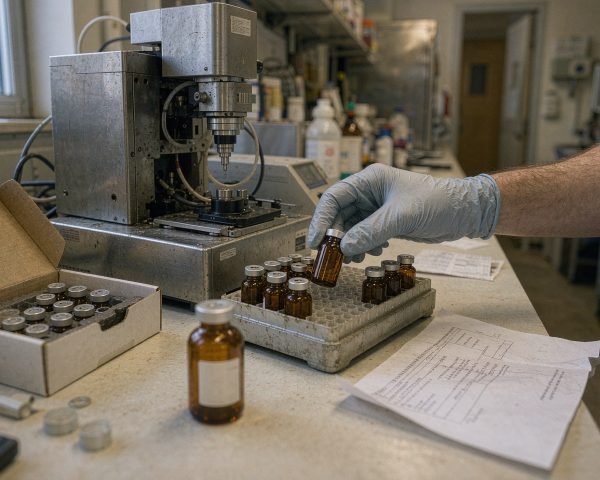

Nitrosamine testing is one of the few workflows where a plastic cap liner can decide whether a batch gets released. The analytes sit at ng/g levels, the methods are LC-MS/MS or GC-MS/MS, and everything between sample and detector either protects your data or pollutes it.
Nitrosamine testing needs low-extractables LC-MS/MS vials and filters, amber glass where light is a factor, chemically inert closures with no secondary amine sources, and certified reference standards stored cold and dark. Polypropylene and PTFE-line-everything are the safe defaults; rubber components and unvalidated filters are the usual suspects when results drift.
That list is short on purpose. The rest of this page explains why each item earns its place, and which shortcuts labs take that cost them the data.
Why the Whole Industry Is Doing This: A Quick History
The panic started in mid-2018. The FDA announced recalls of valsartan products after N-nitrosodimethylamine (NDMA), a probable human carcinogen, turned up in the API made by one Chinese manufacturer, and the recall list kept growing as N-nitrosodiethylamine (NDEA) appeared in more lots (FDA ARB recall updates). Ranitidine, metformin, and other widely used drugs followed. The EMA ran its own review and required marketing authorization holders across Europe to assess every product for nitrosamine risk (EMA nitrosamine overview).
Regulators then made testing permanent. FDA’s guidance requires a three-step process: risk assessment for every product, confirmatory testing where risk exists, and reporting of changes to control the impurities (FDA mitigation guidance). Acceptable intakes are tiny; the agency’s published limit for NDMA is 96 ng per day, and the current acceptable intake tables for nitrosamine drug substance-related impurities live on the FDA’s guidance page (FDA nitrosamine AI limits).
For a testing lab, that math converts directly into method requirements. When the limit is 96 ng/day and a patient takes 800 mg of drug per day, your method is chasing roughly 120 ng/g, and most labs validate to a fraction of that. At those concentrations, consumables stop being commodity purchases.
The Methods Set the Rules: LC-MS/MS and GC-MS/MS
Almost every nitrosamine method you’ll see in a lab is built on tandem MS. Small volatile nitrosamines like NDMA and NDEA work beautifully by GC-MS/MS, often with chemical ionization for extra selectivity. Less volatile ones and the drug-product matrix in general push you toward LC-MS/MS with electrospray.
Both routes share the same sample prep reality: extract the drug product (usually with methanol, acetonitrile, or a mix), maybe clean it up, add internal standards, and inject. FDA has published confirmatory methods for specific products, and they’re detailed about conditions precisely because matrix noise swamps these analytes easily (FDA nitrosamine AI limits).
Two consumable consequences fall out of this. Headspace-style volatility means GC vials, liners, and septa matter as much as LC ones. And MS sensitivity at the bottom of the calibration curve means anything that leaches, adsorbs, or contaminates shows up as either a ghost peak or a suppressed signal.
Vials: Low Extractables First, Then the Material Question
Start with extractables. A vial or cap that leaches plasticizers, mold release agents, or lubricant residues will bury your 0.5 ng/mL calibrator in noise. Buy vials certified for low extractables and lot-tested for LC-MS background, and treat those certificates as part of the method file. We break down which claims on the box actually mean something in our LC-MS grade consumables guide.
Then there’s the glass-versus-polypropylene question, which labs ask constantly and answer inconsistently. For nitrosamines specifically, glass is my default. These are small, polar molecules; adsorption to glass is minimal, and glass tolerates the methanol and dichloromethane-heavy extraction schemes without softening or leaching. Polypropylene is fine for short holds in aqueous or high-aqueous media, but it’s a poorer fit for long storage of standards in strong organic solvent, and some PP products carry mold-release residues that land exactly in your low-mass range. If you do use PP tubes for extraction, verify recovery of your internal standards through the tube type; it’s a one-day check that removes a whole category of doubt.
One more vial habit: match the insert to the volume. Many nitrosamine methods inject 5 to 20 µL from limited extract, and a standard 2 mL vial leaves your analyte sitting in a puddle the needle can’t reach. Use conical inserts or low-volume vials for the calibrators.
Amber Glass and Light: Cheap Insurance
NDMA and several related nitrosamines are photosensitive; UV light promotes their decomposition, and some can also form photochemically under the wrong conditions. Amber glass vials block most of the wavelengths involved for pennies. When to switch from clear: stock solutions, calibration standards, and any extract waiting more than a few hours for its place in the autosampler queue. We’ve compared the two in detail for general lab use in our clear vs amber vials guide.
Storage discipline matters as much as the glass. Deuterated internal standards (d6-NDMA and friends) are expensive and irreplaceable mid-sequence. Keep them in amber vials at 2 to 8 °C or frozen, and log the vial’s puncture count; after a dozen injections the septa are shedding more than they’re sealing.
The Contamination Nobody Budgets For: Secondary Amines in Your Consumables
This is the section that saves someone a week of troubleshooting.
Nitrosamines form when secondary amines meet nitrosating agents. Your method uses acidic conditions at some point, and nitrite is everywhere (it’s a known impurity in excipients and even in some lab materials). That means any consumable that leaches secondary amines is a potential nitrosamine factory inside your own vial.
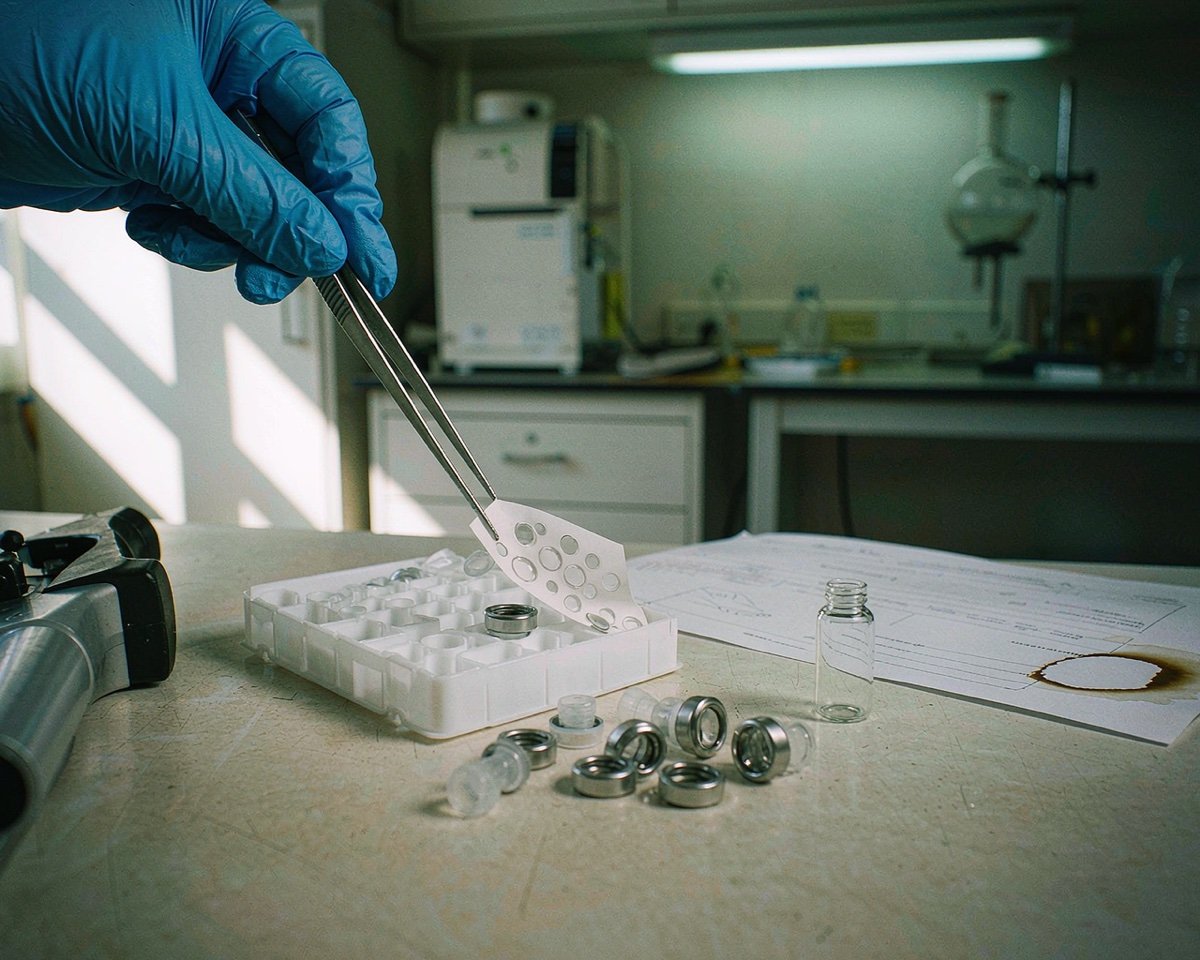
The usual offenders: nitrile and natural rubber components (peristaltic pump tubing, some septa formulations), amine-cured silicone, and certain adhesives in cap liners. The fix is boring and effective: PTFE-faced septa only, no rubber in the sample path, and PTFE or polyethylene cap liners. If your extraction uses shaking with rubber-backed mats or rubber stoppers, run a blank through that exact path. A blank that grows NDMA out of nowhere has found its source, and it’s rarely the reagents.
Syringe Filters: Validate or Regret It
Filtering extracts before injection is standard practice, and for nitrosamines it deserves more respect than it usually gets. Two failure modes matter.
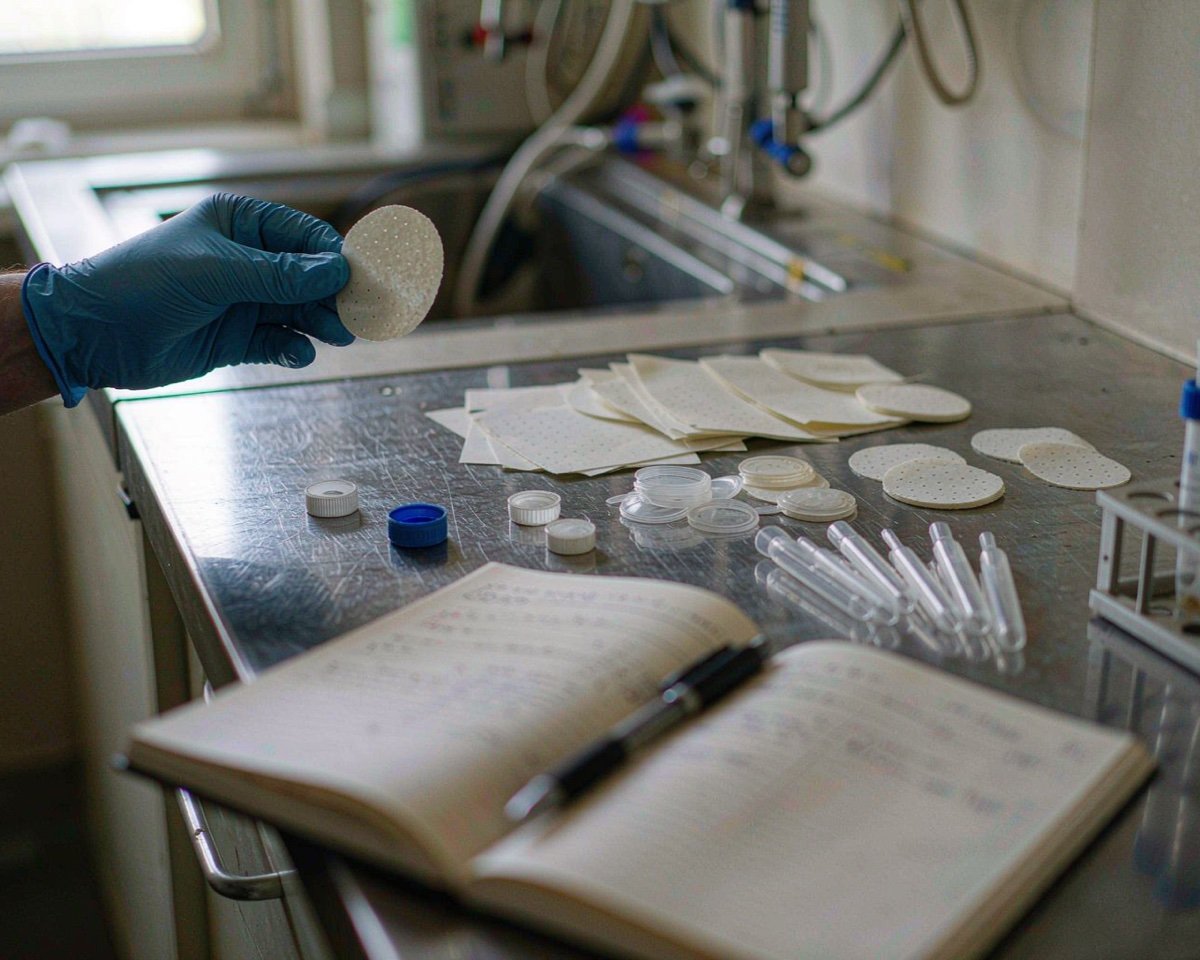
Extractables: the membrane and housing leach into your strong-organic extract, and those extractables land in your LC-MS background. PTFE and PVDF membranes are the usual low-extractable choices for organic-heavy extracts; nylon is fine chemically but can introduce its own background in some solvents. Whatever you choose, pre-rinse the filter with your sample solvent and discard the first fraction, then verify spike recovery through the filter. Our syringe filter extractables overview covers the test methods labs use.
Adsorption: at ng/mL levels, a filter that holds back even 5% of your analyte shifts your low calibrators. Run the recovery check as part of method validation, not as a someday project. And note that some methods skip filtration entirely and centrifuge instead; if your matrix allows it, that’s one consumable removed from the risk list.
Where This Leaves Your Shopping List
Consolidating: amber glass vials with PTFE-faced caps for standards and extracts, low-extractables certification on every LC-MS consumable, PP only where you’ve verified recovery, no rubber anywhere near the sample, and validated or centrifuge-only filtration. None of it is exotic. All of it is the difference between a method that holds 0.1 ng/g and one that drifts every second batch.
The good news is that nitrosamine work doesn’t need a new consumables cabinet. It needs the same discipline we recommend for any trace LC-MS lab, applied without exception. If you only tighten one thing this month, make it the vial and cap spec; it’s the cheapest change with the biggest effect on your noise floor.
Conclusion
Nitrosamine testing compresses everything difficult about trace analysis into one workflow: carcinogens at ng/g, regulators publishing exact acceptable intakes, and MS methods living at the very bottom of their dynamic range. The valsartan recalls made this a permanent part of pharma QC, and the consumables you choose decide whether your method meets the limits or fights its own background.
The pattern across every section above is the same. Materials that stay inert (glass, PTFE, PFA) protect the data; materials that leach (rubber, unvalidated plastics, dirty filters) destroy it quietly. Specify low extractables in writing, store standards cold and dark, and validate every filter that touches an extract. Labs that do these three things pass confirmatory testing on the first attempt far more often, and labs that don’t spend their quarters re-running batches. Your consumables budget is your method robustness budget. Spend it like both are the same thing, because they are.
Frequently Asked Questions
Can I use polypropylene vials for nitrosamine standards?
Short-term storage in aqueous or high-aqueous media is usually fine, but verify recovery first, because some PP products leach residues into your MS range and nitrosamines can interact with plastic surfaces over time. Amber glass with PTFE-faced caps is the safer default for stock and calibration standards.
Do syringe filters adsorb nitrosamines?
Most modern PTFE and PVDF filters show minimal adsorption, but at ng/mL levels you should measure it rather than assume it. Run a standard through the filter and compare recovery against an unfiltered control as part of method validation.
Why amber vials for nitrosamine testing?
Several nitrosamines, including NDMA, are sensitive to UV light and can degrade in solution. Amber glass blocks the wavelengths involved and costs almost nothing extra, which makes it cheap insurance for standards and any extract sitting in the autosampler queue.
What consumables can contaminate my nitrosamine samples?
Anything containing secondary amines is the concern: natural rubber and nitrile components, amine-cured silicone, and some cap liner adhesives can leach amines that convert to nitrosamines under acidic, nitrite-containing conditions. Keep rubber out of the sample path and run method blanks through your full prep.