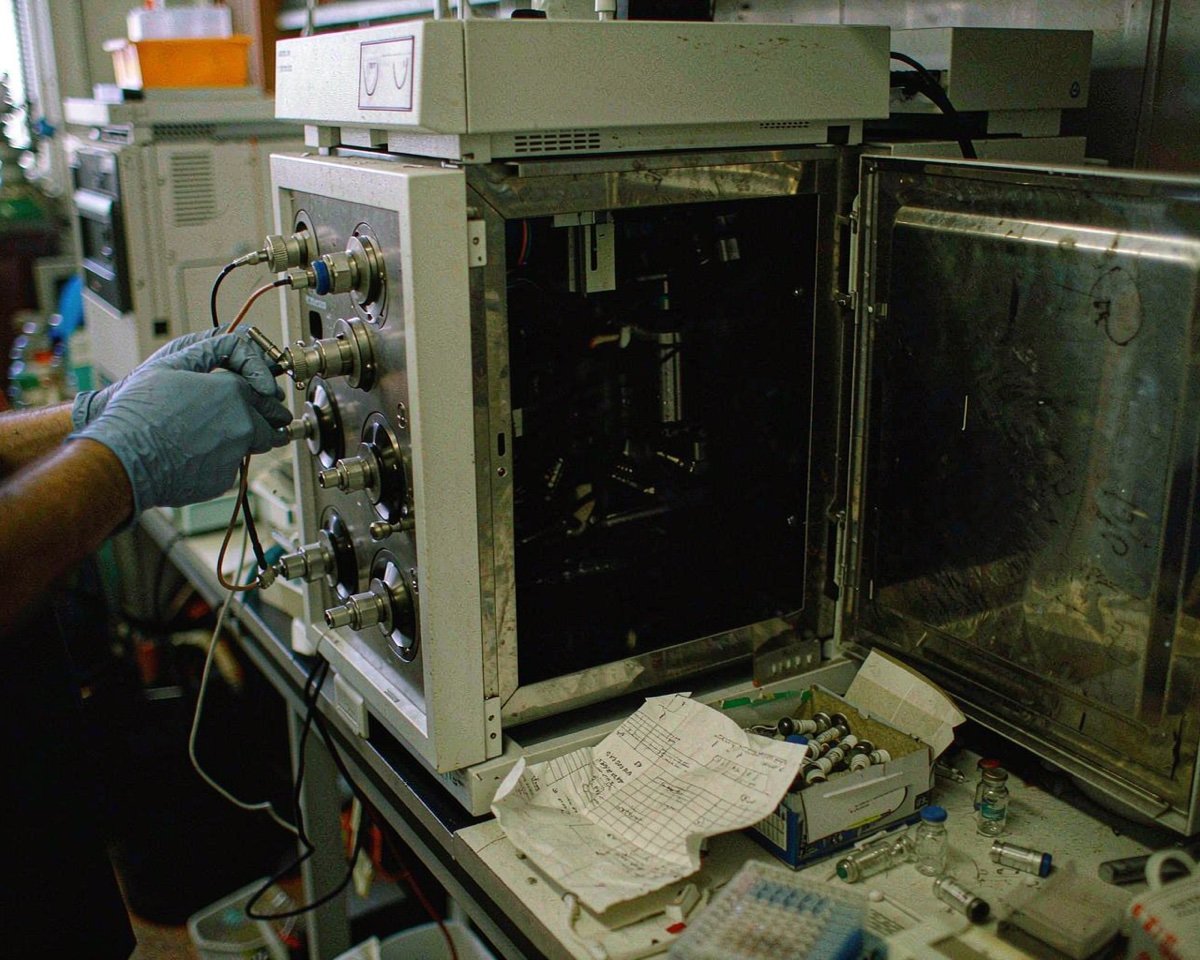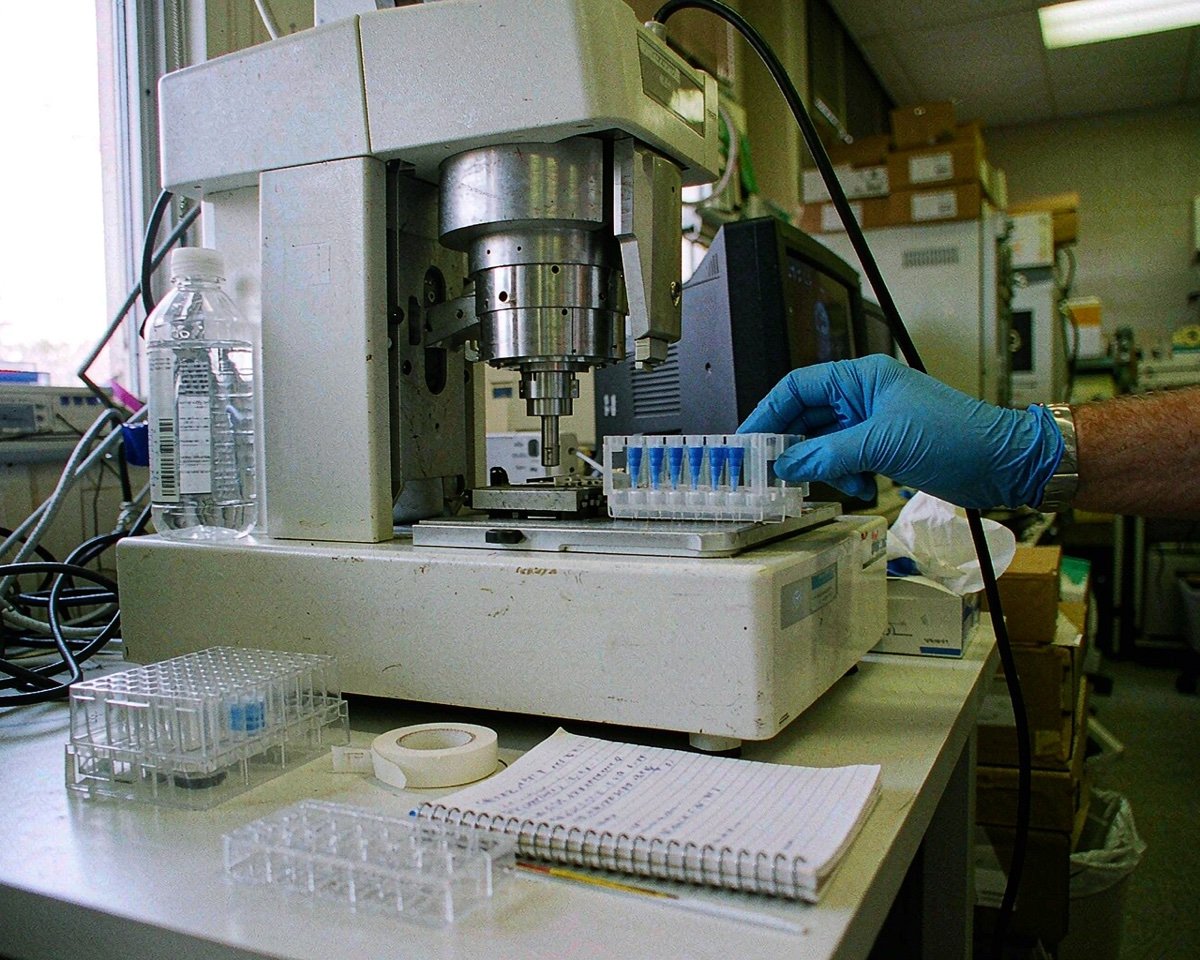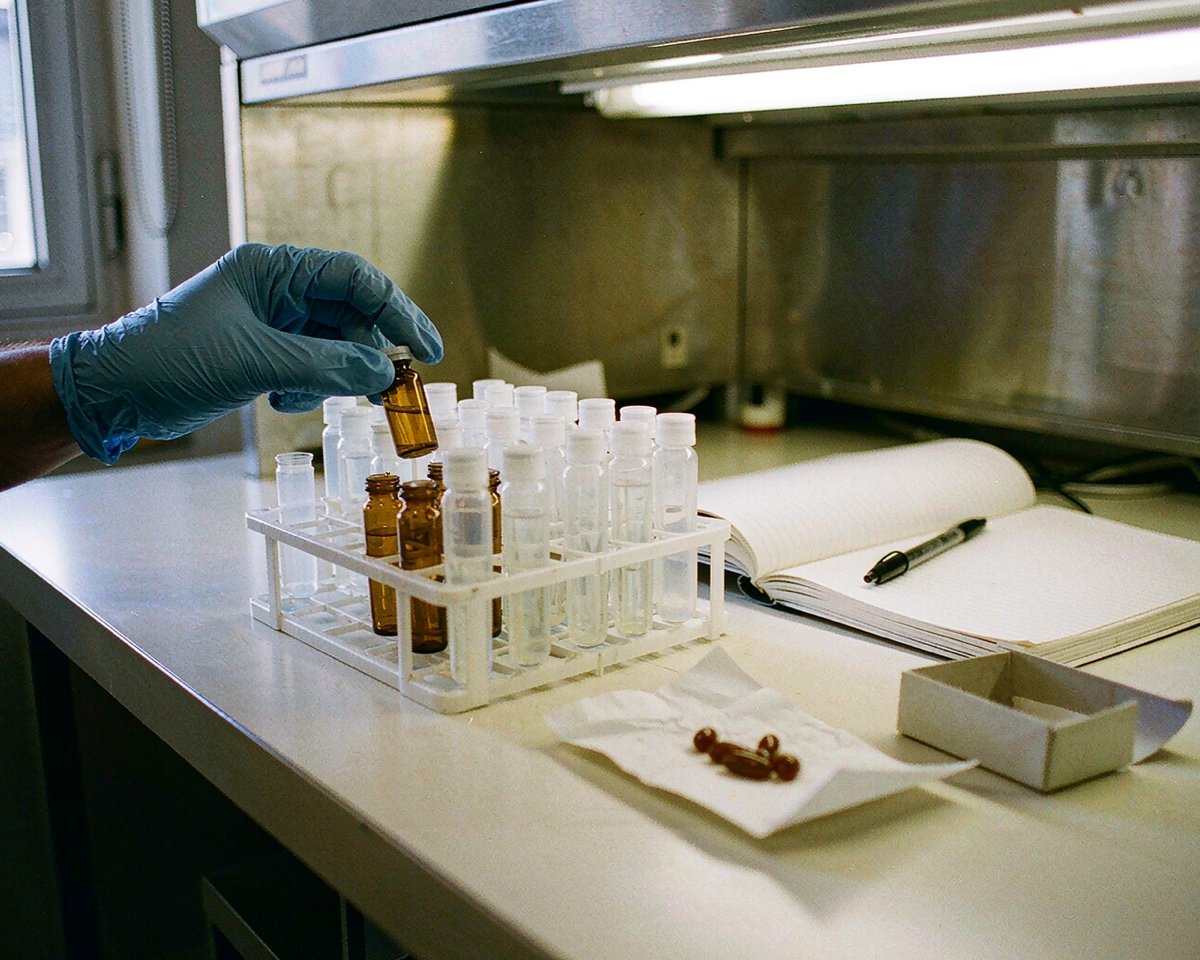


A customer once sent us a photo of a bent autosampler needle next to a tray of 9 mm vials and asked what he had done wrong. The answer was in the photo: he was refilling vials with a positive-displacement pipette through a standard opening, and every third fill nicked the thread or the septa guide. He needed a wide-mouth vial. This article is about when that switch is worth making, and when it is not.
The Short Answer
Wide-mouth vials have an opening roughly 40% wider than standard vials, which makes them the better choice when you are filling or retrieving sample manually, working with viscous samples, handling samples with particulates, or using robotic autosamplers that benefit from a larger needle target. Standard vials remain the better choice for routine automated work with free-flowing samples, because the smaller opening limits evaporation and gives you the broadest cap and septa selection. Pick the opening for your handling workflow, not for the instrument alone.
What “Wide-Mouth” Actually Means
The terminology trips people up because two different things get called “wide”.
A wide-opening vial is the same 12 × 32 mm, 2 mL body with a larger mouth (the 9 mm screw-thread version with a wide bore is the common example). The glass body is unchanged, so tray compatibility is identical.
A wide-bore crimp vial (often 11 mm crimp with a wider mouth) serves the same purpose for crimp-top workflows. And then there are larger formats entirely, like 13-425 threaded 4 mL vials, which are wide-mouth as a side effect of being bigger overall. Our complete guide to HPLC vial neck types walks the full thread alphabet if you want the map.
For this article, the useful comparison is: same vial, same tray, wider opening.
Four Situations Where Wide-Mouth Wins
1. You fill or retrieve samples by hand
The bigger target means the pipette tip or spatula clears the threads without scraping. Anyone who has watched a viscous plasma aliquot curl and miss the vial wall by a millimeter knows what that is worth. The overview of standard vs wide-opening autosampler vials from vials-filters.com frames this the same way: wide openings exist mainly for manual handling and difficult matrices.
2. Your samples are viscous or particulate-laden
Thick matrices pour and pipette slowly; a narrow opening adds splash-back, air bubbles, and wall smears to every transfer. The HPLC vial size guide from hplcvials.com makes the point plainly: large-mouth vials suit thick samples and samples containing solid particles, reducing blockage risk during injection and transfer.
3. Needle damage is showing up in your lab
Wide openings give the autosampler needle a bigger target, which is why robotic-arm autosamplers often prefer them. One supplier catalog notes that wide-ID vials have roughly 40% wider mouths specifically to cut needle-bending risk during sampling; the wide-opening vial overview from chromatographysupplier.com collects those options in one place. A bent needle costs you a service call and a stopped sequence, which buys a lot of vials.
4. You need to get solids out again
Fraction collection, residue recovery, weighing the dried remainder: retrieving anything solid from a standard 6 mm opening is an exercise in patience. Wide-mouth turns a 10-minute excavation into a 30-second pour.
When Standard Openings Are Still the Right Call
Honesty requires the other side of the ledger.
Evaporation control: a smaller opening paired with a well-sealed cap loses less solvent over a long sequence. If your samples sit in the tray for 24 hours and your analytes are volatile, the standard opening is working for you.
Septa and cap selection: the standard openings have the deepest cap, septa, and pre-slit options. If your method specifies a particular septum polymer or a pre-slit design, you will find it more easily in standard formats. (If you are weighing septa choices, our nylon vs PTFE vs PVDF vs PES filters guide covers the filter side of the same compatibility question.)
Cost at volume: standard vials are the highest-volume SKUs in the industry, so they are usually a touch cheaper per unit. On 50,000 vials a year, the difference is real, though smaller than one bent needle.
For most labs the answer is not a conversion, it is a split: standard vials for the routine sequence, a case of wide-mouth for prep work and difficult matrices. I keep both on my bench and the decision takes two seconds per sample.
Compatibility Notes Worth Checking
Tray fit is unchanged for 12 × 32 mm wide-opening vials, but three details can still bite:
- Cap pairing: wide-opening vials need caps matched to the wider finish. A standard 9 mm cap will not seat properly on a wide-bore finish, so order the pair, not just the vial.
- Depth vs diameter: the opening does not change vial height, but if you move to 4 mL wide formats, confirm your tray and needle depth settings.
- Inserts: if you run low-volume inserts, check that the insert foot and the vial bore are designed together. Mismatched inserts float or tilt, and then your needle samples air.
A Quick Decision Test
If you are unsure which side of the split your lab falls on, run this tally for one week: every time someone fills a vial manually, notes a slow pour, chases a bubble, or digs residue out with a spatula, make a mark. Every time a sealed vial sits more than 12 hours before injection, make a different mark.
Whichever column is longer points to your format. Heavy handling marks mean wide-mouth earns its keep immediately; long-dwell marks mean evaporation protection is worth more than filling speed, and standard openings stay. When both columns are long, buy both formats and assign them by sample type: wide-mouth for prep and recovery, standard for the overnight sequences. That is roughly how every well-stocked bench I have seen actually operates, whatever the catalogs imply about choosing one true vial.
Conclusion
Wide-mouth vials are a handling upgrade, not a chromatography upgrade, and that is exactly how to shop for them. When your workflow involves manual filling, viscous or particulate samples, aggressive robotic sampling, or solid recovery, the wider opening removes friction you were paying for in wasted minutes and damaged needles. When your workflow is fully automated with free-flowing, evaporation-sensitive samples, the standard opening remains the smart default. Most labs land on keeping both, and the cost of the second case is trivial next to one stopped sequence. If you are mapping the whole vial-decision tree, our guide to choosing the right vial size for perfect injection results is the companion read, and our breakdown of conical vs flat bottom vials covers the other dimension people confuse with mouth width.
Frequently Asked Questions
What is the difference between 9 mm wide-opening and standard 9 mm vials?
Same 12 × 32 mm body and same thread, different bore width. The wide-opening version has roughly a 40% larger mouth, which eases manual filling and reduces needle strikes, while the standard opening offers maximum evaporation protection and the widest cap and septa selection. Tray compatibility is identical.
Do wide-mouth vials evaporate faster?
The opening itself only matters when the vial is open or the seal is imperfect. Sealed properly with a matched cap and quality septa, both formats hold solvent equally well over a normal sequence. The practical difference is handling, not storage.
Are wide-mouth vials compatible with all autosamplers?
The 12 × 32 mm wide-opening screw vials fit the same trays as standard 9 mm vials, but you must use caps matched to the wide finish. Larger 4 mL wide formats need trays that accept them, so check your autosampler’s vial specification before switching formats.
Should I use wide-mouth vials for headspace analysis?
No, headspace vials follow their own standards (typically 18 mm or 20 mm crimp or screw formats), and the crimp seal matters more than mouth width for volatile analytes. Wide-mouth logic applies to liquid-injection HPLC and GC workflows where handling and needle access are the constraints.
Why did my autosampler needle bend with standard vials?
Common causes include vials seated incorrectly in the tray, mismatched vial heights, septa coring pushing debris into the needle path, and needles sampling from vials with wall contact. If your workflow involves manual refilling or robotic arms, switching those positions to wide-opening vials is one of the cheapest prevention measures available.