
# 9 Bench Habits That Quietly Waste Consumables
Nobody budgets for the filters they push too hard or the mobile phase they pour down the drain on Friday. Yet walk through most labs and you’ll find both every week, plus vials that evaporated and boxes that expired unseen. Bench habits waste consumables more reliably than any supplier.
Nine repeatable habits cause most of it: over-preparing mobile phase, defaulting to 0.22 µm filters, oversized filter diameters, overfilled vials, abused septa, sloppy crimping, wasted sterile packs, ignored FIFO, and bad storage. Fix the habits and the reorder bills shrink.
I counted these on a whiteboard during a supplier audit a few years ago, and the list hasn’t changed since. Each one is cheap to fix and easy to spot once you know what it looks like.
1. Mixing a Week of Mobile Phase on Monday
The habit: you make 4 L of aqueous buffer because the bottle holds 4 L, not because the method needs 4 L this week.
Aqueous mobile phase is a growth medium. Agilent’s best practices for aqueous mobile phases point out that microbial growth causes problems long before it becomes visible to the naked eye, and recommend remaking aqueous mobile phase fresh every other day at room temperature. Waters’ buffered solvents guidance goes further and suggests replacing 100% aqueous mobile phase daily to discourage microbial growth. Once bacteria and algae take hold, they clog pump heads, inlet solvent frits, and column frits, and the only fix is to throw the buffer away and clean everything the growth touched.
So the bottle you mixed generously on Monday is often drain water by Wednesday, plus a contaminated solvent inlet filter you didn’t budget for.
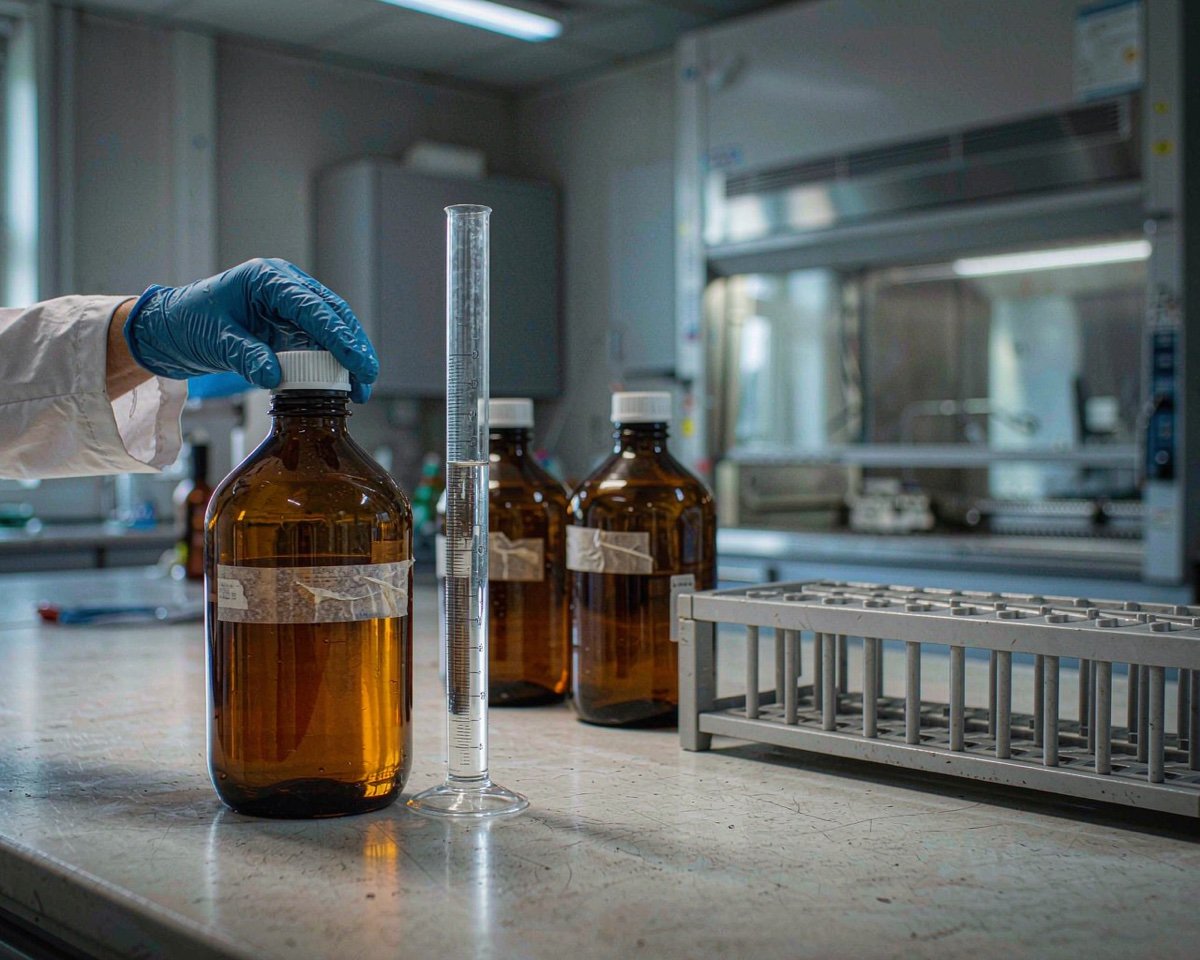
The fix is arithmetic, not chemistry. Look at consumption: a 1 mL/min method running four hours a day uses about 960 mL per day. Mix a liter and a half. If storage is unavoidable, refrigerate the bottle and write the prep date on the cap; amber glass slows photochemical degradation too. If you only change one thing on this list, change this one, because stale buffer damages far more than it wastes.
2. Reaching for the 0.22 µm Filter Out of Habit
The habit: every sample gets the same blue 0.22 µm filter because that’s what the drawer is stocked with and it feels “safer”.
Safer for the column, maybe. Harder on your hand and your filter budget, definitely. Phenomenex’s technical tip on column contamination advises 0.45 µm syringe filters for samples run on 5 µm columns and 0.2 µm filters for 3 µm packings and smaller. Most conventional HPLC methods run on 3 or 5 µm columns, which means most samples are being filtered more finely than the column will ever notice.
A 0.22 µm membrane clogs faster, needs more finger pressure, and gets discarded half-used far more often. On a dirty matrix, you can burn two fine filters where one 0.45 µm would have finished the tray. And no, the half-used filter doesn’t get a second shift; if you’ve ever wondered whether that’s overly cautious, our test of whether you can reuse a syringe filter covers what survives a second push and what doesn’t.
The sensible default: match the pore size to the column packing, not to superstition. Reserve 0.22 µm for sub-2 µm UHPLC hardware and LC-MS methods where fine particulates genuinely matter; sterilizing work needs it too. Everything else, the 0.45 µm workhorse handles with faster flow and fewer dead filters in the sharps bin. If your samples carry heavy particulate loads, a glass fiber prefilter before the membrane saves even more. Do the math once for your own tray: if 80 samples burn 40 fine filters where 25 would have done, that gap shows up in every order, and it bought nothing the column could feel.
3. Grabbing the Biggest Filter in the Drawer for a Tiny Sample
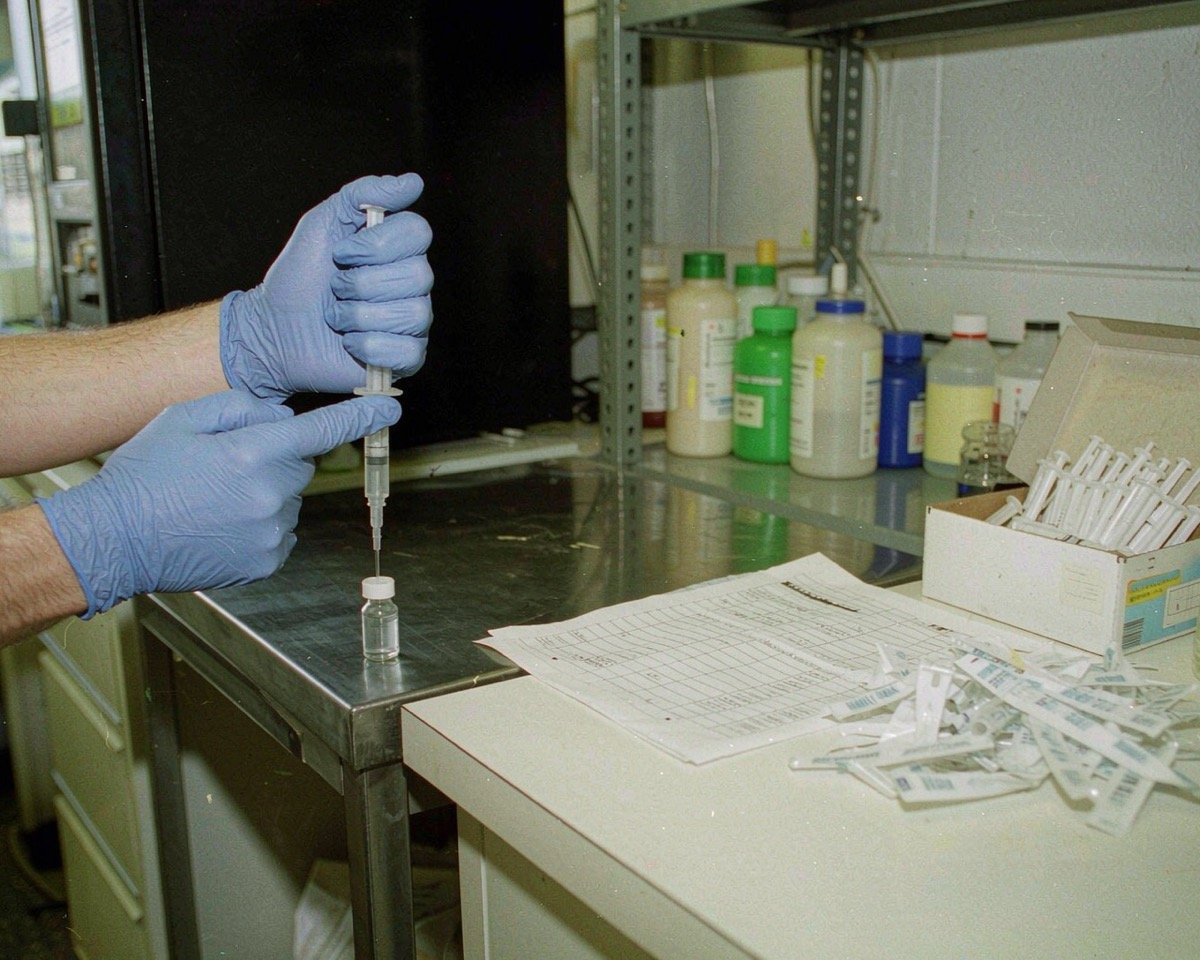
The habit: 800 µL of precious sample goes through a 25 mm filter because that’s what was within arm’s reach.
Every syringe filter holds back liquid after you stop pushing. Cytiva’s method for filtering small HPLC volumes measured hold-up volumes above 1 mL on standard 25 mm filters, which makes filtering samples smaller than 2 mL “very difficult, if not impossible” by their own description. Push 800 µL through a 25 mm housing and a large fraction of your analyte never reaches the vial. It stays in the membrane and the housing, and you either re-prep the sample or inject less than you planned.
Diameter should follow volume. Under 1 mL, use a 4 mm filter with single-digit microliter hold-up. Up to 10 mL, a 13 mm filter is plenty. Save 25 mm housings for the 10-100 mL jobs they were designed for, like mobile phase or dissolution media.
One detail that helps on small volumes: draw about 10% of the sample volume as air behind the liquid, then push the air through after the sample. That air purge chases the hold-up volume into your vial. Cytiva’s method with a 13 mm filter and an air purge recovered 25 µL samples with an average hold-up of just 5 µL.
4. Filling Vials to the Shoulder
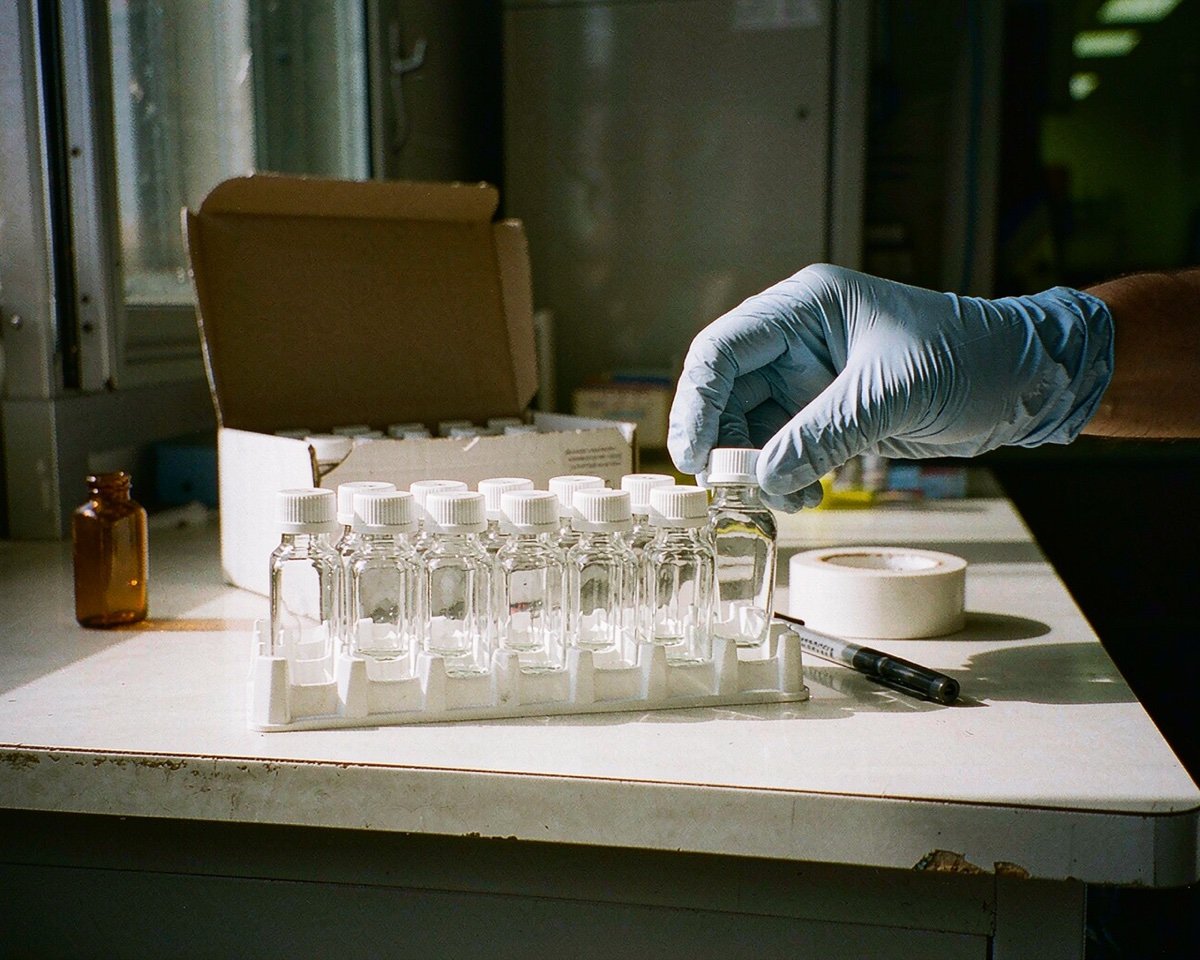
The habit: fill every 2 mL vial to 1.9 mL “so the needle definitely reaches”, then wonder why late-sequence peaks drift high.
A 2 mL vial has a working volume around 1.5 mL; past that, you gain evaporation problems and lose nothing. Agilent’s evaporation study on 2 mL vials measured essentially zero solvent loss through intact PTFE/silicone septa over 24 hours, but about 0.3% per hour through septa pierced by a syringe needle, and nearly 0.9% per hour through a cored septum, using hexane at room temperature. Load a tray at 2 pm for an overnight run and a pierced septum can quietly concentrate the last dozen vials by several percent.
The consequence is a re-run, which doubles your vials, caps, mobile phase, and instrument time for one tray.
Fill to about 1.5 mL for standard work. Below roughly 200 µL, stop filling fat vials and use an insert or a limited-volume vial so the needle sits in liquid without you overfilling. And cap vials as you fill them instead of leaving an open rack next to the balance; open glass loses volatile solvent in minutes, not hours.
There’s a sequence-drift story in almost every lab that runs long trays, and I own one. A few years back I watched an overnight sequence in a pharma QC lab come back with the last dozen vials reading about 4% high against calibration. The column was fine, the calibrants were fine, and a batch release was waiting on the data. The tray had sat pre-pierced from lunchtime while the solvent quietly left through the punctures and the analyte stayed behind. The re-run cost a full day, and a year of filling vials to the right line would have been cheaper.
5. Stabbing Septa Until Something Leaks
The habit: one cap and septum survive six injections and a weekend in the tray, then come back for a Monday re-injection “because the sample’s still in there”.
Silicone reseals elastically, but every puncture leaves a micro-channel, and the channels eventually stop closing. Agilent’s numbers above make the cost concrete: 0.3% of your solvent leaves per hour through a repeatedly pierced septum. For regulated work, suppliers treat vial septa as single-use per analytical sequence, and GC inlet septa have their own clock, typically replacement every 50-100 injections. Shimadzu’s septum replacement guide builds septum replacement into routine GC service, partly because an over-compressed or over-punctured septum bends needles and sheds corings into your inlet.
Cored particles are the nastier cost. A plug of silicone in the sample or the inlet liner shows up as ghost peaks and carryover, and you’ll spend a day chasing a contaminant that came from the cap.
Cheap fix, immediate payback: fresh septum for every vial that gets stored or re-injected, and a written interval for inlet septa. If needles are bending or you see white crumbs on the vial floor, the septa and the needle gauge disagree, and the septa are cheaper to change.
6. Crimping by Feel
The habit: aluminum crimp caps applied with fingers, pliers, or whatever tool survived the last tech, because “crimping is obvious”.
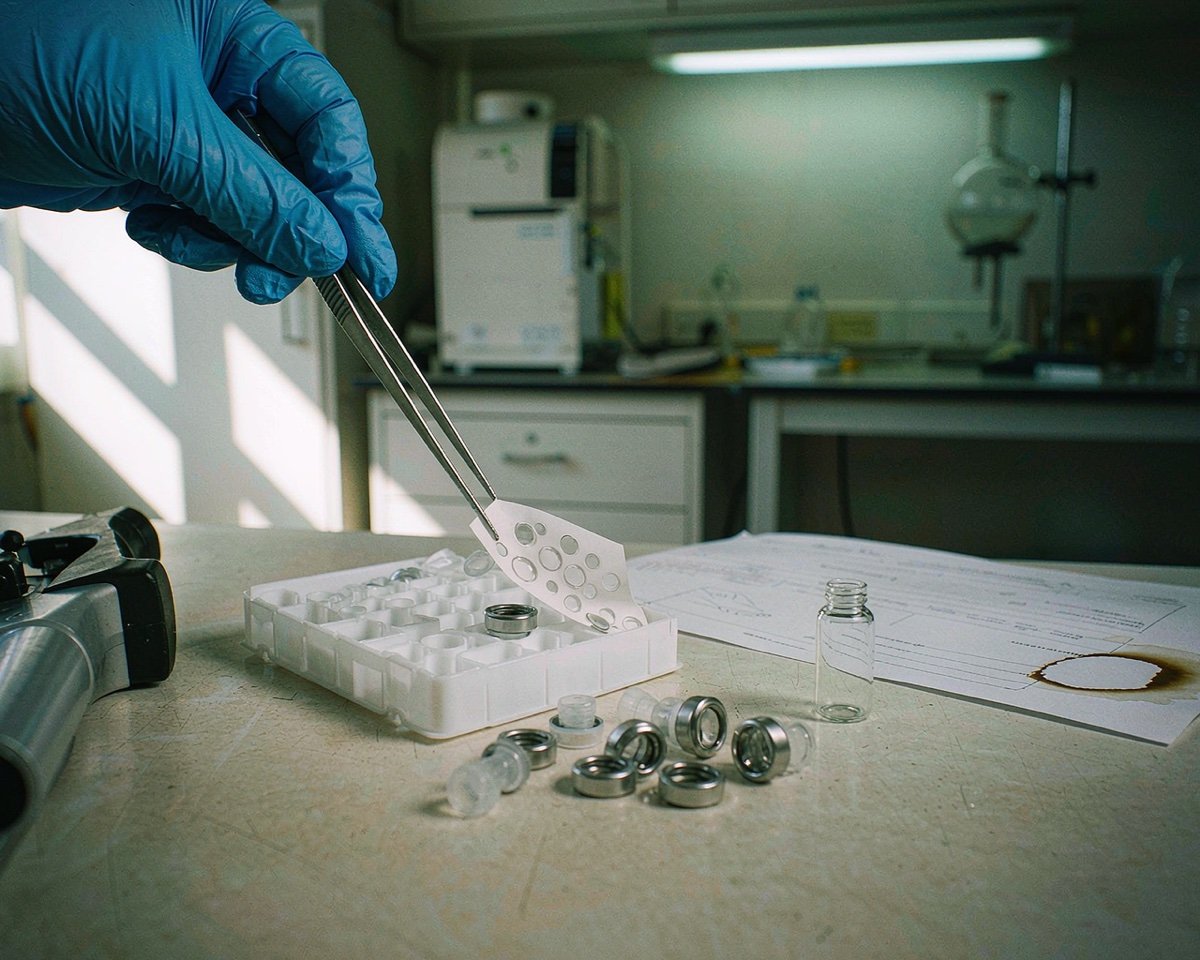
It isn’t, and the evidence sits in your trash. An under-crimped cap seals loosely, so volatile analytes leave through the septa face and headspace pressure leaks around the ferrule. An over-crimped one deforms the cap and can crack thin-walled vials, digging the septum retainer into the septa as it goes. Both failures surface as evaporation losses and pressure leaks in headspace work, plus re-injections nobody scheduled.
Agilent’s vial and sample containment catalog treats caps, septa, and inserts as a designed sealing system whose job is to prevent leakage and sample loss through evaporation. None of that engineering survives the wrong crimping force.
Use a proper crimper, check it occasionally against a test vial (a correctly crimped cap won’t rotate and the septum won’t wrinkle), and retire the pliers. If you inherit a crimper of unknown provenance, crimp a water-filled vial and hold it upside down on a paper towel overnight; the towel tells you the truth by morning. Screw caps are more forgiving of hand torque, but even they deserve firm, even pressure rather than a wrist-flick. Ten seconds of attention per vial beats a failed sequence every time.
7. Opening Sterile Packs You Don’t Need
The habit: the only filters in the storeroom are individually wrapped and sterile, so every 5 mL of mobile phase gets sterilizing-grade treatment, and half-opened peel packs dry out on the bench.
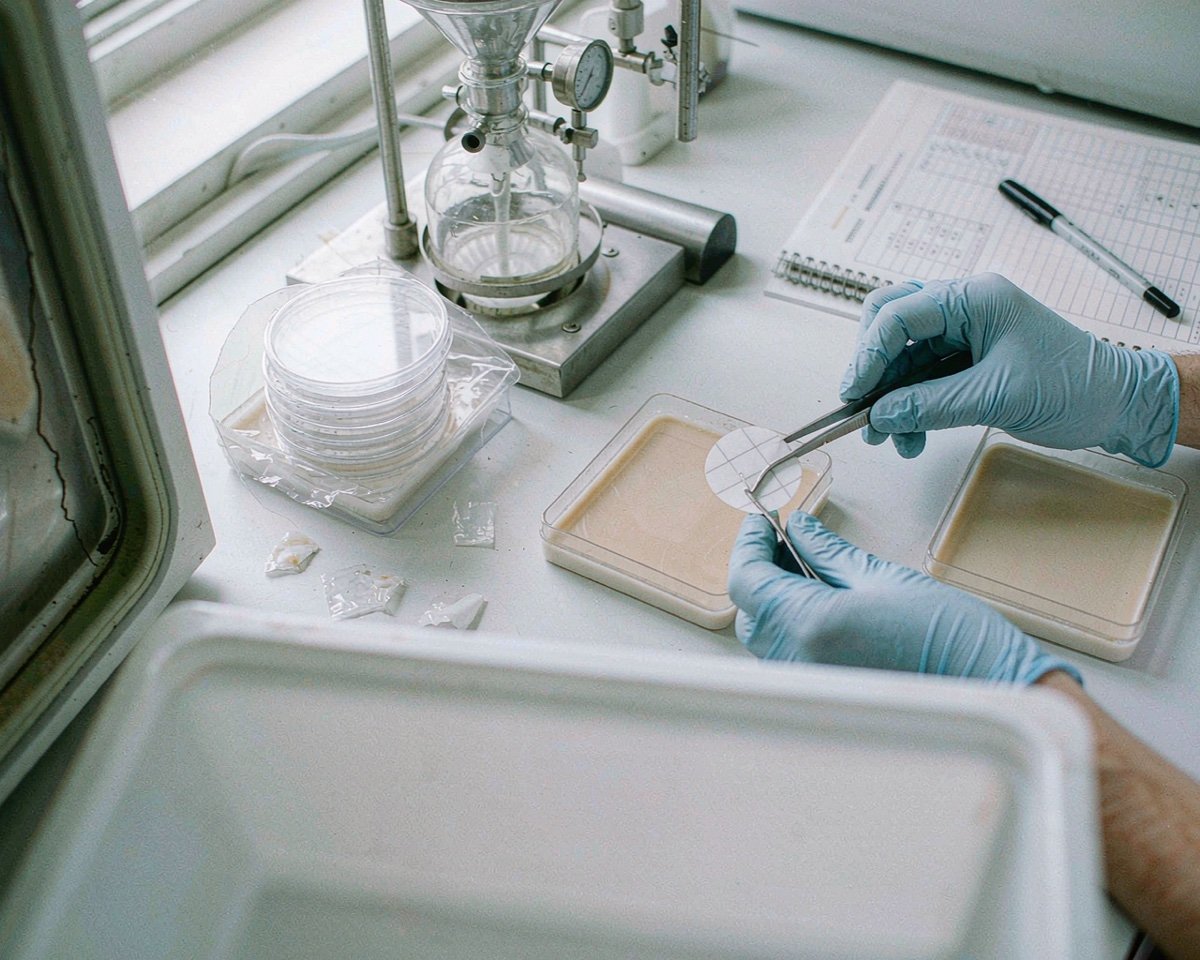
Two costs hide in that habit. The first is straightforward: sterile filters cost more than non-sterile ones, and using them for routine analytical prep is paying for a claim your chromatogram never uses. For HPLC, GC, and IC sample clarification, non-sterile filters do the identical job. Sterility matters for cell culture media and microbiology work, plus any method where the filter itself must not seed the sample with organisms. Your analyte peak is not on that list.
The second cost is quieter. A peel pack opened “just to grab one” exposes the remaining filters to dust and bench air, and exposed sterile product is no longer sterile, so the rest of the pack gets downgraded to general use or binned. Multiply that by every hurried Monday and you’re buying product you never use.
Sort the storeroom by intent. Non-sterile for analytical work, sterile only where the method or biology demands it, and train the bench to open one pack per task rather than one pack per week. Label the shelves so nobody has to guess which is which at 8:55 am. It takes an afternoon to set up and it stops a slow, boring leak of money.
8. Pulling New Boxes from the Front of the Shelf
The habit: the newest delivery goes on the shelf where it’s easiest to grab, and the older boxes slide quietly toward expiry behind it.
FIFO (first in, first out) sounds like a warehouse formality until you find three sealed boxes of filters that expired eleven months ago behind the fresh stock. Everything on this list wastes consumables slowly; expired stock wastes them all at once. Filters and septa are rubber and polymer products with real shelf lives, and vials carry lot-specific certificates that auditors may ask you to match to the box you actually used.
The fix costs a label writer and five minutes per delivery. Date every box when it arrives (arrival date, not just expiry) and place new stock behind old stock. Make expiry checks part of the monthly stockroom walk, and give the oldest boxes a physical nudge forward each month; a shelf you can read at a glance is a shelf nobody secretly hoards from. If a delivery arrives with a short-dated lot, decide immediately whether to burn through it or send it back, because “we’ll deal with it later” is how expired stock is born.
FIFO also serves traceability. If an auditor ever asks which lot touched a batch from last March, the lot number in your log has to match a box that still exists on a shelf somewhere. A stockroom organized first-in-first-out answers that question in ten seconds.
When you do find expired boxes, don’t assume the bin is the only option. Whether to downgrade them to non-critical work or use them anyway depends on what they are and what your method tolerates, and that decision deserves thirty seconds of thought rather than habit.
9. Storing Consumables Wherever There’s Space
The habit: boxes of vials live on the windowsill, filters sit above the solvent shelf, and septa share a drawer with neat’s-foot-oil hand cream. The bench decides where things live, not storage logic.
Consumables have opinions about their surroundings. Light drives algae growth in aqueous solvents (Agilent recommends amber bottles and keeping aqueous solutions out of direct sunlight for exactly this reason), and heat and UV age polymers and adhesives. Humidity swells membranes inside their packaging, and dusty bench air does no favors for anything you’ll push sample through. Septa stored compressed under heavy boxes take a permanent set and seal worse the day you finally use them. Plastic ware left near a UV lamp or a sunny window turns brittle in ways you only discover when the first tube cracks in the rotor.
A carton of 2 mL vials is not fragile cargo, but the certificate inside it matters, and a vial that spent a year in a sunbeam is a gamble your QA department didn’t sign up for.
The cure is boring and effective: sealed boxes in a cool, dry corner away from the window, original lids closed. One shelf, labeled by product family, beats “wherever fits”. For the full system, including what to keep in the original packaging and how to handle opened bags, our guide on how to store lab consumables for maximum shelf life walks through it shelf by shelf.
Conclusion
None of these nine habits looks expensive on any single day. A 0.22 µm filter is pennies, half a liter of buffer is nearly free, one re-pierced septum rarely ruins a sequence on its own. The waste compounds quietly, in the reorder frequency and the re-runs and the expired boxes you find during an audit, and it compounds precisely because each habit is small enough to feel harmless.
That’s also why the fix works. You don’t need a procurement project or new suppliers to stop most of this bleeding. Pick the two habits that cost your lab most (for most benches that’s mobile phase volume and filter sizing) and change those this week. Track your reorders for a month; the difference usually shows up on its own.
If you want to keep going, two of our articles pair naturally with this one. 7 lab consumables habits that save hours every week covers the time side of the same bargain, and 9 lab consumables myths that waste money tackles the beliefs behind a lot of the habits above. Waste less, run more.
Frequently Asked Questions
How much mobile phase should I prepare at one time?
Prepare only what the method will consume in one to two days. Agilent recommends aqueous mobile phase be remade fresh every other day at room temperature, and Waters advises replacing 100% aqueous phases daily. Refrigeration and amber bottles extend the window somewhat, but the arithmetic of daily consumption should decide the bottle size.
Can I reuse a syringe filter for multiple samples?
Manufacturers design disposable syringe filters for single use, and reuse risks carryover and cross-contamination between samples; repeated pressure can also rupture the membrane. The real savings come from matching the filter diameter to your sample volume so you stop discarding half-used filters, not from stretching one filter across a tray.
What pore size syringe filter should I use for HPLC?
Use 0.45 µm for samples on conventional 3-5 µm columns and 0.22 µm for sub-2 µm UHPLC hardware, sterilizing filtration, or LC-MS work. The coarser pore clogs more slowly, flows faster, and wastes fewer filters on samples that never needed the finer cut.
How often should vial septa be replaced?
Treat vial septa as single-use per analytical sequence, and always replace them before storing or re-injecting from a pierced vial. GC inlet septa follow their own interval, typically every 50-100 injections or weekly on a busy instrument. Visible coring or a leak means replace now; unexplained ghost peaks belong on the same suspect list.
What’s the cheapest habit to fix first?
Track your mobile phase prep volume for one week, then mix to that number instead of to the bottle’s capacity. It requires no new purchases, and it stops the single largest recurring discard in most chromatography labs along with the microbial contamination that comes with it.