
Nobody ever saved time in a lab by working faster. You save time by removing the little searches, the double trips, and the mid-run emergencies. After years of watching labs, I can tell you the difference between a smooth lab and a chaotic one is rarely skill. It’s a handful of small habits around consumables.
Here are seven that pay off within a week of starting them.
The Quick Answer
Batch your consumables work, stage materials before each run, keep a stocked “go box” per instrument, pre-label everything you can, log lot numbers as you open boxes, maintain a one-page par card, and do a ten-minute Friday reset. None of these takes more than 20 minutes to set up, and together they claw back hours every week.
1. Build a Go Box for Every Instrument
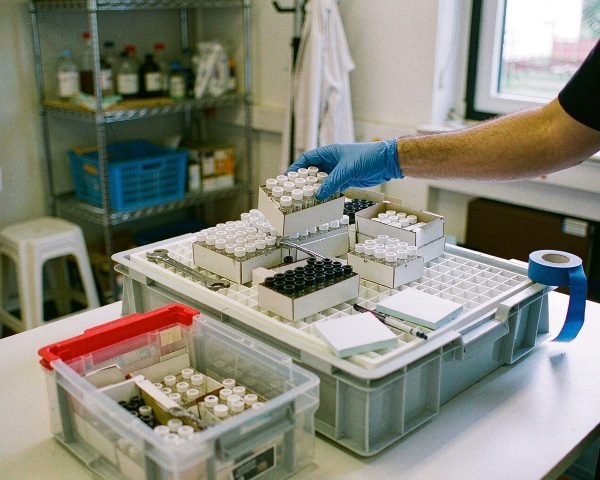
Every HPLC in your lab has a short list of things it eats: vials, caps, septa, filters of one type, and the odd wrench or wipe. Keep all of it in one open bin next to the instrument.
The rule is simple: when you use the last one, the empty spot becomes an order. No more discovering mid-sequence that the last box of 9mm caps went to the other instrument two days ago.
Vendors publish per-instrument consumable lists that make the bin contents easy to define; Agilent’s vial and cap selection guide is one example, and your instrument’s manual lists the rest. My favorite detail: put a pen and a sticky pad inside the box itself. When someone takes the second-to-last box, they scribble the item on a sticky note that goes straight to whoever orders. Low-tech, but it has outlived every inventory app I’ve tried.
The go box pays most during the moments you never planned for. A column blows out at 4 p.m. and you need fresh filters, vials, and wipes for the replacement run. If they’re all in the bin, the swap takes ten minutes. If they’re spread across four drawers and a stockroom, the swap takes forty and a favor from someone on the other side of the lab.
One refinement that costs nothing: color-code the boxes per instrument. Blue tape for the HPLC, red for the GC. New staff learn the map in a day, and misplaced items announce themselves. If your lab has grown beyond a few benches, my stockroom setup guide shows how to scale the same idea.
2. Pre-Label Before the Run Starts
Labeling twenty vials during sample prep means twenty interruptions with one hand holding a pipette. Label them while the samples digest, incubate, or whatever else they’re doing.
Print or write labels for the whole rack at once, apply them to empty vials in the rack, and let the run’s dead time do the work. If you use a cryo or solvent-resistant label, apply it before your gloves get dirty; adhesives hate contaminated glass.
Buy the labels in one style and stick with it. Mixed label styles on one rack slow down reading more than writing ever saved, and a misread position label is how samples swap places. If your vials go into cold storage after the run, use labels rated for the temperature; the difference between a room-temp label and a cryo label shows up as floating paper in a thawed rack. Ask me how I know. If you don’t have a labeling convention yet, my sample labeling and tracking guide gives you one in ten minutes.
3. Batch Your Consumable-Heavy Prep
Filtration is the classic case. Filtering six samples one at a time, spread across a morning, costs more total time than filtering thirty samples in one focused block, because each start-up (grab syringe, unwrap filter, prime, discard the first mL) is repeated overhead.
Same logic applies to standards: prepare your working standards for the whole week in one session, in labeled vials, stored correctly. Storage conditions matter here; most aqueous standards hold a week refrigerated and volatiles hold hours, and the ISO 62085 storage standard is a solid reference for the reagent side.
Watch the filter budget when you batch. One focused filtration session on a heavy matrix burns through more membranes than six gentle sessions, because a single filter does more total work. That’s fine, even good, but it changes your reorder math: batched labs consume consumables in visible waves, and par levels set from “average weekly use” will betray you every second week. Round your par up to the wave, not the average. End of a sequence? Filter tomorrow’s samples before you start the data review. Friday afternoon? Standard prep for Monday. The habit sticks when it hangs on something that already happens.
4. Write the Lot Number Down the Day You Open the Box
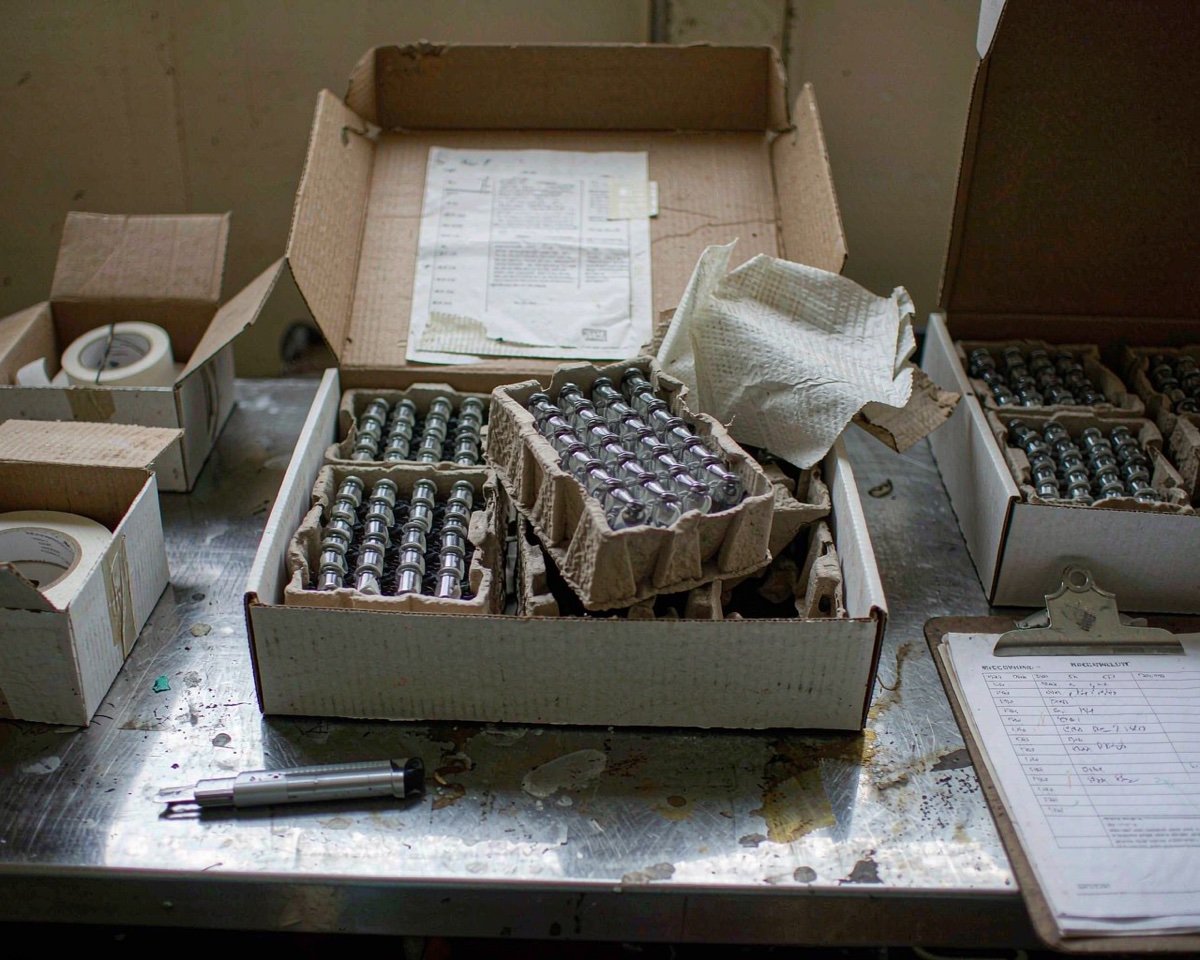
Here’s a habit that feels like paperwork until it saves you a week. Every time you open a new box of vials, filters, or septa, write the lot number on your bench sheet or sequence list, right then.
Why: when an odd result shows up three weeks later, “which lot were we on?” is the first question any investigation asks. If the answer lives only on the box you threw out, you’re reconstructing history from memory.
A spiral notebook next to the balances is enough. One column for the date, one for the item and lot, one line per box. A lab I supplied moved from three sticky notes per week to that notebook, and their next deviation investigation closed in an afternoon instead of a week of emails.
Under USP-style documentation expectations for chromatographic records, lab data must allow reconstruction of what was used; 21 CFR 211.194 spells this out for regulated labs, and even unregulated labs benefit when clients audit.
The habit also feeds your supplier conversations. When a vendor asks “which lot showed the problem?”, the lab with the logbook answers in ten seconds and the lab without it sends everyone hunting through empty boxes in the trash. And when a lot genuinely performs, the log tells you which one to reorder, which quietly improves your average consumable quality over a year.
5. Standardize One Filter for Routine Work
Labs drift into having five filter types in rotation because each method’s history added one. Every switch costs a decision, a verification, and sometimes a recovery study.
Pick one workhorse for routine aqueous and one for organic samples, standardize the format (13mm, luer), and buy them in bulk. Keep specialty filters for the two methods that genuinely need them.
This is also where money hides. Standardizing SKUs is one of the most reliable ways labs cut spending without touching quality, which I covered in the cost-cutting guide. The time saving is quieter but just as real: fewer part numbers means fewer mistakes, fewer re-orders, and a drawer that always has what you reach for.
Here’s the counterargument, because it’s real: some methods legitimately need their specific filter, and standardizing across them trades accuracy for tidiness. The resolution is to standardize the routine 90 percent and leave a clearly labeled “exception” shelf for the rest. The failure mode isn’t having two filter types; it’s having nine, three of which nobody can explain.
6. Keep a One-Page Par Card Per Consumable
A par card is a laminated sheet taped near your storage shelf. For each consumable it lists: the item, the par level (minimum you never want to fall below), the reorder quantity, and the vendor.
Five minutes to make, and it ends the weekly “do we need to order filters?” conversation, because the answer is visible on the wall. When stock drops below par, you order. No meeting required.
The par level matters more than people think. Set it from real consumption: count what you used last month, double it, and that’s roughly your reorder point given typical lead times. My MOQ and lead times explainer helps when vendor minimums fight your par levels.
Laminate the cards and hang them at the storage point, not in a binder. The distance between “I noticed we’re low” and “the item lives three steps away” is where most par systems die. And when a card’s par level turns out to be wrong, fix the card the same day. A par system people silently stop trusting is worse than no system, because it borrows credibility from every future suggestion.
7. Do the Friday Ten-Minute Reset
Once a week, ten minutes: scan the go boxes, check anything below par on the cards, toss the empty wrappers from drawers, and restock tomorrow’s first run.
A checklist I’ve seen work, scrawled on the back of a par card: eyes on every go box, par cards scanned top to bottom, wrappers cleared from the two drawers nearest the instruments, tomorrow’s first run staged with vials and caps in place, and anything odd written on the sticky pad the go boxes already use.
That’s it. The reset is deliberately small so it actually happens. Its value compounds: Monday mornings stop starting with scavenger hunts, and the “who used the last thing” friction disappears because the reset catches it within five days max.
Rotate the reset between lab members if your team has more than two people. Rotation does two things: it spreads the tiny burden so it never becomes someone’s chore, and it means four sets of eyes see the stock every month, which catches more of the weird stuff than one pair ever will.
Two Habits That Sound Smart but Backfire
Two well-intentioned habits reliably waste time, and they’re worth naming so you can skip them. The first is micro-tracking every item in inventory software from day one. A two-bench lab does not need barcode scans for cotton wipes; the setup overhead exceeds the time saved for years. Software earns its keep at scale, and the go box plus par card is the honest starting point.
The second is over-batching: pooling filtration for three days of samples into one mega-session to save overhead. Past a certain point the batch sits filtered but stale, and matrices with real volatility or adsorption risk drift while they wait. Batching pays until it starts trading sample integrity for tidiness, so cap batch windows at a day for aqueous work and prep volatiles same-day no matter what.
What These Habits Have in Common
Timing tells the story from one direction: none of these habits saves minutes while you do them. The go box even costs you an afternoon to build. The payout arrives as absence. The missing emergency, the search that never happens, the run that starts on time for the ninth Friday in a row. Measure the value by what stops showing up.
None of them requires new software, a budget approval, or a meeting. Each one moves a small decision from “whenever someone notices” to a fixed point in the week. That’s the whole game. Time in labs doesn’t vanish in big blocks; it leaks through dozens of tiny lookups and re-dos, and these seven habits plug most of the leaks.
Start with whichever one made you wince in recognition. Mine was the lot numbers, and I still remember the investigation that taught it.
A 30-Day Rollout Plan
If seven habits at once feels like a lot, here’s the sequence that worked for a lab I advised last year:
• Week 1: build the go boxes and write the first par cards for your top five items
• Week 2: start the lot logbook and move standard prep into a single weekly session
• Week 3: convert the lab to pre-labeling and standardize the routine filter
• Week 4: run the first full Friday reset and adjust par levels based on what you learned
If you fall off the wagon in week three, which is common, restart at the last habit that still runs. The system is modular by design; a lab running three of the seven still beats a lab running zero, and shame has never restocked a shelf.
Each week adds one or two habits, and nothing from the previous week gets abandoned. By day 30 the system runs itself, and the only ongoing cost is the ten-minute Friday slot. The order matters: boxes and cards come first because they create the physical structure the paper habits attach to.
Two Habits That Backfire (and What to Do Instead)
A fair warning, because I have watched both of these waste more time than they saved. The first is over-systemizing. A lab I worked with built a barcode-tracked consumables database with check-in and check-out scans for every single box, then spent more time scanning than experimenting. For a ten-person lab, a laminated par card and a go box beat a database, because the card is visible without a login and cannot be out of date in a tab nobody opened.
The second backfire is centralizing too hard. One person becomes the only one who knows the ordering rhythm, takes a two-week vacation, and the lab discovers nobody knows the filter par level. Rotation is the antidote: two people per habit, each able to run it alone, noted on the par card itself. If your habit can only be executed by one specific person, it is not a habit, it is a dependency wearing a habit’s clothes.
The pattern behind both failures is the same: the system grows faster than the lab. Add structure only when a specific, repeated annoyance demands it, and keep every structure simple enough to explain to a new hire in two sentences. The same principle applies to buying decisions: ten terms on one page instead of a manual.
What to Buy First If You Are Starting From Zero
New labs ask me this constantly, so here is the short version that the habits above attach to. Buy depth in the consumables your primary instrument eats weekly: vials, the matching caps, and one filter type in the hundreds, not dozens. Buy breadth in nothing at first. The urge to stock one box of everything is strong and almost always wrong; the exotic item can arrive by Friday delivery, but a missing workhorse stops the bench today.
Then spend a little money on the boring enabling items, because they multiply every habit in this piece: a permanent marker and label roll per bench, four open bins for go boxes, a pack of laminating pouches for par cards, and a dedicated logbook that lives where boxes get opened. The whole kit costs less than one column. A lab that spends forty dollars on this stuff in week one runs smoother by week two than a lab that spent four hundred on extra stock and nothing on structure.
One last buying rule from painful experience: when you find a consumable configuration that works, write it down with the vendor and part number before you reorder. The number of labs that re-order “the filters that worked” from memory and receive something subtly different is not small, and neither is the re-validation that follows.
Conclusion
Saving hours in a lab is less about speed and more about removing friction, and consumables are where most of the friction lives. A go box per instrument ends the mid-run scavenger hunt. Pre-labeling and batch prep convert dead time into finished steps. Writing lot numbers down the day a box opens turns future investigations from archaeology into a glance at a logbook. One standardized filter per routine workflow, a par card per consumable, and a ten-minute Friday reset keep the whole system running with almost no overhead. Pick two habits to start this week, run them for a month, and add the next one when the first two feel boring. The labs I’ve watched keep these going are the ones that treat a smooth week as the result, not luck, and they notice the difference the first time a Monday starts on schedule. Boring is the point.
Frequently Asked Questions
How do I choose par levels for consumables?
Count actual usage over four weeks, add half again as buffer, and make that your on-hand minimum. Adjust monthly for the first quarter until the numbers stabilize. Lead time from your supplier sets how early the trigger fires.
What’s the best way to get the whole lab to adopt these habits?
Attach each habit to an existing trigger (end of sequence, Friday close, box opening) rather than asking people to remember abstractly. Habits that hang on events survive; habits that hang on good intentions don’t.
Do these habits work for small labs with two people?
Even better there. Small labs feel every interruption, and there’s no inventory clerk to lean on. The go box and par card alone usually recover an hour or more a week in a two-person lab.