
# What Are Autoclave Bags and Pouches Used For?
If you work anywhere near a lab or a sterile processing department, you have seen autoclave bags stacked next to the sterilizer. They look like ordinary plastic bags, but they are engineered to survive pressurized steam and to make sterilization actually work. Pick the wrong one or seal it wrong, and you can end up with a load of “treated” waste that is still infectious.
Autoclave bags and pouches hold biohazardous waste or instruments during steam sterilization. Waste bags let steam decontaminate tips, plates, and gloves before disposal, while peel pouches keep instruments sterile after the cycle ends.
The details matter more than most people expect, so let me walk through the two distinct jobs these products do and how to prove the cycle actually killed what it was supposed to kill.
Two Products, Two Very Different Jobs
The first thing to clear up: “autoclave bags” and “autoclave pouches” are not the same product.
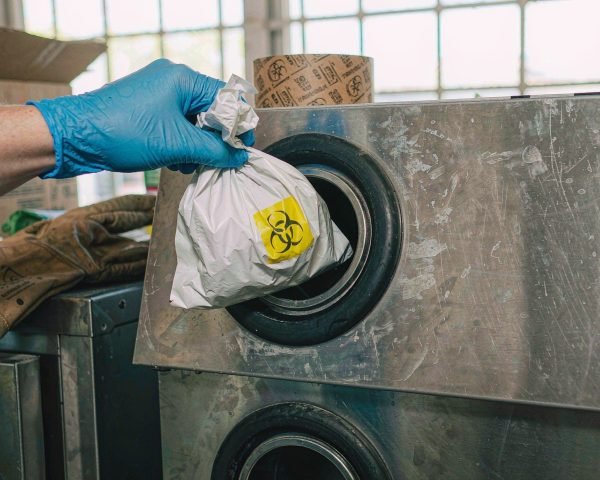
Biohazard autoclave bags are heavy-duty disposal bags, usually red, orange, or yellow with the biohazard symbol printed on them. Their job is containment. You fill them with contaminated solid waste, steam-sterilize the whole bag inside a leak-proof tray, then throw it out. Bags full of liquid waste are a spill waiting to happen, which is why secondary containment is bench habit everywhere I have worked.
Sterilization pouches (often called peel packs) go the opposite direction. Instead of holding things you want to destroy, they hold instruments you want to protect. A paper-and-plastic pouch lets steam in during the cycle, then keeps the contents sterile on the shelf afterward. STERIS’s guide to sterilization pouches explains that these are Class II medical devices, validated to let the sterilant penetrate and then maintain sterility until the pouch is opened.
Confusing the two is an honest mistake in a busy lab. It is also an expensive one.
The Main Job: Biohazard Waste Decontamination
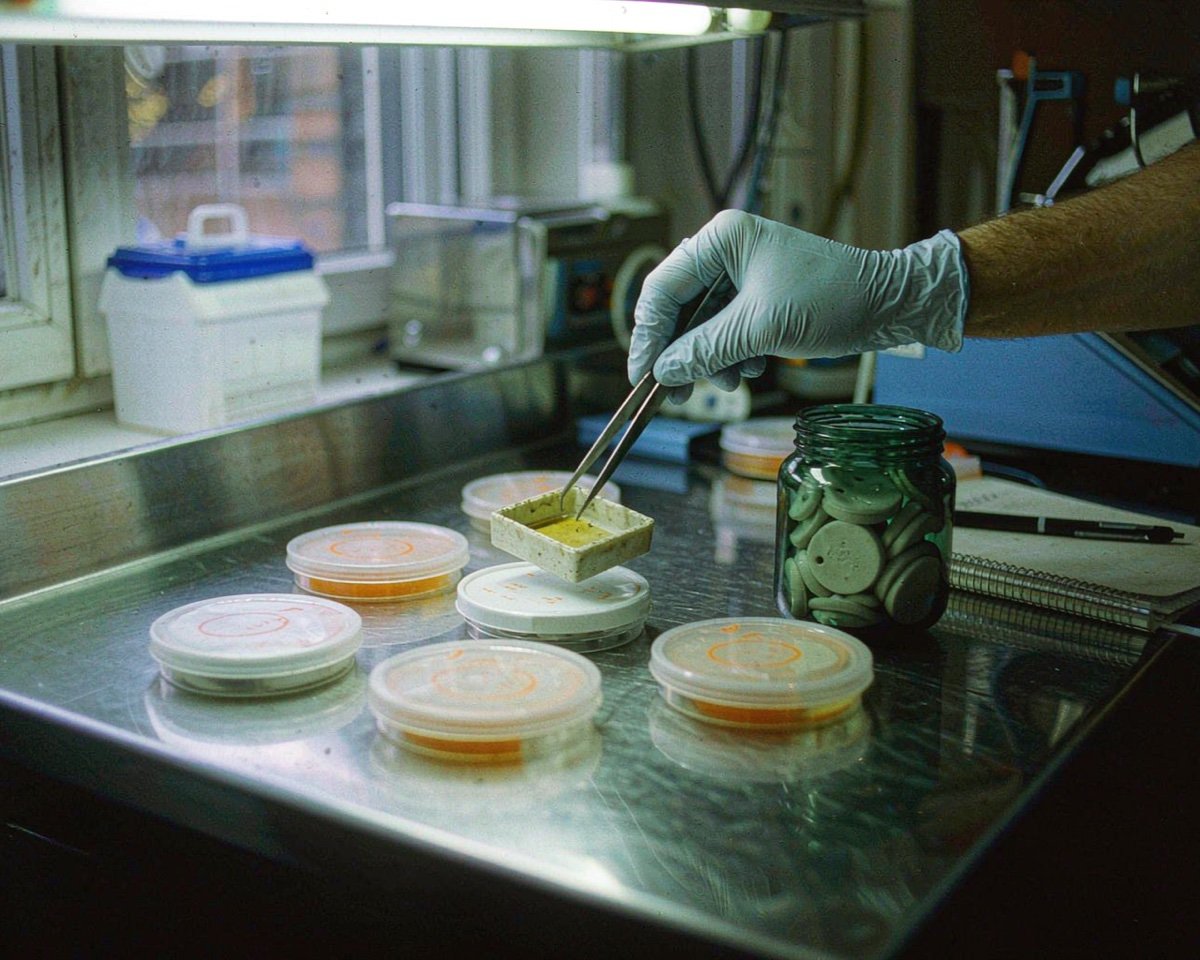
In most research labs, the bulk of autoclave bag volume goes to regulated medical waste: pipette tips, Petri dishes with agar, gloves, absorbent pads, and empty culture flasks. Regulators treat this stream as infectious until proven otherwise, and steam sterilization is the standard way to prove it.
The bag does three things here. It contains the waste during transport to the autoclave, it survives the 121 to 135 °C cycle without melting, and its printed indicator patch (on most quality bags) darkens to show the load was exposed to steam. Tuttnauer’s guide to autoclavable materials lists biohazard bags among the items built to endure these conditions, with waste kept in rigid secondary containers.
Loading the bag correctly matters more than which bag you bought. This is where I have seen more failures than anywhere else. Thermo Fisher’s Sterilin autoclave bag instructions are blunt about this: leave the neck open so steam can get in, never overload the chamber, and add a little water to bags of solid waste so steam can generate inside the bag. Their baseline guidance is a minimum of 30 minutes at 121 °C for ordinary biological waste, and 135 °C for 30 minutes when you are dealing with particularly resistant material. Some institutions go further; the NIH’s packaging protocol for medical pathological waste specifies 60 minutes at 121 °C minimum, with 50 mL of water added to the bag before closing it loosely with autoclave tape.
I once watched a postdoc twist a biohazard bag shut like a garbage bag before a Friday afternoon run. The indicator patch came out unchanged, the whole load had to be repacked, and we lost the weekend. In my experience, most labs get away with sloppy bag prep for months. Then the biological indicator comes back positive and everything stops.
Sterilization Pouches for Instruments
On the instrument side, pouches solve a different problem: keeping something sterile after the autoclave opens. A scalpel comes out of the chamber clean, but the moment it touches the air it starts collecting spores again. A peel pouch wraps it in a microbial barrier.
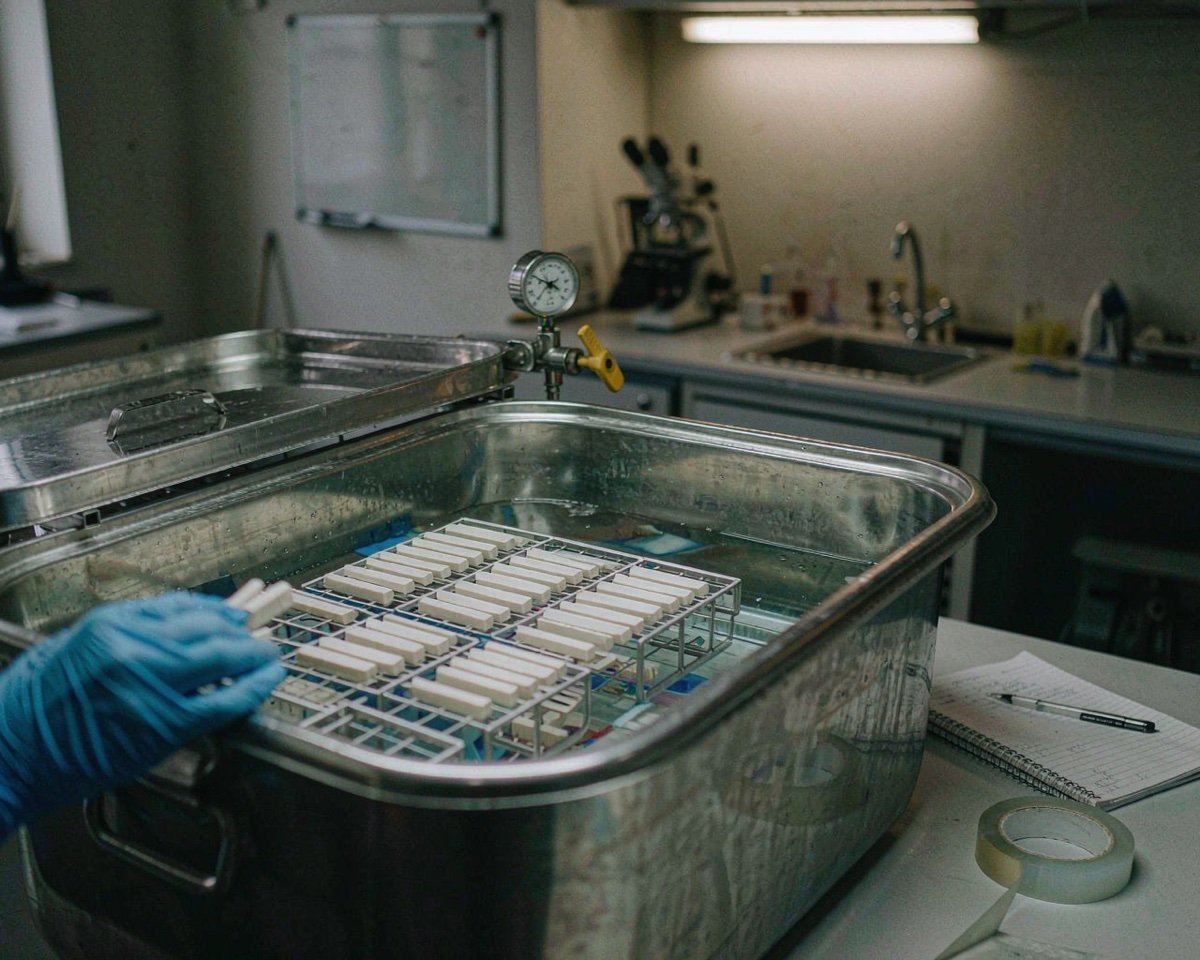
Paper/plastic pouches are the steam option. The medical-grade paper side lets steam and air pass through, the clear film side lets you see the instrument, and the sealed edges keep contaminants out during storage. Self-seal versions have an adhesive strip, heat-seal versions need a sealer, and rolls let you cut custom lengths. One rule STERIS emphasizes: match the pouch to the process. Tyvek pouches are for low-temperature vaporized hydrogen peroxide cycles, and Tyvek in a steam autoclave will melt.
A few practical notes from the bench:
• Use peel pouches for lightweight, low-profile items only. Heavy instrument trays tear through pouch film during handling, which is why standards like ANSI/AAMI ST79 push wrapped trays for those.
• Pouches are single use. A pouch that has been through a cycle has done its job.
• Place pouches on edge, paper to plastic, alternating, so steam circulates and condensate can drain.
One point of confusion worth flagging: pouches and pre-sterilized consumables are different animals. A pouch holds your instruments through sterilization, whereas gamma-irradiated products like sterile sampling bags arrive from the factory already sterile. If you have ever wondered how gamma irradiation and autoclaving compare, the short version is that they suit different materials and different points in the workflow.
Polypropylene, HDPE, and Nylon: Temperature Ratings
Material choice is where purchasing decisions get made, and where the temperature rating on the box actually matters.
HDPE bags are rated for around 121 °C. That covers standard gravity cycles for everyday waste. Polypropylene bags handle up to roughly 135 °C, sometimes 140 °C, which is what you want for high-temperature waste decontamination cycles and for tougher biological loads. The Thermo Fisher Sterilin range shows the split plainly: their HDPE bags carry a 121 °C rating while the polypropylene versions are rated to 135 °C.
Nylon (polyamide) bags sit at the top of the scale, tolerating around 160 °C, which makes them useful for specialty runs and dry-heat applications where standard plastics fail. My default is polypropylene for waste, even at the higher price, because a few cents per bag beats a melted bag fused to the chamber drain.
A related trap: anything you put inside the bag has to survive the cycle too. Polypropylene tips and plates do fine. Polystyrene Petri dishes soften and deform, though they are commonly autoclaved in waste loads since they are headed for disposal anyway. Bottles are a different story, and if you are sterilizing liquids or media in glass, it helps to know how to sterilize reagent and media bottles properly and how many autoclave cycles media bottles can survive before the glass starts letting you down.
Proving the Cycle Worked
A darkened indicator patch proves the bag got hot. It does not prove anything inside died. Those are different claims, and only one of them protects your biosafety sign-off.
Chemical indicators (the tape, the patch) confirm exposure to steam conditions. Biological indicators confirm kill. A BI is a vial of Geobacillus stearothermophilus spores, among the most heat-resistant organisms around, run through the cycle and then incubated to see if anything survives. CDC’s sterilization recommendations call for biological indicator testing at least weekly with a spore preparation matched to the cycle type, and many institutions run monthly BIs on waste autoclaves.
Placement matters as much as frequency. A BI sitting on an empty shelf tests nothing useful. CDC’s 2026 guidance on biological indicators for autoclaves focuses on using BIs to monitor autoclave performance when sterilizing biohazardous waste, and the principle is simple: put the indicator where steam has the hardest time reaching. For a waste load, that means pushing the BI into the center of the bag’s contents, not tucked beside it. Always run an unprocessed control from the same lot, because a negative result with no control is just a hope.
If a BI comes back positive, the autoclave comes out of service until the cause is found and a retest passes. Annoying, yes. But it is the system working.
Quick Buying Notes
Before you reorder, check four things on the spec sheet: material and its maximum temperature, thickness (2.0 mil and up resists punctures), whether an integral indicator patch is included, and compliance markings such as the OSHA bloodborne pathogens labeling US waste bags require. Buy the size your actual waste stream needs, since an overstuffed bag blocks steam circulation from the inside.
Conclusion
Autoclave bags and pouches are simple products doing critical work. Waste bags contain contaminated material and survive the steam cycle that renders it safe for disposal, while peel pouches carry instruments through sterilization and hold sterility until someone opens them at the bench. The brands matter less than the habits: leave bag necks open, add a splash of water to solid waste, match the material to your cycle temperature, and run biological indicators in the worst spot in the load, not the easiest. If you take one thing from this article, make it that an indicator patch is proof of exposure, not proof of kill. From here, the guides on sterilizing reagent and media bottles and gamma irradiation versus autoclaving are good next reads, depending on whether your workflow leans toward liquids or pre-sterilized consumables.
Frequently Asked Questions
Can you put regular trash bags in an autoclave?
No. Standard polyethylene trash bags melt well below autoclave temperatures and can foul the chamber drain. Use bags specifically rated for steam sterilization, typically HDPE for 121 °C cycles or polypropylene for 135 °C cycles.
Do autoclave bags need to be open during sterilization?
Yes, at least loosely. Steam cannot penetrate sealed plastic, so a tightly closed bag shields its contents from sterilizing conditions. Leave the neck open or secure it loosely with autoclave tape, and add a small amount of water to bags of dry solid waste.
What temperature do autoclave bags withstand?
It depends on the material. HDPE bags are rated around 121 °C, polypropylene bags around 135 °C (sometimes up to 140 °C), and nylon bags up to roughly 160 °C for specialty and dry-heat applications. Check the rating on the box before running a high-temperature cycle.
What is the difference between an autoclave bag and a sterilization pouch?
An autoclave bag holds biohazardous waste destined for decontamination and disposal. A sterilization pouch holds clean instruments, lets steam in during the cycle, then maintains their sterility during storage until the point of use. One is for destruction, the other for protection.
How often should you test an autoclave with a biological indicator?
At least weekly per CDC sterilization recommendations, with many institutions testing waste autoclaves monthly at minimum and after every repair or cycle-parameter change. Place the BI in the center of the bag or the hardest-to-sterilize spot in the load, and always run an unprocessed control alongside it.