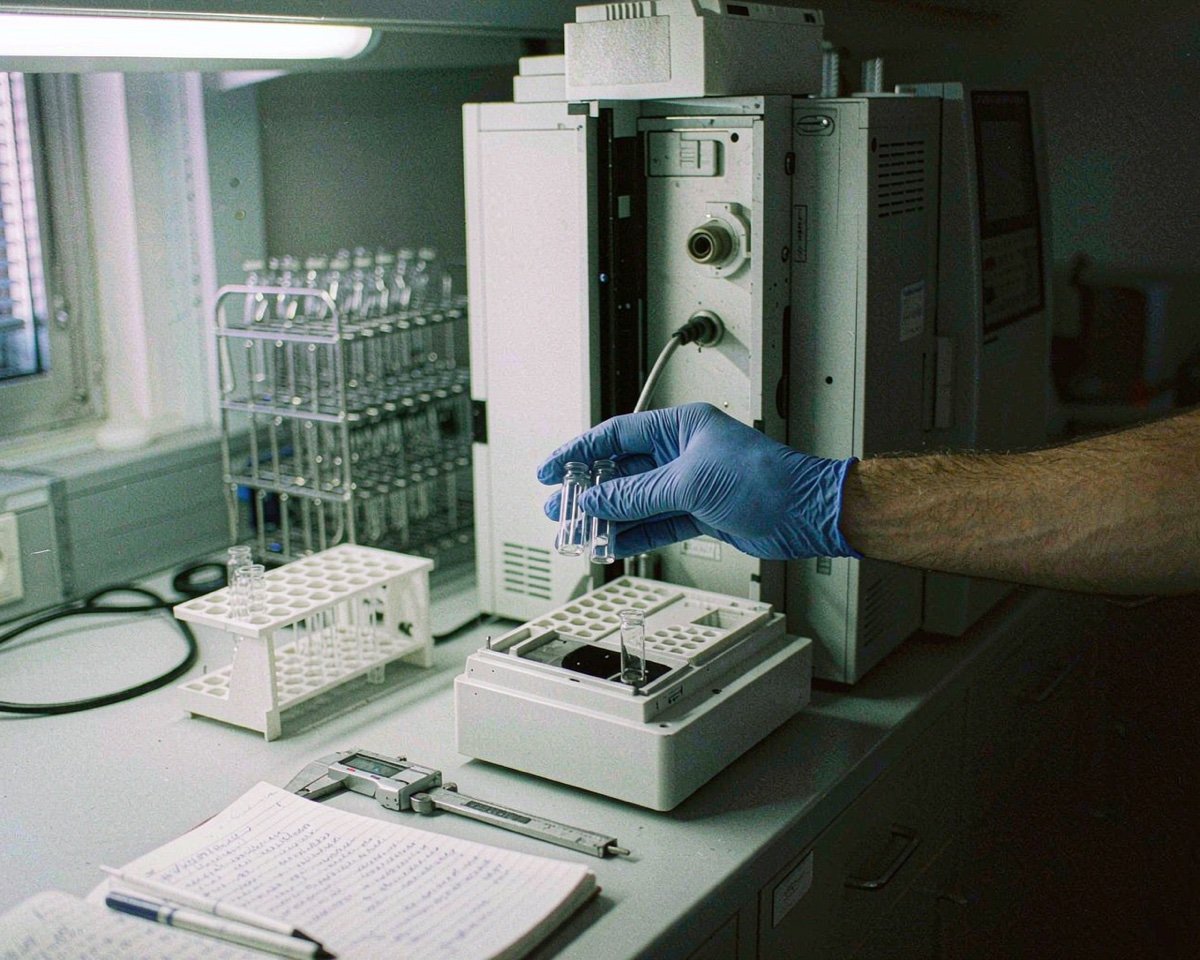
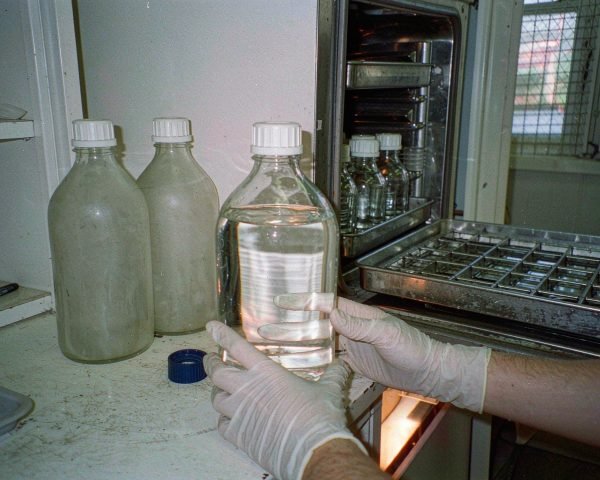

There is a bottle in every media prep room that has been autoclaved more times than anyone can count. It sits next to newer bottles, holds the same LB broth, and nobody questions it. Then one day it cracks along the shoulder, or worse, it survives but starts shedding glass flakes into your agar.
The question in the title has a disappointingly honest answer: it depends on the bottle, the cap, and how you run your cycles. But “it depends” is not useful when you are writing an SOP. So let me give you the practical version.
The Short Answer
Borosilicate glass bottles can handle hundreds of autoclave cycles before the glass itself gives out, but the consumable parts around the glass (caps, gaskets, vent plugs) wear out much sooner, often within 10 to 50 cycles. Most labs should retire a bottle based on visible wear, cap condition, and any change in surface appearance, not on a fixed cycle count.
READ ON
Here is what actually degrades, what manufacturers specify, and how to build a retirement rule your whole lab can follow.
The Glass Is Not the Weak Point
Borosilicate 3.3 glass is engineered for exactly this abuse. It handles steam sterilization at 121°C repeatedly, resists thermal shock that would crack soda-lime glass, and stays chemically inert cycle after cycle. Well-made borosilicate lab glassware is rated for hundreds of autoclave cycles without losing accuracy or strength, which is why universities and pharma labs keep using the same flasks for a decade (LabChoice glassware guide).
So when people ask “how many cycles,” they are usually picturing a glass failure that takes years to arrive. The real failures happen elsewhere.
What does eventually age the glass? Repeated cycles slowly etch the surface, especially in hard-water autoclaves, leaving the cloudy, whitish look we all recognize. That frosting is not just cosmetic. A roughened surface holds residue and is harder to clean, which matters when you are preparing cell culture media where trace contamination shows up in growth curves. Our borosilicate reagent bottles guide covers why this glass outlasts everything else on the shelf.
Caps, Gaskets, and Vents: The Real Expiry Clock
Manufacturers are refreshingly specific here, and the numbers are lower than you would guess. DURAN autoclave bottles, for example, are rated so the bottle and its push-on cap can be reused for up to 10 sterilization cycles before the cap system should be replaced (DURAN autoclave bottle specs).
Ten cycles. Meanwhile the glass body shrugs off a decade of Tuesdays.
The wear mechanism makes sense once you think about it. Gaskets compress, take a set, and stop sealing. Silicone loses elasticity with each heat-cool swing. Polypropylene caps creep and discolor. A vent plug that no longer vents is not a worn part; it is a pressure hazard, because a fully sealed bottle in an autoclave is a bomb with a graduated scale.
My rule after one too many broth floods: every time a bottle goes through the autoclave, the cap gets ten seconds of attention. Gasket soft? Vent clear? Threads smooth? It is the cheapest inspection in the building.
So How Many Cycles Is the Real Answer?
Here is the breakdown I give people, component by component:
| Component | Realistic service life | What kills it |
|---|---|---|
| Borosilicate glass body | Hundreds of cycles | Thermal shock (cold water on hot glass), chips, scratches, frosting |
| Silicone/PVDF gaskets | 10-50 cycles | Compression set, hardening |
| PP screw caps | 50-100+ cycles | Creep, discoloration, thread wear |
| Vent closures/plugs | Per manufacturer, often ~10 | Blocked vents, lost elasticity |
| Printed graduations | 100+ cycles | Abrasive scrubbing, autoclave detergents |
Two honest caveats. The specific numbers depend on the manufacturer and on your cycle (a 121°C liquid cycle is gentler than a 134°C porous-load cycle). And a bottle that gets knocked against a sink edge has a new clock that has nothing to do with autoclaving. Chips and scratches are why washed glassware breaks during experiments, a point the USDA’s glassware safety guidance makes explicitly (USDA ARS glassware guidance).
Cycle Technique Matters More Than Cycle Count
How you autoclave changes how long the bottle lives. The rules that actually extend life:
- Loosen caps or use vented closures. Trapped steam has to go somewhere.
- Let the autoclave cool and depressurize fully before you touch anything. Cracking a hot bottle cap early is the classic (and loud) mistake.
- Never place hot glass on a cold bench or under cold water. The thermal shock does in one second what 500 gentle cycles could not.
- Keep bottles off the chamber walls. Direct contact with the jacket concentrates heat.
The University of Nebraska’s water sciences lab publishes its full glassware cleaning and handling SOP, and its sequence, prompt rinsing, phosphate-free detergent, acid soaks for mineral residue, is a good template for any lab washing bottles between cycles (UNL glassware SOP).
For the full sterilization workflow (not just durability), our step-by-step guide to sterilizing reagent and media bottles walks through preparation, loading, and cooldown.
A Retirement Rule Your Lab Will Actually Follow
Formal SOPs love fixed numbers, and fixed numbers here mislead. A bottle retired at exactly 100 cycles wastes money; one retired at 101 may fail. Instead, use condition-based retirement with a simple checklist:
- Any chip, star crack, or scratched impact mark: retire the bottle now.
- Visible frosting or cloudiness that detergent no longer removes: retire, or demote it to non-critical use.
- Gasket visibly flattened, hardened, or cracked: replace the gasket.
- Cap threads worn, cap discolored, or vent obstructed: replace the closure.
- Graduations illegible: retire if you measure with it, demote if you do not.
Mark the acceptance date on new bottles with lab tape and eyeball the checklist each cycle. It takes ten seconds and catches almost everything the calendar would.
When the Bottle Is Fine but the Media Is Not
One last angle, because it trips people up: sometimes the failure is not the bottle but what the bottle’s surface has become. An etched, frosted interior adsorbs more and cleans worse, and for cell culture or sensitive buffer prep that shows up as drifting growth or recovery. If your bottles look tired, the recovery options (alkaline detergent soaks, acid rinses, and when to stop trying) are worth a look before you reach for the bin. The same aging logic applies to smaller glassware, which is why we also wrote a guide on autoclaving HPLC vials and septa.
Conclusion
Media bottles rarely die of old age at the glass; they die at the gasket, the cap, or the one chip nobody logged. Borosilicate bodies tolerate hundreds of cycles, but the closure system often needs replacement within tens, and manufacturers like DURAN cap their vented closures at around ten cycles for good reason. Retire bottles on condition rather than a fixed count: chips and cracks are immediate, frosting is a demotion, and gasket wear is a cheap, scheduled replacement. Build the ten-second per-cycle cap inspection into your autoclave routine and date every new bottle on arrival. Your media will thank you, and so will whoever inherits the shelf. To go deeper, start with our sterilization step-by-step and the borosilicate durability guide.
Frequently Asked Questions
Can I autoclave a media bottle with the cap screwed on tight?
No. Trapped steam builds pressure and can crack the bottle or blow the cap. Either loosen the cap a quarter turn, use a dedicated vented autoclave closure, or use a self-venting cap system designed to let steam escape during the cycle and seal as it cools.
How many autoclave cycles can polypropylene caps take?
Quality PP caps commonly survive 50 to 100 cycles, but the gasket inside usually wears out first, at roughly 10 to 50 cycles depending on the material. Inspect the gasket every cycle and replace the closure as an assembly when it hardens or takes a visible set.
Is a cloudy or frosted bottle still safe to use?
Structurally, usually yes. Analytically, maybe not. Frosting is etched glass with a roughened surface that holds residue and can affect sensitive media or buffers. Demote frosted bottles to non-critical work and retire them from media prep.
Can media bottles go in the liquid phase of an autoclave cycle?
Glass bottles are fine in liquid cycles at 121°C, provided caps are vented and bottles are not overfilled. Leave headspace for expansion, and always let the chamber return to a safe temperature and pressure before handling.