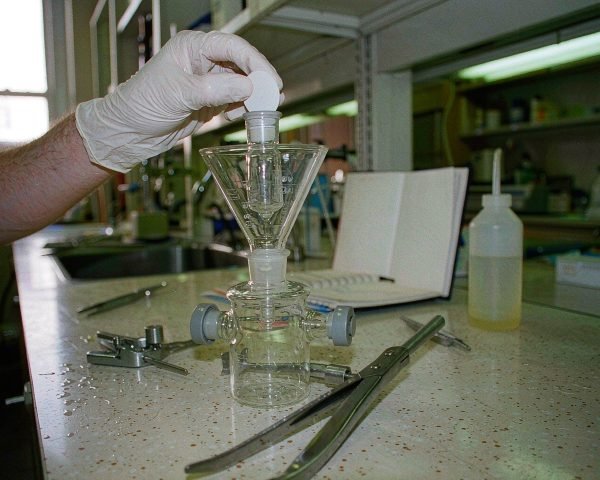

Somewhere in your lab right now, someone is filtering 500 mL of buffer through eight disposable syringe filters, one after another, wondering if there is a better way. There is. It is called a syringe filter holder, and it is one of those old-school pieces of equipment that disposable filters almost made everyone forget.
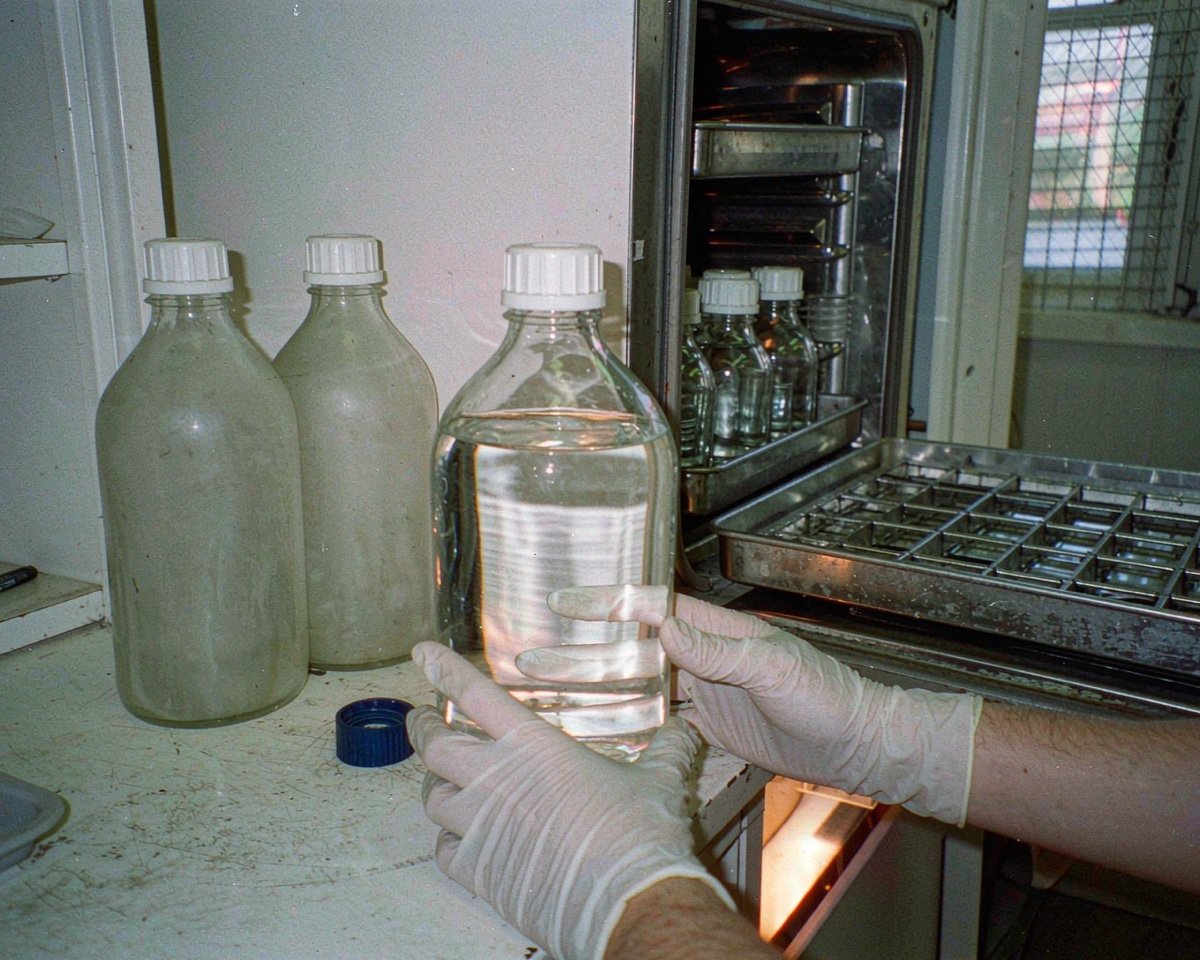
The first time I saw one in action was a water lab running EPA-style filtration all day. A glass funnel, a clamp, a 47 mm membrane, a vacuum flask. One membrane per sample, but everything else reusable. The per-sample cost was a fraction of what we were paying for disposables, and the throughput was better.
So what exactly is it, and when does it beat the syringe filters in your drawer?
The Short Answer
A syringe filter holder is a reusable device (usually borosilicate glass or stainless steel) that clamps a loose membrane filter between a funnel and a support screen, so the liquid passes through the membrane under gravity, vacuum, or pressure. Use one when you filter larger volumes, need cheaper per-sample filtration, or want membrane choice; stick with disposable syringe filters for small volumes and convenience.
READ ON
Below is how the holder actually works, the formats you will run into, and the decision factors that tell you which side of the fence your application belongs on.
How a Filter Holder Works
The design has barely changed in decades because it solves a simple problem cleanly. A holder has four parts:
- A funnel or reservoir that holds the liquid (300 mL is the classic size for a 47 mm holder).
- A support screen (sintered glass frit or stainless steel mesh) that keeps the membrane from collapsing.
- The membrane itself, a loose 47 mm (or 25/90 mm) disc you place by hand.
- A sealed joint (glass frit seat, clamp, or rubber stopper) so the liquid cannot sneak around the membrane.
The “funnel seal ensures that the sample does not bypass the membrane” is the exact wording suppliers use for the classic Whatman glass vacuum holders, and it is the property that matters: all the liquid, all through the membrane (Whatman glass filter holder specs).
Vacuum pulls the liquid from the funnel through the membrane into a flask underneath. That is the whole trick.
Holder vs Disposable Syringe Filter: The Real Trade-offs
Neither is “better.” They are optimized for different jobs, and the honest way to choose is to look at your sample volume and your weekly count.
| Factor | Disposable syringe filter | Reusable holder + loose membranes |
|---|---|---|
| Typical volume per filtration | 1-200 mL | 50 mL to liters |
| Setup time | Seconds | A few minutes |
| Per-sample cost (high volume) | Higher | Lower (membrane only) |
| Membrane choice | Limited to catalog formats | Any 47 mm membrane chemistry |
| Cross-contamination risk | Low (fresh device each time) | Managed by membrane change + cleaning |
| Sterile filtration | Easy (individually wrapped) | Needs autoclaved assembly |
If you are pushing 2 mL of sample into an HPLC vial, a disposable filter is faster, cleaner, and honestly cheaper in labor. We wrote a whole guide to syringe filters for HPLC sample prep for exactly that use case.
If you are clarifying a liter of mobile phase, filtering environmental water samples, or preparing media, the holder wins on cost, speed, and sanity. Eight syringe filters for one buffer batch is a small weekly expense that becomes a real annual line item.
The Formats You Will Actually See
Glass vacuum holders (the classic)
Borosilicate glass funnel, frit or steel support, 300 mL reservoir, seated on a vacuum flask through a rubber stopper. They cover aqueous and organic solvents, autoclave well, and let you watch the filtration happen. The borosilicate versions can be autoclaved and come with printed graduation scales on the 47 mm models (Fisher Whatman holder listing).
Stainless steel holders
Same architecture, steel body, with a 304 stainless support screen that plays nicely with proteinaceous solutions. These show up in sterility testing and pharma QC where glass is a breakage liability (stainless filter holder specs).
Pressure-style holders and in-line formats
For viscous samples or volumes above what vacuum conveniently pulls, pressure vessels (like a Parr-style or stirred cell) push liquid through 47 mm or larger membranes. The 90 mm versions exist for rapid filtration of heavily contaminated or viscous liquids, the same reason they are used for biological fluid filtration in bigger volumes (Whatman holder variants).
Membrane Choice Is Your Superpower Here
With a holder, you buy membranes separately, which means you can match the membrane to the sample instead of the other way around. Mixed organic/aqueous samples get PTFE or regenerated cellulose. Protein solutions get low-binding PVDF or RC. Dirty environmental samples get a glass fiber prefilter on top of the final membrane.
The chemistry decision is identical to the disposable world, and our membrane chemistry comparison covers it in detail. The difference is that a box of 100 loose 47 mm membranes costs less than a handful of equivalently-sized disposable units, so switching chemistries for a difficult matrix stops being a budget conversation.
Cleaning and Sterilizing a Holder
The reusable part of “reusable holder” carries obligations. Between membranes, rinse the funnel, frit, and flask with your wash detergent and deionized water, and deep-clean on a schedule (the classic sequence: detergent wash, tap rinse, acid rinse for mineral films, final deionized rinse). Autoclave the assembled (empty) holder at 121°C for sterile work, with the funnel sealed but not clamped airtight.
Watch the support screen. A clogged frit slows everything and, worse, retains previous samples. If a frit will not clear with normal cleaning, retire it. Filtration speed that decays over weeks is the tell.
One more caution from experience: do not let membranes dry onto the frit. A dried cellulose nitrate membrane bonded to a glass frit is a ten-minute chisel job and a bad start to the morning.
When You Should NOT Bother
Be honest about scale. If your lab filters fewer than a handful of small-volume samples a week, a holder is shelf decoration. The disposables win because setup time dominates. Also skip the holder if you need certified sterile single-use filtration for regulated release testing; individually wrapped sterile disposables carry documentation that a self-autoclaved assembly does not. Our take on sterile vs non-sterile filters covers where that line falls.
Also skip the holder if you need certified sterile single-use filtration for regulated release testing; individually wrapped sterile disposables carry documentation that a self-autoclaved assembly does not. Our take on sterile vs non-sterile filters covers where that line falls.
And if your volumes are truly large (media prep at liters per batch), look at bottle-top filters too, which screw directly onto the reservoir bottle and sit between the holder and the disposable in both cost and convenience.
Conclusion
A syringe filter holder is the reusable backbone of high-volume filtration: a clamped funnel, a support screen, and a 47 mm membrane you choose for the sample in front of you. It will not replace disposables at the bench, and it should not; 2 mL samples deserve the two-second convenience of a sealed filter. But for buffer batches, environmental samples, and anything measured in hundreds of milliliters, the holder pays for itself quickly and gives you membrane chemistry freedom that sealed units cannot match. Choose glass for general work, stainless for protein-heavy QC, and budget ten minutes of cleaning per session as the price of admission. If you are mapping your whole filtration setup, our complete buyer’s guide to syringe filters fills in the rest of the picture.
Frequently Asked Questions
What membrane size does a standard filter holder use?
The most common format is 47 mm, which is why “47 mm membrane” and “filter holder” are almost synonyms in lab catalogs. Smaller 25 mm and larger 90 mm holders exist for small volumes and high-throughput clarifications respectively.
Can I autoclave a glass filter holder?
Yes. Borosilicate glass holders tolerate repeated 121°C autoclave cycles. Autoclave the assembly empty, keep seals loose enough to vent, and let the unit cool fully before tightening. Stainless steel holders are also autoclavable.
Why is my filtration suddenly much slower?
Usually a clogged support frit or a membrane loaded with particulates. Replace the membrane first; if speed does not recover, clean the frit, and retire it if cleaning will not restore flow. Using a glass fiber prefilter on dirty samples prevents most of this.
Do holders work with organic solvents?
Borosilicate glass and stainless steel holders handle both aqueous and organic solvents, which is one of their advantages over plastic-bodied disposables. Match the membrane chemistry (PTFE for aggressive solvents, for example) and check the gasket material for compatibility.