
# 9 Consumables Habits That Protect Data Integrity
When we talk about data integrity, most people picture audit trails, electronic signatures, and 21 CFR Part 11. Fair enough. But some of the ugliest data failures I have seen started with something far more ordinary: a vial, a filter, a Sharpie, a box nobody labeled.
Data integrity depends on the bench as much as the software. Label vials immediately, log lot numbers, never reuse single-use consumables, check expiry dates, match CoAs to GMP lots, store sterile packs properly, pick the right container, segregate QC stock, and quarantine suspect lots with a written disposition.
Nine habits below. Each one is small on its own. Together they decide whether your results survive an audit.
1. Label Every Vial the Moment You Fill It
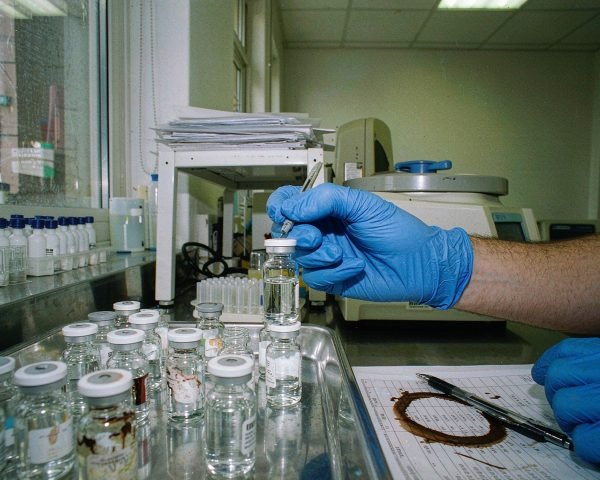
Position in a tray is not identity. The third vial in the tray only stays the third vial until someone pulls one out, moves a rack, or tops off a vial at lunch. After that, you are guessing, and guessing is how a stability time point gets reported against the wrong sample.
ALCOA+ starts with “attributable,” and the MHRA guidance on GxP data integrity makes the same point in plain terms: records must let you reconstruct who did what, to which sample, and when. An unlabeled vial breaks that chain before the instrument even fires. MHRA’s GxP data integrity guidance treats reconstruction of activities as a fundamental requirement, not a nice-to-have.
My habit is boring and it works: the vial gets its ID and date the second liquid goes in, not after the rack is full. I write dates as 2026-03-14, never 03/14, because half the world reads that the other way around and an ambiguous date on a vial is worth nothing in an investigation. Cryo labels or a fine permanent marker, sample ID, dilution, date. Ten seconds per vial.
One more thing. If you find an unlabeled vial before you lock the lab, do not talk yourself into a guess. It goes in the discard stream and, if it might have been a real sample, that goes into the record too. Guesses written into a sequence file are the kind of finding auditors build cases around. Unlabeled also means partially labeled: a vial carrying only a date and no ID is just as useless as a blank one.
2. Log the Lot Number Into the Run Record
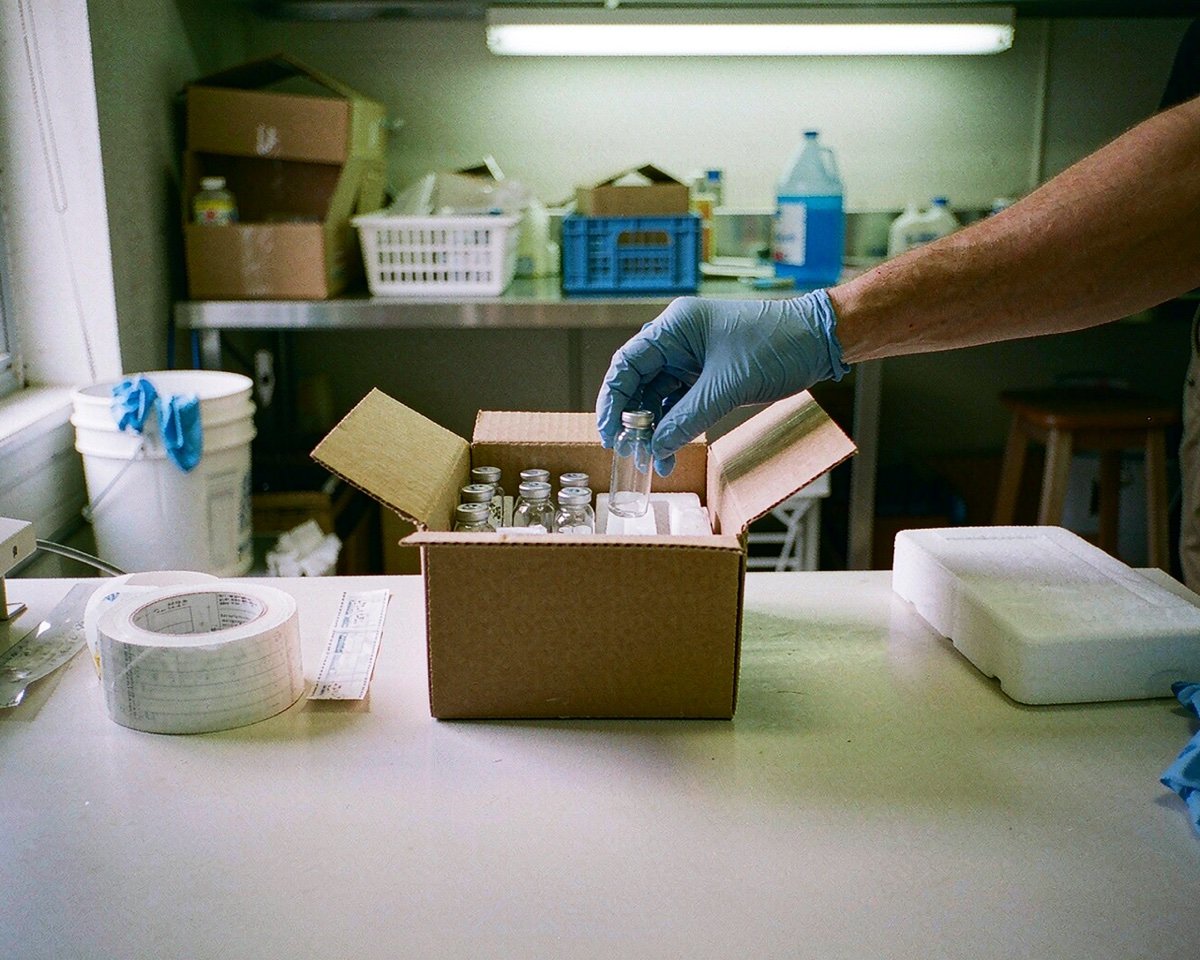
The box gets recycled. The label peels off. Six months later, when an out-of-specification result shows up, nobody can say which lot of vials or septa touched that sample, and the investigation stalls right there.
The FDA says good records have to be complete and attributable, and its data integrity guidance for CGMP is explicit that firms must be able to reconstruct all activities that produced the data. FDA’s data integrity Q&A guidance was written after inspections kept finding exactly this kind of gap. A run record that lists the column serial number but not the vial lot is half a record.
The fix costs two minutes. When I set up a sequence, the lot numbers of the vials, caps, septa, and filters go straight into the run sheet, next to the column and instrument IDs. If I am in a hurry, I snap a photo of the box label with the lot visible and drop it into the shared folder for that project. Either way, the link between the data and the physical materials exists outside the trash bin.
This matters most for consumables, not instruments, because consumables change silently. The lab buys the same 9-425 screw vials for years, but the lot in the drawer this week is not the lot from March. Without a lot number in the record, every result is a blend of unknown materials. With it, a suspect lot can be traced forward and backward in minutes.
Paper-based labs can do the same thing with a bound logbook. One line per run: date, lots, initials. Contemporaneous beats tidy every time, and an entry written the day of the run survives scrutiny in a way a reconstructed entry never will.
3. Never Reuse Single-Use Consumables
A syringe filter is priced like it is disposable because it is disposable. The membrane is rated for a single filtration; after that, you are pushing your sample through captured particles, leached extractables, and whatever the last sample left behind. I have watched a reused 0.22 µm filter shed fibers that showed up as a mystery bump in the chromatogram, and we spent two days chasing a ghost peak that turned out to be Tuesday’s sample.
Pipette tips belong to the same rule. Tip boxes invite “just one more use” because a tip looks clean even when it is not. Carryover at trace levels does not announce itself. It quietly fattens your blank and skews the low calibrator, and you may never see it unless a review catches the pattern.
If budget pressure pushes your team toward reuse, push back with the cost of a rerun: recouping sample volume you may not have, instrument time you did not plan for, and a deviation file for good measure. One honest rerun usually erases the savings from a month of stretched filters.
There is one legitimate middle path. If a new filter lot needs proving before it touches your validated method, do the comparison work deliberately. We keep a short protocol for validating a new filter lot against the old one, and it turns a supplier change from a gamble into a documented decision. That is very different from quietly reusing yesterday’s filter because the box ran out.
4. Check Expiry Dates Before You Start the Run
Expiry dates on consumables are not decoration. Septa age. Silicone hardens, loses resilience, and starts coring or leaking, and a leaking septum during a 60-injection sequence gives you evaporation, drift, and carryover that look like instrument problems. A colleague once spent a weekend rerunning an entire sequence because the oldest vials in the rack, sealed with expired septa, had lost enough solvent to shift every retention time.
So expiry checks happen before the run, not during it. I keep it to a 30-second sweep: septa, filters, standards, and any media or reagent bottles in play. Anything past its date goes out of the working drawer so nobody “borrows” it at 6 p.m. under deadline pressure. What you do with expired stock is a real decision with options, and it helps to read up on expired consumables before you downgrade them to non-critical work, because “still looks fine” is not a release criterion.
There is a data integrity angle here too. WHO’s guideline on data integrity defines reliable data as complete, consistent and available throughout the retention period, and results produced with degraded materials undermine that reliability at the source. The number may print out fine. Whether it means anything is a different question.
Rotate the duty if several people share the bench. A check that only one person remembers is a check that disappears the week that person takes a holiday.
If you want a fuller routine, our pre-run consumables checks cover the whole sweep in order, and it takes about five minutes once it is habit.
5. Match Certificates to Lots for GMP Work
A certificate of analysis is only proof if it describes the parts you actually used. In regulated runs, every consumable lot that touches the batch needs its CoA, and the lot number on the certificate has to match the lot number on the box. “The vendor is certified” is not a match. It is a hope.
PIC/S is blunt about why this matters: inspectors judge the veracity of your evidence, and PIC/S PI 041-1 builds the whole data governance system around being able to reconstruct events from records. A CoA filed three drawers away from the batch record, with no lot link, fails that test even if the consumables were perfect.
Here is the routine I would defend in an audit. At incoming, check the lot on the CoA against the lot printed on the bag and the box. Staple or clip the certificate to the receiving log and file both by lot number, not by supplier name. When a batch record later references a consumable, the trail reads: batch record, lot number, receiving log, CoA. Four steps, no leaps.
For non-GMP work you can relax the filing, but keep the habit of checking that the certificate matches the box. Supplier warehouse mix-ups are rare, and rare is not the same as never.
And be careful with substitutions. If the approved lot runs out mid-campaign and someone grabs a non-certified equivalent “just for the diluent vials,” that decision needs to be written down and quality-approved or not made at all. Undocumented substitutions are the consumables version of testing into compliance, and inspectors have seen every version of it.
6. Handle Opened Sterile Packs Like They Expire
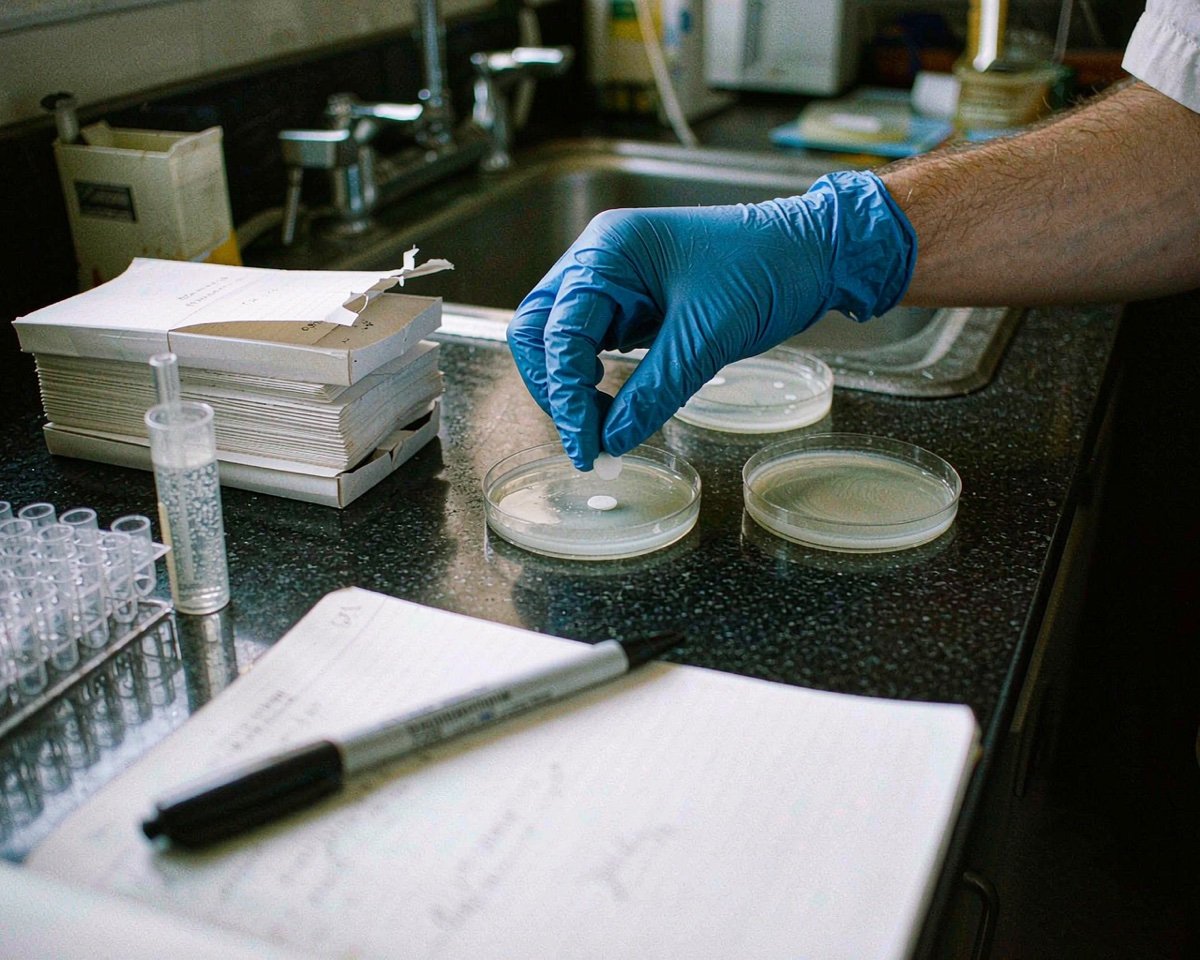
The moment you tear the pouch, the clock starts. A sterile pack left open on the bench overnight is not sterile tomorrow, no matter how careful the lab looks. Using it the next day turns “validated aseptic technique” into “validated until Tuesday,” and any microbial result from those plates or media now carries a question mark that is expensive to answer.
My rule is simple. Open the pack when you will use it, and date the pouch the moment it is opened if there is any chance of reuse, such as a sleeve of transfer pipettes or a partial sleeve of tubes. Anything intended to stay sterile after opening gets resealed into a clean container with the open date and the user’s initials. Reservoirs and media bottles get the same treatment: cap on tight, bench time logged, and discard on schedule rather than “when it looks wrong.”
Where a pack lives matters too. The bench beside the sink, next to the waste beaker and the soaking bath, is the worst real estate in the lab. I keep opened packs in a closed drawer away from water sources and hand traffic. Contamination from a sloppy pack does not usually create a dramatic failure. It creates intermittent dirty blanks and slow, expensive investigations into an instrument that was never the problem. A UV cabinet or laminar hood helps, but it does not rescue a pack that sat open beside the sink. Clean storage is about where things live between uses.
7. Pick the Right Container for the Sample
Containers are chemistry, not furniture. USP sets real performance standards here: USP General Chapter <660> classifies glass containers by hydrolytic resistance, because a container that leaches alkali can change your pH, your recovery, and your results. Type I borosilicate earns its price premium for a reason.
Match the container to the actual risk in your sample. Light-sensitive compounds belong in amber vials, and I mean from the first dilution onward, all the way to the final injection vial. Proteins and surfactants adsorb onto untreated glass surfaces, so low-binding or silanized vials protect your low-level results. Volatile analytes argue for crimp seals, because a screw cap with a worn septum breathes slowly across a long sequence. And if you are injecting 200 µL into a 2 mL vial, check whether the needle can actually reach the liquid; a conical insert solves in seconds what an empty-looking chromatogram otherwise takes a day to diagnose.
Headspace and storage have their own traps. Water samples for volatile organics must be filled with zero headspace, since evaporation changes the answer before the instrument sees it. Samples that will sit over a weekend deserve a cap check and an evaporation check on return.
None of this is exotic. It is a five-minute decision at the bench, made once per method, and then written into the method so the next person does not rediscover it by failure.
8. Keep QC Consumables Separate From Sample Prep
Cross-contamination rarely arrives through dramatic routes. It arrives through shared ones: one tip box everyprep uses, one pair of scissors that opens both standard ampoules and sample bags, one spatula that lives in the drawer and touches everything. The blank that carries a hint of your highest calibrator usually learned it from hardware, not from the instrument.
The habit is segregation, and it works best when it is physical. Dedicated stock of tips, filters, and vials for standard and QC preparation, kept in a marked zone or color-coded trays, with sample preparation supplies kept apart. Solvents for standards get their own pipettes where feasible. Nothing about this needs new equipment; it needs lines on the bench that people agree not to cross.
I learned this one the expensive way. A legacy autosampler wash vial filled with mobile phase had been topped up from the standard prep area for months, and our system suitability blanks started drifting upward until a fresh hire, who had not yet absorbed the local shortcuts, asked why the wash stock lived next to the 1000 ppm standard. One question, one relocation, and the blanks went quiet.
Stock bottles need the same discipline as consumables. Contents, concentration, date opened, initials. If a bottle could be mistaken for anything else, it eventually will be, usually on a Friday afternoon.
If your lab is small and physical segregation is impractical, at least segregate in time: standards first with clean hardware, samples after, blanks between. The point is that the QC result must be attributable to the standard, not to whatever the spatula met last.
9. Quarantine Suspect Lots and Write Down What Happened
Sooner or later a lot arrives wrong. Vials chipped at the rim, septa wrinkled in the seal, filters running so slowly you suspect the membrane. The instinct under deadline is to push through and complain later. The habit that protects you is quarantine plus a written disposition.
Quarantine means the lot physically moves: out of the working drawer, into a labeled holding area, marked “do not use pending review.” Then the record part, which is the half people skip. The disposition says what was decided and by whom: returned to the supplier, scrapped, or released after re-inspection with the reasoning attached. A lot pulled from the shelf and quietly replaced leaves no trail; a quarantined lot with a signed disposition is a controlled event.
Writing it down also builds the history your purchasing decisions need. If the same supplier lot problem appears twice in a year, that pattern is only visible if each event was recorded. Auditors read those records as a sign the quality system breathes.
When a lot fails formally, the next steps deserve more than improvisation. We published a playbook for what to do when a lot fails incoming inspection, and the core move is always the same: contain the lot, document the decision, and notify anyone who already used material from it. The last step is uncomfortable and non-optional, because a suspect lot that touched released data is a data integrity issue, not just a supply issue.
Conclusion
None of these nine habits requires new software, new instruments, or a budget meeting. A marker, a run sheet with lot numbers, a quarantine shelf, and thirty seconds of expiry checks will carry most of the weight. That is the quiet truth about data integrity at the bench: the records regulators ask for are only as trustworthy as the vials, filters, and labels that fed them, and the cheapest place to protect your data is the moment a sample enters a container.
Pick one habit to install this week. If your lab is like most, I would start with labeling at the point of fill, since it touches every sample and every run that follows. Then work through the rest over a month, and lean on the checklists we already built: the pre-run consumables checks for daily use, and the guide to expired consumables for the stock you keep postponing. Six months from now, your audit trail will thank you, in writing.
Frequently Asked Questions
Do consumables really affect data integrity, or is it only a software issue?
They genuinely affect it. An unlabeled vial, an unlogged lot number, or a reused filter breaks the chain between your data and the physical sample, which is exactly what ALCOA+ and GxP data integrity guidance require you to preserve. Software controls cannot fix a sample nobody can identify.
What should I record about the consumables I use in a run?
At minimum: the lot numbers of vials, caps, septa, and filters, plus the CoA reference for regulated work. Writing them into the run sheet, or photographing the box labels into the project folder, is enough. The goal is that a future investigation can trace any result back to the exact materials.
Can I reuse a syringe filter if it still looks clean?
No. The membrane is rated for one filtration, and reuse invites carryover, shed fibers, and extractables that show up as unexpected peaks. If cost is the concern, validate a cheaper lot properly rather than stretching a single filter across samples.
How long can I keep using a pack of septa or vials after opening?
There is no universal number, so set your own rule and date the pack when you open it. Many labs use opened packs within the working session or re-seal them in a clean container for short-term use. Anything that must stay sterile should be treated as compromised the moment the pouch opens.
What do I do if I find an unlabeled vial after a sequence?
Treat it as unidentifiable and discard it, then record the event, especially if it might have held a real time point or customer sample. Guessing its identity from tray position puts a fabrication risk into your records, which is far worse than an honest gap.